
Reviewed · WALKING TOURS
LocalPlaces Understanding Johannesburg Walking Tour
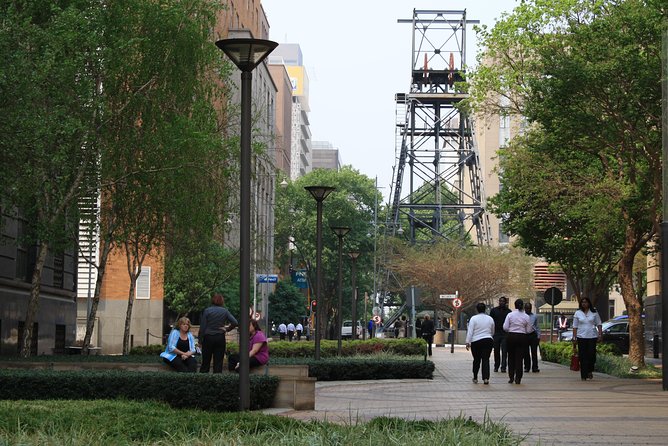
Johannesburg’s past is written in stone. This four-hour walk gives you a clear first look at the city through its gold-rush beginnings, grand early buildings, long decline, and present-day renewal. I like the focus on Marshalltown’s architecture and the way the tour links famous names such as Gandhi, Mandela, and Tambo to real places. I also like that guide Charlie brings the story to life as a lively raconteur. The main consideration is that this is a city walking tour in an area that has seen serious urban change, so you should come ready for a candid look at Johannesburg rather than a polished sightseeing route.
The tour costs $80.80 per person, lasts about four hours, and is private for your group. That price is easier to justify if you value context, conversation, and a tailored pace more than a long list of paid attractions. You will not spend the morning rushing between museums. Instead, you will walk through the old central business district and learn how Johannesburg became the city it is today.
In This Review
- Key points to know before booking
- Why this is a smart first look at Johannesburg
- Starting at Gandhi Square at 9:00 a.m.
- Walking through Marshalltown’s gold-rush district
- Main Street and the changing face of the CBD
- The old stock exchange and Johannesburg’s former financial power
- The Mandela and Tambo connection
- How the storytelling shapes the experience
- Is $80.80 a fair price?
- Who should book this Johannesburg walk?
- Cancellation and practical planning
- Should you book the Understanding Johannesburg Walking Tour?
- FAQ
- How long does the Understanding Johannesburg Walking Tour last?
- Where does the tour begin?
- What time does the tour start?
- Where does the tour finish?
- Is this a private tour?
- How much does the tour cost?
- Can I cancel the tour for a full refund?
Key points to know before booking
- Gandhi Square begins the story: The tour starts where Gandhi worked as a young lawyer, giving the city’s political history a direct physical setting.
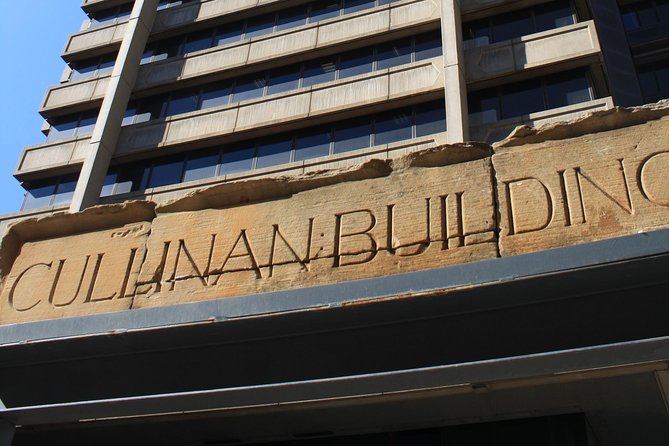
- Marshalltown is the main stage: This older inner-city district reveals Johannesburg’s mining, banking, and Edwardian past through its buildings and streets.
- The tour covers boom, decline, and renewal: You get a full account of the city, from the gold rush through present-day coffee shops and eateries on Main Street.
- The old stock exchange is a highlight: The stained-glass windows and abandoned interior offer a striking look at Johannesburg’s former financial power.
- Charlie adds personality: His lively storytelling suits the tour’s mix of architecture, people, business, and urban culture.
- It is a private four-hour walk: Only your group participates, with a 9:00 a.m. start and return to the meeting point.
Why this is a smart first look at Johannesburg
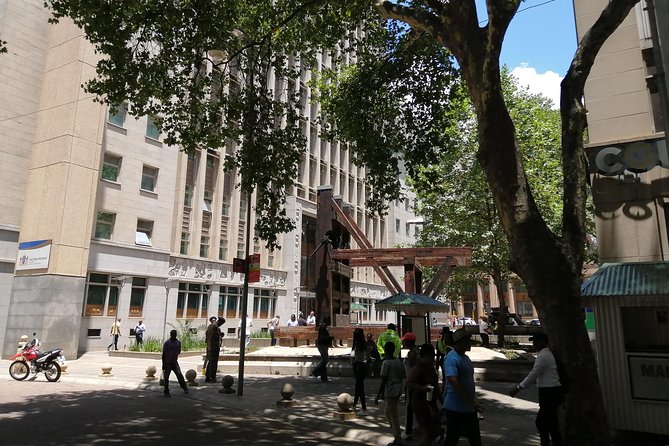
Johannesburg can be hard to read at street level. Its wide roads, tall office buildings, old banks, new cafes, empty properties, and active businesses do not always tell one clear story on their own. This tour gives you the timeline you need.
You begin with the city before the gold rush, then move through the mining boom and the early 1900s. From there, the story turns to decline and the current push to bring parts of the inner city back to life. That sequence matters because Johannesburg is not simply an old city or a new one. It is both, often on the same block.
I especially like that the tour does not limit Johannesburg’s story to gold and business. Gandhi’s time as a young lawyer, the former offices of Mandela and Tambo, and the changing use of Main Street add people and politics to the architectural details. The result should help you understand why the city’s central districts matter, even when some buildings appear worn or empty.
This is also a useful first-day activity because it gives you a mental map. After four hours, you should have a better sense of the older central business district, its mining roots, and the difference between its former power and its current direction.
More Walking Tours in Johannesburg
- Soweto: Walking Tour with a Local Guide and Lunch
★ 4.9 · 648 reviews - Soweto Walking Tour with Lunch
★ 5.0 · 288 reviews - Johannesburg: Local Food Tasting Guided Walking Tour
★ 4.7 · 192 reviews
Starting at Gandhi Square at 9:00 a.m.
The meeting point is 2 Pritchard Street in Johannesburg, with the walk beginning at 9:00 a.m. The tour then returns to the same meeting point. That simple out-and-back arrangement is practical because you do not have to arrange a second pickup point at the end.
Gandhi Square is more than a place to gather. It sets up one of the tour’s most memorable personal stories. You will see a sculpture of Gandhi as a young lawyer and learn that he worked in Johannesburg as a business lawyer. The square connects a familiar historical figure to the ordinary legal and commercial world of the city.
That detail gives the tour a useful tone from the start. Johannesburg’s story is not only about famous leaders or wealthy mining companies. It is also about offices, courts, contracts, transport, workers, and the daily business that helped a gold-mining settlement become a major city.
The stated visit to Gandhi Square lasts about 15 minutes. That is enough time for an introduction and explanation without letting one stop take over the entire walk. If you are interested in Gandhi’s South African years, keep your expectations measured. The tour provides a connection to the place, not a full museum-style study of his life.
Walking through Marshalltown’s gold-rush district
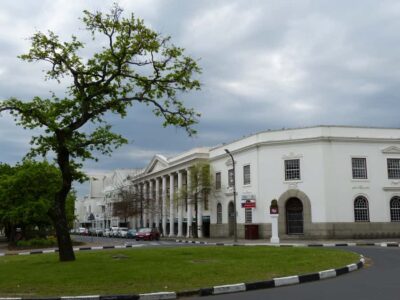
Marshalltown is the central part of the experience. It is described as the older section of Johannesburg’s CBD, and its buildings trace the beginnings of the city’s mining and financial companies. This is where the walk shifts from a general introduction to a close look at the physical city.
You will hear how Johannesburg grew from the discovery of gold into a center of mining and finance. The architecture helps make that change easier to understand. Early commercial buildings, older offices, and grander Edwardian-era designs show the confidence of a city that expected wealth and expansion.
The value here is the connection between a building and the forces behind it. Instead of seeing an old facade as a photograph stop, you get an explanation of who used these spaces and why the district mattered. That approach suits anyone who enjoys architecture but wants more than dates and decorative details.
The tour also asks you to look at the city’s later years. Some buildings carry the marks of neglect or changed use. Rather than hiding that past, the walk treats urban decline as part of Johannesburg’s story. You can then see current regeneration in a more realistic way. A new coffee shop on Main Street is not presented as proof that every problem has been fixed. It is one sign of a district trying to find a new role.
Main Street and the changing face of the CBD
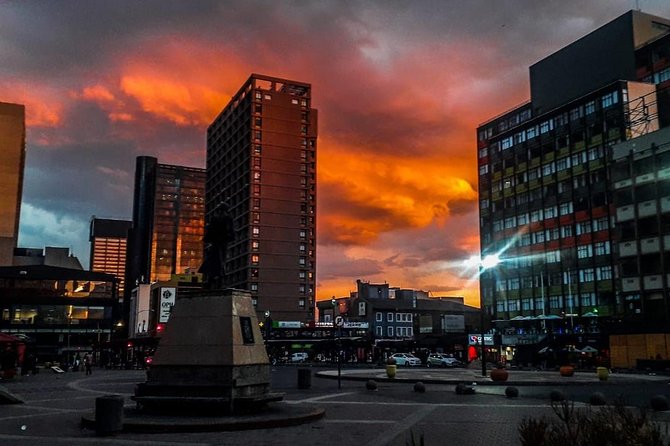
The walk includes pedestrianized Main Street in the corporate mining district. This is an important section because it brings together the old financial center and the newer businesses that now occupy parts of the area.
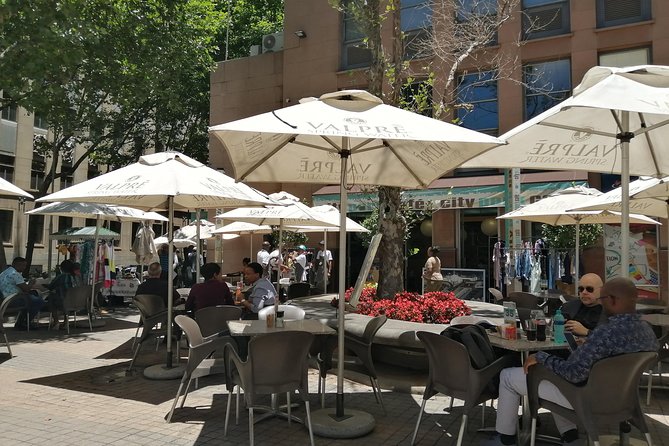
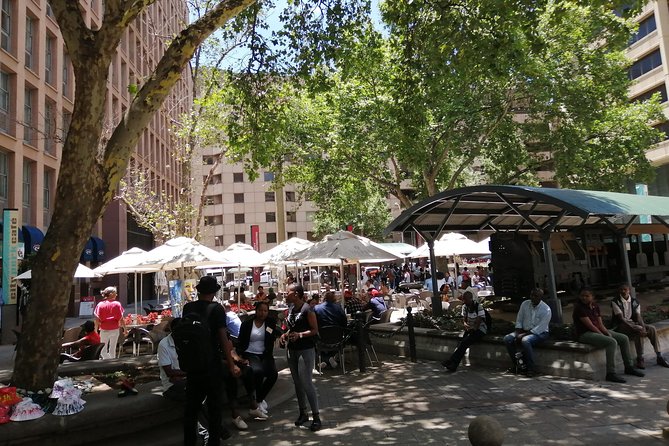
Main Street lets you compare different periods in a short distance. The older mining offices speak to Johannesburg’s gold-rush wealth. Current coffee shops and eateries point to a different kind of city life, with people using the area for food, work, and social time rather than only for mining administration and finance.
I like this part because it gives the regeneration story a human scale. You are not only hearing about planning schemes or property investment. You are seeing how an old business district can attract new uses. At the same time, the walk does not pretend that a few new businesses erase the area’s complicated past.
Expect the guide to keep your attention on the street itself. The details may include architecture, names, former businesses, and the people connected to the buildings. This is a walking tour for looking up, listening, and noticing changes in use. It is less suited to someone who wants constant interior access or a series of formal attractions.
A completely different kind of day out on the same trip:
- From Johannesburg: Pilanesberg Nature Reserve Game Safari
★ 4.8 · 1,327 reviews - Johannesburg: Hop-On Hop-Off Bus with Optional Soweto Tour
★ 4.6 · 985 reviews - Soweto /Johannesburg and Apartheid Museum Guided Full Day Tour
★ 5.0 · 932 reviews - Johannesburg Hop-On Hop-Off City Tour with Soweto Option
★ 4.5 · 768 reviews
The old stock exchange and Johannesburg’s former financial power
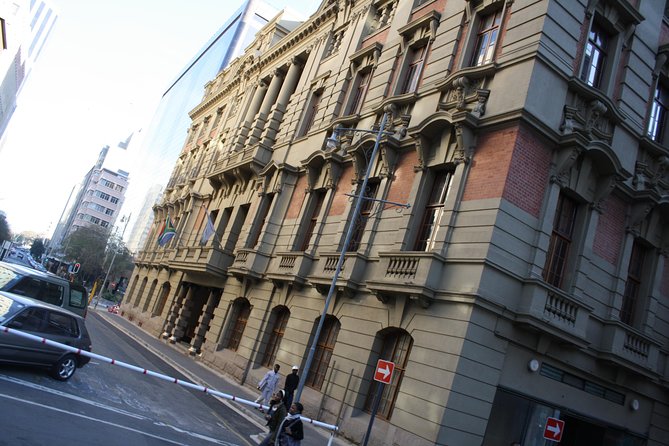
One of the strongest details from the experience is the chance to go inside an abandoned stock exchange with stained-glass windows. That is a striking contrast: a place once linked to money and corporate activity, now carrying the quiet atmosphere of an unused building.
The interior helps explain the ambition of old Johannesburg. Stained glass may sound more suited to a church or civic hall than to a financial institution, which is exactly why it can make such an impression. It shows how business leaders expressed status and confidence through architecture.
This is also where the tour’s theme of decline becomes tangible. You are not merely told that the central business district lost some of its former importance. You can see the gap between what the building was built to represent and its abandoned condition.
Access to an abandoned building can depend on conditions, permissions, or safety, so I would treat this as a possible highlight rather than an absolute guarantee of every departure. Still, the detail makes clear why the architecture and urban culture side of the tour appeal so strongly to people who enjoy old commercial districts.
The Mandela and Tambo connection
Another key point is the Shadow Boxer sculpture, located near the offices once used by Nelson Mandela and Oliver Tambo. The sculpture offers a compact way to connect Johannesburg’s legal world with the anti-apartheid struggle.
The importance of this stop is not only the famous names. It shows how political history was tied to ordinary city addresses. Mandela and Tambo worked as lawyers, and their office was part of the same urban setting shaped by mining money, courts, companies, and public institutions.
You should expect this section to add political weight to the architecture. The walk does not treat the CBD as a collection of handsome old buildings detached from South Africa’s difficult past. It connects the city’s commercial development with the people who challenged the systems around them.
For many visitors, this will be one of the most memorable parts of the morning. The Shadow Boxer sculpture also gives you a clear visual marker, making the story easier to remember after the tour ends.
How the storytelling shapes the experience
The guide matters a great deal on a tour built around history and streets rather than admission-ticket attractions. Charlie is described as a lively raconteur, and that is a good fit for this route. The stories need energy because the walk covers several eras and shifts between architecture, business, politics, and urban change.
A strong guide can help you notice why a building matters before your attention moves to the next one. Charlie’s style appears to favor vivid storytelling rather than a dry list of dates. That should suit you if you enjoy learning through characters and episodes.
The private format is another advantage. Only your group participates, so the experience should feel more conversational than a large public walk. You can ask about a building, a historical figure, or the city’s current direction without competing with a crowd. Group discounts are available, which makes the per-person price more reasonable for a small party.
The private setup does not mean the tour is fully customizable. The supplied route centers on Marshalltown, Gandhi Square, Main Street, and the historic CBD. If you want a broad Johannesburg tour covering several distant neighborhoods, this is not the right format.
Is $80.80 a fair price?
At $80.80 per person, this is not a cheap casual stroll. The value depends on what you want from Johannesburg.
I think the price makes sense for a private four-hour experience with a guide who can explain the city’s development in person. You are paying for interpretation, local context, and time to ask questions. The old stock exchange, Gandhi Square, the Shadow Boxer sculpture, and the wider Marshalltown route give the walk several distinctive points rather than one single landmark.
The price is harder to justify if you mainly want entrance tickets, grand views, or a packed sightseeing schedule. There are no listed museum admissions or special transport segments. The main product is the guide’s story and the city itself.
Group discounts improve the calculation. For a couple, family, or group of friends, the cost may feel more worthwhile because you receive a private activity rather than joining a large mixed group. The mobile ticket also keeps the booking simple, while the 15-day average booking window suggests that you should not leave it until the last morning if your schedule is fixed.
Who should book this Johannesburg walk?
I would recommend this tour to you if you like:
- Urban architecture and old commercial buildings
- Gold-rush and mining history
- Political history tied to real locations
- Honest discussion of decline and regeneration
- Small private tours with room for questions
- Walking routes that explain a city rather than simply photograph it
It is especially useful as your first Johannesburg activity because the tour creates a framework for later visits. Once you understand the old CBD, the mining economy, and the city’s uneven renewal, other parts of Johannesburg may make more sense.
The walk may be less suitable if you dislike urban areas with visible decay or want a relaxed outing with little historical explanation. Four hours on foot also requires a reasonable level of mobility, though most people can participate and service animals are allowed. The experience is dependent on good weather, so keep some flexibility in your schedule.
The 9:00 a.m. start is helpful. You finish around early afternoon, leaving time for another activity. It also avoids making the walk a late-day commitment, though the exact end time can vary because the duration is approximate.
Cancellation and practical planning
You can cancel for a full refund up to 24 hours before the start time. Changes or cancellations made inside that window are not refunded, and the cut-off uses Johannesburg local time.
The tour requires good weather and a minimum number of participants. If poor weather or low enrollment causes cancellation, you will be offered another date or experience, or a full refund. Since the tour returns to its starting point, you can plan the rest of your day without arranging transport from a separate endpoint.
It is near public transportation, and confirmation arrives when you book. I would wear comfortable shoes and allow yourself enough time to reach 2 Pritchard Street before 9:00 a.m. The route is built around observation and conversation, so a phone or camera may be useful, but the main thing is to keep your attention on the guide and the buildings.
Should you book the Understanding Johannesburg Walking Tour?
Yes, if you want Johannesburg explained through its oldest central districts rather than reduced to a quick photo stop. The tour’s strongest features are its clear timeline, the Marshalltown architecture, the old stock exchange with its stained glass, Gandhi Square, and the Mandela and Tambo connection at the Shadow Boxer sculpture.
I would book it early in a Johannesburg visit, especially if you enjoy urban history and want a private guide who can answer questions. I would skip it only if you prefer scenic outings, museum interiors, or a route that covers many different parts of the city.
For the right audience, this is a thoughtful and unusually direct introduction to Johannesburg. It shows the city at its grandest, most troubled, and most hopeful, often within a few blocks.
FAQ
How long does the Understanding Johannesburg Walking Tour last?
The tour lasts approximately four hours.
Where does the tour begin?
It begins at 2 Pritchard Street, Johannesburg, 2113, South Africa.
What time does the tour start?
The scheduled start time is 9:00 a.m.
Where does the tour finish?
The tour ends back at the meeting point.
Is this a private tour?
Yes. Only your group participates in the activity.
How much does the tour cost?
The listed price is $80.80 per person. Group discounts are available.
Can I cancel the tour for a full refund?
Yes, if you cancel at least 24 hours before the experience starts. Cancellations made less than 24 hours in advance are not refunded.
Newest reviews from Johannesburg
- Cradle of Humankind and Maropeng Day Tour from Johannesburg★ 4.0 · 5 reviews
- Explore Soweto 8 Hour Tour with Lunch and Museum Visit★ 5.0 · 5 reviews
- 3 Day All Incl. Private Kruger Park Safari Incl. Transfer From Johannesburg★ 5.0 · 5 reviews
- Harties cableway Tour★ 4.5 · 5 reviews
- Pretoria Historical Tour★ 4.0 · 5 reviews
- Constitutional Hill and Soweto 5 hours tour.★ 5.0 · 5 reviews
- 5 Day Kruger National Park and Panorama Route Safari★ 4.5 · 5 reviews
- Luxury Car Johannesburg Airport Private Transfer★ 5.0 · 5 reviews
Walking Tours, compared.

Soweto: Walking Tour with a Local Guide and Lunch
Read our review →




Browse the lists this tour appears in