
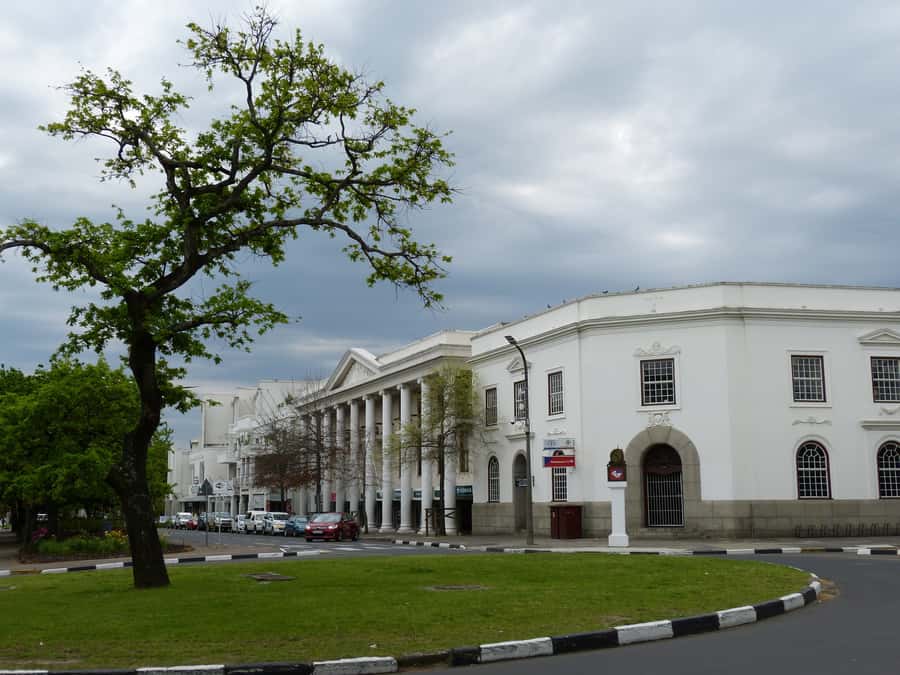
Reviewed · HISTORICAL TOURS
Stellenbosch: Guided Historical Walking Tour
Start with the town’s stories, not its tasting rooms. This 90-minute walk introduces Stellenbosch’s oak-lined streets and Cape Dutch buildings with the help of local guides such as Johan, Marlene, and Juliana. I like the easy pace and the way the tour connects old buildings with present-day university life. At $18 per person, it also gives you a useful first look at town before you choose where to eat, shop, or taste wine.
I also like the small details: the water furrows beside the Mill Stream, the story behind the Eerste River, and the legends linked with the Angel Factory and the Moederkerk graveyard. The main consideration is simple: this is a history walk, not a wine tour, and transportation to Church Street is not included. Bring comfortable shoes and arrive 15 minutes early.
In This Review
- Key points at a glance
- Why a 90-minute walk works so well
- Meeting the guide on Church Street
- Following the Mill Stream beneath the oaks
- The Braak and the town’s historic face
- Dorp Street and four centuries of change
- Fire, rebuilding, and the stories behind the walls
- Simon van der Stel and the Eerste River
- Angels, ghosts, and local character
- Stellenbosch University and the town today
- What the guide style adds
- Is $18 a good price?
- Who should book this walking tour?
- Should you book the Stellenbosch historical walk?
- FAQ
- How long is the Stellenbosch historical walking tour?
- How much does the tour cost?
- Where does the tour meet?
- How early should I arrive?
- What language is the tour conducted in?
- Is transportation included?
- Is the tour wheelchair accessible?
- What should I bring?
- Can I cancel for a full refund?
- Can I reserve now and pay later?
Key points at a glance
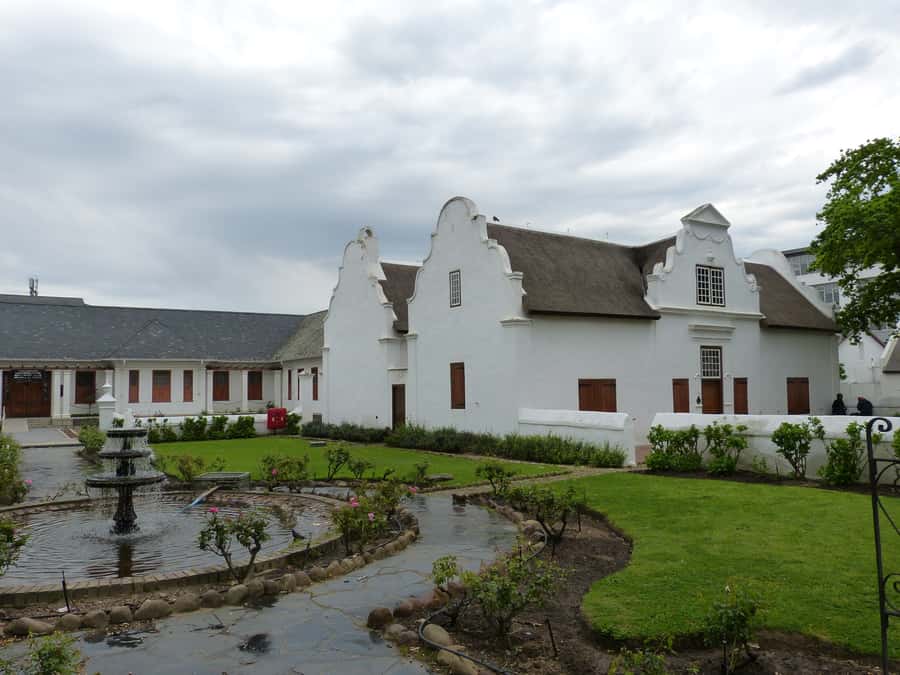
- The town’s oak avenues: Shaded streets and open water furrows give the walk much of its character.
- The Braak: Stellenbosch’s village green is framed by historic buildings on three sides.
- Dorp Street: You visit the oldest residential street in South Africa.
- Stories beyond architecture: Fires, colonial beginnings, university figures, local characters, and ghostly tales all find a place in the walk.
- Excellent guide feedback: Johan, Marlene, Juliana, and other guides are praised for clear explanations, humor, warmth, and a good pace.
- Simple, flexible planning: The tour costs $18, lasts 90 minutes, is conducted in English, and allows free cancellation up to 24 hours before departure.
Why a 90-minute walk works so well
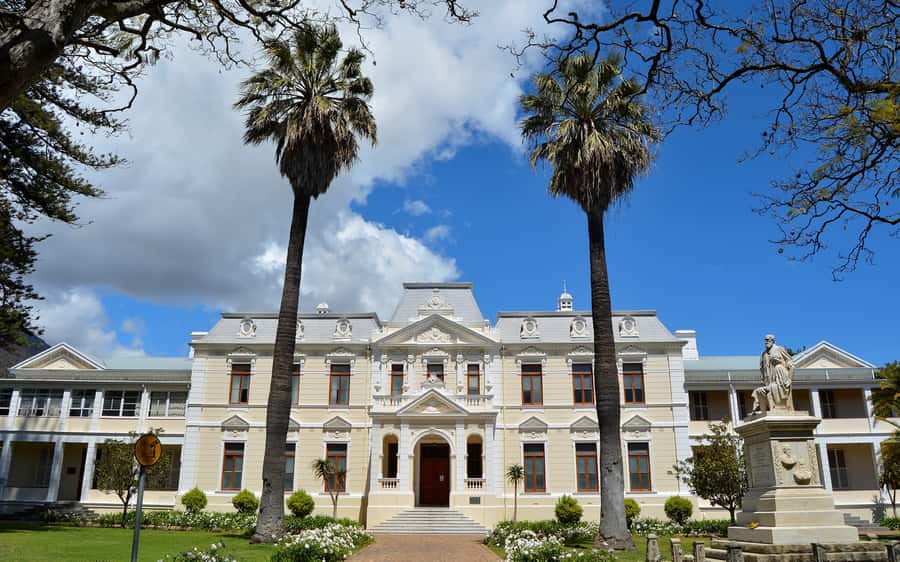
Stellenbosch can look easy to understand. It has attractive streets, old whitewashed buildings, cafés, and a famous university. Yet a self-guided stroll can leave you admiring façades without knowing why they matter.
This tour gives those façades a setting. You hear how the town began in the 17th century, how Simon van der Stel set up camp beside the Eerste River, and how the river received its name. You also learn how repeated fires in the 18th century destroyed large parts of the early settlement.
That combination is the real value. The walk is not just a procession of old buildings. It explains why the town was laid out as it was, how it survived disaster, and how its past still shapes Stellenbosch today.
Ninety minutes is a smart length. You get enough context to make the town meaningful, but not so much that the history becomes a lecture. The route is described as an easy city walk, and several people specifically appreciated that it was not too far to walk. If you have only part of a day in Stellenbosch, this fits neatly before lunch or another activity.
More Walking Tours in Stellenbosch
- Walking Tour of Stellenbosch
★ 5.0 · 81 reviews - Stellenbosch: Khayamandi Township Walking Tour
★ 4.3 · 5 reviews - Franschhoek Wine Walk with Lunch
★ 5.0 · 30 reviews
Meeting the guide on Church Street
The meeting point is 47 Church Street, Stellenbosch Central, at the Stellenbosch Visitors Bureau. You should arrive 15 minutes before the start time. Since transportation is not included, plan your own way to the address and allow time to find it without rushing.
The guide is one of the most important parts of this experience. Johan is repeatedly praised for his humor, clear storytelling, and ability to answer questions. Marlene is described as warm, engaging, and good at keeping the walk moving at a comfortable pace. Juliana is praised for enthusiasm and for explaining answers fully rather than brushing questions aside.
Those details matter because historical walking tours can go wrong in two ways. A guide can bury you in dates, or offer a string of vague stories with no useful context. The strongest accounts of this tour point to a better balance: enough facts to understand the town, plus anecdotes that keep you looking up from the pavement.
The tour is in English. It is also wheelchair accessible, which makes it a practical option for more visitors, although the experience remains a walking tour through town and comfortable footwear is still sensible.
Following the Mill Stream beneath the oaks
One of the most appealing features of the route is the relationship between the streets and the water. Stellenbosch is known as the village of the oaks, and its shaded avenues are bordered in places by the water furrows of the Mill Stream.
These furrows are easy to pass without a guide. Once they are pointed out, though, they become part of the town’s design rather than a minor roadside detail. They help explain how water shaped daily life and how the settlement developed around practical needs as well as colonial planning.
The oak-lined streets also make the walk pleasant. Shade can be welcome in the Western Cape, and the trees give the old center a calmer feel than a standard city pavement. You are not confined to one museum or indoor room. The town itself is the exhibit.
I would pay close attention here to the guide’s explanation of how the old water system fits into Stellenbosch’s growth. That kind of small infrastructure often tells you more about an early settlement than a grand monument does.
The Braak and the town’s historic face
The Braak, or village green, is one of the clearest places to understand Stellenbosch’s historic layout. Buildings surround it on three sides, creating an open civic space rather than a narrow street of façades.
This is a good stop for visitors who enjoy architecture but do not want a technical building survey. The guide brings the Cape Dutch style into focus while explaining how the buildings relate to one another. You get the broad visual effect first, then the stories that make the setting memorable.
The appeal is the harmony of the scene. White walls, gabled forms, old trees, and open space create an unmistakable sense of place. But the tour does not treat the town as a frozen postcard. Stories about its inhabitants and later development help connect the architecture with real lives.
This is also where the guide’s style can make a major difference. Johan’s humor and Marlene’s relaxed delivery have been especially well received, while Juliana is praised for showing both familiar sights and less obvious corners. If you enjoy asking questions, the format appears to reward curiosity.
More historical tours:
- Stellenbosch: Historical Bike Tour & Wine Tasting
★ 4.9 · 248 reviews - Cape Town: Art, Culture & History Walking Tour
★ 4.9 · 392 reviews - Soweto Township Cultural Tour incl Apartheid Museum and Nelson Mandela House
★ 5.0 · 30 reviews - Cape Town Guided City Cycling Heritage Tour – Private Tour
★ 5.0 · 27 reviews
Dorp Street and four centuries of change
Dorp Street is described as the oldest residential street in South Africa. That claim gives the street an immediate place in the tour, but the more useful question is what you learn by walking it.
Here, the guide can show how a residential street preserves the shape of an earlier town. Buildings are not simply isolated historic objects. Their position along the road helps you picture how Stellenbosch grew from a settlement into a university town and regional center.
The tour also looks across roughly four centuries of local life. That long view is valuable because it avoids reducing Stellenbosch to one period. You hear about the colonial founder and the first settlement, but also about later residents, famous university graduates, prime ministers, sportsmen, and the town’s current identity.
Several guides are praised for connecting older events with modern Stellenbosch. That present-day link is worth listening for. It helps you understand why the university matters so much to the town and why Stellenbosch feels like more than a preserved architectural district.
Fire, rebuilding, and the stories behind the walls
The devastating fires of the 18th century are a major part of the walk. They nearly wiped out the early town and destroyed large sections of its buildings.
This is one of the most useful historical themes because it changes how you see the surviving architecture. A beautiful old building is not proof that the town simply carried on untouched. Fires forced rebuilding, altered what remained, and became part of the town’s long struggle to develop.
The guide’s job is to make those events understandable without turning the walk into a list of disasters. Past accounts of this experience praise the way guides make history come alive, using clear explanations and memorable anecdotes. Liz, for example, was praised for explaining how Stellenbosch was established and developed despite repeated fires.
I find this kind of context more valuable than a simple date. You learn to look at the town as a place that has changed, burned, rebuilt, and adapted. That makes the old center feel less like a display and more like a living settlement.
Simon van der Stel and the Eerste River
The story of Simon van der Stel gives the tour an early anchor. You visit the place where the colonial founder set up camp beside the Eerste River and learn how the river got its name.
This stop helps place Stellenbosch in the wider story of the Cape. It is not just a pretty town that appeared fully formed. Its beginnings are tied to settlement, movement, water, and colonial expansion.
A good guide should also help you understand the difference between seeing a site and knowing its role. A riverbank or street corner may not look dramatic on its own. The explanation gives it meaning, especially when the guide connects the first settlement with the town that grew around it.
The tour is particularly useful if you are new to South African history. Several guides have been praised for giving context that reaches beyond Stellenbosch, including broader historical and political background. You will not receive a full course in the country’s past in 90 minutes, but you can gain a clearer frame for understanding the town.
Angels, ghosts, and local character
Not every memorable stop is solemn. The Angel Factory adds a lighter, more unusual note, while the Moederkerk graveyard comes with the possibility of a ghost story.
These details keep the tour from becoming too formal. A town’s character is built not only from founders and public buildings, but also from local beliefs, colorful inhabitants, odd corners, and stories passed from one generation to another.
The mention of an angel or ghost does not mean this is a paranormal tour. The main focus remains local history and architecture. Still, these tales offer a welcome change of pace, especially for families and anyone who likes a little mystery with their facts.
One guide was praised for sharing an amusing story about the local morgue. That suggests the tour is willing to explore the less polished side of town life as well as its grand buildings. I consider that a plus. The strange and slightly macabre details are often what you remember later.
Stellenbosch University and the town today
Stellenbosch University is an important part of the town’s identity, and the tour introduces notable graduates, including prime ministers and sportsmen.
This section gives the walk a useful modern edge. You are not only learning about a settlement founded centuries ago. You are also seeing a university town whose public life, buildings, and reputation continue to develop.
The guides appear to handle this material in a conversational way. Johan is praised for discussing both the past and modern Stellenbosch, while other guides have been appreciated for explaining how the town’s earlier history affects the present.
That connection helps you read the streets differently after the tour. A university building, student area, or public square is no longer just part of the scenery. It becomes part of an ongoing story that links old settlement patterns with contemporary South African life.
What the guide style adds
The most consistent strength here is the guiding. The experience depends less on a special attraction than on how well a person can interpret ordinary streets.
Johan is often described as funny, responsive, and generous with information. Marlene is praised for being charming, well informed, and good-humored. Juliana is noted for her energy, enthusiasm, and willingness to tailor explanations to questions. Maureen is praised for making the town’s early history vivid.
Small groups can make the walk feel especially personal. Some departures have been very small, including occasions when one person received what was effectively a private tour. That is not guaranteed, but it means you may have room to ask about architecture, language, politics, or local life.
The quality of the guide can vary slightly in tone because several people lead the tour. That is not a serious concern here, since the feedback consistently emphasizes clear explanations and friendly presentation. Still, if you prefer a quiet, self-directed visit, you may find the steady narration more than you need.
Is $18 a good price?
At $18 per person, this is strong value for a 90-minute guided walk. You are paying for a local perspective, an organized route, and the ability to understand places that could otherwise pass as attractive but unexplained streets.
The price looks especially fair if you are visiting Stellenbosch for the first time. A short orientation can help you decide where to return later, which buildings deserve another look, and how to fit the historic center into the rest of your day.
It is less essential for someone who wants only wine tasting or countryside scenery. Those experiences are not part of this walk. The tour earns its price through stories, architecture, and context, not through tastings, transport, or included food.
You can also reserve now and pay later, which helps if your schedule is still shifting. Free cancellation is available up to 24 hours before the activity for a full refund. Those policies add flexibility without changing the basic nature of the experience.
Who should book this walking tour?
I would choose this tour if you:
- Have limited time in Stellenbosch and want a useful introduction.
- Enjoy buildings, town planning, local stories, and South African history.
- Prefer a gentle walk rather than a bus excursion.
- Want to ask a local guide about both the old town and present-day life.
- Are visiting the wine country but want to see more than estates and tasting rooms.
- Like unusual details, including fire stories, graveyard tales, and local characters.
You might skip it if your schedule is packed with vineyard visits and you have no interest in the town center. You should also remember that it is conducted in English, so it may not suit anyone seeking a tour in another language.
Wear comfortable shoes. Even an easy walk is less enjoyable if your footwear is poor, and the best parts of Stellenbosch are encountered on foot rather than from a vehicle.
Should you book the Stellenbosch historical walk?
Yes, I would recommend it for most first-time visitors to Stellenbosch. The combination of oak avenues, the Mill Stream, The Braak, Dorp Street, Cape Dutch architecture, fire history, university stories, and local legends gives you a well-rounded introduction for a modest price.
Book it early in your stay if possible. The route can serve as your town orientation, and the guides are good at answering the questions that arise when you first arrive. Johan, Marlene, and Juliana each bring a slightly different personality, but the strongest qualities are consistent: warmth, humor, clear storytelling, and a genuine feel for Stellenbosch.
If you already know the town well, it can still be worthwhile. Tanya’s experience suggests that even repeat visitors can learn something new, especially from a guide who explains how familiar streets fit into the wider story. For $18 and 90 minutes, that is a sensible way to see Stellenbosch with fresh eyes.
FAQ
How long is the Stellenbosch historical walking tour?
The tour lasts 90 minutes.
How much does the tour cost?
The listed price is $18 per person.
Where does the tour meet?
The meeting point is 47 Church Street, Stellenbosch Central, Stellenbosch, 7599.
How early should I arrive?
You should arrive 15 minutes before the activity begins.
What language is the tour conducted in?
The tour is conducted in English.
Is transportation included?
No. Transportation to and from the meeting point is not included.
Is the tour wheelchair accessible?
Yes, the activity is wheelchair accessible.
What should I bring?
Bring comfortable shoes for the walking route.
Can I cancel for a full refund?
Yes. You can cancel up to 24 hours in advance for a full refund.
Can I reserve now and pay later?
Yes. The activity offers a reserve now and pay later option.
More Walking Tours
- Soweto: Walking Tour with a Local Guide and Lunch
★ 4.9 · 648 reviews - Plettenberg Bay: Bungee Jumping with Zipline and Sky Walk
★ 5.0 · 506 reviews - Cape Town: Nathi Langa Township Walking Tour
★ 4.9 · 493 reviews - Cape Town: Street Art Walking Tour in Woodstock
★ 4.8 · 293 reviews
Newest reviews from Stellenbosch
- Cape Wineland 3 Award Winning Vineyards★ 4.6 · 5 reviews
- Full-Day Chocolate Cheese Olive and Wine Tour from Franschhoek★ 4.0 · 5 reviews
- Stellenbosch: Khayamandi Township Walking Tour★ 4.3 · 5 reviews
- E-Bike Stellenbosch Winelands – Full Day Private Tour★ 5.0 · 6 reviews
- Wijntoer – Reserve tour with a winemaker!★ 5.0 · 7 reviews
- Horse Riding Wildlife Safari★ 5.0 · 7 reviews
- Half Day Horseback Wine Tour★ 4.5 · 7 reviews
- 1h30m – Nature Quad Trail★ 4.5 · 7 reviews
Historical Tours, compared.

Soweto Township Cultural Tour incl Apartheid Museum and Nelson Mandela House
Read our review →
Cape Town Guided City Cycling Heritage Tour – Private Tour
Read our review →
Apartheid History of South Africa (Full day Experience with lunch
Read our review →
Robben Island Tour; Pickup, Drop-off; Guided Tour Historic Prison
Read our review →

Browse the lists this tour appears in