
Reviewed · FOOD & DRINK
Lesedi Cultural Village with lunch or dinner cultural food
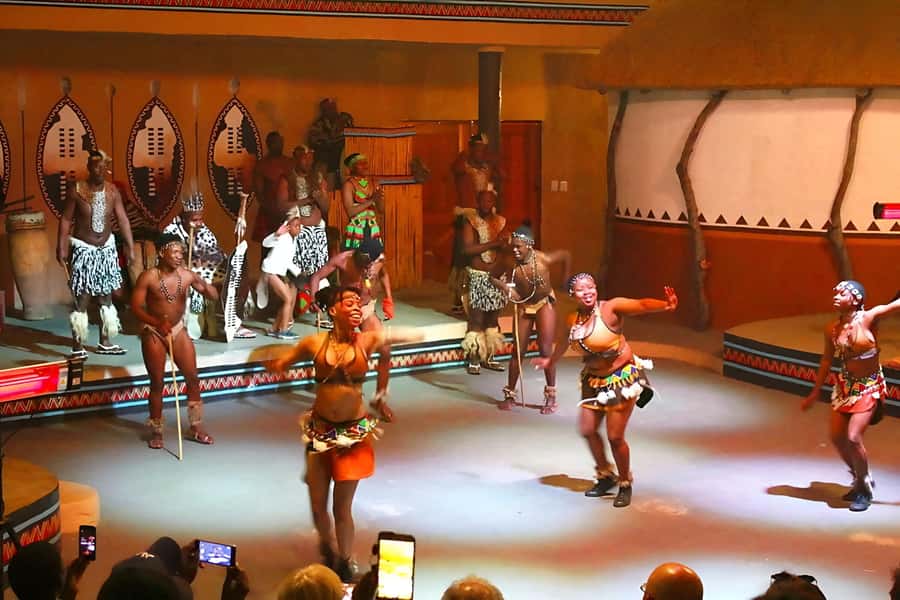
Culture comes alive through song here. Lesedi Cultural Village gives you a compact introduction to five South African cultural traditions, with Zulu, Xhosa, Pedi, Sotho, and Ndebele guides, traditional homesteads, music, dancing, and a meal included in the price. I especially like the warm musical welcome and the chance to compare five cultures in one outing. The final dance performance is another strong point, with singers and dancers bringing plenty of energy to the room.
The main caution is that this is a staged cultural attraction, not a visit to an ordinary rural village. The homes are replicas, and some scenes are performed for an audience. If you want a clear, accessible introduction with singing, dancing, and food, it works well. If you want a quiet, unplanned encounter with daily life, you may find parts of the experience too polished.
The tour lasts about five hours, including roughly 90 minutes of road time from Johannesburg or Pretoria. At $143 per person, the price is not low, but it includes transportation, admission, a guided cultural program, and food. That makes it easier to judge as a half-day package rather than just an entrance ticket.
In This Review
- What makes this five-hour cultural tour worth considering
- Starting with drums, singing, and a friendly welcome
- Five homesteads, five cultural perspectives
- Demonstrations that turn explanations into something visible
- Stories, rituals, and the limits of a short tour
- The final dance performance is the high point
- Lunch, local flavors, and what the price includes
- The 45-minute ride from Johannesburg or Pretoria
- Shopping and supporting local craftwork
- Who will enjoy Lesedi most?
- Booking, cancellation, and access details
- Should you book Lesedi Cultural Village?
- FAQ
- How long does the Lesedi Cultural Village tour last?
- Where can I be picked up?
- What cultures are represented at Lesedi Cultural Village?
- Is food included in the price?
- Is the meal lunch or dinner?
- Which languages are available?
- Is the tour wheelchair accessible?
- Can I cancel for a refund?
What makes this five-hour cultural tour worth considering
- Five traditions in one visit: You learn about Zulu, Xhosa, Pedi, Sotho, and Ndebele customs without arranging separate excursions.
- A musical beginning: The welcome usually includes singing, drumming, and dancing, so the tour starts with participation rather than a long lecture.
- Traditional homes with explanations: Replica homesteads help you see how architecture, materials, and household spaces differ between groups.
- A lively closing performance: The dancing is the most consistently praised part of the experience and can be both graceful and physically demanding.
- Food is included: The meal may include South African staples such as pap, chakalaka, and meat dishes, though the exact menu can vary.
- Pickup from two major cities: Hotel pickup and return are offered around Johannesburg and Pretoria, which saves you from arranging a separate taxi or rental car.
Starting with drums, singing, and a friendly welcome

The first moments set the mood. On arrival, you are typically greeted by traditional music and dancing, followed by an introduction and drumming session. This is not a silent museum visit. You are encouraged to watch, listen, and sometimes join in.
That opening is useful because it gives the outing a clear sense of place right away. It also helps families and first-time visitors settle into the format. You do not need previous knowledge of South African music or dance. The performance carries the welcome, while the guide explains what you are seeing.
The guides come from the cultural groups represented at the village. Their job is not only to describe customs, but also to connect the buildings and performances with family life, ceremonies, and belief. English, Portuguese, and French language support is available. One French-speaking guide has been especially helpful for visitors who need translation, and pauses are built into some explanations.
If Samuel is leading your departure or cultural tour, you may appreciate his habit of adding extra information and introducing people to new parts of the experience. Guides can shape the day, so it is worth listening closely during the first orientation and asking questions when something interests you.
More Food Tours in Johannesburg
- Johannesburg: Local Food Tasting Guided Walking Tour
★ 4.7 · 192 reviews - Soweto Food & Beer Bike Tour
★ 4.9 · 40 reviews - Johannesburg: Wine Tasting
★ 4.3 · 39 reviews
Five homesteads, five cultural perspectives
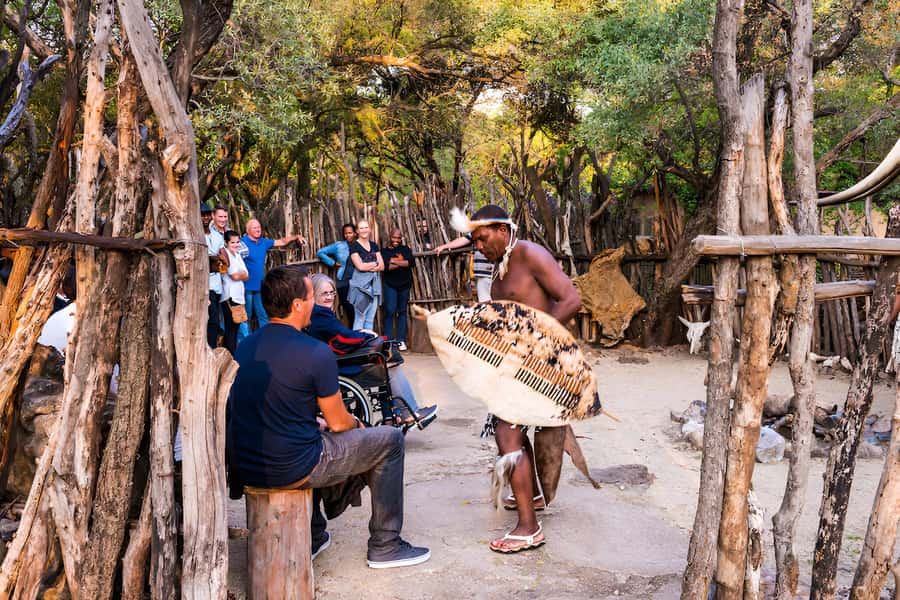
The central part of the visit takes you through representations of five ethnic groups: Zulu, Xhosa, Pedi, Sotho, and Ndebele. Each area uses traditional-style dwellings and household details to show how people lived and organized family life.
The value here is comparison. Seeing one homestead alone might leave you with a general idea of traditional South African housing. Seeing five in sequence lets you notice different building methods, decorative choices, and customs. The guides explain the meaning of structural elements and the materials used to make the homes.
The experience presents these groups as distinct, but it also gives you a reminder that South Africa has never been one single cultural story. Language, clothing, ceremony, craft, music, and family traditions vary from one group to another. The short format cannot cover everything, but it gives you useful starting points for understanding the country beyond its wildlife and cities.
You should also keep your expectations realistic. These are reconstructed dwellings, and the scenes around them are arranged for demonstration. That makes the route easy to follow, but it can also feel artificial. One particularly critical assessment found the visual displays too manufactured and felt the visit did not teach enough. That is a fair warning if you prefer museum-level detail or direct contact with living communities.
I would treat the homesteads as teaching sets. They are helpful visual aids, not untouched historical sites.
Demonstrations that turn explanations into something visible
The tour may include demonstrations of older household and craft activities, such as pottery-making, weaving, beer-brewing, and beadwork. You might also hear about traditional cooking methods and see how everyday skills connect with family and community life.
These sections are most useful when you take your time. Instead of viewing the objects as decorations, look for the practical purpose behind them. A pot is not just a souvenir shape. Beadwork can carry information about clothing and identity. Brewing, cooking, and weaving show how ordinary work can also carry social meaning.
Some activities may invite participation. You might be asked to try a basic dance step or handle a craft under local guidance. The interactive parts are simple, but they help break down the distance between the audience and the performers. You are not expected to become a dancer or artisan in five minutes. The point is to give you a small physical sense of the skill involved.
The guides also explain ceremonies and rituals, including weddings, initiation rites, and ancestral worship. These subjects need care, and the tour presents them through explanation, song, and dance rather than through private religious practice. The result is accessible, though necessarily brief.
Stories, rituals, and the limits of a short tour
Lesedi works best when the guide adds context to what you are looking at. Folklore, legends, and historical anecdotes can turn a row of huts into a story about people, family, work, and belief.
Still, five cultural traditions in 2.5 hours leaves little room for lengthy discussion. You will receive an introduction to each group, not a full study of its past or present. If your main interest is history, politics, or modern cultural change, you may want to pair this outing with a museum or city tour.
The presentation also places more weight on what you can see and hear than on extended conversation. That explains why some people leave delighted by the music and others wanting more substance. I would go in expecting a visual and performing-arts program with cultural background, not a university seminar.
The strongest approach is to ask focused questions. Ask about the differences between the five homesteads, the purpose of a craft, or the meaning of a dance. A good guide can make the short visit feel much more substantial.
More cultural village visits in Johannesburg:
- Lesedi Cultural Village and Cradle of Humankind Tour
★ 5.0 · 48 reviews - Lesedi Cultural Village Tour
★ 5.0 · 46 reviews - Lesedi Cultural Village
★ 5.0 · 45 reviews - Johannesburg: Lesedi Cultural Village Experience
★ 4.6 · 43 reviews
The final dance performance is the high point
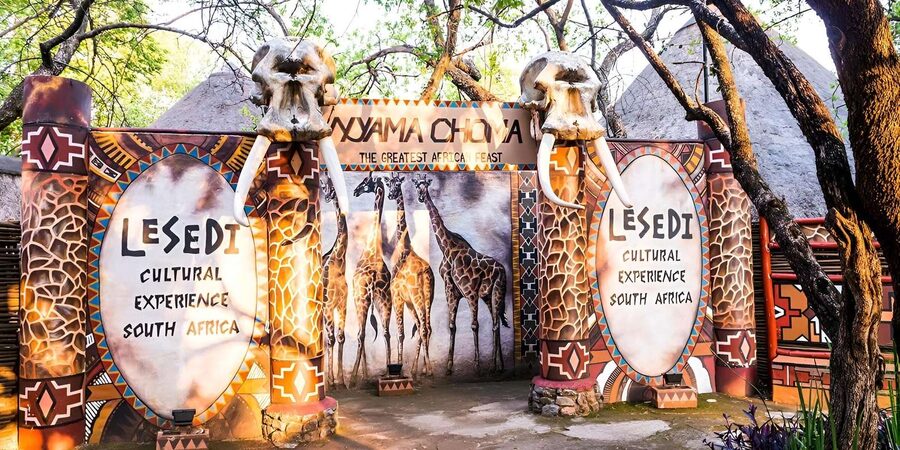
The closing performance brings the groups together in a fast-moving display of singing, drumming, and dance. This is where the tour’s energy peaks. The dancers are praised for their stamina, and the performance can be striking even if you have seen cultural shows elsewhere.
I like that the ending feels celebratory rather than simply informative. After walking through the homesteads and listening to explanations, you see the music and movement used as a shared expression. The show gives you a clearer sense of why performance matters in community life.
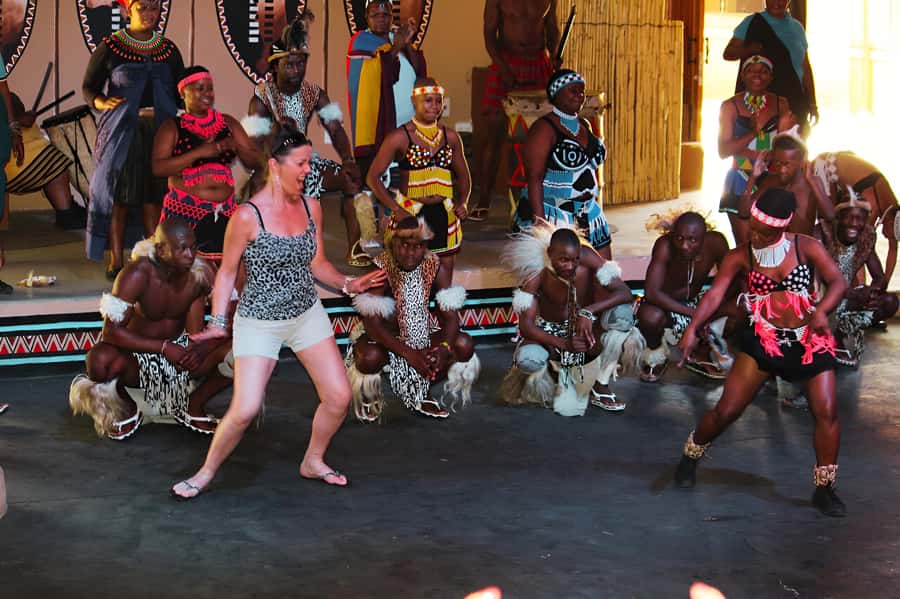
You may also be invited to join the dancing. Participation is optional, but trying a few steps can make the experience more memorable. Wear clothing that allows easy movement, especially if you expect to take part.
This is also the section to photograph, provided photography is permitted at the moment. Focus on the performance rather than holding your phone up for the entire show. You will get more from it if you watch the rhythm and coordination directly.
Lunch, local flavors, and what the price includes
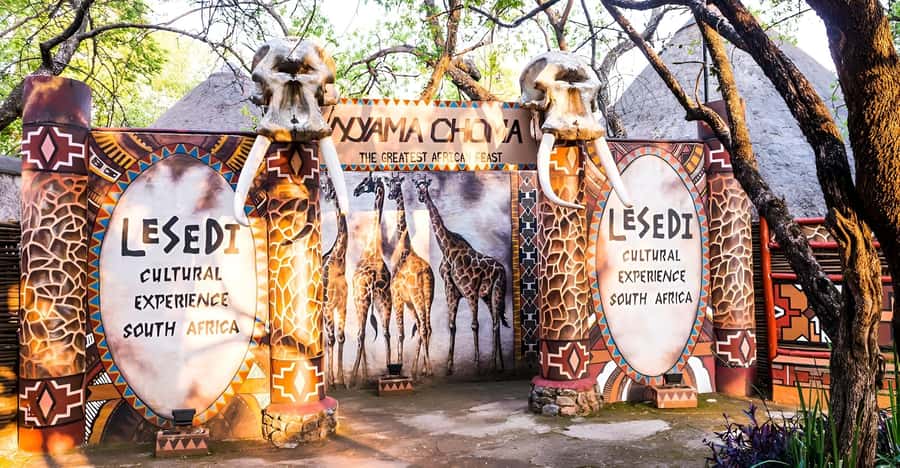
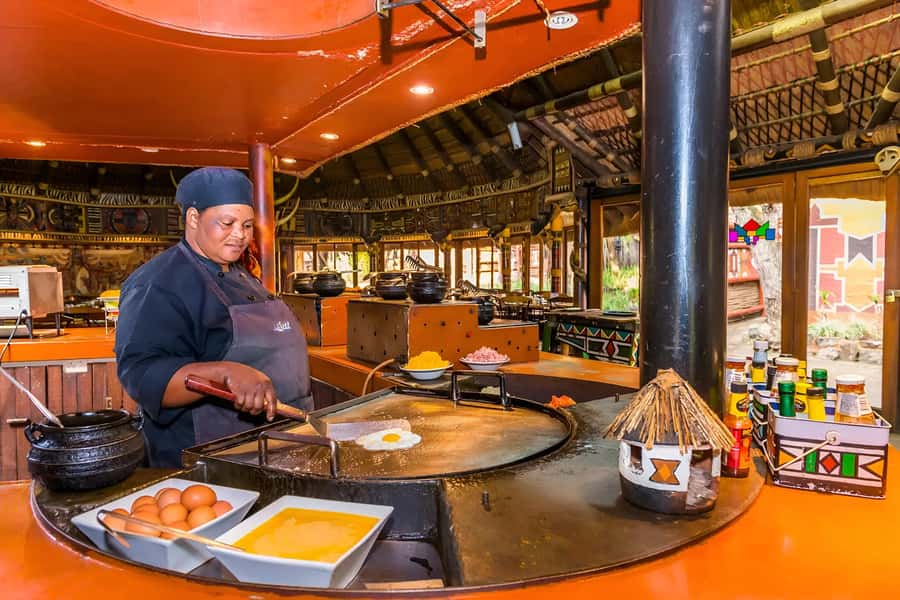
The scheduled plan allows about one hour for lunch after the cultural visit. Food is included, while drinks are not. Depending on the meal provided, you may encounter pap, a maize-based staple; chakalaka, a spicy vegetable relish; and meat prepared in a traditional style.
The meal matters because it extends the cultural lesson beyond buildings and performance. Food gives you another way to understand daily life, and it provides a proper break before the return drive. One of the strongest practical comments about the experience is simply that the meal is good.
Do not assume every dish will suit you. Chakalaka can be spicy, and the menu may not match familiar European or North American dining habits. If you have dietary needs, check with the provider before booking, since the supplied information does not specify vegetarian, vegan, allergy, or religious-diet arrangements.
The title of the experience allows for lunch or dinner, while the described schedule places lunch after the village visit. Starting times can change the meal slot, so check the available departure time when you book.
At $143, the meal alone does not justify the cost. The value comes from combining food with entry, transport, guides, performances, and a five-hour schedule. For someone staying in Johannesburg or Pretoria without a car, the package is more attractive because hotel pickup and drop-off are included around both cities.
The 45-minute ride from Johannesburg or Pretoria
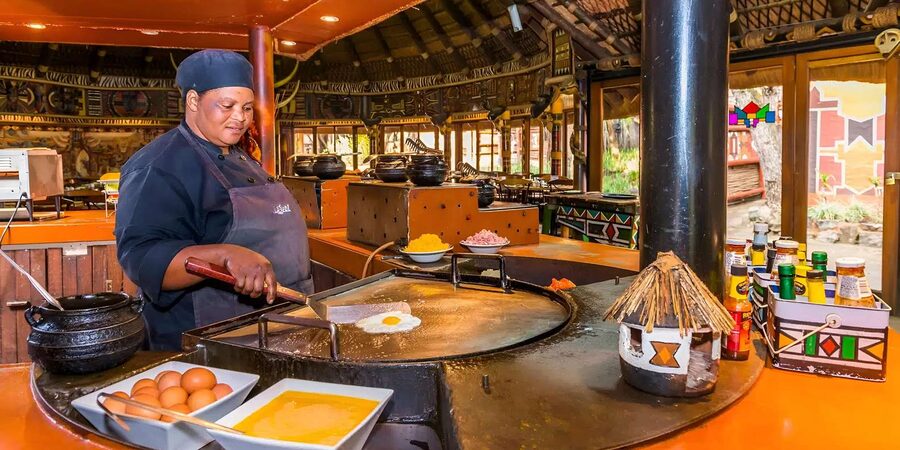
The road journey takes about 45 minutes each way by bus or coach. Pickup options are available in central Pretoria and Johannesburg, with hotel pickup and return offered around both areas at no extra cost.
That transport is a practical advantage. You do not need to work out a separate route to the village, and you can treat the outing as a half-day plan. It also means the tour is not limited to people staying near the attraction.
The tradeoff is time. Of the five-hour duration, about 90 minutes are spent on the road. Add pickup arrangements and the day can feel longer than the stated schedule. If you have only one day in the region, compare this with other outings before committing.
Coach travel also means less control over your timing. You will follow the group schedule rather than leave a section early or linger at a favorite homestead. That is normal for a packaged cultural visit, but independent-minded visitors should know what they are choosing.
Shopping and supporting local craftwork
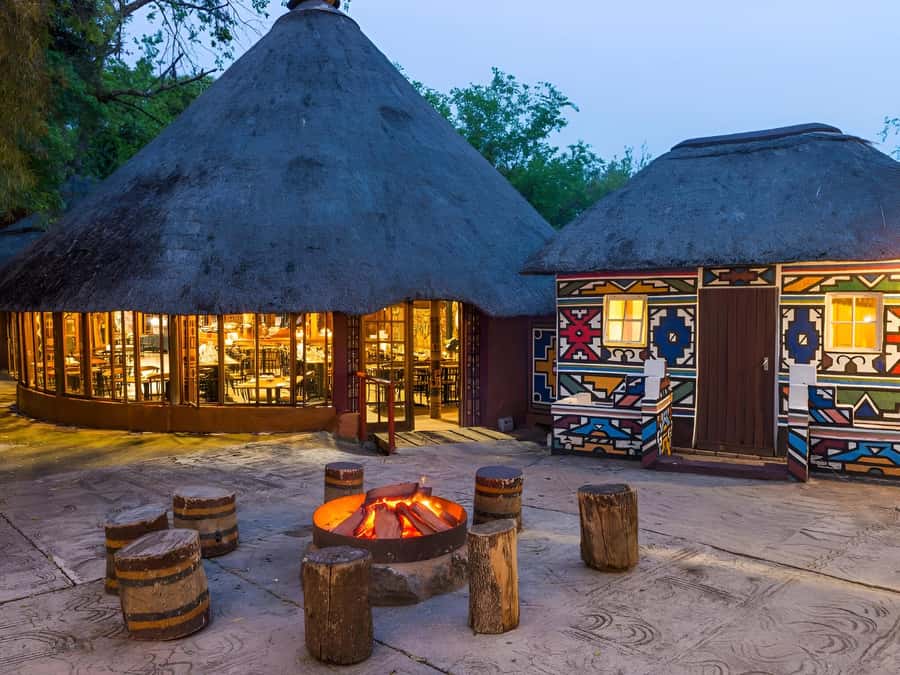
A marketplace is usually part of the village experience, with crafts, clothing, beadwork, and souvenirs made by local artisans. Purchases are not included, so bring money only if you want to shop.
The market can be a useful final stop because you have already seen some of the techniques and designs in context. You can make a more informed choice than you might at a generic souvenir stand. Look at the quality, ask what an item is made from, and buy something because you genuinely like it.
Personal purchases are the main extra expense listed for the tour. Drinks also cost extra. Plan for those two items rather than assuming the $143 covers everything you may want during the day.
Who will enjoy Lesedi most?
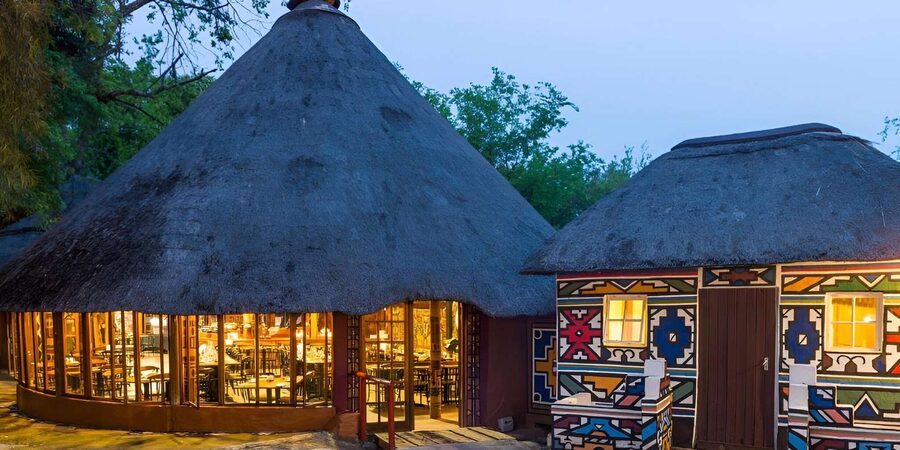
I would recommend this tour to you if you want a convenient first look at South Africa’s cultural variety. It suits families, first-time visitors, people who enjoy live music, and anyone who prefers a guided program to independent research.
It is also a good match if you want to hear several languages and see multiple traditions presented in one place. The English, Portuguese, and French options make the explanations more accessible, and French translation has been singled out as particularly useful.
You may want to skip it if you dislike staged performances, reconstructed buildings, or group schedules. The cultural program is designed for a broad audience, so it simplifies complex traditions. Visitors seeking an unplanned village encounter or detailed academic interpretation could find it too theatrical.
The strongest praise centers on three things: the friendly welcome, the dance show, and the helpful guides. The most useful names to remember are Samuel, who has been praised for adding information and personal attention, and the French-speaking guide who helps bridge language gaps. Neither is guaranteed for every departure, but language support is part of the offering.
Booking, cancellation, and access details
You can cancel up to 24 hours before departure for a full refund, and the reserve-now, pay-later option keeps your plans flexible. The activity is wheelchair accessible, though the supplied details do not explain the exact route or facilities, so you should confirm any specific mobility needs before booking.
The tour offers skip-the-ticket-line access and a live guide. Check the available starting times carefully, especially if you want lunch rather than dinner or need to fit the outing around another Johannesburg or Pretoria plan.
Should you book Lesedi Cultural Village?
Book it if you want music, dance, food, and a clear introduction to five South African cultures in one organized half-day. The included transport and meal improve the value, especially if you are staying in Johannesburg or Pretoria and do not have a car.
Skip it if authenticity, private interaction, and detailed cultural study matter more to you than performance. Lesedi is a polished presentation, and parts of it are visibly arranged for an audience. For the right reader, that is not a flaw. It is an easy, entertaining first chapter, as long as you do not mistake it for the whole story.
FAQ
How long does the Lesedi Cultural Village tour last?
The experience lasts about five hours, including the bus or coach journey and the time spent at the village.
Where can I be picked up?
Pickup options are available in central Pretoria and Johannesburg. Hotel pickup and drop-off are offered around Johannesburg and Pretoria at no extra cost.
What cultures are represented at Lesedi Cultural Village?
The tour presents Zulu, Xhosa, Pedi, Sotho, and Ndebele traditions.
Is food included in the price?
Yes. Food is included, with the schedule describing approximately one hour for lunch. Drinks and personal purchases are not included.
Is the meal lunch or dinner?
The experience may be offered with lunch or dinner. The described schedule places the meal after the village visit as lunch, so check the available starting time when booking.
Which languages are available?
Live guided tours are available in English, Portuguese, and French.
Is the tour wheelchair accessible?
Yes, the activity is listed as wheelchair accessible. For specific access requirements, contact the provider before booking because detailed route information is not provided.
Can I cancel for a refund?
Yes. You can cancel up to 24 hours in advance for a full refund.
More Dinners Out in Johannesburg
- 4-Day Kruger Park Safari & Panoramic Tour Combo including Breakfast and Dinner
★ 5.0 · 19 reviews - 3-Day Kruger National Park Safari including Breakfast and Dinner
★ 4.5 · 19 reviews - 5-Day Kruger Park Safari & Panoramic Tour Combo including Breakfast and Dinner
★ 5.0 · 12 reviews - 4-Day Kruger National Park Safari including Breakfast and Dinner
★ 5.0 · 12 reviews
More Lunch Experiences
- Soweto: Walking Tour with a Local Guide and Lunch
★ 4.9 · 648 reviews - Full-Day Soweto, Apartheid Museum and Lunch Tour
★ 5.0 · 410 reviews - Soweto: Guided Bicycle Tour with Lunch
★ 4.9 · 292 reviews - Soweto Walking Tour with Lunch
★ 5.0 · 288 reviews
Newest reviews from Johannesburg
- Cradle of Humankind and Maropeng Day Tour from Johannesburg★ 4.0 · 5 reviews
- Explore Soweto 8 Hour Tour with Lunch and Museum Visit★ 5.0 · 5 reviews
- 3 Day All Incl. Private Kruger Park Safari Incl. Transfer From Johannesburg★ 5.0 · 5 reviews
- Harties cableway Tour★ 4.5 · 5 reviews
- Pretoria Historical Tour★ 4.0 · 5 reviews
- Constitutional Hill and Soweto 5 hours tour.★ 5.0 · 5 reviews
- 5 Day Kruger National Park and Panorama Route Safari★ 4.5 · 5 reviews
- Luxury Car Johannesburg Airport Private Transfer★ 5.0 · 5 reviews
Food & Drink, compared.

Full-Day Winelands Tour with Wine Tastings & Food
Read our review →


Stellenbosch & Franschhoek 20 Wine Tasting + Lunch Shared Tour
Read our review →

Browse the lists this tour appears in