
Reviewed · SOWETO TOURS
Soweto: Guided Bicycle Tour with Lunch
Soweto is best understood at street level. This four-hour bicycle tour brings you close to Orlando West’s political landmarks, from Hector Pieterson Museum to Mandela House and Tutu House, while the route also reaches ordinary residential areas. I like the excellent local guiding, especially the clear, lively storytelling associated with guides such as Thabo, Teboho, and Themba. I also like the simple kota lunch, a tasty South African sandwich that turns a history tour into a social experience. The main consideration is physical: the route covers about 11 kilometers, with several uphill sections, and the standard bikes may not have gears.
You meet at Vilakazi Espresso and return there after a circuit through several parts of Soweto. The bicycles let you cover more ground than a walking tour, but you still stop often enough to look around and ask questions. At $52 per person, the price is fair if you want history, local context, food, a guide, and a bicycle in one half-day outing. Hotel transport is not included.
In This Review
- Key points to know before you ride
- Why a bicycle works so well in Soweto
- Starting at Vilakazi Espresso
- Mzimhlophe and the women’s hostel
- Mama Lilian Ngoyi and the road to Hector Pieterson
- Orlando East, Orlando Stadium, and the community center
- Vilakazi Street and the kota lunch
- Tutu House and Mandela House
- The guides are the tour’s strongest asset
- Is $52 good value?
- Who should book this ride?
- FAQ
- Where does the Soweto bicycle tour start and finish?
- How long is the tour?
- What language is the tour conducted in?
- Is lunch included?
- Does the tour include hotel pickup?
- Is the tour suitable for people who do not cycle?
- Should you book the Soweto bicycle tour?
Key points to know before you ride
- About 11 kilometers of cycling: Expect a real ride, not just a few photographs beside the main sights.
- Orlando West is the focus: The route includes Vilakazi Street, Mandela House, Tutu House, and Hector Pieterson Museum.
- The guide makes the difference: Thabo and Teboho are praised for humor, history, local knowledge, and calm group handling. Your assigned guide may vary.
- Lunch is a local kota: This South African sandwich is included and is one of the most enjoyable parts of the outing.
- You see more than the famous homes: Mzimhlophe, Orlando East, Orlando Stadium, and community areas add present-day context.
- Bring practical basics: Sunscreen, rain gear, and cash are advised. An informal settlement visit may include an optional gratuity of R20 to R50 or more.
Why a bicycle works so well in Soweto
A vehicle can show you Soweto’s major sights, but a bicycle gives the visit a different rhythm. You move through neighborhoods at a human pace, stop without much fuss, and get a stronger sense of how the well-known landmarks fit into the wider township.
The route is not limited to Vilakazi Street. You pass through areas with different levels of development and see more of Soweto’s urban pattern. Several riders appreciated that the tour showed both the popular visitor areas and less polished residential sections without turning people’s lives into a spectacle.
That point matters. A good township tour should provide context and respect, not simply take you somewhere poor for photographs. This route appears to handle that balance well through local guiding and historical explanation. The informal settlement visit, when included, is conducted with a local guide, and any gratuity is optional.
The cycling also keeps the four hours active. You are not sitting in a minibus listening to a running commentary. You ride, stop, listen, ask questions, and ride again. For many people, that makes the history easier to absorb.
More Cycling Tours in Johannesburg
- Guided Bicycle Tour of Soweto with Lunch
★ 5.0 · 180 reviews - Soweto: Bike Tour with a Local Tour Guide
★ 4.7 · 114 reviews - Soweto Food & Beer Bike Tour
★ 4.9 · 40 reviews
Starting at Vilakazi Espresso
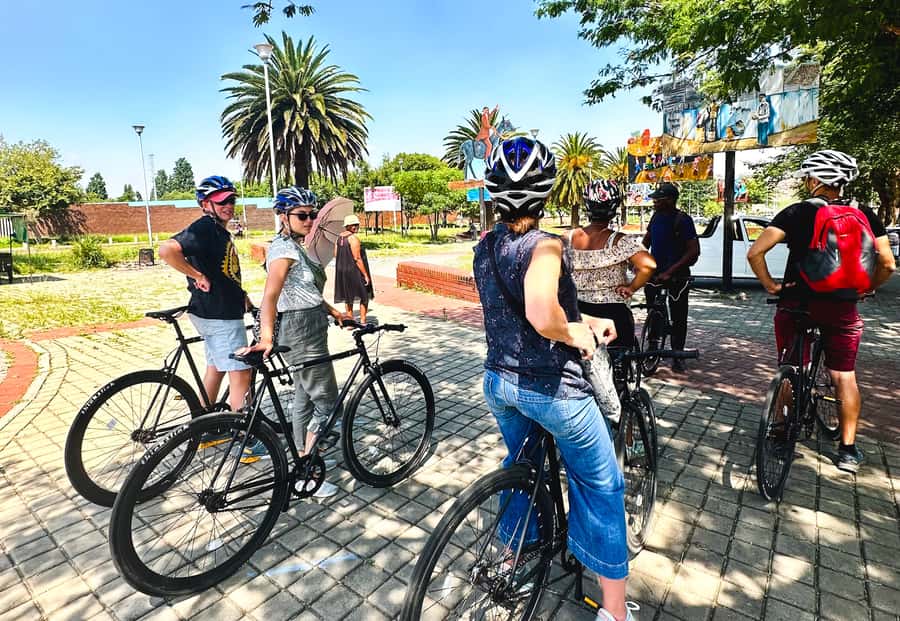
The meeting point is Vilakazi Espresso, on or near the famous Vilakazi Street area in Orlando West. This is a sensible place to begin because several major stops are close by, and it gives you an immediate introduction to one of Soweto’s best-known streets.
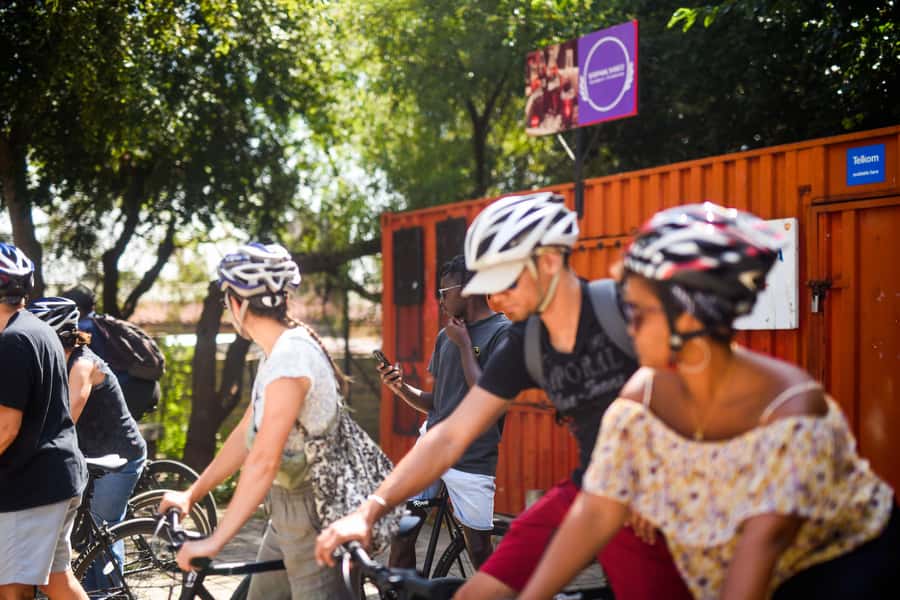
Your guide provides the bicycle and starts with basic instructions. The bikes have generally been praised as well maintained and comfortable. One past rider also noted that a flat tire was repaired very quickly, which is reassuring, although you should still expect a straightforward bicycle rather than a high-end cycling machine.
The opening briefing is useful for more than safety. It helps set the tone for the ride and places the area in context. Soweto was created in 1904, and the guide explains how its neighborhoods developed over time. The strongest part of the experience is the connection between the physical streets and the political events that took place there.
Group size can vary. Some departures have small groups, and on one occasion a solo participant received what was effectively a private ride with the guide. That can make the experience especially flexible, though you should not assume every departure will be private.
Mzimhlophe and the women’s hostel
One early section takes you toward Mzimhlophe, including a stop near Mzimhlophe Women’s Hostel. This broadens the tour beyond famous political names and gives you a look at the social structures that shaped township life.
The stop is brief, about 15 minutes in the supplied schedule, so do not expect a long indoor museum visit. Instead, you get an explanation of the neighborhood, a chance to take photographs, and a chance to ask about the area’s past and present.
This is one reason I prefer the bicycle route to a landmark-only itinerary. You are not simply collecting famous addresses. You are seeing how homes, community spaces, public facilities, and major historic sites sit together.
The route can include an informal settlement visit with a local guide. This may be an important part of understanding present-day Soweto, but approach it with care and courtesy. Do not treat residents as scenery, and ask before taking photographs. If you wish, you can offer a gratuity of R20 to R50 or more, but it is discretionary.
Mama Lilian Ngoyi and the road to Hector Pieterson
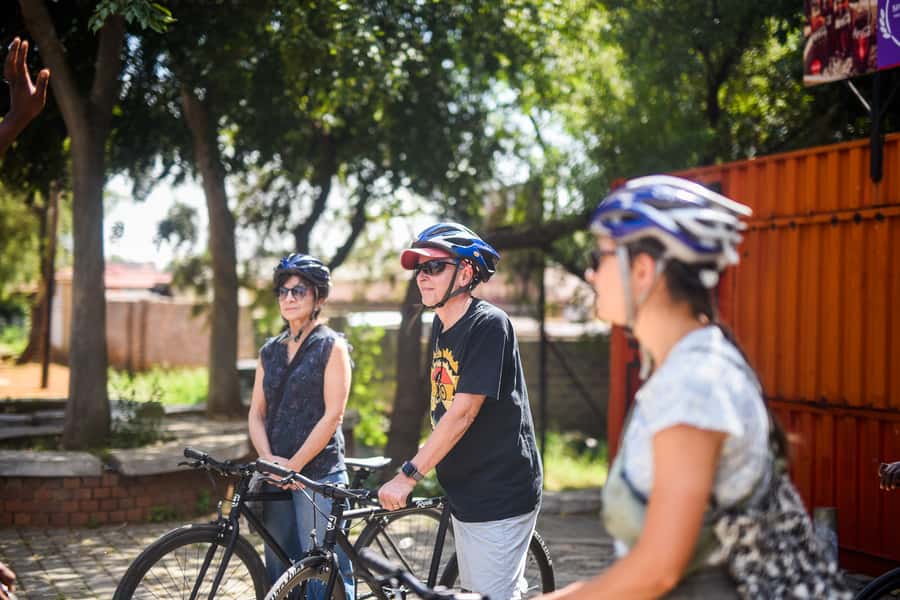
The tour also passes the home of Mama Lilian Ngoyi, an anti-apartheid activist. This stop adds another important voice to a story that can otherwise become too focused on Mandela and the Nobel Prize winners.
The guide’s role is central here. Thabo, Teboho, and Themba have each been praised for explaining history in plain language, answering extra questions, and connecting national events to local places. The best guides do not just recite dates. They explain why a house, street, hostel, or community center mattered.
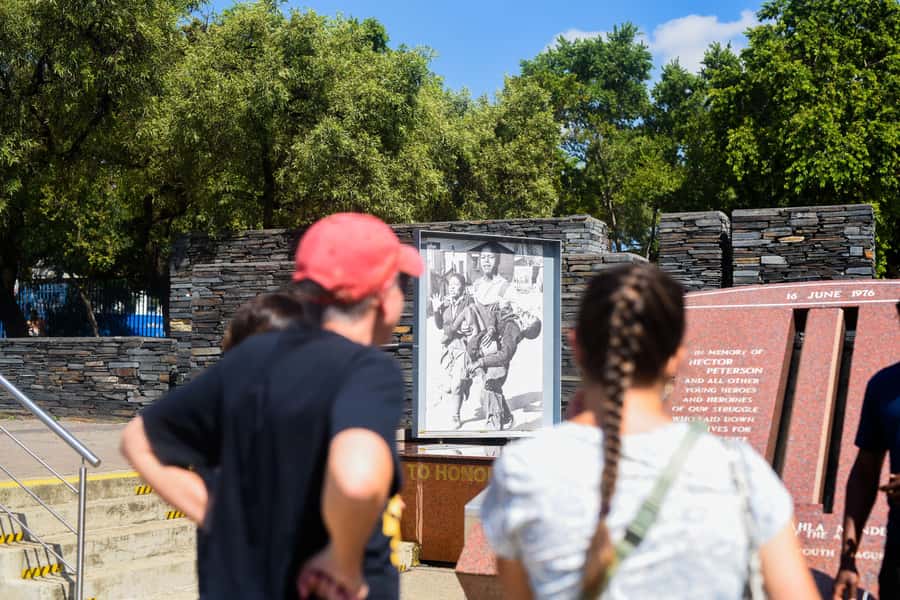
From there, the ride continues toward Hector Pieterson Museum. This is the emotional center of the tour, and the scheduled visit lasts around 20 minutes, including a guided visit, sightseeing, walking, and cycling time.
The museum and memorial area mark the Soweto uprising, one of the major turning points in the struggle against apartheid. Your guide helps place the event in its local setting, rather than leaving you with an isolated monument and a few captions.
Give this stop the attention it deserves. The cycling is lively, but the museum requires a slower mood. You may find the contrast useful: the ride gets you physically involved in the area, then the memorial asks you to pause and think.
More Soweto tours:
- Johannesburg: Hop-On Hop-Off Bus with Optional Soweto Tour
★ 4.6 · 985 reviews - Soweto /Johannesburg and Apartheid Museum Guided Full Day Tour
★ 5.0 · 932 reviews - Johannesburg Hop-On Hop-Off City Tour with Soweto Option
★ 4.5 · 768 reviews - Half-Day Tour of Soweto Tour
★ 4.5 · 712 reviews
Orlando East, Orlando Stadium, and the community center
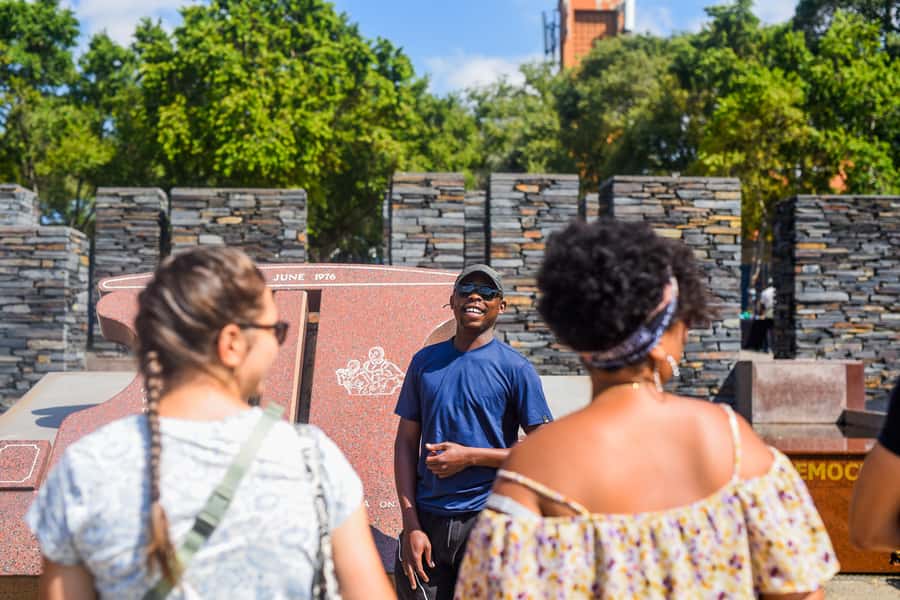
The route continues through Orlando East, with short stops at Orlando Stadium and Orlando Community Centre. These sections are not major museum visits, and the time at each is limited, but they help show how broad the township is.
Orlando Stadium is a recognizable public landmark, while the community center offers another way to think about daily life and shared facilities. The schedule allows roughly five minutes at the stadium and ten minutes at the community center, so these are quick orientation stops rather than lengthy tours.
You should not expect every stop to have the same emotional weight as Hector Pieterson Museum or Mandela House. That is part of the route’s strength. The day alternates between major historical places and ordinary parts of Soweto, giving you a less narrow picture.
The ride includes hills. Some people found it reasonably easy, including older members of multigenerational groups, while others specifically warned about uphill sections and wished for geared or electric bikes. Fitness levels vary, so I would judge this as manageable for a reasonably active cyclist, but not ideal if you rarely ride or dislike climbing.
Vilakazi Street and the kota lunch
Vilakazi Street is the most famous stretch of the route. It is associated with both Nelson Mandela and Archbishop Desmond Tutu, making it unusual even before you visit the individual houses.
The lunch stop lasts about 25 minutes and includes a local sandwich called a kota. A kota is hearty, informal food, and it fits the setting better than a generic restaurant meal would. The food and drinks are included, which improves the value of the tour and gives you a chance to sit down after the hills.
Several riders singled out the kota as a highlight. I can see why. Food adds a useful social layer to a cultural tour, especially when it gives you a taste of something closely linked to everyday South African life rather than a polished tourist menu.
The lunch setting is described as a local restaurant or outdoor eatery. Do not expect a long, leisurely meal. This is a short break in an active itinerary, but it is enough to rest your legs, eat, and talk with the guide.
Tutu House and Mandela House
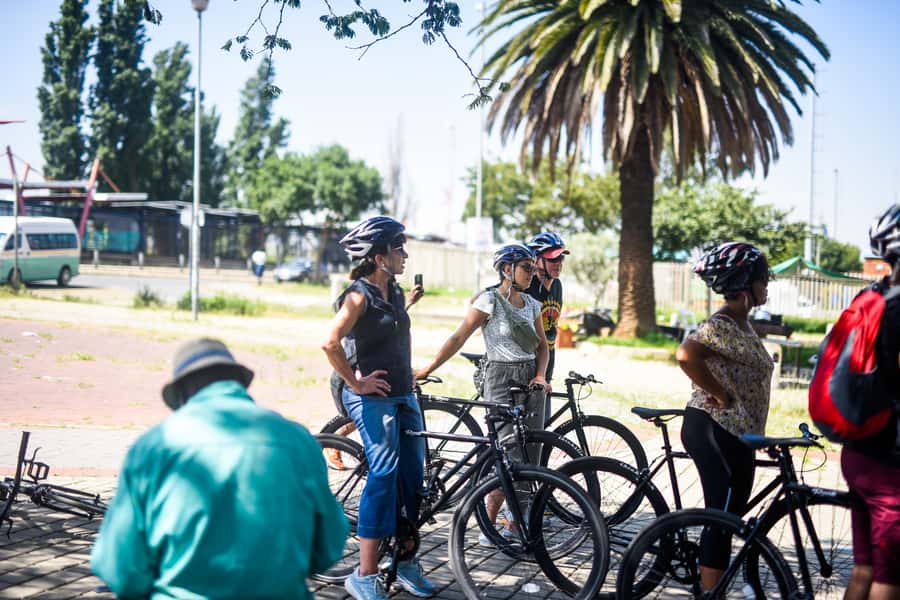
Tutu House is on Vilakazi Street and is seen from the outside or visited briefly, with about five minutes allowed in the schedule. The guide explains Archbishop Desmond Tutu’s contribution to the end of apartheid and the role his family home played in the street’s political importance.
Mandela House receives a longer stop, around 15 minutes, and is one of the main reasons people book this tour. Nelson Mandela lived there from 1946 to 1962, before his long imprisonment and later presidency. Seeing the house in its neighborhood setting makes the story feel less abstract.
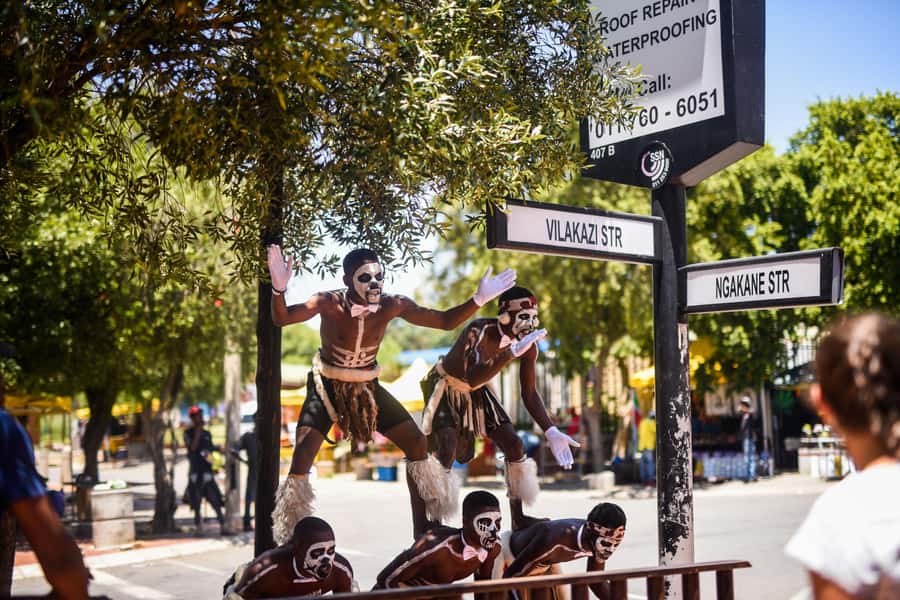
The stop may also include a traditional dance show. The details can vary, but it adds a cultural note after the more serious political sites.
One memorable feature along the route is the group of olive trees planted by Mandela, Tutu, and Bill Clinton in memory of Hector Pieterson. Details like this give the ride small moments of discovery between the major attractions.
Because the stop at Mandela House is relatively short, you should not expect an extended museum visit. If you want to study every exhibit at length, a dedicated visit may suit you better. Here, the goal is to connect the house with the street, the movement, and the wider community.
The guides are the tour’s strongest asset
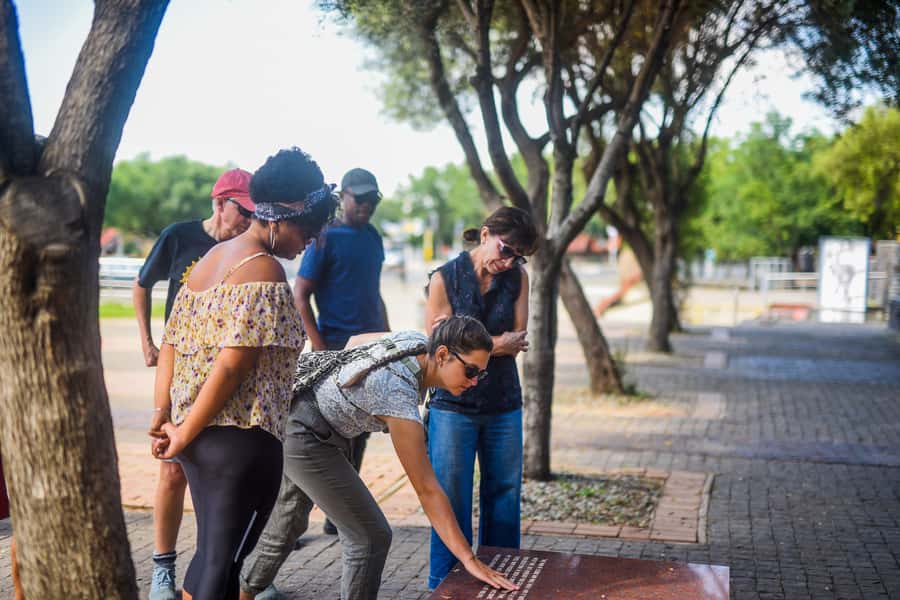
The most consistently praised part of this experience is the guiding. Thabo, also referred to as Teboho in some bookings, is described as funny, articulate, friendly, and deeply familiar with Soweto. Themba receives similar praise for his history, humor, safety awareness, and ability to answer questions.
Names can differ because the company uses more than one guide, so do not book solely on the expectation of one specific person. Still, the repeated pattern is clear: the quality of the day depends heavily on having a local guide who can explain both apartheid-era history and contemporary Soweto.
The guide also controls the pace. One group with a wide age range, including people in their sixties and seventies, managed the ride comfortably. Another participant warned that uphill cycling with no gears requires practice. A good guide can help with stops and group spacing, but cannot remove the hills.
The safety comments are encouraging. Small groups, including an all-women group, felt well looked after. You will still be cycling on public streets, so follow the guide’s instructions and keep your attention on the road.
Is $52 good value?
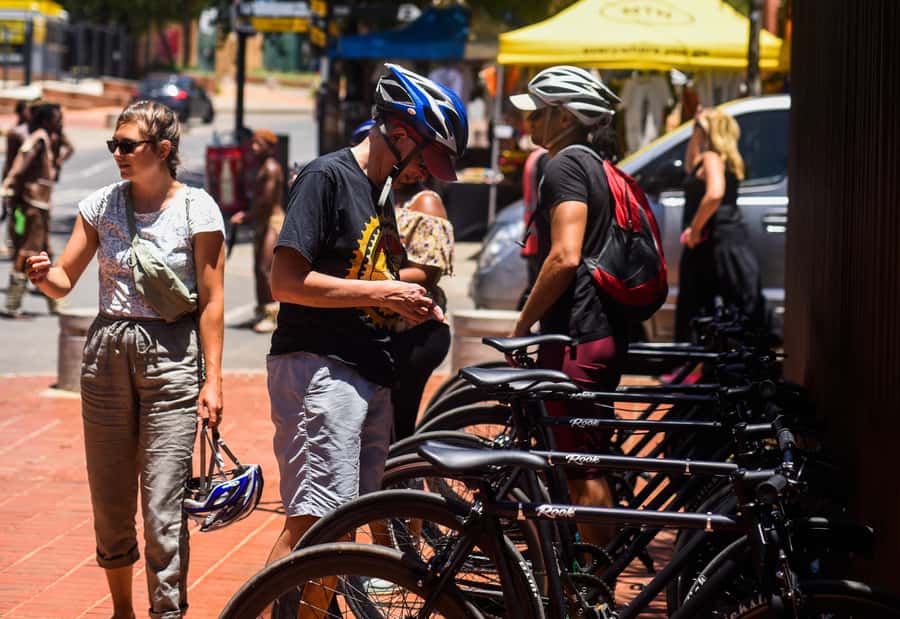
At $52 per person, this is not the cheapest way to see Soweto, but it bundles several useful elements: a bicycle, an English-speaking local guide, food and drinks, and four hours of structured touring.
The price looks strongest if you value local explanation. A bicycle alone would not tell you why Mzimhlophe matters, what happened around Hector Pieterson, or how Mandela and Tutu’s homes relate to the neighborhood. The guide turns movement through Soweto into a connected story.
It also offers more coverage than a short walk around Vilakazi Street. You reach Orlando East, Orlando Stadium, the community center, Mzimhlophe, the women’s hostel, and several political landmarks.
Hotel pickup and drop-off are not included. You need to make your own way to Vilakazi Espresso, so add that transport cost and time when comparing options. The free cancellation option up to 24 hours ahead and reserve-now, pay-later flexibility are useful if your Johannesburg plans may shift.
Who should book this ride?
I would choose this tour if you enjoy active sightseeing, want local history explained in person, and have at least a reasonable level of cycling fitness. It suits couples, small groups, solo visitors, and families with older children who can ride confidently.
It is also a strong choice if you want a respectful look at more than the headline sights. The route gives you historical landmarks, residential neighborhoods, public spaces, and local food in one outing.
I would think twice if you cannot ride a bicycle, are pregnant, use a wheelchair, or are uncomfortable with hills. The tour is not suitable for wheelchair users, and there are no e-bikes listed. Bring sunscreen, rain gear, and cash. Water is not listed as an inclusion, so carrying your own bottle is sensible.
FAQ
Where does the Soweto bicycle tour start and finish?
The tour starts and finishes at Vilakazi Espresso in Soweto.
How long is the tour?
The experience lasts four hours. Starting times depend on availability.
What language is the tour conducted in?
The live guided tour is conducted in English.
Is lunch included?
Yes. Food and drinks are included, with lunch featuring a South African sandwich called a kota.
Does the tour include hotel pickup?
No. Hotel pickup and drop-off are not included, so you must arrange transport to Vilakazi Espresso.
Is the tour suitable for people who do not cycle?
No. The tour is not suitable for people who cannot ride a bicycle. It is also not suitable for pregnant women or wheelchair users.
Should you book the Soweto bicycle tour?
Book it if you want to connect Soweto’s major apartheid sites with the streets and communities around them. The bicycle covers plenty of ground, the kota lunch adds real local flavor, and the guides bring warmth, humor, and useful context to serious subjects.
Just prepare for hills and a fairly active half-day. If you can handle about 11 kilometers on a standard bicycle, this is a well-priced way to see more of Soweto than Vilakazi Street alone. For an active visitor who wants history with a human voice, One Day Africa’s tour is a strong choice.
More Lunch Experiences
- Soweto: Walking Tour with a Local Guide and Lunch
★ 4.9 · 648 reviews - Full-Day Soweto, Apartheid Museum and Lunch Tour
★ 5.0 · 410 reviews - Soweto Walking Tour with Lunch
★ 5.0 · 288 reviews - Johannesburg and Soweto Apartheid Full Day Tour w/Lunch
★ 4.9 · 219 reviews
Newest reviews from Johannesburg
- Cradle of Humankind and Maropeng Day Tour from Johannesburg★ 4.0 · 5 reviews
- Explore Soweto 8 Hour Tour with Lunch and Museum Visit★ 5.0 · 5 reviews
- 3 Day All Incl. Private Kruger Park Safari Incl. Transfer From Johannesburg★ 5.0 · 5 reviews
- Harties cableway Tour★ 4.5 · 5 reviews
- Pretoria Historical Tour★ 4.0 · 5 reviews
- Constitutional Hill and Soweto 5 hours tour.★ 5.0 · 5 reviews
- 5 Day Kruger National Park and Panorama Route Safari★ 4.5 · 5 reviews
- Luxury Car Johannesburg Airport Private Transfer★ 5.0 · 5 reviews
Soweto Tours, compared.
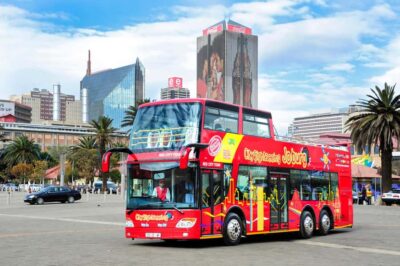

Soweto /Johannesburg and Apartheid Museum Guided Full Day Tour
Read our review →
Johannesburg Hop-On Hop-Off City Tour with Soweto Option
Read our review →

Soweto: Walking Tour with a Local Guide and Lunch
Read our review →
Jo’berg in 1 Day: Soweto, Apartheid Museum & City Tour
Read our review →
Full-Day Tour with Soweto and Apartheid Museum
Read our review →
Browse the lists this tour appears in