
Reviewed · WALKING TOURS
Johannesburg’s Downtown Walking Tour with lunch
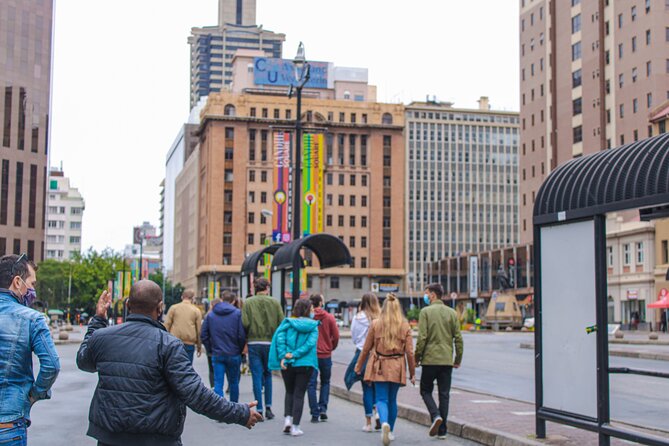
Johannesburg makes more sense on foot. This experience goes beyond postcard sights, using Braamfontein, Newtown, and Gandhi Square to explain how the city changed, why parts of it declined, and what is happening now. I like its focus on real urban life rather than a quick drive past landmarks, and I like that lunch, water, transport, and a guide are included. The main consideration is that some streets may feel uncomfortable, especially if you are used to staying in Sandton or other polished northern districts.
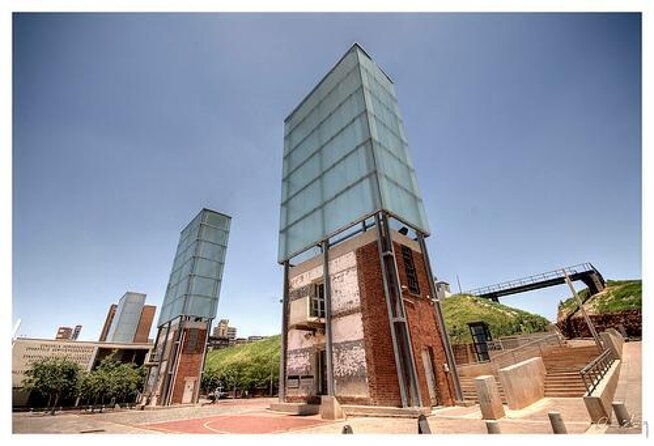
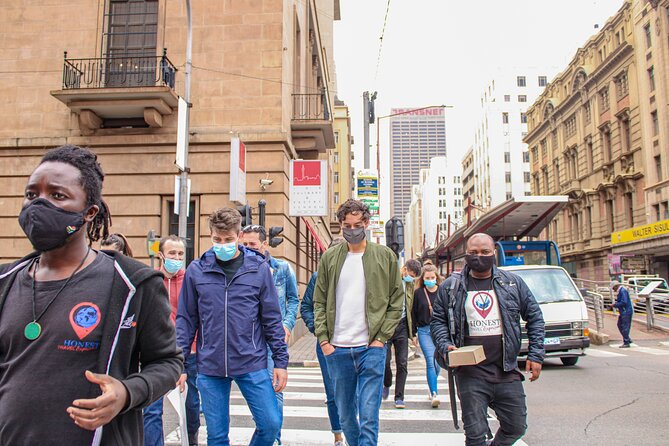
I also like the way the guides connect buildings, bridges, public art, music, politics, and daily life. Guides such as Sean, Nkosi, Tigh, Romeo, B.K., Frank, and Angela have been praised for making the city easier to understand and helping visitors feel secure. Still, this is not a tidy sightseeing circuit. It is a direct look at a complicated city, so come ready to listen, walk, and keep an open mind.
In This Review
- Five things to know before you book
- Why this tour matters in Johannesburg
- Starting in Braamfontein
- Constitution Hill and the weight of South African history
- African art and the city’s creative voice
- Bridges, rail lines, and the shape of the city
- Newtown and Johannesburg’s cultural center
- Gandhi Square and the central business district
- Walking pace, safety, and what the day feels like
- Lunch, transport, and the $77.92 price
- Who should choose this experience?
- Practical tips for a better day
- Should you book the Johannesburg downtown walk?
- FAQ
- Where does the tour take place?
- Is the tour located in Pretoria?
- How long does the experience last?
- Is pickup available?
- What is included in the price?
- Are alcoholic drinks included?
- How many people can join the tour?
- Can service animals join the tour?
- What is the cancellation policy?
Five things to know before you book
- Johannesburg is explained, not just displayed: The tour looks at the causes behind the city’s social and economic changes, rather than simply pointing out famous places.
- Braamfontein sets the political and cultural tone: Constitution Hill, African art, and major bridges help connect the city’s past with its present.
- Newtown is the cultural heart of the route: The area’s theaters, public spaces, and renewal projects show how Johannesburg is trying to reshape its center.
- Safety comes through local guidance: Several guides are praised for helping visitors feel comfortable in areas that can seem uneasy when seen alone.
- Lunch adds practical value: At $77.92 per person, the included meal, bottled water, air-conditioned vehicle, and guide make this more than a basic walking tour.
Why this tour matters in Johannesburg
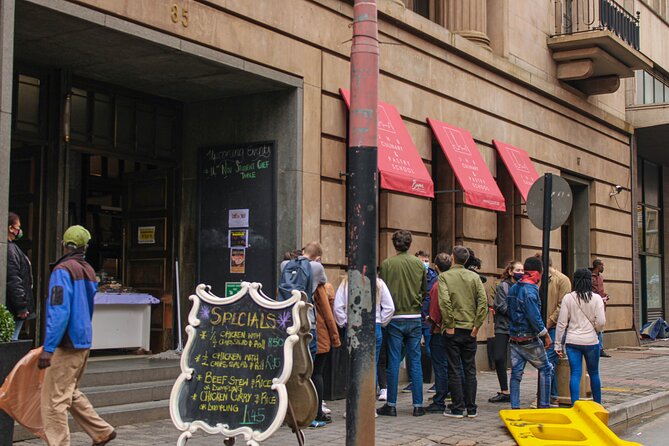
Johannesburg is often reduced to a warning about crime. That view misses the bigger question: how did a major city center reach its present condition? This experience tries to answer that question through streets and neighborhoods instead of a classroom lecture.
The tour company presents its work as an honest look at South Africa’s past, present, and future. That means you are likely to hear about apartheid, migration, business moving north, informal trade, culture, regeneration, and the daily pressures faced by people in the inner city.
I value that approach. A short city tour cannot explain every part of Johannesburg, but it can give you a useful framework. After a few hours, places that might otherwise seem disconnected begin to fit together.
The rating is 4.7 out of 5, with 94 percent recommending the experience. The sample size is modest, with 17 ratings listed, so I would treat those figures as encouraging rather than final proof. The repeated praise is more useful: guides are often described as friendly, lively, well informed, and good at answering questions.
More Walking Tours in Pretoria
- Pretoria: Cullinan Surface Diamond Mine Walking Tour
★ 4.5 · 58 reviews - Soweto walking tour with a taxi ride
★ 4.5 · 42 reviews - Elephant Walk Guided Half Day Tour from Johannesburg
★ 5.0 · 26 reviews
Starting in Braamfontein
Braamfontein lies just north of Johannesburg’s central business district. It became part of Johannesburg in 1886 and began as a farm before developing into part of the city’s business and institutional center.
The area later lost many businesses and institutions as activity shifted toward Sandton and the northern suburbs. Yet Braamfontein did not simply disappear. It became home to a less formal economy and found a new role in the city’s changing center.
That makes it a strong opening stop. You are not looking at a preserved old quarter with a single clear story. You are seeing a district shaped by movement, decline, adaptation, and renewal.
The Braamfontein portion lasts about an hour. Expect your guide to explain how the district changed over time and how its buildings and streets reflect those changes. The value here is the context. You begin to understand that Johannesburg’s central districts did not become less important overnight. People, businesses, and institutions moved, and the effects spread through the city.
Constitution Hill and the weight of South African history
Constitution Hill is at 11 Kotze Street in Braamfontein, near the western end of Hillbrow. It is home to South Africa’s Constitutional Court, making it one of the most important political and legal sites on the route.
The precinct links the country’s painful past with its democratic present. The tour description does not promise a full museum visit or a lengthy court program, so you should not book this experience expecting hours inside every exhibit. Instead, Constitution Hill functions as a key point for understanding the country’s political story.
I like that it appears early in the walk. It gives the rest of the route a frame. When your guide later discusses migration, inequality, policing, public space, or urban renewal, you have already encountered a place tied to the country’s legal and constitutional identity.
The experience is strongest when you ask questions. Several guides have been praised for answering everything from serious historical issues to small details about the streets. Sean, in particular, is repeatedly singled out for his ability to explain South Africa’s diverse cultures and political past in a clear, approachable way.
African art and the city’s creative voice
One stop is an African art museum with thousands of works ranging from historic to contemporary. The supplied details do not name the museum, so confirm the exact site and opening arrangements when you book.
This stop matters because the tour does not treat art as decoration. The guides connect African art to local identity and to the role of creativity in Johannesburg’s center. That broadens the visit beyond political monuments and social problems.
You might find this especially useful if you want to see how the city presents African stories through visual work. The collection’s range, from older pieces to contemporary art, suggests that the focus is not limited to one period or style.
Allow some flexibility here. Museum access can depend on timing, and the overall experience is listed as approximately three to five hours. The exact pace may change with the group, traffic, opening times, and the amount of discussion at each stop.
A completely different kind of day out on the same trip:
- Soweto Half Day Tour
★ 5.0 · 231 reviews - Johannesburg and Soweto tour
★ 5.0 · 231 reviews - Ultimate Johannesburg Tour
★ 5.0 · 200 reviews - Johannesburg: Pretoria and Cullinan Diamond Mine Tour
★ 4.7 · 165 reviews
Bridges, rail lines, and the shape of the city
The route includes a bridge that crosses railway lines and sidings west of Johannesburg Park Station. It is the fourth of five bridges in that area and was completed in 2003 at a cost of R38 million.
This may sound like a minor stop, but it helps you read Johannesburg as a working city. Rail lines, bridges, stations, highways, and business districts all affect how people move and where investment goes. A guide who can explain those links turns an ordinary crossing into a useful piece of urban history.
The bridge also connects neatly with the tour’s larger question: what happened to Johannesburg? The city is not only a collection of famous buildings. Its changes can be seen in transport routes, property patterns, and the way districts connect or become cut off.
For visitors staying in Sandton, this is one reason the walking tour can feel different from the rest of a Johannesburg visit. You are seeing the central city at street level rather than observing it from a hotel, shopping center, or vehicle window.
Newtown and Johannesburg’s cultural center
Newtown forms the second major part of the route. It sits in Johannesburg’s inner city, bounded by railway lines to the north, the M2 highway to the south, West Street to the east, and Quinn Street to the west.
The Nelson Mandela Bridge links Braamfontein and Newtown. It can carry about 3,000 cars an hour and acts as a major northern gateway into the city. The bridge is both practical infrastructure and a strong visual marker of how the districts connect.
Newtown is known for cultural facilities and for its role in the city’s efforts to renew the inner city. The Market Theatre is an important part of that story. It played a major role in South African theater during apartheid, giving the arts a place to challenge official narratives and bring different communities together.
This is one of the most appealing sections for people who want more than political history. Newtown brings together theater, art, street scenes, public space, and urban change. Guides also point out intricate street art, which adds a visible layer to the city’s identity.
Romeo has been praised for telling Newtown’s story in a lively and interesting way. Sean is also frequently mentioned for showing visitors the area, explaining its cultural importance, and answering questions without making anyone feel foolish for asking them.
The drawback is that Newtown can feel uneven. Renewal does not mean every block looks polished or comfortable. You may see signs of neglect alongside creative projects and active cultural spaces. That contrast is part of the lesson, but it may surprise you.
Gandhi Square and the central business district
Gandhi Square is a plaza in Johannesburg’s central business district, named after Mahatma Gandhi. It provides a different kind of stop from Constitution Hill and Newtown.
Here, the focus is likely to shift toward public space, urban identity, and the layers of people and events that shaped the city center. The square is included for about an hour, making it one of the main sections rather than a quick photo stop.
I would use this part of the tour to ask how the central business district functions today. The wider route is designed to explain both the past and the present, and Gandhi Square is a natural place to discuss the city’s current condition.
The guides’ strength is especially useful here. One guide was praised for being able to explain what almost every street, square, and park had been like in earlier years, along with the reasons for positive and negative changes. That kind of street-by-street explanation is hard to get from a guidebook.
Walking pace, safety, and what the day feels like
The experience lasts about three to five hours, so plan for a substantial half-day. It combines walking with an air-conditioned vehicle, and pickup is offered. The exact balance between walking and driving is not fully detailed, so confirm the meeting and pickup plan before you set out.
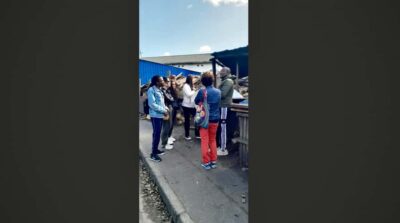
Safety is treated as a central part of the experience. That does not mean the tour pretends every street is risk-free. Instead, the guide helps you move through the city with local awareness and explains why some areas feel different from more protected visitor districts.
Several accounts describe walking through places that felt uncomfortable at first, while also saying the guide created a sense of security. That is an important distinction. You should still follow your guide’s instructions, keep valuables discreet, and avoid wandering away from the group.
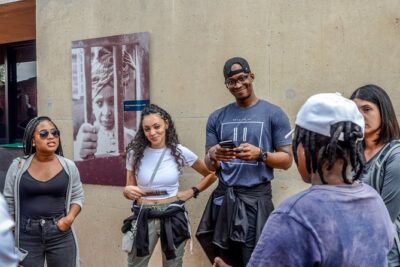
The maximum group size is 30 people. That is not an intimate private walk, though the group may be smaller on a given date. One positive sign is that Sean reportedly continued with a tour even when only one person was booked, but you should not assume every departure will operate in exactly the same way.
The guides appear to be the heart of the experience. Names connected with strong feedback include Sean, Nkosi, Tigh, Romeo, B.K., Frank, and Angela. The assigned guide may vary, so do not book solely for one person unless the company confirms who will lead your departure.
Lunch, transport, and the $77.92 price
At $77.92 per person, this is not the cheapest way to walk around Johannesburg. The value depends on how much you want from the day.
You receive a guide, an air-conditioned vehicle, bottled water, and lunch. Alcoholic drinks are not included. Pickup is offered, which can make the experience easier if you are staying outside the central route, though the listing details do not fully explain the pickup area or whether return transport is guaranteed.
For me, the price is reasonable if you want interpretation rather than simple transport between sights. A free city walk might show you streets and buildings, but it will not necessarily explain the forces behind Johannesburg’s changes or provide lunch and vehicle support.
The meal is also useful because the tour can run up to five hours. You will want to know what kind of lunch is provided and where it takes place, since the available information does not specify the menu or restaurant. Ask before booking if you have dietary requirements.
The tour is booked an average of 22 days ahead, which suggests you should not wait until the last minute if your schedule is fixed. Confirmation is provided at booking. Free cancellation is available up to 24 hours before the local start time. Poor weather can lead to a new date or a full refund.
Who should choose this experience?
I would recommend it to first-time visitors who want to understand Johannesburg instead of simply checking off attractions. It suits people who enjoy asking questions, hearing local explanations, and seeing both the city’s creative energy and its problems.
It is also a good fit if you are staying in Sandton and want a more direct look at the central city. The route can help you compare the polished northern suburbs with Braamfontein, Newtown, and the CBD without pretending those areas are interchangeable.
Families can enjoy it too. Frank and a tour partner were praised for keeping children engaged during a two-hour-plus walk, though younger children may find the full three-to-five-hour schedule tiring.
I would be more cautious if you want a gentle sightseeing walk with little discussion of difficult subjects. This is not a polished highlights tour. It deals with apartheid, urban decline, social inequality, safety, migration, and contested public spaces.
Practical tips for a better day
Wear comfortable shoes and expect to spend meaningful time on foot. The route covers several districts, and the experience is designed around seeing the city at street level.
Keep your schedule flexible. The advertised duration is approximate, and conversations, museum access, group size, traffic, and weather can affect the timing.
Ask about pickup details, the lunch menu, and the precise museum stop before departure. Those points are not fully specified, and clear information will help you plan the rest of your day.
Stay with the guide. The tour is designed to help you understand and navigate the city, but it is not a license to explore unfamiliar streets alone during the excursion.
Should you book the Johannesburg downtown walk?
Book this tour if you want context, local interpretation, and a candid look at central Johannesburg. The strongest part is the guiding. Sean, Nkosi, Tigh, Romeo, B.K., Frank, and Angela are praised for making the city understandable, friendly, and less intimidating.
The experience is worth the price for visitors who want lunch, transport support, and a substantial explanation of Johannesburg’s past and present. I would skip it only if you prefer a short, polished sightseeing circuit or feel uneasy about walking through an uneven inner-city environment.
For most curious first-time visitors, this is a useful introduction. It will not answer every question about Johannesburg, but it can replace a vague fear of the city with a clearer understanding of how it came to be this way.
FAQ
Where does the tour take place?
The experience is based in Johannesburg and visits Braamfontein, Newtown, and Gandhi Square in the central city.
Is the tour located in Pretoria?
The booking information lists Pretoria as the location, while the route and description focus on Johannesburg. Confirm the exact pickup point and operating area before booking.
How long does the experience last?
The tour lasts approximately three to five hours.
Is pickup available?
Yes. Pickup is offered, but the available information does not specify the exact pickup zones.
What is included in the price?
The price includes a guide, an air-conditioned vehicle, lunch, and bottled water.
Are alcoholic drinks included?
No. Alcoholic beverages are not included.
How many people can join the tour?
The maximum group size is 30 people.
Can service animals join the tour?
Yes. Service animals are allowed.
What is the cancellation policy?
You can cancel at least 24 hours before the local start time for a full refund. Cancellations or changes made within 24 hours are not refunded or accepted. If poor weather causes the tour to be canceled, you will be offered another date or a full refund.
More Lunch Experiences
- Apartheid History of South Africa (Full day Experience with lunch
★ 4.5 · 24 reviews - Johannesburg and Soweto Private Guided Tour with Shebeen Lunch.
★ 5.0 · 5 reviews - From Cape Town: Big Five Game Reserve with Lunch
★ 4.6 · 2,409 reviews - Wine Tour to Stellenbosch & Franschhoek with Tastings & Lunch
★ 5.0 · 828 reviews
Newest reviews from Pretoria
- Half-Day Lion and Safari Park Tour★ 5.0 · 5 reviews
- 2 Day Pilanesberg national park Guided Tour★ 5.0 · 5 reviews
- Johannesburg and Soweto Private Guided Tour with Shebeen Lunch.★ 5.0 · 5 reviews
- 3 Day Kruger National Park tour★ 5.0 · 5 reviews
- Pilanesberg National Park Full-Day Tour from Johannesburg★ 5.0 · 5 reviews
- Johannesburg and Apartheid museum tour★ 5.0 · 5 reviews
- Constitutional Hill,Johannesburg City and Apartheid Museum with Soweto Day Tour★ 5.0 · 5 reviews
- Pretoria Capital City Tour from Pretoria, every TUESDAY★ 4.5 · 5 reviews
Walking Tours, compared.

Soweto: Walking Tour with a Local Guide and Lunch
Read our review →


Browse the lists this tour appears in