
Reviewed · APARTHEID MUSEUM TOURS
Apartheid History of South Africa (Full day Experience with lunch
History lives in Johannesburg’s streets. This full-day experience connects the gold rush, apartheid law, Soweto resistance, and South Africa’s changing future in a way that is easy to follow. I especially like the two-part route through Johannesburg and Soweto, and I like that lunch, museum admissions, transport, and a guide are included. The main drawback is the packed schedule, with several short stops and a tour length that can vary from four to eight hours.
You should also know that the experience is listed from Pretoria but focuses much of its time in Johannesburg and Soweto. Some feedback praises friendly, caring guides and strong local insight, while other feedback raises serious concerns about communication and refunds with the company. I would confirm pickup details and the day’s exact schedule before paying.
In This Review
- Key points at a glance
- Why this tour matters in Johannesburg
- Starting with gold and Johannesburg’s mining past
- Maboneng and Marshalltown: a changing city center
- Constitution Hill and the hard reality of political imprisonment
- Hallmark House and a short pause above Johannesburg
- Soweto, where history becomes personal
- Mandela House and the life behind the political symbol
- Hector Pieterson Museum and the 1976 student uprising
- The Apartheid Museum as the day’s main lesson
- What the $106.78 price really buys
- Timing, pickup, and practical concerns
- Who will enjoy this day most?
- Should you book the Apartheid History of South Africa experience?
- FAQ
- Where does the tour take place?
- How long does the experience last?
- Is lunch included?
- Are alcoholic drinks included?
- Is pickup available?
- What is the cancellation policy?
Key points at a glance

- Gold began the Johannesburg story: The tour links the city’s growth to the discovery of gold and the mining headquarters that followed.
- Johannesburg gets more than a drive-by visit: Maboneng, Marshalltown, Constitution Hill, and Hallmark House show different sides of the city center.
- Soweto supplies the emotional center: Mandela House and the Hector Pieterson Museum explain resistance in personal, human terms.
- The Apartheid Museum ties the day together: Its exhibits give you a fuller account of the laws, violence, resistance, and political change.
- Lunch and museum fees are included: That adds value to the $106.78 price, especially if you prefer one organized day.
- Guide quality matters here: Strong guides have been praised for warmth, safety, and passion, but company communication has also drawn criticism.
Why this tour matters in Johannesburg
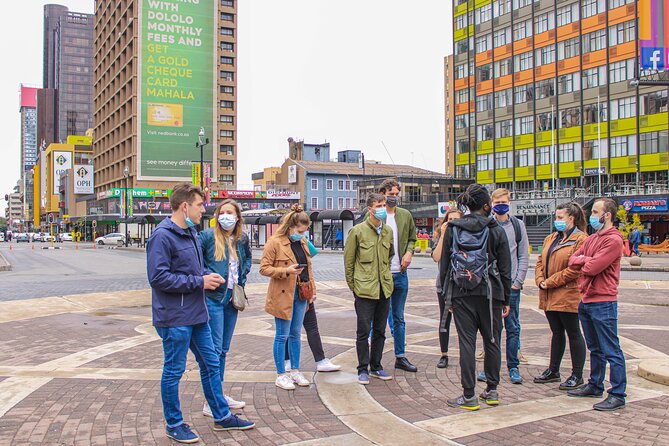
Apartheid can be hard to understand if you only see isolated landmarks. It was not one law or one event. It was a system that controlled where people lived, worked, went to school, traveled, and owned property. This experience tries to show how that system developed and how some of its effects continue in South Africa today.
The day begins with Johannesburg’s gold story. That is an important choice. Gold brought money, workers, mining companies, rail links, and rapid urban growth. It also helped create a strict racial labor system. By starting there, the tour gives you the economic background before moving into the political and social machinery of apartheid.
You then move from central Johannesburg to Soweto. That shift matters. In the city center, you see institutions, mines, offices, prisons, and redevelopment projects. In Soweto, the story becomes more personal, tied to homes, schools, families, protest, and memory.
A guide can make a major difference. The strongest feedback about this company praises hosts who are friendly, passionate, and careful about guest safety. One guide named Tye received particular praise for being kind and enthusiastic about the subject. Still, the mixed company feedback means you should not treat the guide quality as guaranteed.
More Full-Day Tours in Pretoria
- Johannesburg Full-Day Tour(Soweto/Jo-Burg & Apartheid Museum)
★ 5.0 · 110 reviews - Pilanesberg Safari Open vehicle game Full Day
★ 5.0 · 12 reviews - Johannesburg Full Day
★ 5.0 · 10 reviews
Starting with gold and Johannesburg’s mining past
The first Johannesburg section lasts about two hours and focuses on the discovery of gold. The supplied description points to the mining headquarters of South Africa and the origins of the city’s growth. This gives you a useful frame for everything that follows.
Johannesburg is not an old colonial capital built around a palace or cathedral. Its modern story grew quickly from mining. Workers arrived, businesses followed, and officials built systems to control labor and land. The gold economy helped produce the divisions that apartheid later made more formal and severe.
The stop itself is listed as free admission, but the value comes from the explanation. Look for a guide who can connect the gold economy to housing, employment, migration, and racial control. If the commentary stays at the level of dates and famous names, you will miss the main point.
Two hours is a generous amount of time for this opening section, but the overall schedule may shift. Traffic in Johannesburg can affect the order and length of stops. Ask at the start how long you will spend at each museum and when lunch is planned.
Maboneng and Marshalltown: a changing city center
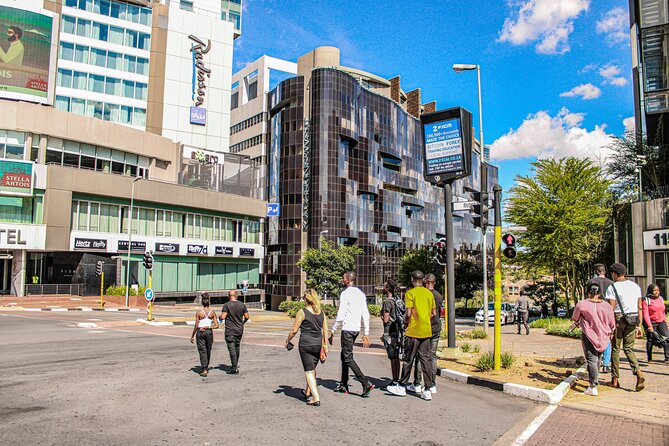
The Maboneng and Marshalltown portion lasts about 30 minutes, though the description includes both street viewing and a walking segment. Maboneng is known for its street art, cultural venues, restaurants, boutiques, and converted buildings. Areas once in poor condition have been reused for creative and commercial purposes.
That makes Maboneng useful for understanding present-day Johannesburg. The tour is not only about old political events. It also shows how parts of the city center are being remade. Arts on Main and the Museum of African Design are named as cultural points of interest, though your exact access may depend on the day’s timing.
The short visit is both a strength and a weakness. You get a quick introduction without losing the whole day here, but 30 minutes is not much time for a real walking tour or museum visit. You may see the area rather than study it closely.
The route continues with a walk through Marshalltown and a stop at a downtown lunch venue. Lunch is included, which helps the price make sense. You will not need to arrange a separate meal, and the break gives you a chance to rest after the first part of the day.
Constitution Hill and the hard reality of political imprisonment
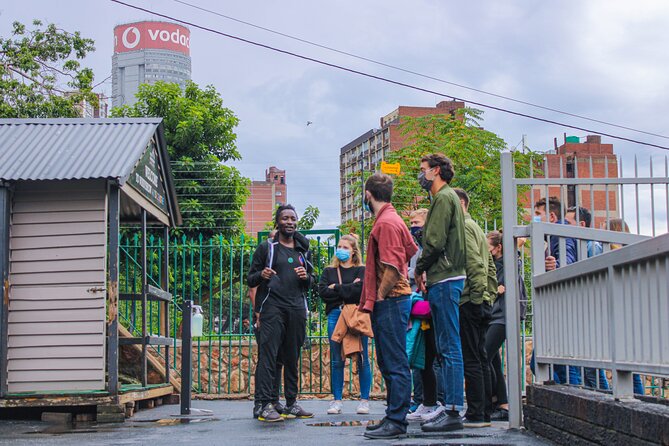
Constitution Hill is listed for about 30 minutes, with admission not included in the stop description, while the overall tour information says museum entrance fees are included. That inconsistency is worth clarifying before departure. Ask whether your ticket covers Constitution Hill specifically or only the other museums.
The site was once a political prison and is now a human rights museum. Its importance lies in showing how imprisonment supported the wider system. People were detained not only for violent acts, but also for political opposition, organizing, protest, and resistance to discriminatory laws.
Thirty minutes will give you an introduction, not a full visit. Constitution Hill deserves more time if you want to read exhibits carefully. On a tightly timed day, your guide’s explanation may be more valuable than trying to rush through every display.
I would pay attention to how the tour handles the prison’s human details. The subject can become too abstract when presented only through legislation and political leaders. The cells, court processes, and personal stories help you understand what apartheid meant in daily life.
More apartheid history tours:
- Soweto and Apartheid Museum Guided Tour
★ 5.0 · 38 reviews - Soweto & Apartheid Museum Tour
★ 5.0 · 20 reviews - Soweto & Apartheid Museum Guided Tour
★ 5.0 · 18 reviews - Soweto, Apartheid Museum & Constitution Hill Day Tour
★ 5.0 · 12 reviews
Hallmark House and a short pause above Johannesburg
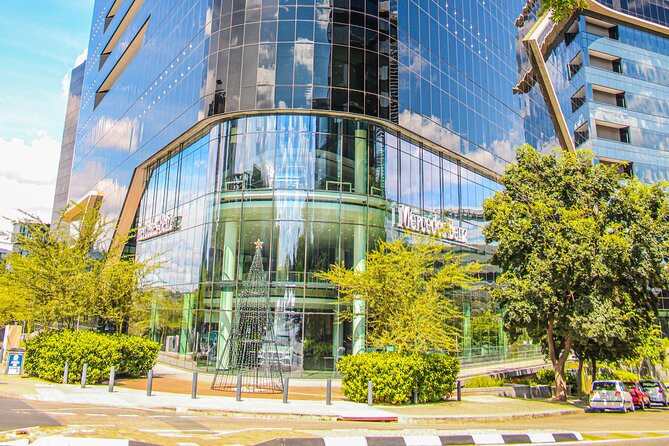
Hallmark House, including Deuce Bar, provides a different kind of stop. The listed visit lasts about 30 minutes and includes a drink or cocktail, although alcoholic beverages are not included in the tour price. You can take in city views and see a refurbished building that now includes residential apartments and a hotel.
The stop adds variety to an otherwise serious day. It gives you a pause, a view, and a look at Johannesburg’s current hospitality scene. The Marabi Club is also mentioned as a fine-dining venue in the building, but dining there is not presented as part of this experience.
You should budget for any alcoholic drink yourself. Coffee and tea are included, but alcohol is specifically excluded. If you do not drink, the stop can still work as a short rest and city-view break.
The timing may feel odd to some people. A bar stop in the middle of an apartheid history tour will not appeal to everyone, especially if you want every minute devoted to museums. I see it as a reasonable breather, provided it does not shorten the more important historical visits.
Soweto, where history becomes personal

The tour then heads to Soweto for about two hours. Soweto is central to South African history because its communities were shaped by segregation, forced removals, labor policy, and resistance. The area is not simply a sightseeing district. It is a lived place with a powerful political memory.
The best part of this section should be the connection between broad policy and ordinary life. Apartheid affected families, schools, transport, work, housing, and language. In Soweto, those subjects become easier to picture because the tour places them in a real community rather than leaving them inside a museum.
The description calls Soweto a symbolic part of South African history, and that is accurate without making the area into a mere monument. Listen for explanations of how the township was designed to serve the city’s labor needs while limiting movement and opportunity for Black residents.
Two hours gives the guide room to show more than one landmark. Still, the area is large and the schedule includes two major museums afterward. Ask whether the Soweto portion includes a general drive, guided stops, or walking time, since the exact balance is not specified.
Mandela House and the life behind the political symbol

Mandela House is scheduled for about 30 minutes. The home gives you context about Nelson Mandela’s life beyond the familiar image of the international statesman and Nobel Peace Prize winner.
A home visit can make political history feel more grounded. Mandela was not only a figure in textbooks. He lived in a neighborhood, maintained family ties, and experienced the pressures of the same system the tour explains. The house helps place his early political life within Soweto.
Thirty minutes is enough for a focused introduction, but it may not allow much time to study every display. If the guide provides background before entering, listen closely. The context will help you understand why this modest home carries such weight.
Mandela House is also one of the included admissions, which makes the stop easier to fit into a single paid outing. You do not need to organize a separate visit or worry about another ticket during the day.
Hector Pieterson Museum and the 1976 student uprising

The Hector Pieterson Museum and Memorial is scheduled for about 30 minutes. It focuses on June 16, 1976, when young people in South Africa protested against the education system and were met with state violence.
The museum’s name recalls Hector Pieterson, a schoolboy whose death became an international symbol of the uprising. The subject is painful, but it is essential for understanding why Soweto became such a powerful symbol of resistance.
This is another place where a short visit can feel too brief. The displays require attention, and the emotional weight is considerable. You may want to ask whether the guide will give you time to read independently or mainly lead an explanation.
The museum helps connect youth, education, language, and political resistance. It also shows that opposition did not come only from established political leaders. Students played a major role, and their action changed how the world saw apartheid.
The Apartheid Museum as the day’s main lesson
The Apartheid Museum is listed for about one hour and is described as a must-see, with time dependent on the day. It is the place most likely to bring the separate pieces together.
You can expect exhibits dealing with racial classification, segregation, political control, resistance, and the end of apartheid. The museum is valuable because it provides a structured account after you have already seen the city and Soweto. The earlier stops give the displays a physical setting.
One hour is useful but not generous. If you read every panel, you may need much longer. The tour format means you must accept a survey rather than a complete museum visit. Ask whether the guide plans to lead you through selected sections or leave you to explore at your own pace.
The museum admission is included in the package. That matters because museum fees can add up during a full day. More importantly, the visit gives the tour a strong closing point, moving from the roots of the system to its operation, resistance, and continuing impact.
What the $106.78 price really buys
At $106.78 per person, this is not the cheapest way to see Johannesburg. You are paying for a full-day structure, an air-conditioned vehicle, a guide, lunch, coffee or tea, taxes, and museum entrance fees.
The value is strongest if you want one organized history day and do not want to arrange several separate rides and admissions. Transport between central Johannesburg, Soweto, and the museums would be difficult to coordinate on your own, particularly if you are unfamiliar with the city.
The value is weaker if you prefer long museum visits or independent exploration. Several stops are only 30 minutes, and the day includes a bar and redevelopment district as well as historical sites. You may feel rushed at Constitution Hill, Mandela House, the Hector Pieterson Museum, or the Apartheid Museum.
The maximum group size is 50 people. That is a large possible group for a subject that benefits from questions and quiet reflection. A smaller group would likely feel more personal, but the exact group size on your date is not provided.
Timing, pickup, and practical concerns
The experience lasts approximately four to eight hours, which is a wide range. The difference may depend on pickup arrangements, traffic, museum timing, and the day’s route. Confirm the expected start and finish times before booking, especially if you have an evening flight or another scheduled activity.
Pickup is offered, and the vehicle is air-conditioned. The listing identifies Pretoria as the location, while the route centers on Johannesburg and Soweto. Ask exactly where pickup is available and how long the transfer to the first stop will take.
Mobile tickets are provided, and confirmation is sent at booking. Most people can participate, and the experience is near public transportation. Free cancellation is available if you cancel at least 24 hours before the start time. Changes or cancellations inside that window are not accepted for a refund.
The company’s wider feedback is mixed. Several comments praise friendly hosts, safe handling, spontaneous arrangements, and guides who go out of their way to meet people at Gautrain stations or ensure a safe drop-off. Other comments describe poor communication, unsatisfactory equipment on unrelated activities, and a delayed refund. Those complaints do not prove this particular day will fail, but they are a good reason to confirm details in writing.
Who will enjoy this day most?
I would recommend this experience to you if you want a guided introduction to apartheid and prefer context over independent wandering. It suits first-time visitors who want Johannesburg, Soweto, Mandela House, and the Apartheid Museum connected in one day.
It is also a good fit for history and culture lovers who appreciate a guide’s explanation. The route covers economic roots, political imprisonment, urban redevelopment, community life, youth protest, and national reconciliation.
You may want another option if you dislike group tours, need lots of time at museums, or want a quiet, deeply focused visit at each site. The 50-person maximum is sizeable, and the short stop lengths may test your patience.
Should you book the Apartheid History of South Africa experience?
Book it if you want a broad, well-organized introduction and value included lunch, transport, and admissions. The combination of Johannesburg and Soweto is the strongest reason to choose it, while the Apartheid Museum, Mandela House, and Hector Pieterson Museum give the day real substance.
Before booking, confirm the pickup point, total duration, group size, and which entrance fees are covered. If the company gives clear answers and your priority is seeing the major sites in one day, $106.78 can be fair value. If you want slow museum study or a smaller, more personal experience, look for a private tour instead.
FAQ
Where does the tour take place?
The experience is listed in Pretoria, but the route visits Johannesburg, Maboneng, Marshalltown, Constitution Hill, Hallmark House, Soweto, Mandela House, the Hector Pieterson Museum, and the Apartheid Museum.
How long does the experience last?
The approximate duration is four to eight hours. The exact timing can vary, so confirm the expected schedule before booking.
Is lunch included?
Yes. Lunch, coffee or tea, museum entrance, taxes, an air-conditioned vehicle, and a guide are included.
Are alcoholic drinks included?
No. Alcoholic beverages are not included. The Hallmark House stop mentions drinks and cocktails, so you should expect to pay separately for alcohol.
Is pickup available?
Yes. Pickup is offered. The exact pickup area should be confirmed because the tour is listed from Pretoria while the main route takes place in Johannesburg and Soweto.
What is the cancellation policy?
You can cancel at least 24 hours before the local start time for a full refund. Cancellations or changes made less than 24 hours before the start time are not accepted for a refund.
More Lunch Experiences
- Johannesburg’s Downtown Walking Tour with lunch
★ 4.5 · 17 reviews - Johannesburg and Soweto Private Guided Tour with Shebeen Lunch.
★ 5.0 · 5 reviews - From Cape Town: Big Five Game Reserve with Lunch
★ 4.6 · 2,409 reviews - Wine Tour to Stellenbosch & Franschhoek with Tastings & Lunch
★ 5.0 · 828 reviews
More Historical Tours
- History Bicycle Tour of Soweto
★ 4.0 · 7 reviews - Cape Town: Art, Culture & History Walking Tour
★ 4.9 · 392 reviews - Stellenbosch: Guided Historical Walking Tour
★ 4.7 · 283 reviews - Stellenbosch: Historical Bike Tour & Wine Tasting
★ 4.9 · 248 reviews
Newest reviews from Pretoria
- Half-Day Lion and Safari Park Tour★ 5.0 · 5 reviews
- 2 Day Pilanesberg national park Guided Tour★ 5.0 · 5 reviews
- Johannesburg and Soweto Private Guided Tour with Shebeen Lunch.★ 5.0 · 5 reviews
- 3 Day Kruger National Park tour★ 5.0 · 5 reviews
- Pilanesberg National Park Full-Day Tour from Johannesburg★ 5.0 · 5 reviews
- Johannesburg and Apartheid museum tour★ 5.0 · 5 reviews
- Constitutional Hill,Johannesburg City and Apartheid Museum with Soweto Day Tour★ 5.0 · 5 reviews
- Pretoria Capital City Tour from Pretoria, every TUESDAY★ 4.5 · 5 reviews
Apartheid Museum Tours, compared.

Soweto /Johannesburg and Apartheid Museum Guided Full Day Tour
Read our review →
Jo’berg in 1 Day: Soweto, Apartheid Museum & City Tour
Read our review →
Full-Day Tour with Soweto and Apartheid Museum
Read our review →
Full-Day Soweto, Apartheid Museum and Lunch Tour
Read our review →
Half Guided Day Tour of Soweto And Apartheid Museum
Read our review →
Ultimate Johannesburg Soweto Experience with Apartheid Museum
Read our review →
Soweto: Hop-On Hop-Off Bus, City Tour and Apartheid Museum
Read our review →
Johannesburg and Soweto Apartheid Full Day Tour w/Lunch
Read our review →Browse the lists this tour appears in