
Reviewed · WALKING TOURS
Durban: Local Markets and Culture Guided Walking Tour
Durban opens its doors early. This local markets tour takes you beyond the beachfront and into the city’s working heart, with market walks, local minibus taxis, and a Bunny Chow lunch at North Beach. I love the direct contact with everyday Durban life, and I like that guide Johnny is known by many of the stallholders. The main consideration is comfort: the day includes about 8,000 steps, crowded market spaces, and public transport.
You begin at Tekweni Backpackers on Ninth Avenue, just off Florida Road, then travel into central Durban with an English-speaking guide. I especially like the mix of Indian, African, and Zulu influences, along with the chance to shop for spices and local goods at prices that can be far lower than in tourist shops. If you prefer private cars, polished sights, or a gentle pace, this may feel too earthy and unpredictable.
In This Review
- Key points to know before you go
- Why this tour shows a different Durban
- Starting at Tekweni Backpackers on Ninth Avenue
- Riding Durban’s minibus taxis
- Warwick’s markets: the main event
- The Muti market and traditional medicine
- Shopping tips for spices and souvenirs
- Walking through Durban to the beachfront
- Bunny Chow at North Beach
- What makes Johnny such a valuable guide
- Price, pace, and overall value
- Who should book this Durban walking tour?
- Should you book it?
- FAQ
- Where does the tour start?
- Where does the tour finish?
- How long does the tour last?
- Is lunch included?
- Are drinks included with lunch?
- Does the tour use public transport?
- Which markets are visited?
- What should I bring?
- How much walking is involved?
- Is the tour suitable for wheelchair users?
- What language is the tour conducted in?
- Can I cancel the booking?
Key points to know before you go
- Several markets in one morning: See the Early Morning Market, Bridge Market, Indian markets, African Market, Muti market, and Victoria Street Market.
- Johnny is the key to the experience: His long connection with Durban helps you enter places that can be hard to approach alone.
- Local minibus taxis are part of the tour: The 15-minute rides add a real slice of city life, but they are not as calm or private as an Uber.
- The Muti market is unusual: Traditional healers sell herbs, oils, powders, and animal products linked to local medicinal beliefs.
- Shopping can be a strong part of the value: Bring cash and a large bag for spices, souvenirs, and other market goods.
- Lunch is Bunny Chow at North Beach: The tour ends on the beachfront with Durban’s famous bread-filled curry meal, while drinks cost extra.
Why this tour shows a different Durban
Durban is often sold through its Indian food, warm climate, and long beachfront. Those are good reasons to visit, but they do not explain the whole city. This tour takes you inland, where commerce, faith, migration, traditional medicine, and daily commuting meet in a series of markets around Warwick.
I like the way the experience connects places that can seem separate on a map. You do not simply walk through one market, take a few pictures, and leave. You move through several trading areas and hear how Durban developed through African, Indian, and other cultural influences.
That makes the guide especially important. Johnny has led this type of tour for more than 14 years, and his local connections are a practical advantage. He knows the market sellers, greets people along the route, and helps you ask questions without treating the market like a stage set.
You should still approach the experience with respect. These are working markets, not a theme park. People are buying food, medicine, clothing, and household goods. Ask before taking photographs, listen carefully, and remember that shopping is optional.
More walking tours in Durban:
- Culture Walking Tour of Durban
★ 5.0 · 110 reviews - Durban: City Sightseeing and Walking Tour
★ 4.6 · 98 reviews - Durban: Top 10 City Sights and Walking Tour
★ 4.1 · 69 reviews
Starting at Tekweni Backpackers on Ninth Avenue
The meeting point is Tekweni Backpackers, at 169 Ninth Avenue in Morningside, just off Florida Road. Johnny waits inside the premises, and safe parking is available if you arrive by car.
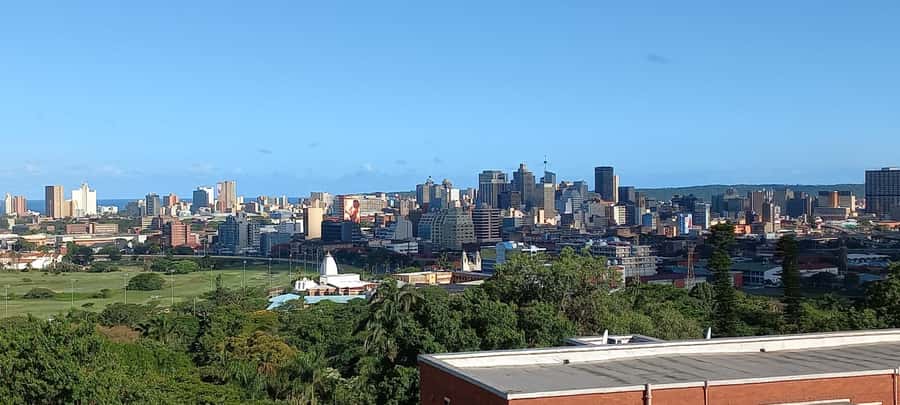
The beginning includes an introduction to Durban’s past and present, plus a viewpoint and photo stop. This is a useful way to get your bearings before entering the market districts. You can look over the city, then start to understand how the central areas fit together.
Wear clothes for a warm walking day. Comfortable shoes matter more than smart shoes here, since the route involves roughly 8,000 steps at a slow pace. A hat, sunglasses, sunscreen, water, and cash belong in your day bag.
The tour lasts 330 minutes on paper, or about five and a half hours. The practical guidance describes it as four to five hours, while the pace can stretch if the group wants more shopping, conversation, or food. One especially long outing included extra meals and weather delays, so do not schedule an important appointment immediately afterward.
Riding Durban’s minibus taxis
The first local transport leg takes about 15 minutes. Later, you use public transport again to reach the beachfront. These minibus taxis, often called combis, are not just a way to save time. They are part of how many people get around Durban, and the ride gives you a small but useful lesson in local city life.
On your own, the system can be difficult to understand. Johnny explains how it works and guides you through the process. That support matters, especially if you are unfamiliar with local routes and payment customs.
The tradeoff is comfort. Minibus taxis can be crowded, and you do not get the privacy or predictable timing of a private vehicle. Rain can make waiting less pleasant, too. One past participant specifically wished for an Uber or taxi on a wet day, so bring patience and a light rain layer if the forecast looks uncertain.
I think the transport is worth keeping if you want an everyday experience rather than a sealed-off tour vehicle. If you have mobility concerns, dislike close quarters, or need complete control over the schedule, it may be the weakest part of the day.
Warwick’s markets: the main event
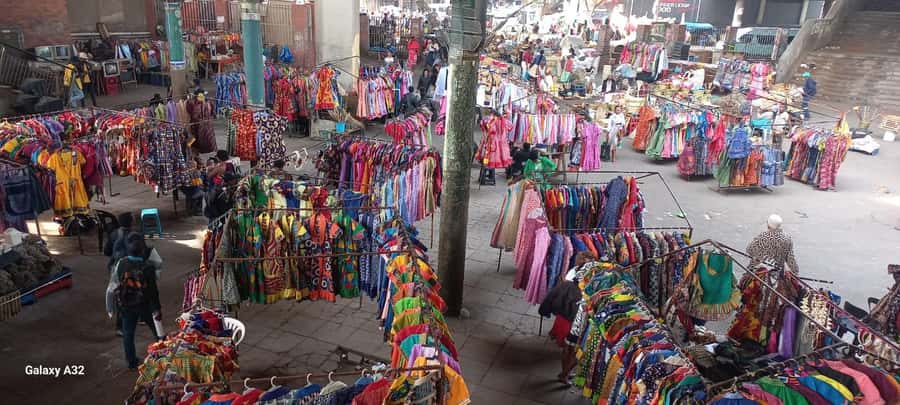
The Markets of Warwick form the core of the tour. This is not one tidy market hall. It is a group of trading areas with different goods, customers, and cultural backgrounds.
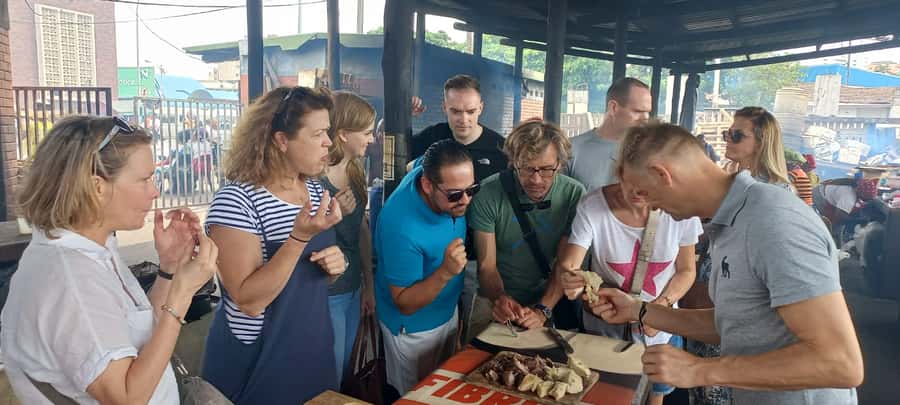
You move through the Early Morning Market, Bridge Market, Indian markets, African Market, Victoria Street Market, and the traditional medicine market. The route gives you a broad look at what people buy and sell in Durban, from food and spices to clothing, remedies, and souvenirs.
The market walk is guided rather than rushed. Johnny explains what you are seeing and answers questions about food, customs, politics, and local life. His familiarity with the sellers also helps you feel less like an outsider wandering into an unfamiliar area.
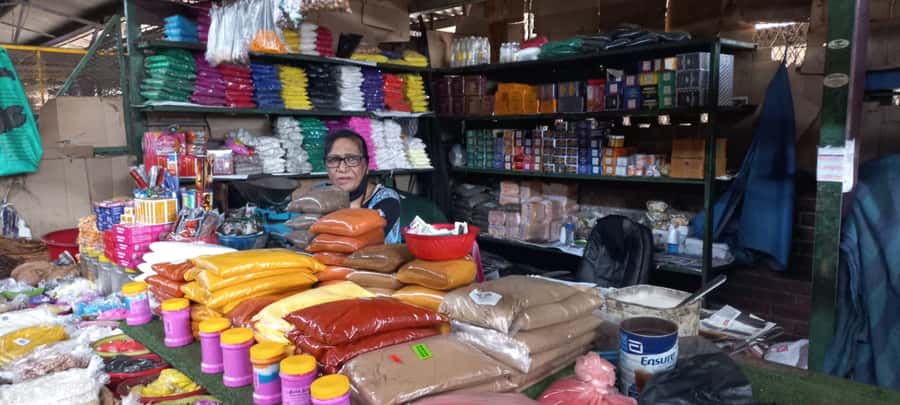
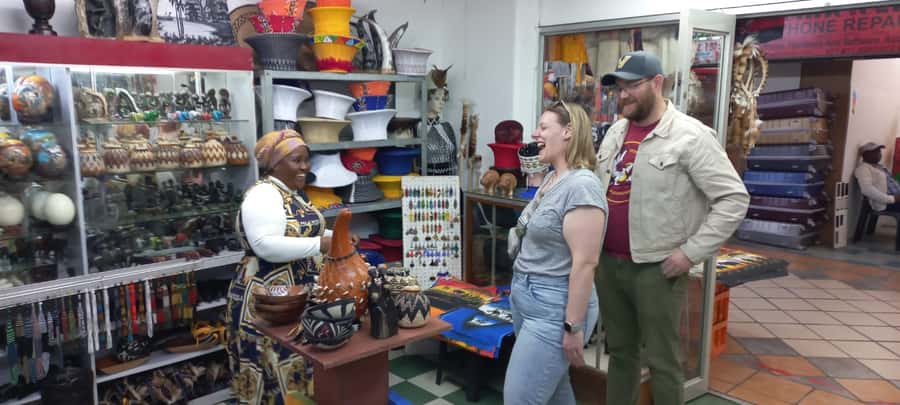
Victoria Street Market is likely to be the easiest section for first-time visitors. It is well known for Indian and African goods, spices, crafts, and food products. You might find souvenirs here at much lower prices than in tourist-oriented shops, though you should still compare prices and buy only what you really want to carry.
The African market areas feel less arranged for visitors. That is part of their value, but also part of the challenge. You may see direct, competitive selling and crowded stalls. Keep your belongings secure, stay with the group, and let Johnny set the pace.
A few more tours worth putting side by side
- Durban: 30-Minute Harbor Boat Cruise
★ 4.7 · 665 reviews - Durban: 1-Hour Boat Cruise from Wilson’s Wharf
★ 4.7 · 496 reviews - Durban Point Waterfront: Luxury Canal Boat Cruise
★ 4.4 · 298 reviews - Durban: Pontoon Boat Harbor Cruise
★ 4.4 · 182 reviews
The Muti market and traditional medicine

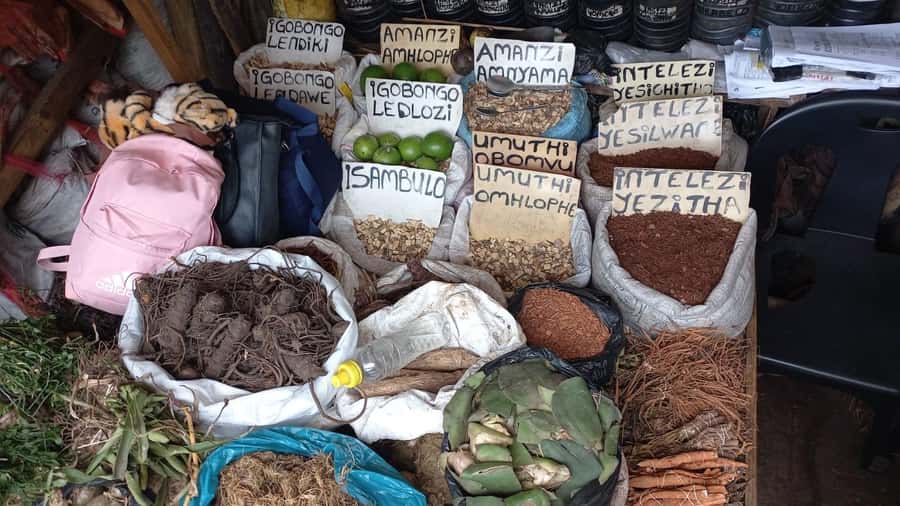
The traditional medicine market is the most distinctive stop. In this setting, Muti refers to traditional medicine, and the stalls may contain herbs, oils, powders, and products made from parts of animals. Traditional healers explain their uses according to local beliefs and practices.
This section can be fascinating, but it deserves a thoughtful approach. It is not a display of oddities for casual entertainment. These goods are connected to real traditions and to people seeking treatment or spiritual help.
You may find the material confronting, particularly when animal products are involved. If you are sensitive to that subject, ask Johnny for context and decide how closely you wish to look. The tour gives you an opportunity to understand a part of Durban that is rarely included in standard city sightseeing, but you should not treat it as a place to make jokes or handle items carelessly.
This is also where the wider social picture becomes clearer. The markets show how many people earn a living through small-scale trade and how traditional practices continue beside modern city life. The experience does not smooth over poverty or inequality, and that honesty is one of its strengths.
Shopping tips for spices and souvenirs
Bring cash. Personal purchases are not included, and cards may not be practical at every stall. A large reusable bag is a smart idea, especially if you want spices, local trinkets, or other small goods.
I would save most of your souvenir and spice shopping for this part of the trip. Prices can be far below those in tourist shops, but do not assume every first price is the final one. Ask Johnny for advice when you are unsure about quality, use, or a fair price.
Shopping is not compulsory, and you should not feel pressure to buy. The best purchases are the items you can identify and pack easily. Spices may be tempting, but check airline rules and luggage limits before buying large quantities.
Take care with photographs. Market sellers may welcome pictures, but permission is still the polite choice. A guide who knows the community can help you judge when a photo is appropriate.
Walking through Durban to the beachfront
After the markets, the tour continues through central Durban on foot and by local transport. This part links the market districts to the coast and gives you more time to ask about the city, its communities, and its changing identity.
The walk is described as slow, but it is still substantial. Eight thousand steps can feel easy on a cool morning and tiring under strong sun. Comfortable clothes and water are not optional extras here.
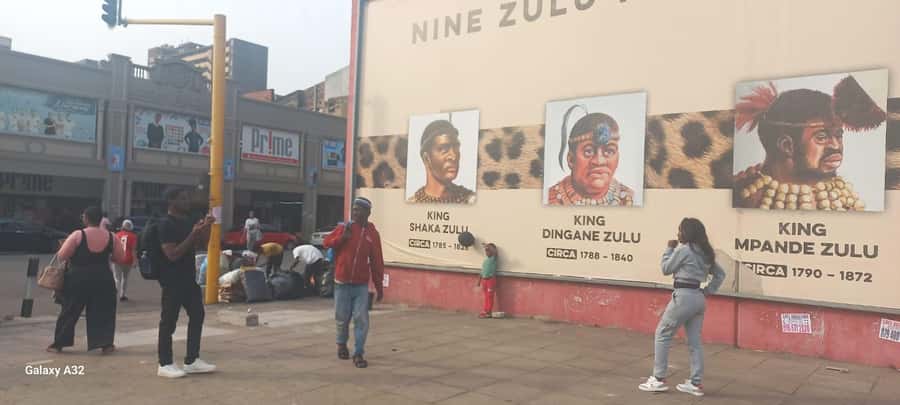
The city section may appeal most to people who enjoy seeing how places function between the famous sights. You get a sense of movement, work, and local routines rather than a sequence of grand monuments.
The pace may also be flexible. Johnny has been willing to add places connected to a group’s interests, and weather can affect timing. That personal approach is useful, although it means your finish may not run to the exact minute.
Bunny Chow at North Beach
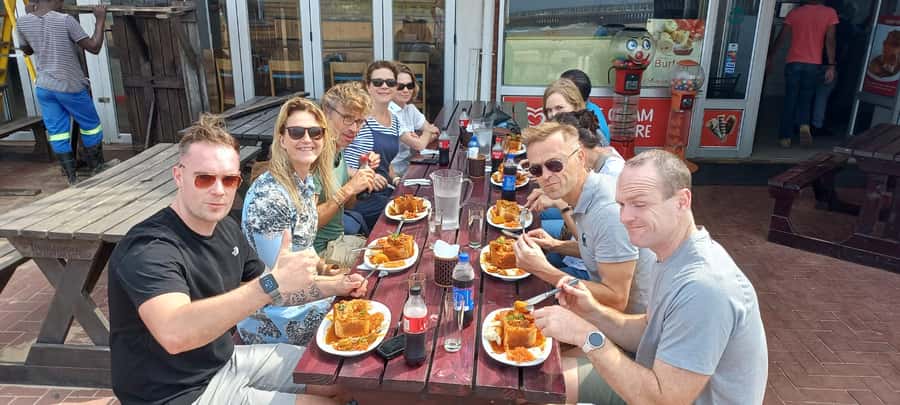
The final stop is lunch on the North Beach promenade. The included meal is Bunny Chow, Durban’s famous speciality: a hollowed loaf of bread filled with curry or meat.
It is filling, informal, and closely tied to Durban’s Indian food culture. If you have never tried it, this is a good setting because the meal arrives at the end of a physically active morning. The beachfront location also gives the day a clear change of mood after the market districts.
Drinks are not included, so budget separately for beverages. You may also want to ask about the filling if you have dietary restrictions, since the basic description specifies bread and meat rather than a particular recipe.
The lunch is more than a convenient finish. It connects the city’s food traditions with the people and places you have just seen. I like that the tour does not end at the last market stall. It gives you time to sit, eat, and talk through the morning.
What makes Johnny such a valuable guide
The strongest reason to book this experience is Johnny’s personal connection to Durban. He is described as passionate about the city, familiar with its different cultures, and respected by people working in the markets.
That matters in practical ways. He can explain how the combis work, introduce you to local sellers, help with questions about goods, and add detail that would be hard to find in a guidebook. His style also appears flexible and conversational, so curious people who ask many questions will get the most from the day.
You should not expect a scripted lecture at every corner. The appeal is the combination of explanation, observation, and conversation. Johnny discusses politics, food, traditions, and history, and he answers questions directly.
This kind of guiding also helps with confidence. Several solo women have felt safe with him, and his relationships in the markets can make the surroundings feel less intimidating. That does not mean you should ignore normal city precautions, but it does make a difference when entering unfamiliar areas.
Price, pace, and overall value
At $68 per person, the price includes the guide, walking tour, both local transport legs, and lunch. That is fair value if you want a full morning with several market areas and personal interpretation rather than a short photo tour.
The lunch alone is not the reason to book. The value comes from combining access, transport help, market context, and local knowledge in one outing. You also avoid having to work out the minibus system or decide which market areas are sensible to visit on your own.
The price is less attractive if you mainly want Victoria Street Market and a quick meal. You could spend less by visiting a single market independently, though you would miss the connected route and Johnny’s introductions.
The tour also asks you to pay with time and energy. It is long, active, and not polished in the usual sightseeing sense. I see that as a fair exchange for a more direct look at Durban, but it will not suit every holiday style.
Who should book this Durban walking tour?
I would choose this tour if you want:
- A close look at Durban’s market culture
- Honest discussion of local history, politics, and inequality
- Indian, African, and traditional medicine markets in one outing
- A chance to use local minibus taxis with help
- Affordable spice and souvenir shopping
- An informal Bunny Chow lunch by the sea
- A guide who values questions and personal contact
I would think twice if you need wheelchair access, since the tour is not suitable for wheelchair users. It is also not suited to anyone seeking a private vehicle, a short walk, or a tightly timed schedule.
The tour is conducted in English. It is best for people who are curious, physically comfortable on their feet, and willing to enter busy working markets with an open mind.
Should you book it?
Book it if you want to see Durban from street level rather than from a coach window. The markets, Muti stalls, combi rides, and Bunny Chow give the day a strong sense of place, while Johnny’s local ties add comfort and meaning.
Skip it if you want quiet, private transport, or a carefully polished sightseeing route. For everyone else, this is one of the better ways to understand why Durban is more than its beach. Bring cash, water, sturdy shoes, and curiosity, then leave room in your bag for spices.
FAQ
Where does the tour start?
It starts at Tekweni Backpackers, 169 Ninth Avenue, just off Florida Road in Morningside. The guide waits inside the premises.
Where does the tour finish?
The tour finishes at North Beach, on the beachfront promenade, after lunch.
How long does the tour last?
The stated duration is 330 minutes. Practical guidance describes the experience as about four to five hours, although the timing can vary.
Is lunch included?
Yes. Lunch is included and consists of Bunny Chow, a traditional Durban meal of bread filled with meat or curry.
Are drinks included with lunch?
No. Beverages are not included, so you should bring extra money if you want something to drink.
Does the tour use public transport?
Yes. The tour includes local minibus taxis from the meeting point to the markets and again from the markets to the beachfront.
Which markets are visited?
The route includes the Early Morning Market, Bridge Market, Indian markets, African Market, traditional medicine market, and Victoria Street Market.
What should I bring?
Bring comfortable shoes, sunglasses, a sun hat, sunscreen, water, comfortable clothing, and cash.
How much walking is involved?
The walk is about 8,000 steps at a slow pace. You should be comfortable walking for several hours.
Is the tour suitable for wheelchair users?
No. The experience is not suitable for wheelchair users. It is also not suitable for people over 95 years old.
What language is the tour conducted in?
The live tour guide speaks English.
Can I cancel the booking?
You can cancel up to 24 hours before the experience for a full refund. You can also reserve now and pay later.
Newest reviews from Durban
- Durban Shore Excursion: Valley of 1000 Hills and PheZulu Tour★ 5.0 · 5 reviews
- Zulu Cultural Experience: Zulu Village + Tribal Markets + Traditional Zulu Food★ 5.0 · 5 reviews
- From Durban: 2-Day Lesotho Guided Trip with Lodging & Meals★ 4.9 · 5 reviews
- Isandlwana and Rorke’s Drift Battlefields Tour★ 5.0 · 5 reviews
- From Durban: Oribi Gorge & Lake Eland Adventure Tour★ 5.0 · 5 reviews
- Hluhluwe Safari & Emdoneni Wild Cat Project Day Tour from Durban★ 5.0 · 6 reviews
- Full Day Isimangaliso Wetlands Park -Croc & Hippo &Game Fr Durban★ 4.5 · 6 reviews
- Drakensberg Kamberg Cave Art & Mandela Capture Site Day Tour★ 4.1 · 6 reviews
Walking Tours, compared.

Soweto: Walking Tour with a Local Guide and Lunch
Read our review →




Browse the lists this tour appears in