
Reviewed · SOWETO TOURS
History Bicycle Tour of Soweto
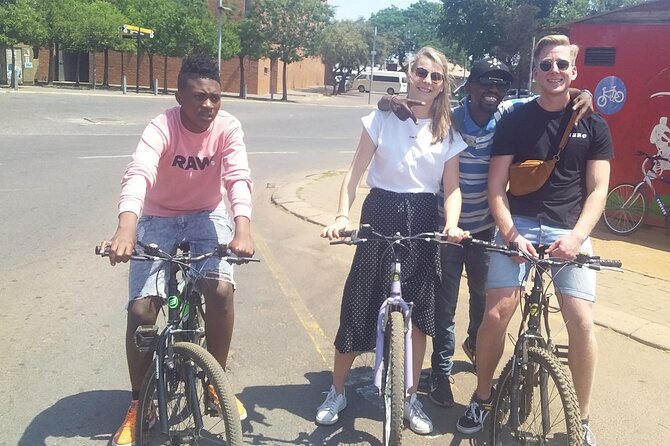
Soweto is best understood at street level. This four-hour bicycle tour takes you through Orlando West and nearby parts of the township, linking everyday life with the long struggle against Apartheid. I like the chance to visit places connected with Nelson Mandela and Desmond Tutu, and I like that local guides explain the area as you move through it rather than presenting history in a classroom.
I also appreciate the small-group limit of 10 people and the stop at local food places, which adds a human touch to the route. The main caution is practical: some bicycles have been described as old or poorly maintained, and the route includes more uphill riding than you might expect. Add strong heat and basic roads, and this is not a polished city bike ride.
In This Review
- Key points to know before booking
- Starting at the Hector Pieterson Memorial in Orlando West
- Seeing where Soweto began in 1904
- Regina Mundi Church and the role of faith
- Mineworker hostels, an orphanage, and everyday Soweto
- Orlando West High School and the 1976 student uprising
- What the bicycle ride feels like
- Heat, clothing, and useful preparation
- Local guides and the value of hearing the story there
- Is $40.91 a fair price?
- Who should book this Soweto bike tour?
- Final verdict: book it for local history, not polished cycling
- FAQ
- Where does the History Bicycle Tour of Soweto start?
- Where does the tour finish?
- How long does the tour last?
- Is hotel pickup included?
- What equipment is provided?
- Does the tour visit Nelson Mandela’s former home?
- Is the Hector Pieterson Museum part of the guided tour?
- How far in advance can I cancel for a refund?
Key points to know before booking
- The tour begins at the Hector Pieterson Memorial: You meet at 8287 Khumalo Road in Orlando West, Johannesburg, not at a hotel or central transport hub.
- The history is personal and difficult: The route covers the Apartheid struggle, the 1976 student uprising, forced settlement, mineworker hostels, and the death of Hector Pieterson.
- You visit major Soweto landmarks by bicycle: Stops include Regina Mundi Church, the former homes of Nelson Mandela and Archbishop Desmond Tutu, and a squatter camp.
- The bikes are basic: One account praised the fun and local character but another reported bent wheels, weak or missing brakes, and no working gears.
- Heat and hills matter: Wear a full-brimmed hat, use plenty of sunscreen, and be ready for a four-hour ride with uphill sections.
- The tour ends at Coffee and Cream cafe: The activity returns to the meeting point area, with the Hector Pieterson Museum best visited separately afterward.
Starting at the Hector Pieterson Memorial in Orlando West
Your meeting point is the Hector Pieterson Memorial at 8287 Khumalo Road, Orlando West, Johannesburg. This is an important start because the memorial and nearby museum are tied directly to the 1976 student uprising, which gives the ride a clear historical focus from the first minute.
The tour itself begins outside the museum, while the museum visit is left for after the cycling portion. I think that arrangement makes sense for a bike tour. You first see the neighborhood and the places discussed by your guide, then you can take your time with the museum’s exhibits without watching the clock or worrying about returning a bicycle.
You receive a bicycle and helmet, and a local guide leads the group. The maximum group size is 10 people, small enough for questions and a more personal exchange. The tour requires at least two people per booking, so you cannot reserve it as a solo activity.
The published location information can be confusing because the experience is sometimes associated with Pretoria, while the meeting point is clearly in Orlando West, Johannesburg. Check your transport plan carefully and use the stated address as your practical reference.
More Soweto tours:
- Johannesburg and Soweto tour
★ 5.0 · 231 reviews - Soweto Half Day Tour
★ 5.0 · 231 reviews - Johannesburg Full-Day Tour(Soweto/Jo-Burg & Apartheid Museum)
★ 5.0 · 110 reviews
Seeing where Soweto began in 1904
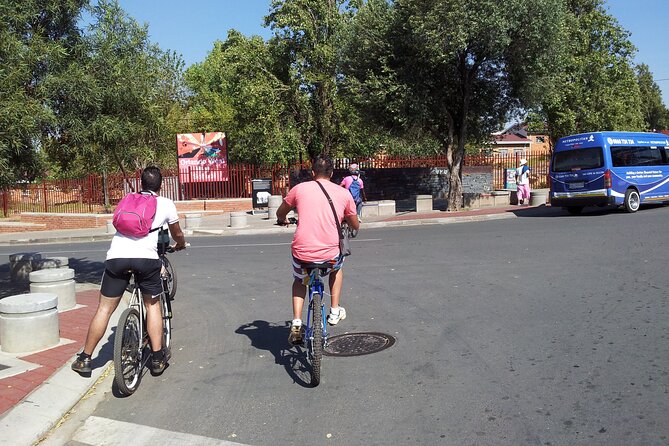
The first part of the ride introduces the township’s beginnings. You learn about the area established in 1904 and how Soweto developed through policies that controlled where black South Africans could live and work.
This opening matters because Soweto is not simply a collection of famous streets and political landmarks. The neighborhood grew through pressure, separation, and the movement of people under Apartheid. As you cycle through it, the guide connects those larger policies to homes, churches, hostels, and public spaces around you.
The route is designed to show the good, bad, ugly, and sad parts of the township. That broad approach is one of the tour’s strengths. You are not being shown only polished memorials or political names. You also see signs of poverty and difficult living conditions, including a squatter camp and a mineworkers’ hostel.
Those sights may be uncomfortable, and they should be approached with respect. This is not a sightseeing loop where every stop is meant to be cheerful. The value comes from meeting Soweto as a lived-in place with many layers, rather than reducing it to a single chapter in South African history.
Regina Mundi Church and the role of faith
Regina Mundi Church is one of the route’s important stops. Churches played a major part in community life during Apartheid, and Regina Mundi is linked to the political and social history of Soweto.
The tour also includes several other churches, giving you a wider sense of how religious buildings served local communities. I find this kind of stop useful because it broadens the story beyond politicians and protest leaders. The history of Soweto also belongs to congregations, families, students, workers, and neighborhood organizers.
The exact amount of time spent at each site is not specified, so you should expect a guided orientation rather than a long formal visit at every location. The bike format keeps the tour moving. That is good for covering ground, but it means you may want to return independently to any place that catches your interest.
Mineworker hostels, an orphanage, and everyday Soweto
The route includes a mineworkers’ hostel and an orphanage, along with residential streets and local gathering places. These stops help explain the social effects of Apartheid and the economic forces that shaped Johannesburg’s townships.
A mineworker hostel points to the system that separated workers from their families and communities. The orphanage brings the story closer to daily life and to the human cost of hardship. Together, these places make the tour less about a list of monuments and more about how political decisions affected ordinary households.
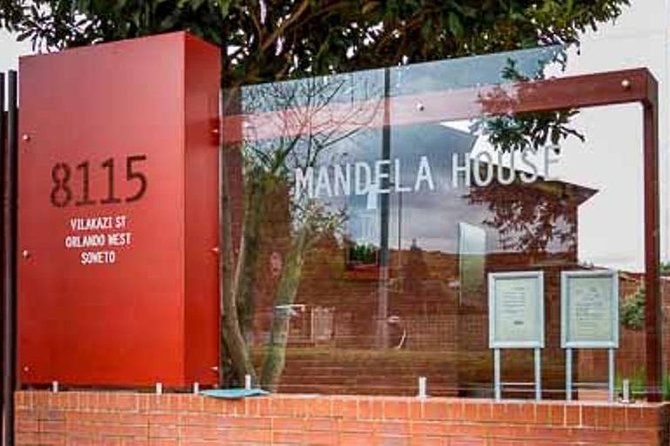
You also pass homes connected with Nelson Mandela and Archbishop Desmond Tutu. The chance to see where two major figures lived is a clear highlight, but the real value comes from seeing those homes within the wider neighborhood. Mandela’s name can easily become a distant symbol. In Soweto, the setting helps place his early public life in a real community.
The same is true of Tutu’s former home. Seeing the two addresses on one ride creates a useful link between political leadership, religious activism, and local life. Do not expect grand estates or a museum-style presentation at every home. The attraction is the connection to the people and events that shaped modern South Africa.
More cycling tours:
- Bicycle or Tuk Tuk Soweto Guided Experience
★ 5.0 · 7 reviews - From Pretoria: E-Bike in the wild with game near Jo’burg
★ 5.0 · 6 reviews - Cape Town: Atlantis Dunes Quad Bike Tour and Photo Session
★ 4.5 · 322 reviews - Soweto: Guided Bicycle Tour with Lunch
★ 4.9 · 292 reviews
Orlando West High School and the 1976 student uprising
The stop at Orlando West High School gives the tour its most powerful historical focus. Here, your guide explains the student uprising against Apartheid in 1976.
The protest began with students opposing the compulsory use of Afrikaans in schools, but the wider issue was the unequal education system imposed on black South Africans. The uprising became a major turning point in the international understanding of Apartheid, and the death of Hector Pieterson became one of its best-known symbols.
This stop is especially meaningful because it connects directly to the memorial where you begin. You see the setting connected with the uprising, hear the local account, and then have the option of visiting the Hector Pieterson Museum afterward.
I recommend leaving time for the museum if you can. The cycling tour gives you movement, context, and a guide’s explanation. The museum can then provide a quieter place to process the events and add more detail. Because the museum visit is not part of the guided ride, you should treat it as a separate stop rather than assuming it is included in the four-hour schedule.
What the bicycle ride feels like
This is a practical township ride, not a sleek recreational cycling tour. One positive account described the experience as great fun on basic bicycles and praised the interesting roads, neighborhood food places, and friendly local atmosphere. Another account reported bicycles with bent wheels, no brakes, and no working gears.
That difference matters. Bicycle condition can vary, so inspect your bike before setting off. Check the brakes, wheels, seat, and tires, and tell the guide immediately if something feels unsafe or uncomfortable. A helmet is included, but the presence of a helmet does not remove the need to check the bicycle itself.
The route also includes uphill sections. One person was surprised by how much climbing was involved, especially in the heat. If you ride often, four hours on a basic bike may be manageable. If you rarely cycle, you should think carefully about the physical demand before booking.
The tour information says most people can participate, but that does not mean the ride will feel effortless. You need to be comfortable cycling for several hours and handling a bicycle that may not have reliable gears. Children are subject to a special rate only when sharing with two paying adults, and a child seat was described as difficult to fit securely to the available bicycles. Families should ask questions before reserving.
Heat, clothing, and useful preparation
Heat is one of the clearest practical concerns. One person specifically advised wearing a full hat rather than relying on a cap, along with thorough sunscreen. That is sensible advice for a four-hour outdoor activity.
I would prepare with:
- A full-brimmed hat that stays secure while riding
- High-factor sunscreen applied before the tour
- Comfortable clothing suited to hot weather
- Closed shoes suitable for pedaling
- Water, unless the guide confirms that it is supplied
- A small bag that does not interfere with cycling
The supplied details do not state how much water, food, or shade is available, so do not assume refreshments are included. The route does include small food places, and that was one of the elements praised by a participant, but food and drinks are not listed among the inclusions.
The guide and bicycle are included, as is the helmet. Hotel pickup and drop-off are not included, so you must arrange your own way to Orlando West and back. The tour ends at Coffee and Cream cafe and returns to the meeting point area.
Local guides and the value of hearing the story there
The guide is the main reason to choose this experience instead of simply cycling through Soweto on your own. The route covers politically sensitive and emotionally difficult subjects, and a local explanation can help you understand what you are seeing.
A participant gave particular thanks to the young men who guided and explained the places along the route. Another praised the guides as excellent and recommended the tour for its friendly neighborhood contact. No guide names are provided, but the strongest praise is directed at the quality of the explanations and the welcoming manner of the guides.
That local presence also helps with the small food stops and residential areas. You are not just ticking off Mandela’s house and the Hector Pieterson site. You are moving through a community while someone explains why particular buildings and streets matter.
Still, guide quality can shape the day. The published rating is 3.9 from seven ratings, which suggests a generally positive but not flawless experience. If you want a highly polished, museum-like tour with uniform equipment and a fixed presentation, this may feel rough around the edges. If you value local contact and a less packaged experience, the roughness may be part of its appeal.
Is $40.91 a fair price?
At $40.91 per person, the tour offers four hours of guiding, bicycle use, and a helmet. You are paying for more than transport. The price covers local interpretation, access to a route that would be difficult to understand fully on your own, and a chance to connect several major Soweto sites in one morning or afternoon.
The value is strongest if you want context. Mandela’s former home, the 1976 uprising, Regina Mundi Church, and the township’s early history are more meaningful when connected by a guide who can explain how they relate.
The value is weaker if you expect premium equipment or a comfortable sightseeing ride. The bicycle condition concerns are serious, especially for anyone with limited cycling experience or for families trying to use a child seat. Since hotel transfers are not included, your total cost also includes getting to Orlando West and leaving afterward.
The tour is often reserved around 126 days ahead. That does not guarantee that every date sells out, but it suggests that advance planning is sensible, especially if your South Africa itinerary is fixed. Free cancellation is available if you cancel at least 24 hours before the start time. Changes or cancellations made within 24 hours are not accepted for a refund.
Who should book this Soweto bike tour?
I would recommend it to active visitors who want history tied to real streets and homes. It suits you best if you are comfortable on a bicycle, willing to ride in heat, and interested in hearing difficult history without expecting the day to be emotionally light.
It is also a good fit if you prefer a small group. With no more than 10 people, you have a better chance to hear the guide and ask questions than on a large coach tour.
I would be cautious about booking it for young children, anyone who is not confident cycling, or anyone who needs dependable gears and brakes. The child seat concern and reports of poor bicycle condition deserve attention. Ask the operator about the specific bicycle available before committing.
The tour is less suitable if your schedule allows only a quick photo stop at Mandela’s house or the Hector Pieterson Memorial. Four hours gives the history room to breathe, but it also means a substantial portion of your day is spent riding.
Final verdict: book it for local history, not polished cycling
I would book this tour if I wanted a direct, active introduction to Soweto and was prepared for basic bicycles, heat, hills, and serious subject matter. The chance to ride from the Hector Pieterson Memorial through Orlando West, Regina Mundi Church, the former homes of Mandela and Tutu, and sites tied to the 1976 uprising gives the route real purpose.
I would skip it, or first request a clear equipment check, if bicycle safety is your main concern. The strongest praise goes to the local guides, the friendly neighborhood contact, and the unusual food stops. The main weakness is the inconsistency of the bicycles.
For the right person, $40.91 is a fair price for four hours of local explanation and historical context. Arrive prepared, wear full sun protection, inspect the bike, and save time for the Hector Pieterson Museum after the ride.
FAQ
Where does the History Bicycle Tour of Soweto start?
It starts at the Hector Pieterson Memorial, 8287 Khumalo Road, Orlando West, Johannesburg, South Africa.
Where does the tour finish?
The activity ends back at the meeting point area, at Coffee and Cream cafe.
How long does the tour last?
The bicycle tour lasts approximately four hours.
Is hotel pickup included?
No. Hotel pickup and drop-off are not included, so you must make your own way to the meeting point.
What equipment is provided?
The tour includes a bicycle and helmet, along with a local guide.
Does the tour visit Nelson Mandela’s former home?
Yes. The route includes a home where Nelson Mandela once lived. It also includes a home associated with Archbishop Desmond Tutu.
Is the Hector Pieterson Museum part of the guided tour?
The tour begins at the Hector Pieterson Museum, but you visit the museum on your own after the cycling tour.
How far in advance can I cancel for a refund?
You can cancel at least 24 hours before the experience begins for a full refund. Cancellations made less than 24 hours before the start time are not refunded.
More Historical Tours
- Apartheid History of South Africa (Full day Experience with lunch
★ 4.5 · 24 reviews - Cape Town: Art, Culture & History Walking Tour
★ 4.9 · 392 reviews - Stellenbosch: Guided Historical Walking Tour
★ 4.7 · 283 reviews - Stellenbosch: Historical Bike Tour & Wine Tasting
★ 4.9 · 248 reviews
Newest reviews from Pretoria
- Half-Day Lion and Safari Park Tour★ 5.0 · 5 reviews
- 2 Day Pilanesberg national park Guided Tour★ 5.0 · 5 reviews
- Johannesburg and Soweto Private Guided Tour with Shebeen Lunch.★ 5.0 · 5 reviews
- 3 Day Kruger National Park tour★ 5.0 · 5 reviews
- Pilanesberg National Park Full-Day Tour from Johannesburg★ 5.0 · 5 reviews
- Johannesburg and Apartheid museum tour★ 5.0 · 5 reviews
- Constitutional Hill,Johannesburg City and Apartheid Museum with Soweto Day Tour★ 5.0 · 5 reviews
- Pretoria Capital City Tour from Pretoria, every TUESDAY★ 4.5 · 5 reviews
Soweto Tours, compared.

Soweto /Johannesburg and Apartheid Museum Guided Full Day Tour
Read our review →
Johannesburg Hop-On Hop-Off City Tour with Soweto Option
Read our review →

Soweto: Walking Tour with a Local Guide and Lunch
Read our review →
Jo’berg in 1 Day: Soweto, Apartheid Museum & City Tour
Read our review →
Full-Day Tour with Soweto and Apartheid Museum
Read our review →
Browse the lists this tour appears in