
Reviewed · WALKING TOURS
Walking Tour of Stellenbosch
Start with Stellenbosch’s stories, not just its scenery. This 90-minute walk gives you a useful introduction to the town’s Cape Dutch buildings, local culture, and long past. I like the focus on Mill Stream, the Eerste River, and Dorp Street, and I like the small maximum of 12 people, which should make questions easier. The main consideration is that street noise can make the guide hard to hear, especially without a headset or speaker.
At $12.65 per person, this is an easy-value outing for a first visit or a tight schedule. Guides such as Juliana, Marlene, Johan, Johann, and Marleen have been praised for bringing the town’s story to life, though the experience depends partly on weather and your ability to walk for around an hour and a half.
In This Review
- Key points to know before you go
- Why a walking tour works so well in Stellenbosch
- Starting at 47 Church Street
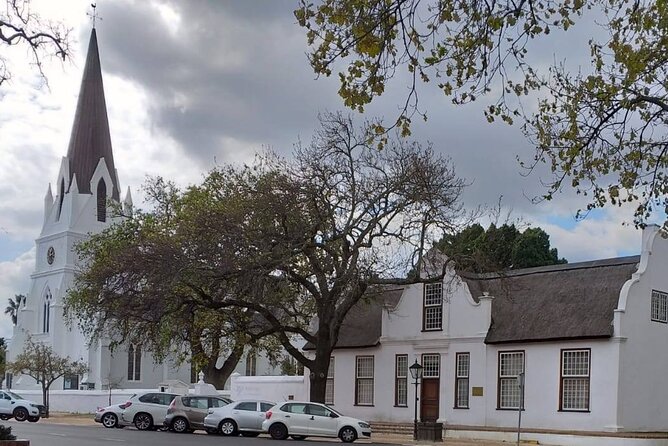
- Cape Dutch architecture you can actually read
- Mill Stream, the Eerste River, and Dorp Street
- History told through fires, street names, and local tales
- A small group, with one sound-related weakness
- Is $12.65 good value?
- Weather, walking, and practical planning
- Who will get the most from this walk?
- Should you book the Stellenbosch walking tour?
- FAQ
- Where does the Stellenbosch walking tour begin?
- Where does the tour end?
- How long does the walking tour last?
- What places are included on the route?
- How much does the experience cost?
- What happens if bad weather cancels the tour?
Key points to know before you go
- Church Street starting point: Meet at 47 Church St in central Stellenbosch, with the walk ending back at the same place.
- A compact introduction: The 90-minute route covers central highlights without taking up half your day.
- Architecture with context: You learn why Cape Dutch buildings look the way they do, rather than simply photographing old façades.
- Stories beyond the main sights: Guides explain street names, fires, early settlers, local tales, and the town’s growth.
- Small-group format: The maximum is 12 people, a useful size for listening and asking questions.
- Low-cost planning tool: At $12.65, the walk can help you decide where to return for wine, food, art, or further exploring.
Why a walking tour works so well in Stellenbosch

Stellenbosch is easy to admire at a glance. Whitewashed façades, old trees, university buildings, and central streets create a pleasant setting for a stroll. But the town makes more sense when someone explains how its streets developed and why its buildings have particular shapes and details.
That is the real purpose of this tour. You are not simply shown a row of attractive buildings. You hear how Stellenbosch grew from a small settlement into the university town you see today. The guide also connects older events with present-day life, so the town feels like a living place rather than an open-air museum.
I especially like this approach for a first visit. You can walk around on your own afterward, but you will have a clearer sense of what deserves a closer look. A building that might otherwise seem like a pretty backdrop can become part of a story about settlement, fire, religion, street planning, or local families.
The walk is also a good fit if you have limited time. It does not ask you to give up a full morning or afternoon. You get a focused introduction, then remain free to visit wineries, museums, restaurants, or other parts of the area.
More Walking Tours in Stellenbosch
- Stellenbosch: Guided Historical Walking Tour
★ 4.7 · 283 reviews - Stellenbosch: Khayamandi Township Walking Tour
★ 4.3 · 5 reviews - Franschhoek Wine Walk with Lunch
★ 5.0 · 30 reviews
Starting at 47 Church Street
The meeting point is 47 Church St in Stellenbosch Central. Church Street is a sensible place to begin because the central area gives the guide plenty to discuss from the first minutes of the walk.
The listed opening stop is Church Street, with about 10 minutes noted there. You can expect the guide to use this early section to orient you to the town and set up the wider story. Pay attention to the first explanations about the buildings and street layout, since they provide clues for understanding the rest of the route.
You should arrive ready to walk, not merely stand in one place. The tour is described as an easy stroll, but a moderate level of physical fitness is recommended. Comfortable shoes will make the experience more pleasant, particularly if you are already spending the day on foot.
The activity finishes back at the meeting point. That makes the walk simple to fit around other plans, and it means you do not need to arrange a separate ride from the end of the route.
Cape Dutch architecture you can actually read
One of the strongest parts of the experience is its attention to architecture. Stellenbosch is known for its Cape Dutch buildings, but the value comes from learning what you are looking at.
The guide points out distinctive features and explains how the buildings relate to the town’s past. You can expect to hear more than a list of dates and names. The commentary includes the development of the town, the stories behind important buildings, and unusual details that are easy to miss when you explore alone.
This is where a guided walk earns its modest price. A photograph can show you a gable or façade, but it cannot explain why a building matters or how it fits into the story of Stellenbosch. The guide gives you that missing layer.
Several guides have earned strong praise for this part of the walk. Marlene has been described as experienced and particularly strong on the town’s beginnings. Juliana has been praised for her detailed explanations and patience with questions. Those comments suggest that the quality of the commentary is the main reason to book.
You may also hear about specific features of buildings and hotels, along with the way streets and important structures changed over time. One useful theme concerns the church and the effect of past fires on where infrastructure was placed. Details like this help you notice the town’s planning instead of seeing only its postcard appearance.
Mill Stream, the Eerste River, and Dorp Street
The route includes Mill Stream, the Eerste River, and Dorp Street. These places matter because they broaden the tour beyond a single architectural street.
Waterways help explain why settlements developed where they did. The guide connects Mill Stream and the Eerste River with the town’s early growth, giving you a better feel for how natural features shaped local life. You are likely to appreciate these stops more after hearing the explanation, since the importance of a stream or river is not always obvious during a quick walk.
Dorp Street brings the focus back to the built town. It is one of the central areas where you can see the relationship between old buildings, street planning, and modern activity. The tour uses this setting to explain both the town’s early years and its present character.
The route is described as covering the central historic areas rather than the entire town. That is a strength if you want a manageable outing, but it is also a limit. You should not book this expecting a full Stellenbosch day tour or transportation to outlying attractions. Transportation to and from attractions is not included, and the walk begins and ends at the stated meeting point.
More walking tours:
- Soweto: Walking Tour with a Local Guide and Lunch
★ 4.9 · 648 reviews - Plettenberg Bay: Bungee Jumping with Zipline and Sky Walk
★ 5.0 · 506 reviews - Cape Town: Nathi Langa Township Walking Tour
★ 4.9 · 493 reviews - Cape Town: Art, Culture & History Walking Tour
★ 4.9 · 392 reviews
History told through fires, street names, and local tales
The commentary seems strongest when it gets specific. You may hear stories about street names, early inhabitants, unfortunate events, and the reasons certain buildings or institutions ended up where they are.
One especially useful detail concerns the impact of notorious fires on the town’s layout and the location of the current church. Stories like this are memorable because they tie a visible place to a clear event. You are more likely to remember a street when you know the mishap or decision that shaped it.
The guides also bring in local tales rather than sticking to formal dates. That gives the walk a human scale. Early settlement is not presented as a tidy chain of success. You hear about adventures, mistakes, and problems along the way.
At the same time, the tour includes present-day Stellenbosch. The town is not treated as frozen in its early period. You learn about its role as a university town and get a sense of how historic buildings sit alongside current local life.
That balance is important. I prefer a walking tour that explains both what happened long ago and what you are seeing now. The best guides, including Johan and Johann, have also offered suggestions about art, wine, and places to eat. That advice can be useful after the formal walk ends, especially if this is your first day in town.
A small group, with one sound-related weakness
The maximum group size is 12 people. That is small enough to feel more personal than a large city walk, and it gives you a reasonable chance to ask questions. Several guides have been praised for answering questions patiently and adapting their commentary to the group.
The small size also helps with the pace. You can stop to look at a building or hear a story without managing a crowd of strangers. For families, pairs, and solo visitors, this format should feel manageable.
There is one practical weakness to keep in mind. At least one participant had trouble hearing the presentation because of traffic and crowd noise, suggesting that the guide did not use a headset or speaker. If you have hearing difficulty, stand close to the guide and mention the issue at the start. The tour may be less satisfying if you are stuck at the back.
This is not a reason to dismiss the experience, but it is a real consideration. A walking tour succeeds only if you can hear the explanation. The guide’s skill matters, yet the street setting can work against clear sound.
Is $12.65 good value?
At $12.65, the price is modest for a guided 90-minute introduction. You are paying for a professional guide, focused route, and local explanation rather than transport or entry tickets.
That distinction matters. The tour does not include transportation to attractions, and there are no listed admission fees bundled into the experience. You are buying interpretation and orientation. If you would otherwise wander through central Stellenbosch without knowing which buildings or streets deserve your attention, the cost is easy to justify.
I see the best value in booking this near the beginning of your stay. You can use the guide’s advice about wine, art, and food to shape the rest of your time. You may also find it useful before a self-guided walk, since you will already understand the broad story of the town.
It is less useful if you have already spent several days studying Stellenbosch’s architecture and history, or if you want a tour built around wine tastings and transport. This is a town walk, not a winery excursion.
The experience is booked, on average, 16 days ahead. That does not mean you must reserve it that early, but it suggests that advance planning is sensible during busy periods. The small 12-person limit can make spaces less flexible than on a large group outing.
Weather, walking, and practical planning
The tour depends on favorable weather. If poor weather causes a cancellation, you are offered an alternative date. You should still check the forecast before setting aside the time, especially if you prefer a relaxed outdoor walk rather than a hurried one under difficult conditions.
The activity lasts about 1 hour and 30 minutes. That is long enough for a proper introduction but short enough to combine with other plans. Leave room before or after it if you want to ask the guide about restaurants, wine, or local places worth seeing.
Service animals are allowed, and the starting point is near public transportation. The tour does not provide transport to or from attractions, so you are responsible for getting to 47 Church St and making your own plans afterward. Since the walk returns to the meeting point, your transport plan stays straightforward.
The cancellation terms are generous if you act early. You can receive a full refund by canceling at least 24 hours before the local start time. Cancellations or changes made within 24 hours are not refunded or accepted.
Who will get the most from this walk?
I would choose this tour for a first-time visitor who wants an efficient introduction to Stellenbosch. It is also a good match for anyone who enjoys buildings, town planning, local stories, and the link between past events and current life.
Families can use it as a gentle way to learn the town together. One father and son particularly enjoyed the old buildings and the feel of university life, which points to the tour’s broad appeal. You do not need to be a specialist in architecture to follow the commentary.
It also suits solo visitors and couples who want a little direction without committing to a full-day excursion. The guide’s suggestions about food, wine, and art can help you make better choices after the walk.
I would hesitate if you dislike guided commentary, have difficulty walking for 90 minutes, or want to spend the time tasting wine. You should also think carefully if hearing a guide in normal street conditions is difficult for you. A small group helps, but no speaker system is guaranteed.
Should you book the Stellenbosch walking tour?
I would book it if you are new to Stellenbosch, have roughly 90 minutes available, and want the town’s buildings and streets to make more sense. The $12.65 price is fair, the route covers central highlights, and the strongest guides appear to bring warmth, detail, and useful local advice.
Book it early if your schedule is tight, and try to stay close to the guide so traffic does not swallow the commentary. If you want a focused history and architecture walk rather than a transport-heavy wine tour, this is a practical way to get your bearings fast.
FAQ
Where does the Stellenbosch walking tour begin?
The tour begins at 47 Church St, Stellenbosch Central, Stellenbosch, 7600, South Africa.
Where does the tour end?
The activity ends back at the meeting point on Church Street.
How long does the walking tour last?
The tour lasts approximately 1 hour and 30 minutes.
What places are included on the route?
The walk includes central Stellenbosch highlights such as Mill Stream, the Eerste River, and Dorp Street. The listed starting stop is Church Street.
How much does the experience cost?
The listed price is $12.65 per person.
What happens if bad weather cancels the tour?
The tour is subject to favorable weather. If it is canceled because of poor weather, you can choose an alternative date.
Newest reviews from Stellenbosch
- Cape Wineland 3 Award Winning Vineyards★ 4.6 · 5 reviews
- Full-Day Chocolate Cheese Olive and Wine Tour from Franschhoek★ 4.0 · 5 reviews
- Stellenbosch: Khayamandi Township Walking Tour★ 4.3 · 5 reviews
- E-Bike Stellenbosch Winelands – Full Day Private Tour★ 5.0 · 6 reviews
- Wijntoer – Reserve tour with a winemaker!★ 5.0 · 7 reviews
- Horse Riding Wildlife Safari★ 5.0 · 7 reviews
- Half Day Horseback Wine Tour★ 4.5 · 7 reviews
- 1h30m – Nature Quad Trail★ 4.5 · 7 reviews
Walking Tours, compared.

Soweto: Walking Tour with a Local Guide and Lunch
Read our review →





Browse the lists this tour appears in