
Reviewed · STREET ART
Johannesburg: Street Art and Culture in Maboneng!
Art tells Maboneng’s story. This two-hour walk brings Johannesburg’s creative side into focus, from murals by local and international artists to the old industrial streets now filled with galleries, cafés, shops, and restaurants. I especially like the strong local perspective and the way the tour explains what the artwork means, rather than treating it as simple decoration. The main consideration is that $40 is a fairly serious price for a two-hour walk, especially since coffee, food, and drinks cost extra.
The tour also gives you a useful introduction to Johannesburg’s changing inner city. I like the visit to the Hideout Bar, an alleged meeting place for anti-apartheid activists, and the chance to hear about Maboneng from guides who know the area personally. Ayanda receives the most praise for his warmth, humor, and command of local history, although Bonny, Kaiser, and Michael have also led highly rated outings.
In This Review
- Five details worth knowing before you book
- Starting under the bridge at Home of the Bean
- Reading Maboneng through its walls
- The Hideout Bar and Maboneng’s political past
- From mining district to creative neighborhood
- Galleries, traders, food, and daily life
- A viewpoint and a final look at the precinct
- The guides make the difference
- Is $40 good value for two hours?
- Who should book this Maboneng walk?
- FAQ
- How long does the Maboneng Street Art and Culture tour last?
- Where does the tour begin?
- Is coffee included in the tour price?
- What language is the tour offered in?
- Is the tour wheelchair accessible?
- What street artists might I learn about?
- Can I cancel for a refund?
- Should you book it?
Five details worth knowing before you book
- The tour begins at Home of the Bean, on the corner of Fox and Berea streets, under the bridge.
- Street art is the main subject, with work connected to artists such as ESPO Powers and DBongz.
- Maboneng’s story reaches from mining and industry to urban renewal, art, food, and new businesses.
- The Hideout Bar adds a political layer, with its alleged links to Nelson Mandela and other anti-apartheid activists.
- The tour is in English only, and it is listed as wheelchair accessible.
- Bring money for purchases and refreshments, since informal traders, artists, cafés, and bars are not included in the $40 cost.
Starting under the bridge at Home of the Bean
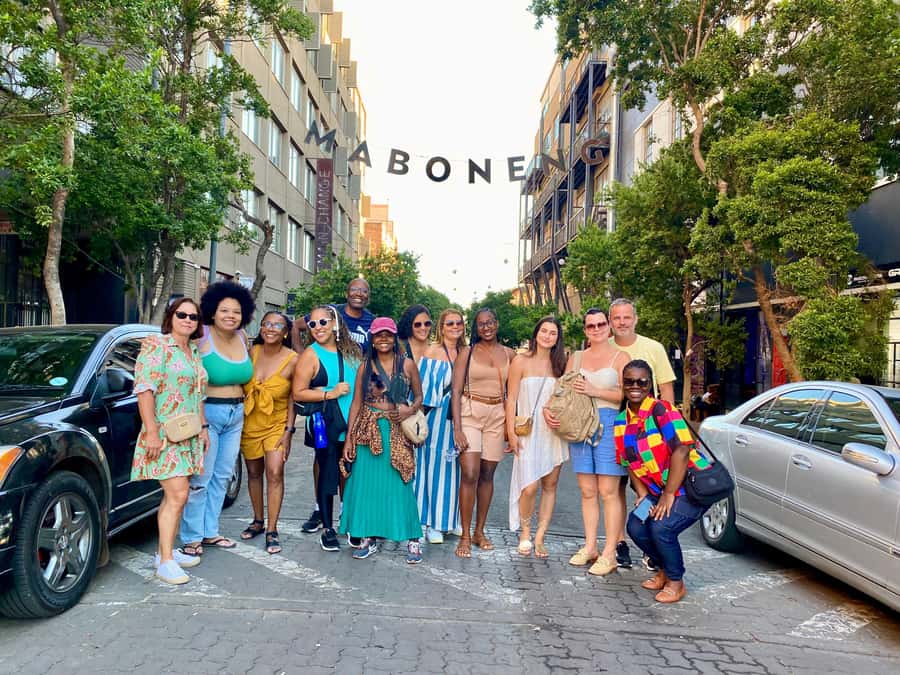
Your meeting point is Home of the Bean, a local coffee shop at Fox and Berea streets. The building can look like an old industrial structure from the outside, so you should wait inside the café if you arrive early rather than standing on the pavement.
The first 15 minutes are used for coffee and a safety briefing. The coffee is not included, but this opening gives you a practical chance to settle in, meet the guide, and ask questions before walking into the neighborhood.
The tour operator communicates by WhatsApp or message about 30 minutes before the start. That is useful in a city where meeting points can be easy to miss, especially when the entrance is tucked beneath a bridge. Keep your phone available and contact the operator if you are delayed or cannot find the café.
The atmosphere of the tour can vary with the group. One account describes a relaxed outing with only two to four people, but you should not assume every departure will be that small. A compact group makes it easier to ask questions and stop near murals without blocking the pavement.
A few more tours worth putting side by side
- From Johannesburg: Pilanesberg Nature Reserve Game Safari
★ 4.8 · 1,327 reviews - Johannesburg: Hop-On Hop-Off Bus with Optional Soweto Tour
★ 4.6 · 985 reviews - Soweto /Johannesburg and Apartheid Museum Guided Full Day Tour
★ 5.0 · 932 reviews
Reading Maboneng through its walls
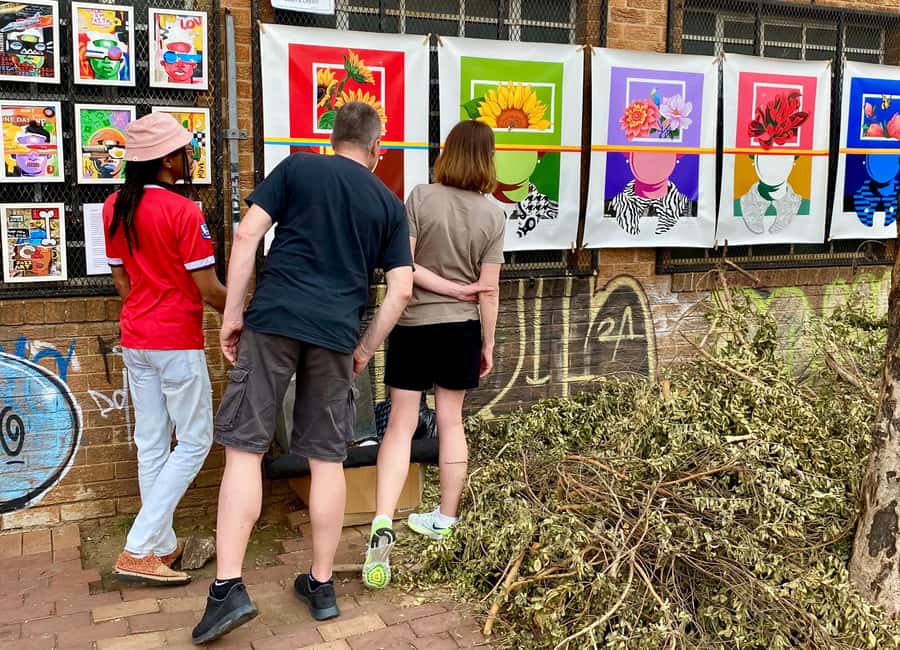
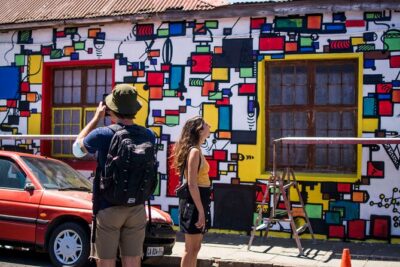
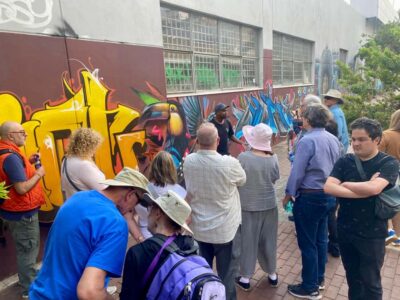
After the introduction, you spend around 30 minutes walking through Maboneng and looking at street art across the precinct. The appeal is not simply the number of murals. The guide explains the artists, the ideas behind individual works, and how public art fits into the neighborhood’s broader change.
You might see work by artists including ESPO Powers and DBongz, with a mix of local and international styles. The art offers an approachable way into difficult subjects, including identity, city life, politics, community, and the changing face of Johannesburg.
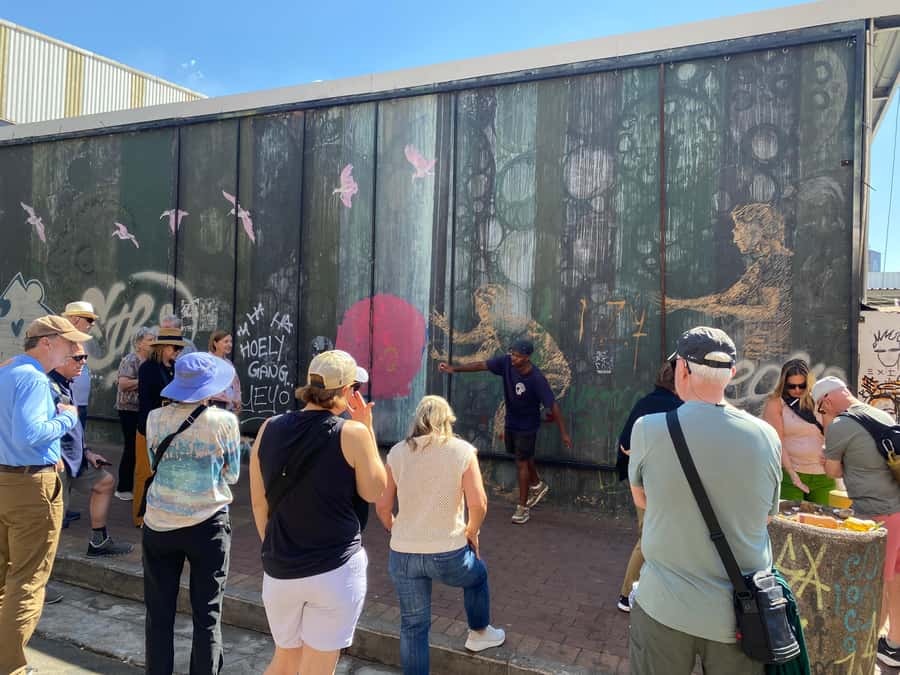
This is where the guide makes the biggest difference. On your own, you may notice color, scale, and technique but miss the context. A guide can point out why a particular wall matters, who created it, and how it relates to the surrounding streets.
Ayanda is the name most often associated with the tour. He is described as a local resident with personal experience of Maboneng’s changes, and his ability to connect street art with everyday life is a major strength. His friendly manner also helps the walk feel like a conversation instead of a school lecture.
The schedule allows time to stop and look, but not to study every mural at length. If you are a serious street-art photographer or want a slow art tour, two hours may feel short. If you want a clear introduction with enough background to continue exploring on your own, the pace should work well.
The Hideout Bar and Maboneng’s political past
One of the most memorable stops is the Hideout Bar at Curiocity Backpackers. It is presented as an alleged hideout for Nelson Mandela and other anti-apartheid activists.
The word alleged matters. This is a story tied to local memory and political history, not a formally explained museum exhibit with a long display of documents. The value comes from hearing the story in the place itself and considering how ordinary urban spaces could take on importance during apartheid.
The stop lasts about 15 minutes. That is enough for a visit and some explanation, but you should not expect a full apartheid-history lecture. The tour uses this location as one piece of a larger story about Johannesburg, resistance, migration, work, and the way buildings gather meaning over time.
This stop is especially useful if you are new to South African history. Maboneng is not presented as a polished entertainment district detached from the country’s past. Its cafés, bars, galleries, and murals sit alongside memories of political struggle and industrial work.
From mining district to creative neighborhood
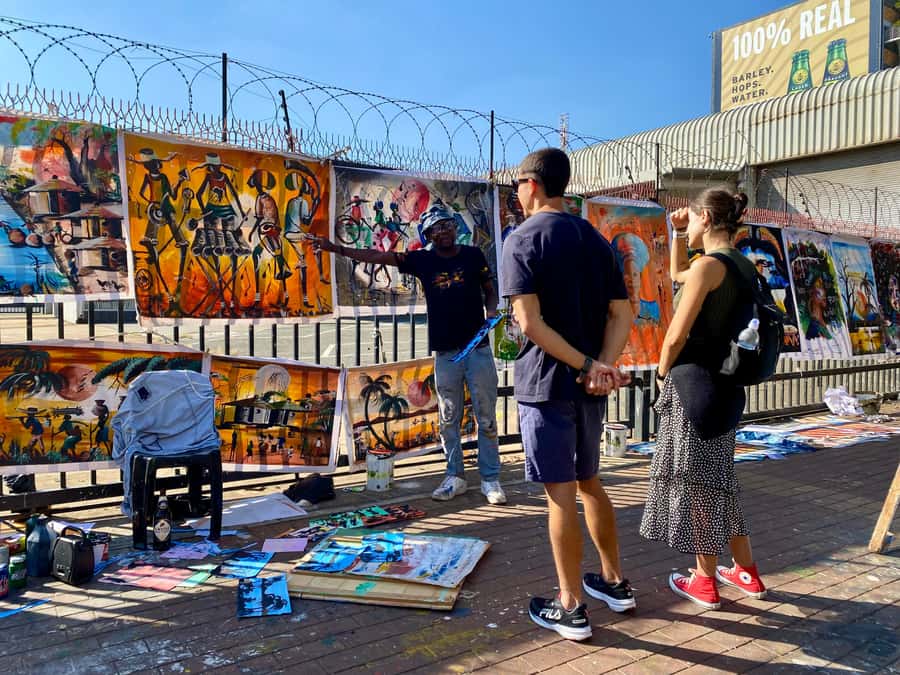
Another 30-minute walk gives you more time to understand Maboneng’s redevelopment. The area has strong links to Johannesburg’s mining economy and began as an old industrial district. Since 2009, it has changed into a popular inner-city area associated with art, food, small businesses, and design.
That change is not just a feel-good story about empty warehouses becoming cool spaces. The tour also addresses how redevelopment was funded and the vision behind it. You get a chance to think about the benefits and tensions of urban renewal, including who gets to shape a neighborhood and who gets to call it home.
This is one of the best reasons to book the walk instead of simply visiting a restaurant or gallery in Maboneng. You see the area as a work in progress. The art, shops, and food businesses show what the district hopes to become, while the older buildings and local community point to what was already there.
Maboneng means Place of Light, a fitting name for an area that has been marketed through creativity and renewal. Yet the tour does not reduce the neighborhood to a brand. It presents a place with different communities, commercial energy, informal trading, and an evolving identity.
The guide’s local connections add something special. Several visitors describe people greeting Ayanda as he walks through the streets, which suggests that he is not simply repeating a prepared script. His familiarity with the area helps you see Maboneng as a lived-in neighborhood rather than an outdoor gallery.
A completely different kind of day out on the same trip:
- Johannesburg Hop-On Hop-Off City Tour with Soweto Option
★ 4.5 · 768 reviews - Full Day Ultimate Pilanesberg National Park Safari from Johannesburg or Pretoria
★ 4.5 · 718 reviews - Half-Day Tour of Soweto Tour
★ 4.5 · 712 reviews - Soweto: Walking Tour with a Local Guide and Lunch
★ 4.9 · 648 reviews
Galleries, traders, food, and daily life
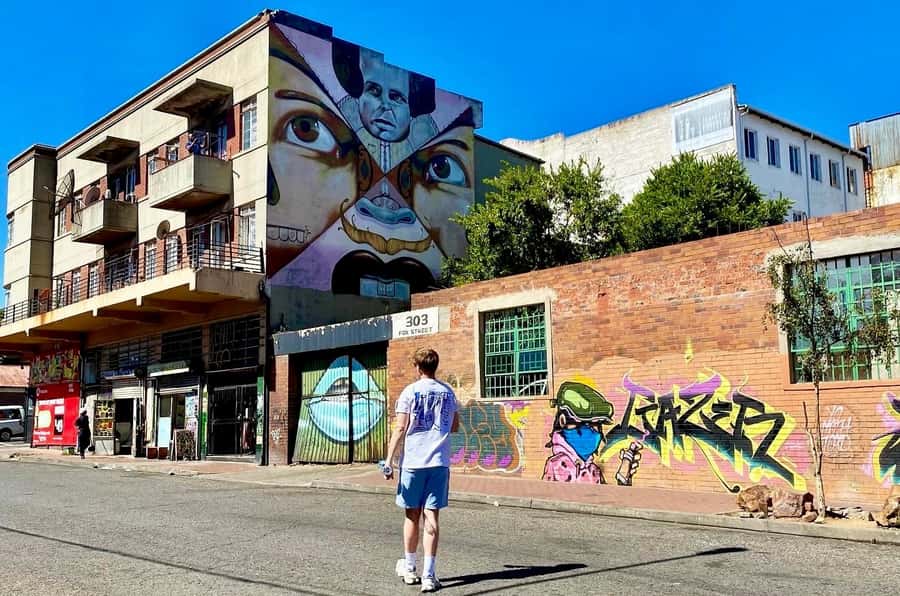
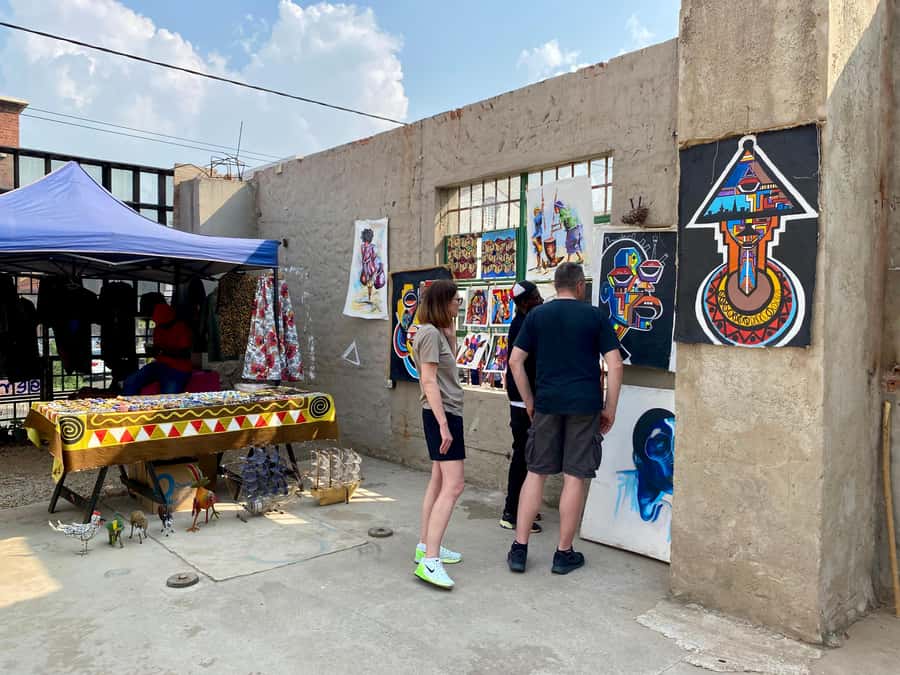
The walk includes Maboneng Arts Village, a space where artists and creative workers sell their pieces. This is a useful stop if you want to take home something more personal than a standard souvenir.
You will also pass informal traders, curio shops, gift stores, restaurants, and galleries. The range of businesses helps explain Maboneng’s appeal, but it also means the area is not only about large commissioned murals. You see a mix of formal creative spaces and street-level commerce.
Bring cash or a card if you may want to buy art, crafts, or small items along the route. Purchases are not part of the tour price. Food and drinks are also your responsibility, including the opening coffee at Home of the Bean.
I would resist trying to turn this into a shopping expedition. The tour lasts only two hours, and stopping at every stall could cut into the time available for the murals and historical explanations. Instead, note places that interest you and return later if your schedule allows.
The people who live and work in Maboneng are part of the experience. The tour aims to show cultural variety and the different ways people use the neighborhood. That makes the walk more useful than a quick circuit of photogenic walls, though the exact balance between art, shopping, and local life depends on the guide and group.
A viewpoint and a final look at the precinct
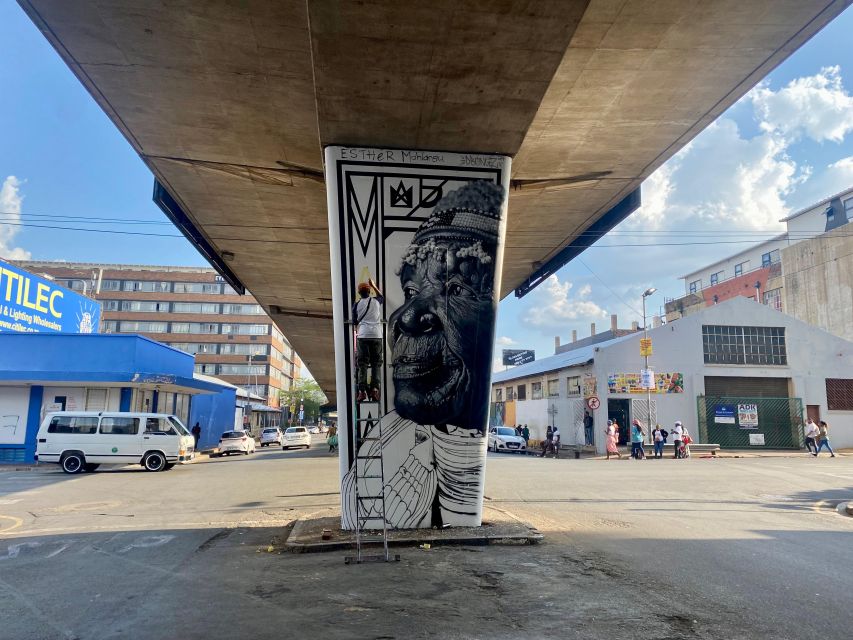
The itinerary includes about 15 minutes at a viewpoint, with scenic views along the way. This offers a break from looking at walls and gives you a wider sense of the inner city.
The precise viewpoint is not specified, so you should not book this expecting a famous landmark or a long rooftop visit. One account highlights a good view from a rooftop bar, but the main point is the perspective, not a guaranteed drink or extended stop.
The final 15 minutes bring you back through Maboneng toward Home of the Bean. This return walk gives the guide room to answer questions and tie together the neighborhood’s art, history, and current development.
Some visitors have found that explanations can occasionally repeat, particularly when the tour covers connected subjects more than once. That is a minor drawback, but it may matter if you prefer a tightly edited presentation. The upside is that you have several chances to ask for clarification, and the guides generally welcome questions.
The guides make the difference
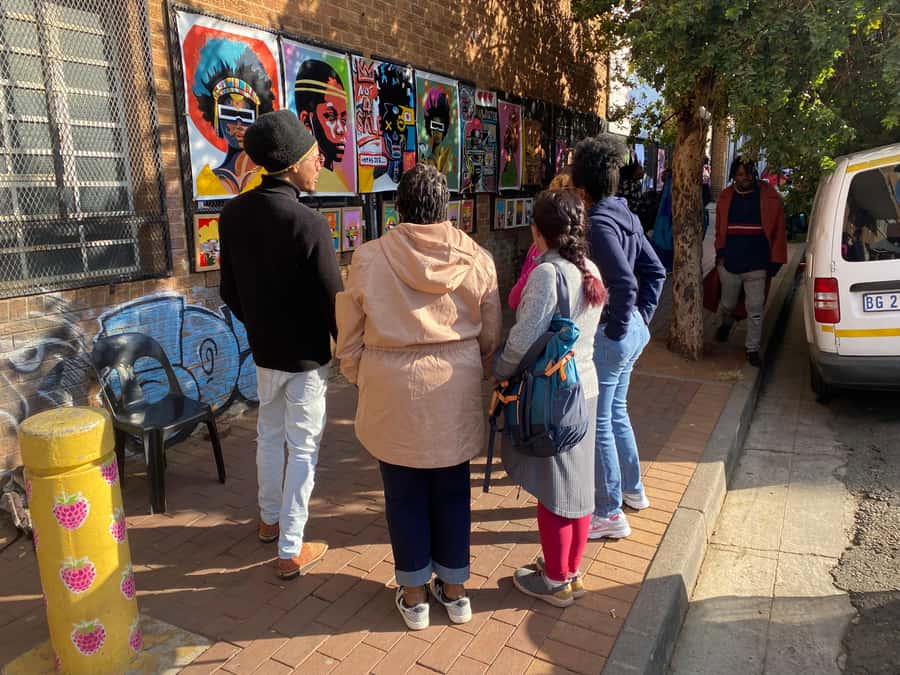
The strongest part of this experience is the human element. Ayanda receives repeated praise for his warmth, personal connection to Maboneng, and ability to explain both individual artworks and wider South African issues.
He is also described as articulate, humorous, patient, and helpful. On one outing, he assisted with finding an ATM. On another, he helped arrange a parking spot near the meeting point. These are small touches, but they matter when you are navigating Johannesburg for the first time.
Other guides have also been praised. Bonny is described as extremely well informed and friendly. Kaiser was appreciated for knowing the neighborhood and its people, while Michael was praised for his professional and courteous manner.
Because the experience is in English only, you need enough English to follow explanations about art, apartheid, urban development, and local culture. The language is not just used for directions. It carries the main value of the tour.
The safety briefing at the start is useful, and several accounts describe feeling comfortable walking with the guide. You should still use ordinary city awareness, keep valuables secure, and follow the guide’s advice. Maboneng is a working inner-city neighborhood, not a controlled museum complex.
Is $40 good value for two hours?
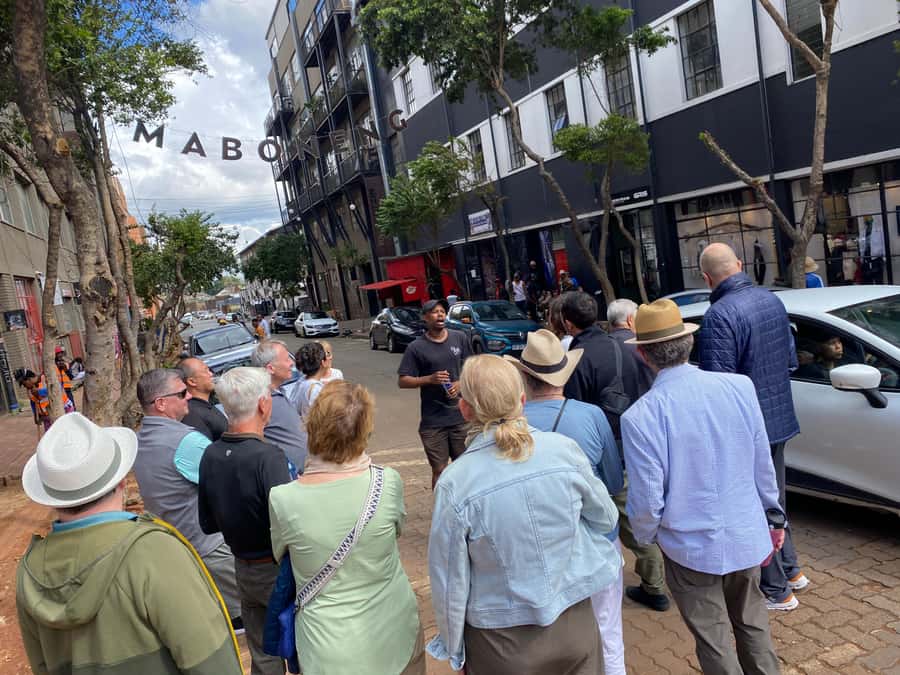
At $40 per person, this is not the cheapest way to see Maboneng. You pay for a two-hour guided walk, local interpretation, and entry to the sites visited. Coffee, food, drinks, and purchases are extra.
The value depends on what you want from the visit. If you only want photographs of murals, you can walk through the precinct yourself for less. But you would lose much of the explanation about artists, redevelopment, political memory, and the social mix of the area.
For a first visit to Johannesburg, the tour can work as a compact orientation. It shows you an inner-city district while giving you a framework for understanding what you see. The cost is easier to justify if you treat it as a cultural introduction rather than a simple art walk.
It is also useful for a short Johannesburg stopover. One visitor had limited time before heading to the airport and still managed to see the main sights and get a helpful introduction. The two-hour length keeps the commitment manageable.
The free cancellation option up to 24 hours before the start and reserve-now, pay-later arrangement add flexibility. These terms are helpful if your Johannesburg plans are still shifting, but they do not change the basic question: you are paying a premium for interpretation and local access.
Who should book this Maboneng walk?
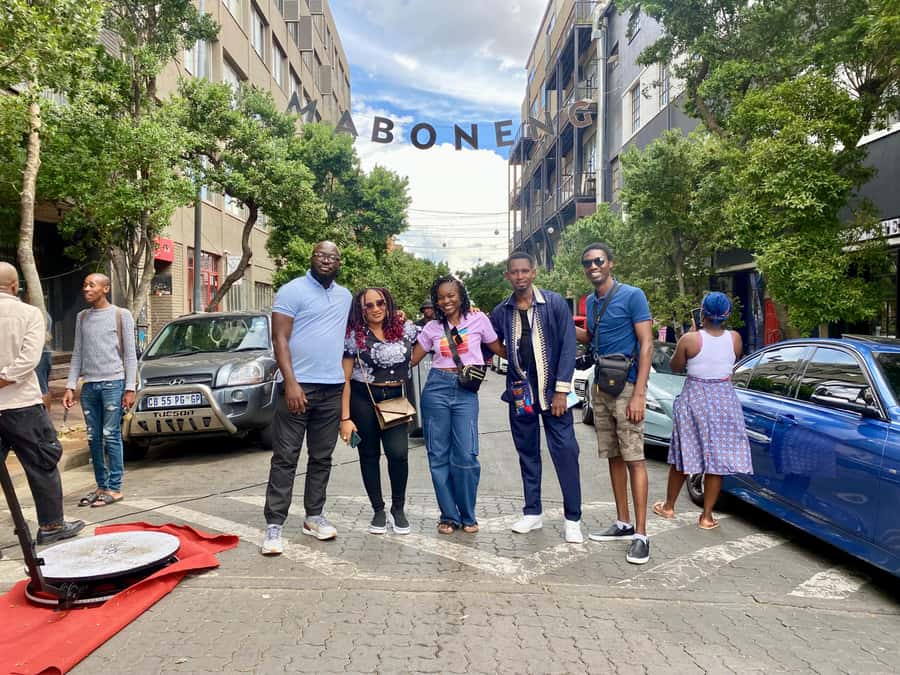
I would recommend it most strongly if you:
- Want to understand the stories behind street art, not just photograph it.
- Are visiting Johannesburg for the first time.
- Prefer a local guide to wandering through an unfamiliar inner-city district alone.
- Care about apartheid history, urban renewal, and present-day city life.
- Enjoy small galleries, independent shops, informal trading, and creative spaces.
- Have about two hours and want a focused introduction to Maboneng.
It may be less suitable if you want a long art workshop, extensive shopping time, or a full-day history tour. The pace is steady, and the route covers several subjects in a short period.
The walk is listed as wheelchair accessible, which makes it more practical for many visitors. Still, the tour takes place on city streets and includes movement between several stops, so it is sensible to confirm current route details if you have specific mobility needs.
FAQ
How long does the Maboneng Street Art and Culture tour last?
The tour lasts two hours, including the opening café stop, safety briefing, walking sections, the Hideout Bar visit, and the viewpoint.
Where does the tour begin?
It begins at Home of the Bean coffee shop on the corner of Fox and Berea Street, under the bridge. Wait inside the café if you arrive before the start.
Is coffee included in the tour price?
No. Coffee, food, and all other drinks are paid for separately by you.
What language is the tour offered in?
The tour is offered in English only and includes a live English-speaking guide.
Is the tour wheelchair accessible?
Yes, the experience is listed as wheelchair accessible.
What street artists might I learn about?
The tour can include work by local and international artists, including ESPO Powers and DBongz. The guide explains the artists and meanings behind selected murals.
Can I cancel for a refund?
You can cancel up to 24 hours before the tour for a full refund. You can also reserve now and pay later.
Should you book it?
Book this tour if you want Maboneng explained, not merely photographed. The best parts are the local guide, the stories behind the murals, the Hideout Bar, and the frank look at how a former industrial area has changed since 2009.
The $40 price is reasonable for a well-led cultural introduction, but less convincing if you plan to spend most of the time shopping or taking pictures. For first-time visitors, short-stay visitors, and anyone curious about present-day Johannesburg, this is a smart way to get your bearings. Ayanda is the guide I would hope to meet, though the other named guides have also earned strong praise.
Newest reviews from Johannesburg
- Cradle of Humankind and Maropeng Day Tour from Johannesburg★ 4.0 · 5 reviews
- Explore Soweto 8 Hour Tour with Lunch and Museum Visit★ 5.0 · 5 reviews
- 3 Day All Incl. Private Kruger Park Safari Incl. Transfer From Johannesburg★ 5.0 · 5 reviews
- Harties cableway Tour★ 4.5 · 5 reviews
- Pretoria Historical Tour★ 4.0 · 5 reviews
- Constitutional Hill and Soweto 5 hours tour.★ 5.0 · 5 reviews
- 5 Day Kruger National Park and Panorama Route Safari★ 4.5 · 5 reviews
- Luxury Car Johannesburg Airport Private Transfer★ 5.0 · 5 reviews
Street Art, compared.

Colours of Johannesburg: A Graffiti & Street Art Tour
Read our review →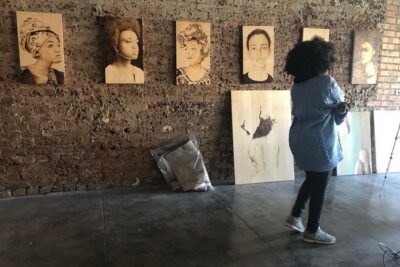
(Meet the Artist)Art Gallery & Street Art tour with lunch
Read our review →
Johannesburg Street Art & Museum Walking or E-scooter Tour
Read our review →Browse the lists this tour appears in