
Reviewed · STREET ART
Colours of Johannesburg: A Graffiti & Street Art Tour
Johannesburg wears its stories on walls. This 210-minute walking tour connects Braamfontein, Newtown, and Maboneng, showing how tags, murals, and public art reflect the city’s people and changing neighborhoods. I like the clear explanation of the difference between graffiti and street art, and I especially like that guide Ayanda adds personal knowledge of the city and its artists.
The tour also includes transport between districts, which saves your feet and makes three separate areas practical in one afternoon. The main consideration is that it is offered in English only, and the optional graffiti artist appearance is never guaranteed. The local graffiti store may also be closed from December 24 through January 20.
In This Review
- Five things to know before you go
- Why this tour is more than a mural walk
- Meeting at 70 Juta Street in Braamfontein
- Braamfontein: murals and the story of a changing precinct
- The graffiti store: supplies, clothing, and a useful surprise
- Newtown: Johannesburg’s arts district and graffiti center
- Maboneng: a colorful finish with a different mood
- What Ayanda adds to the afternoon
- The price: fair value for a three-district city tour
- Who will enjoy it most
- Practical advice for a better afternoon
- Should you book Colours of Johannesburg?
- FAQ
- Where does the Colours of Johannesburg tour begin?
- Where does the tour finish?
- How long does the tour last?
- Which neighborhoods does the tour visit?
- Is transport included?
- Is the graffiti store always open?
- Is a graffiti artist guaranteed to join the tour?
- What language is the tour offered in?
- What should you bring?
Five things to know before you go
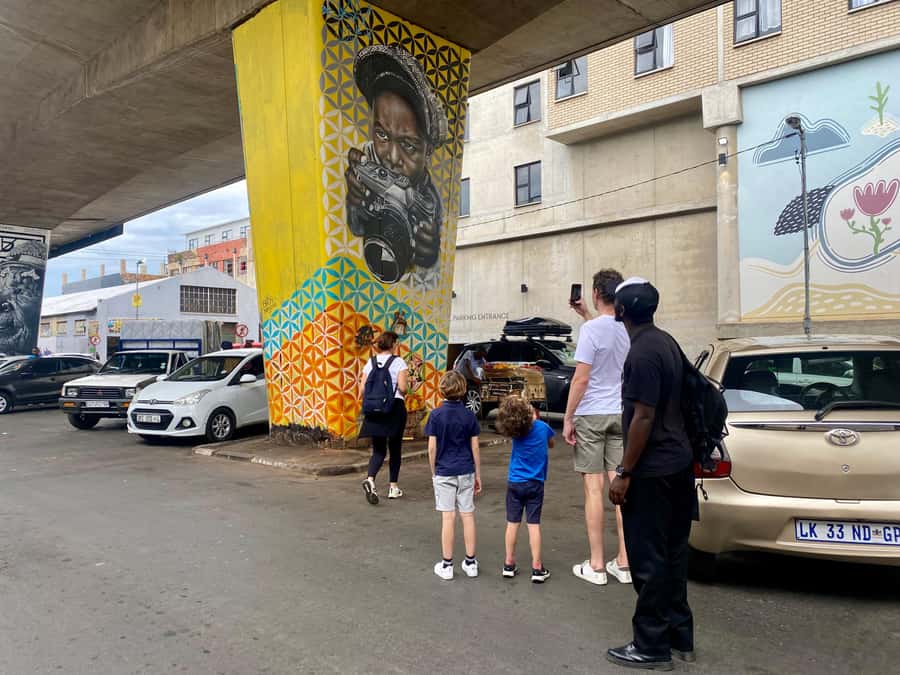
- Three inner-city districts in 210 minutes: You see Braamfontein, Newtown, and Maboneng rather than staying in one small art quarter.
- Ayanda brings local context: He grew up in the areas covered and explains both the art and Johannesburg’s wider past and present.
- Graffiti and street art get different treatment: You learn how the two forms relate, not just how to photograph them.
- Transport is included between neighborhoods: The walking sections are linked by transport during the tour.
- The graffiti store adds a hands-on stop: When open, you can browse local merchandise, supplies, and an exhibition room.
- Comfortable shoes matter: This is a walking tour with sightseeing sections in three districts, so bring water and wear shoes you can use for several hours.
Why this tour is more than a mural walk
You can photograph a painted wall in seconds. Understanding who made it, why it appeared there, and how it fits into Johannesburg’s street culture takes longer. That is the real purpose of this tour.
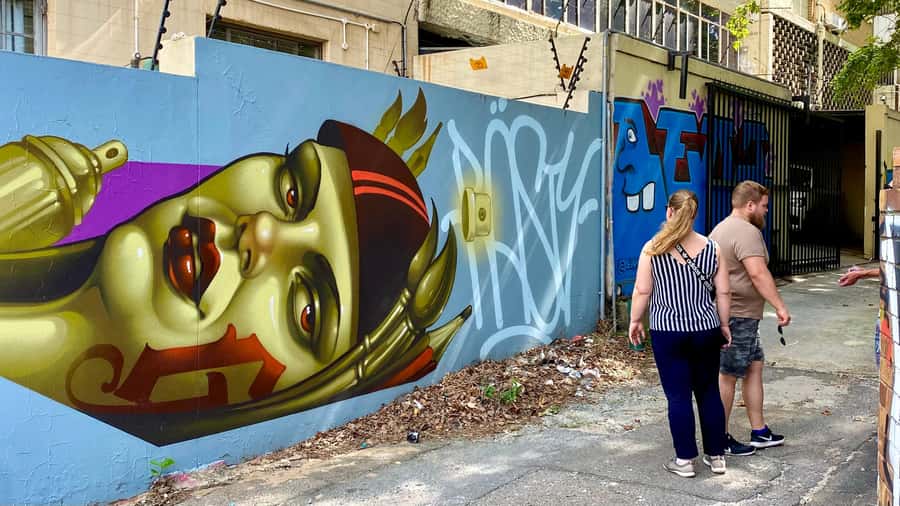
The experience begins with the basic vocabulary. Graffiti and street art overlap, but they are not presented as the same thing. You learn about graffiti writers, tags, large commissioned murals, and the ways artists use public walls to share ideas, mark territory, build reputations, or change how an area feels.
That distinction gives the rest of the afternoon more meaning. A quick signature is no longer just a splash of paint. A large mural is not simply a colorful background for a photograph. You start looking for style, repetition, placement, and clues about the artist.
Ayanda is a major part of the experience. He is described as professional, friendly, and deeply committed to Johannesburg’s street culture. He also knows the city beyond the walls, adding South African history and local context when it helps explain what you are seeing.
That personal connection is useful. This is not a generic art tour that could take place in any city. The route is tied to the neighborhoods, artists, and changes of Johannesburg’s inner city.
A few more tours worth putting side by side
- From Johannesburg: Pilanesberg Nature Reserve Game Safari
★ 4.8 · 1,327 reviews - Johannesburg: Hop-On Hop-Off Bus with Optional Soweto Tour
★ 4.6 · 985 reviews - Soweto /Johannesburg and Apartheid Museum Guided Full Day Tour
★ 5.0 · 932 reviews
Meeting at 70 Juta Street in Braamfontein
The meeting point is inside Skinner Café at 70 Juta Street. Look for the green café on the corner, with large see-through windows and a small outdoor seating area facing Juta Street.
The tour begins with a 15-minute safety briefing at a local restaurant. That may sound like a small detail, but it gives you a sensible start in a city where it is useful to understand how the group will move around. You also have time to meet the guide and get ready before the walking begins.
Arrive prepared for an active afternoon. Comfortable shoes and water are specifically recommended. You will not be walking continuously for three and a half hours because transport links the neighborhoods, but each district includes guided walks and photo stops.
Hotel pickup and drop-off are not included. If you need that service, you are asked to contact the operator separately. For many people, meeting at the café will be straightforward, but this is worth arranging before the day of the tour.
Braamfontein: murals and the story of a changing precinct
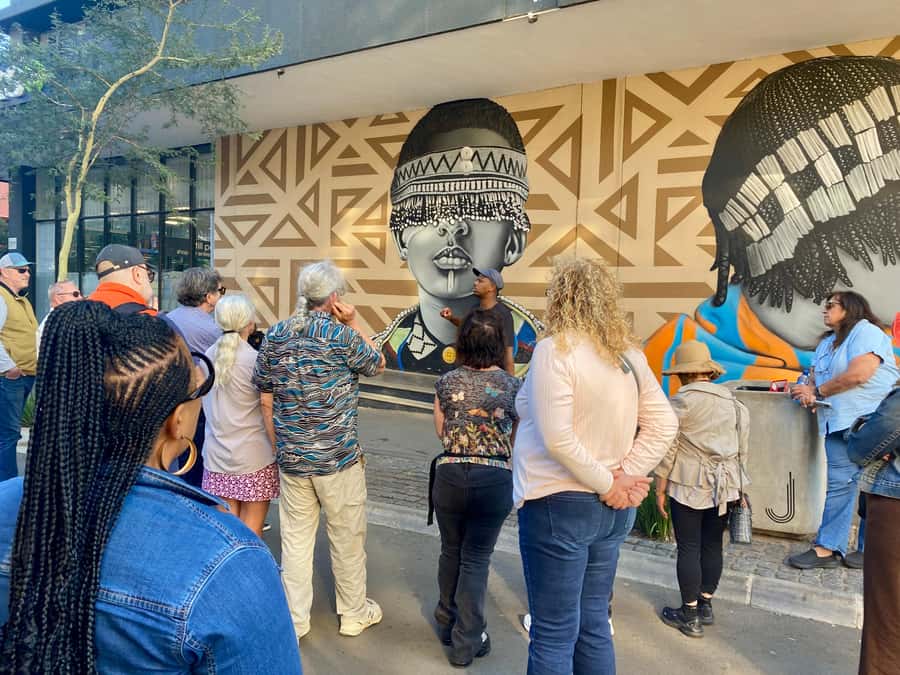
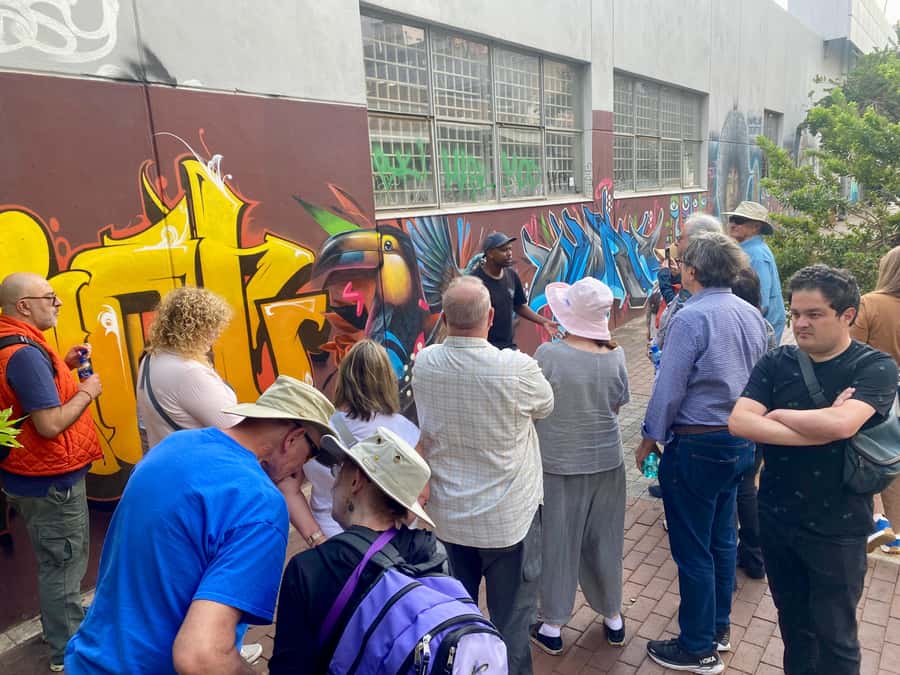
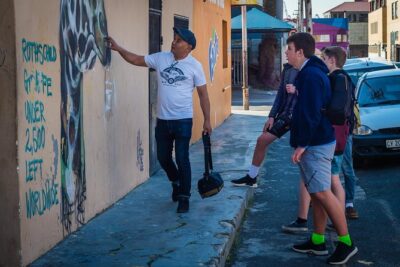
Braamfontein receives about an hour of guided walking and sightseeing. It is a strong opening because the area has large murals, smaller works, and graffiti spread across its walls, giving you a broad introduction before the tour becomes more focused on individual artists and tags.
The guide explains how street art affected the development of Braamfontein from 2003. That context matters. You are not simply being shown a collection of paintings. You are looking at the connection between public art and the way an urban district presents itself, attracts creative activity, and develops a recognizable identity.
Expect to stop often. Some works may be large and easy to spot, while others require you to look at corners, side walls, and smaller surfaces. The tour is built around observation, so it helps to keep your camera ready but not let photography replace the explanation.
This section also introduces some of Johannesburg’s more prolific graffiti writers and street artists. You may begin to recognize repeated tags or styles later in Newtown and Maboneng. That continuity is one of the pleasures of the route: the art does not feel like a series of unrelated decorations.
Braamfontein is also a good place to ask questions. If you want to understand the difference between an artist’s public mural and an unsanctioned tag, or why one work is treated differently from another, this is the point to start the conversation.
The graffiti store: supplies, clothing, and a useful surprise
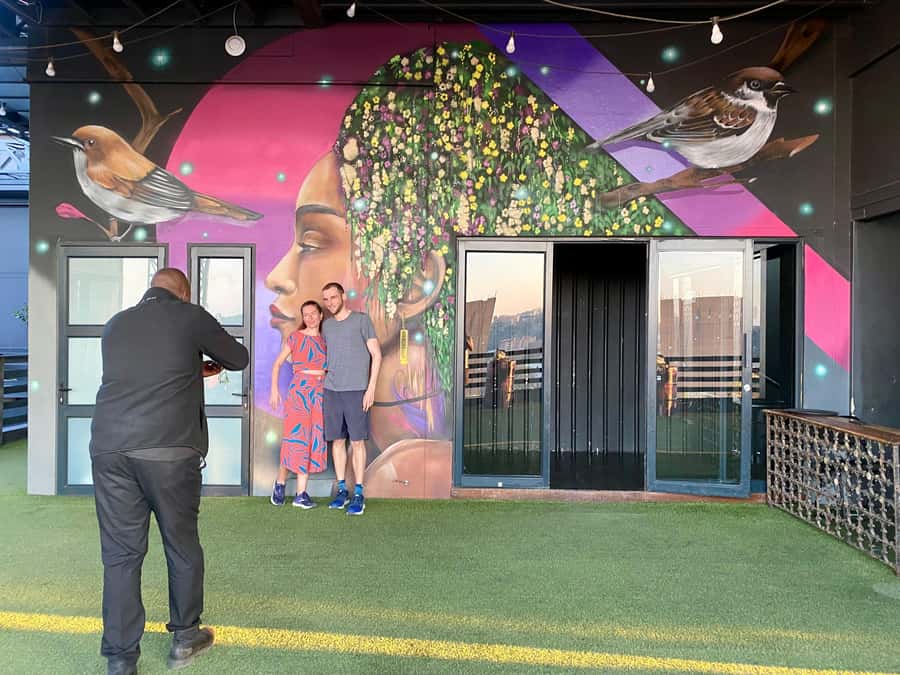
The tour makes a 15-minute stop at a local graffiti store, described as the place where local artists buy their supplies. This gives you a look at graffiti culture away from the walls.
When the store is open, you may be able to browse merchandise designed by local graffiti artists. There can also be an exhibition room with artworks on display. That makes the stop more than a shopping break. It shows how street artists can work across public walls, clothing, gallery-style displays, and art materials.
The store is closed during the festive period from December 24 through January 20, so check the date of your tour if this stop matters to you. The experience continues without it, but you should not book during that period expecting the full store visit.
If you enjoy local design, this is likely to be one of the most useful places to spend a few extra minutes. One participant bought a locally designed T-shirt and continued receiving compliments on it during a later safari trip. That is a better souvenir than a generic city magnet, and it directly supports the artists whose work you have been learning about.
A completely different kind of day out on the same trip:
- Johannesburg Hop-On Hop-Off City Tour with Soweto Option
★ 4.5 · 768 reviews - Full Day Ultimate Pilanesberg National Park Safari from Johannesburg or Pretoria
★ 4.5 · 718 reviews - Half-Day Tour of Soweto Tour
★ 4.5 · 712 reviews - Soweto: Walking Tour with a Local Guide and Lunch
★ 4.9 · 648 reviews
Newtown: Johannesburg’s arts district and graffiti center
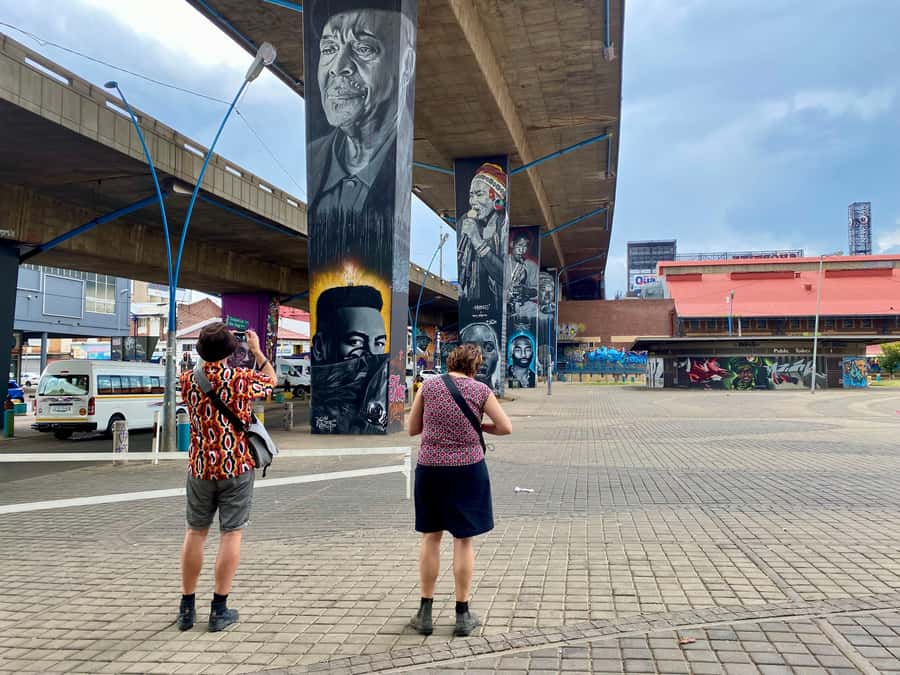
From Braamfontein, the tour moves to Newtown for about 45 minutes of walking, sightseeing, and photography. Transport between districts is included, which is important here. Without it, fitting three separate neighborhoods into one afternoon would be tiring and inefficient.
Newtown is described as the spiritual home of arts and culture in the inner city, with a history reaching back to 1886. The tour presents it as a long-running center of underground activity and one of the best places in Johannesburg to see graffiti.
This section shifts the focus toward graffiti writers and their tags. You will see how artists leave a recognizable mark and how repeated signatures help you identify them across different walls. The guide’s personal familiarity with the areas and artists adds value here, especially when a work is not labeled with a plaque or explanatory sign.
Newtown is also where the tour’s broader theme becomes clearer. Street art is not separate from city life. It shares space with shops, pavements, older buildings, newer development, and the daily movement of the inner city. Some walls may look polished and planned; others may feel rougher or more spontaneous. That contrast is part of what you are being asked to notice.
Keep your expectations flexible. Outdoor art changes. A wall may be repainted, altered, or partly covered by later work. The guide’s knowledge helps you understand the changing nature of the scene, but no street art route can promise that every piece will look exactly as it did on an earlier visit.
Maboneng: a colorful finish with a different mood
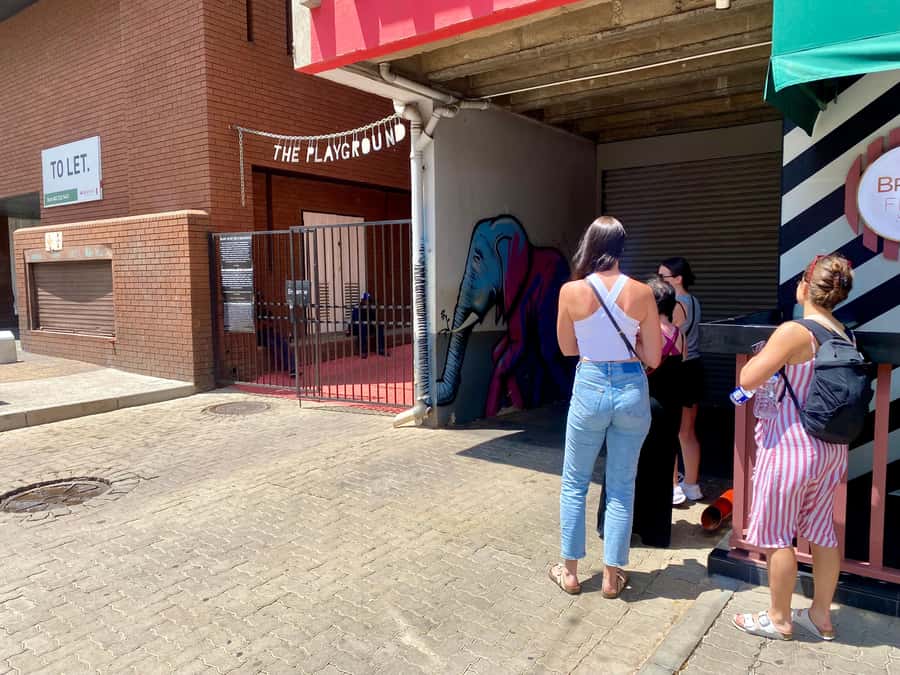
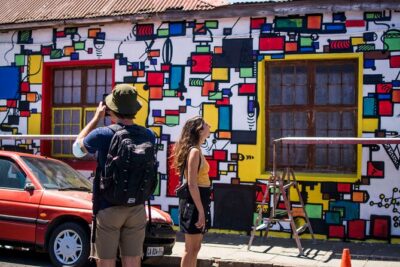
The final 45-minute section takes place in Maboneng, where the tour ends at Home of the Bean. Like Braamfontein, Maboneng has murals and street art across its walls, but the examples here range from intricate works by international artists to familiar tags by local graffiti writers.
That mix gives the final district a useful contrast. You see how local and international influences share the same public setting. The guide can connect the visual details to Johannesburg’s wider street culture and show how different artists contribute to the feel of the precinct.
The route includes walking, sightseeing, shopping, and an aerial view. The aerial viewpoint provides a change from studying walls at street level. After spending much of the tour looking closely at paint, letters, and textures, it gives you a broader sense of the area.
The ending at Home of the Bean is practical. You finish at a named location rather than being left somewhere along the route. You can also use the end of the tour to ask final questions about places to revisit or artists you want to follow.
What Ayanda adds to the afternoon
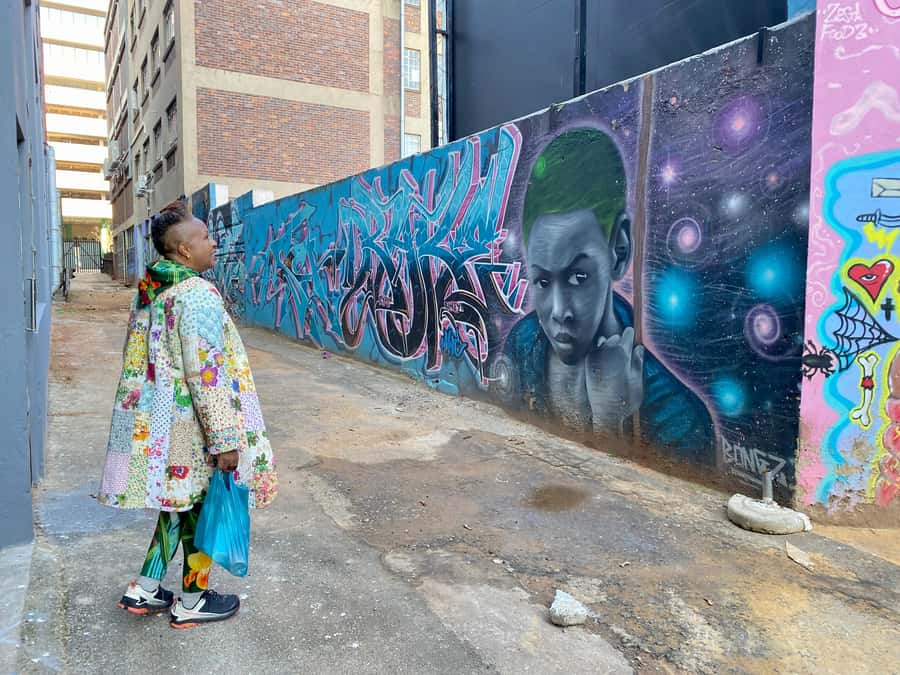
The strongest feature of this experience is the guide. Ayanda is not only familiar with graffiti and street art. He grew up in the areas covered by the tour and has wider knowledge of South Africa’s past and present.
That helps in two ways. First, he can explain the art in specific terms, including artists, tags, and murals. Second, he can place the art inside the city’s social and cultural story. Several visitors described him as passionate, kind, friendly, and willing to answer questions beyond the strict topic of graffiti.
That flexibility is valuable if you are curious about Johannesburg more broadly. You might begin with a question about a tag and end up discussing the neighborhood, the city’s development, or South African history. The tour is structured, but it does not sound rigid.
An artist sometimes joins the group, but this depends entirely on availability. Treat that as a pleasant possibility, not a feature you are guaranteed to receive. If an artist does come along, it could add first-hand insight. If not, Ayanda remains the main source of interpretation.
The price: fair value for a three-district city tour
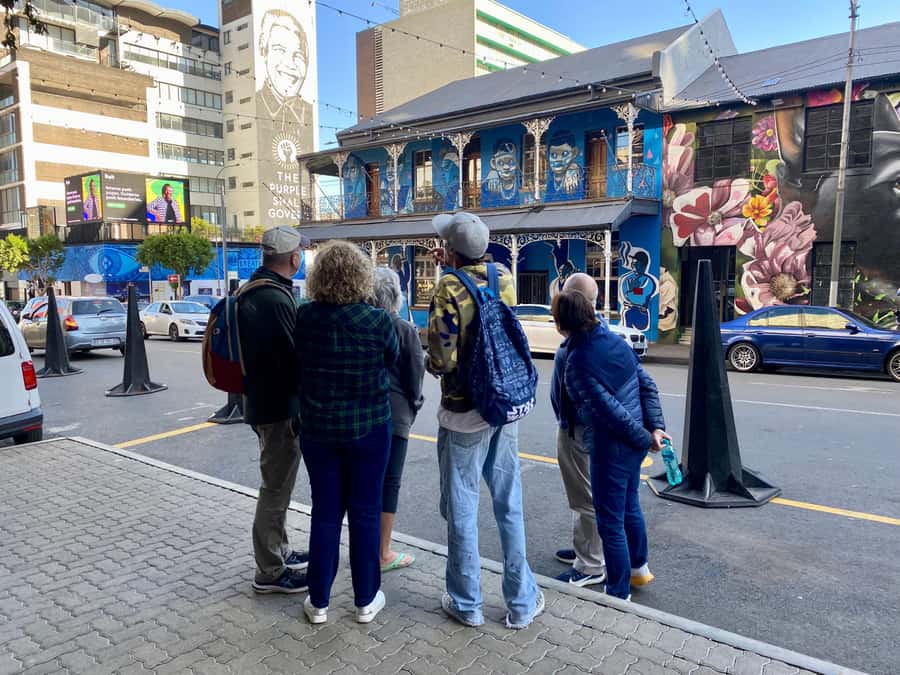
At $43 per person, this is not the cheapest way to look at public art, but it offers more than a short neighborhood stroll. You receive a 210-minute guided experience, transport between the districts, a safety briefing, three substantial walking sections, and a stop at the graffiti store when it is open.
The value is strongest if you want context. You could visit public murals independently, but you would miss much of the explanation about the difference between graffiti and street art, the role of tags, the artists behind the work, and the effect of street art on places such as Braamfontein and Maboneng.
The included transport also matters. Newtown and Maboneng are not treated as distant add-ons that you must reach on your own. The tour creates one connected afternoon from separate parts of the inner city.
I would consider the price worthwhile for a first Johannesburg visit, particularly if you have only a few days and want an introduction to urban culture beyond the usual major sights. It is less useful for someone who only wants quick photo stops or already knows the city’s graffiti scene well.
The tour is conducted in English only. If you need detailed explanation in another language, this is not the right choice.
Who will enjoy it most
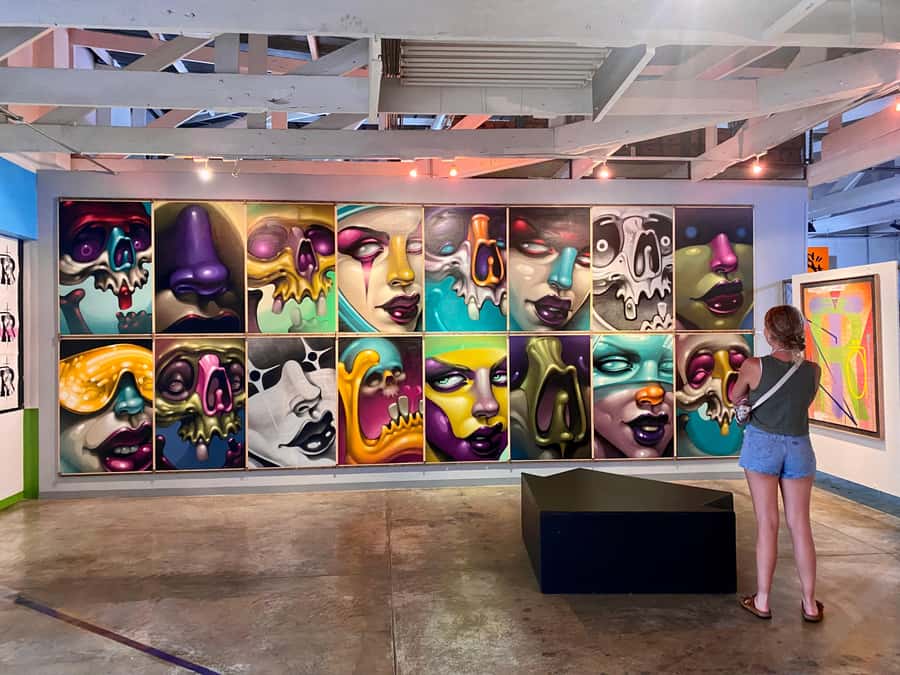
You should consider this tour if you like urban photography, public art, local design, or city history. It works especially well for people who want to understand a place through everyday streets rather than only through formal museums.
It is also a good fit for first-time visitors to Johannesburg who want a guided introduction to Braamfontein, Newtown, and Maboneng. You receive a broad view of the inner city while learning how art and neighborhood identity connect.
Younger visitors may enjoy the strong visual side, but the tour is not just a photo walk. The guide spends time explaining ideas, artists, and history. You will get more from it if you are willing to listen, ask questions, and look closely.
I would be cautious about booking if you dislike walking, want a fixed list of guaranteed murals, or expect an artist to join the group. Outdoor art is always subject to change, the store can close during the festive period, and the artist appearance depends on personal availability.
Practical advice for a better afternoon
Wear comfortable shoes from the start. The route includes walking in three districts, and even the transport breaks will not remove the need to spend time on foot.
Bring water and keep your phone or camera ready. You will encounter both large murals and small tags, so a wide-angle camera is useful for walls while a closer lens or phone setting helps with details.
Meet inside Skinner Café, not simply somewhere on Juta Street. The green building, large windows, and small seating area make it easy to identify, but knowing the exact meeting place reduces morning confusion.
If buying local art or clothing interests you, ask whether the graffiti store will be open on your date. It closes from December 24 through January 20, and the store visit is specifically dependent on opening hours.
You can cancel up to 24 hours before the tour for a full refund, and you can reserve now while paying later. Those terms help if your Johannesburg schedule is still shifting.
Should you book Colours of Johannesburg?
Book it if you want street art with explanation, not just street art as scenery. The three-district route, included transport, local store visit, and Ayanda’s personal connection make this a useful way to understand Johannesburg’s creative life in a short period.
Skip it if you need another language, cannot manage several walking sections, or want a guaranteed meeting with a graffiti artist. For everyone else, $43 is a fair price for a focused afternoon that combines art, local history, and a closer look at the city’s inner streets.
FAQ
Where does the Colours of Johannesburg tour begin?
It begins inside Skinner Café at 70 Juta Street in Braamfontein. The café is green, has large see-through windows, and has a small seating area outside on Juta Street.
Where does the tour finish?
The tour finishes at Home of the Bean in Maboneng.
How long does the tour last?
The tour lasts 210 minutes, or three and a half hours.
Which neighborhoods does the tour visit?
The route includes Braamfontein, Newtown, and Maboneng.
Is transport included?
Transport between the neighborhoods during the tour is included. Hotel pickup and drop-off are not included, but you can contact the operator if you need that service.
Is the graffiti store always open?
No. The store visit depends on opening hours, and it is closed during the festive period from December 24 through January 20.
Is a graffiti artist guaranteed to join the tour?
No. A graffiti artist may sometimes join, but this depends entirely on the artist’s availability and is not guaranteed.
What language is the tour offered in?
The tour is offered in English only and includes a live English-speaking guide.
What should you bring?
Bring comfortable shoes and water. The experience includes walking and sightseeing in three different districts.
Newest reviews from Johannesburg
- Cradle of Humankind and Maropeng Day Tour from Johannesburg★ 4.0 · 5 reviews
- Explore Soweto 8 Hour Tour with Lunch and Museum Visit★ 5.0 · 5 reviews
- 3 Day All Incl. Private Kruger Park Safari Incl. Transfer From Johannesburg★ 5.0 · 5 reviews
- Harties cableway Tour★ 4.5 · 5 reviews
- Pretoria Historical Tour★ 4.0 · 5 reviews
- Constitutional Hill and Soweto 5 hours tour.★ 5.0 · 5 reviews
- 5 Day Kruger National Park and Panorama Route Safari★ 4.5 · 5 reviews
- Luxury Car Johannesburg Airport Private Transfer★ 5.0 · 5 reviews
Street Art, compared.

(Meet the Artist)Art Gallery & Street Art tour with lunch
Read our review →
Johannesburg Street Art & Museum Walking or E-scooter Tour
Read our review →Browse the lists this tour appears in