
Reviewed · CITY TOURS
Johannesburg City Walking Excursion
Johannesburg rewards curious walkers. This guided route takes you from Braamfontein through Newtown, the city center, and Maboneng, linking street art, politics, labor, music, law, and South Africa’s changing urban life. I like the way it moves beyond postcard sights, and I like that a local guide provides context as you walk through places many visitors would not feel comfortable exploring alone.
The $40 price includes a local lunch and transportation during the tour, which gives the experience solid value if you want an introduction to central Johannesburg without arranging every detail yourself. The main consideration is that entry tickets are not included, and one past booking reportedly had no guide arrive, so I would confirm the meeting details before setting out.
The route begins at the Wing Republic, identified by a restaurant with beautiful black-and-white artwork. From there, you walk through several districts and finish at Home of the Bean, a coffee shop where arranging an Uber is easy. Guide Tebogo receives especially warm praise for explaining Joburg clearly and making the city feel more approachable.
In This Review
- Key points to know before booking
- Why this walking route gives you more than a city snapshot
- Starting at Wing Republic in Braamfontein
- The Nelson Mandela Bridge and Newtown’s cultural story
- Workers Compound and the story of migrant labor
- Ferreira Market, Chancellor’s House, and the law
- Main Street, Gandhi Square, and Johannesburg’s gold economy
- Carlton Centre and the ABSA Gallery
- Maboneng, street art, and the final coffee stop
- What the $40 price includes and what it does not
- Comfort, safety, and practical planning
- Who should book the Johannesburg City Walking Excursion?
- FAQ
- Where does the Johannesburg City Walking Excursion start?
- Where does the tour end?
- How much does the excursion cost?
- Is lunch included?
- Is transportation included?
- Are entry tickets included?
- What language is the tour conducted in?
- Is the excursion suitable for wheelchair users?
Key points to know before booking
- A cross-city walking route: You move from Braamfontein to Newtown, the city center, Gandhi Square, the Carlton Centre area, and Maboneng.
- History tied to real places: The tour discusses immigration laws, labor, apartheid-era conflict, legal work by Nelson Mandela and OR Tambo, and South Africa’s major industries.
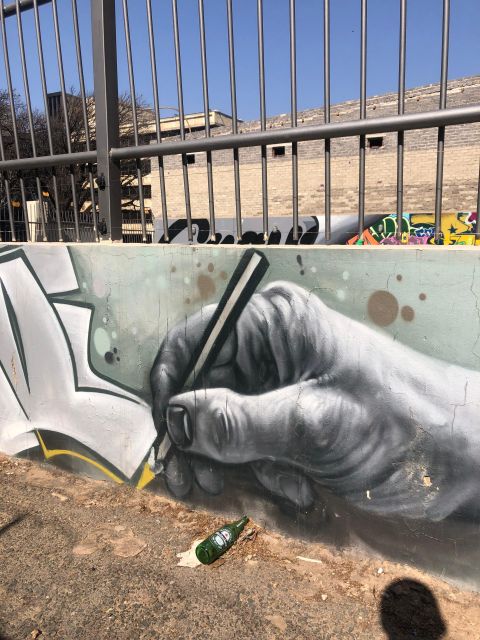
- Street art is part of the main experience: Maboneng provides a closing look at Johannesburg’s artists and creative scene.
- Lunch is included: You receive a local lunch, while any separate attraction entry fees are your responsibility.
- The guide is central to the value: Tebogo is singled out for clear, engaging explanations, though a no-show report means you should verify the booking before departure.
- Plan for a full outdoor day: Comfortable shoes, sun protection, a jacket, water or tissues, and a power bank will make the walk easier.
Why this walking route gives you more than a city snapshot
Johannesburg is not a city that explains itself at a glance. Its central districts carry stories about gold, migration, labor, segregation, law, protest, music, and renewal. A guide helps connect those subjects to buildings and streets instead of leaving you with a collection of names.
That is the strongest reason to choose this excursion. You are not simply being driven past major landmarks. You walk between them, see how the districts change, and hear how South Africa’s past continues to shape daily life. The route also addresses current conditions in Joburg, giving you a more honest picture than a polished sightseeing circuit.
I would choose this tour if you want a grounded introduction to the city. It is especially useful early in a Johannesburg stay, since it can give you a sense of the central area before you decide where to spend more time on your own.
The walking format has a tradeoff. You get closer to the streets, but you also need comfortable shoes and enough energy for a route with many stops. The precise duration and group size are not stated, so you should ask the provider before booking if those details affect your plans.
More City Tours in Johannesburg
- Johannesburg Hop-On Hop-Off City Tour with Soweto Option
★ 4.5 · 768 reviews - Jo’berg in 1 Day: Soweto, Apartheid Museum & City Tour
★ 4.8 · 524 reviews - Soweto: Hop-On Hop-Off Bus, City Tour and Apartheid Museum
★ 4.5 · 250 reviews
Starting at Wing Republic in Braamfontein
The meeting point is described as the Wing Republic, with the practical instruction to look for a restaurant marked by beautiful black-and-white artwork. That detail matters in a busy urban setting, so arrive with the meeting point description ready on your phone.
The first stop provides an overview of Johannesburg and the route ahead. This introduction should help you place the later stops in context, since the tour covers several different parts of the city and a wide span of South African history.
Braamfontein is a useful starting district because it sets up the city’s mix of urban life, culture, and public space. From here, the walk heads toward Newtown, giving you a chance to see the city at street level instead of from behind a vehicle window.
The provider includes transportation during the tour, but the experience is clearly built around walking. I would not assume that transportation replaces the walking sections. Ask how it is used if you have mobility concerns or want to know how much time you will spend on foot.
The Nelson Mandela Bridge and Newtown’s cultural story

The walk from Braamfontein to Newtown includes the Nelson Mandela Bridge, one of the route’s most recognizable points. It gives the tour a strong visual marker and connects the walk to one of South Africa’s most important modern political figures.
In Newtown, you visit the Market Theatre and Mary Fitzgerald Square. These stops shift the focus from political history to music, theater, and art. That change is useful because Johannesburg’s identity is not only about conflict and industry. Creative work has also played a major role in how people express resistance, memory, and community.
The Market Theatre is presented as a place to learn about South African music and art. The value here depends heavily on the guide’s explanation, since entry tickets are not included and the supplied details do not promise access to performances or indoor exhibits. Think of this as a contextual visit rather than a guaranteed theater event.
Mary Fitzgerald Square adds another public setting to the walk. Together, the square and the theater help you see Newtown as a cultural district, not simply another stop on a city route.
Workers Compound and the story of migrant labor
The route continues to the Workers Compound, where the guide explains South Africa’s laborers immigration laws. This is one of the more serious portions of the experience, but it is also one of the most important.
Johannesburg grew through mining and industrial work, and labor policies shaped who could move, where people could live, and how families were affected. Seeing a workers compound while hearing about those laws gives the subject a physical setting. You are not just hearing a date or policy name. You are considering the spaces built for working people and the rules that controlled their movement.
The tour also includes the Science Discovery Centre. The supplied information does not specify the exact exhibits or whether a ticket is required, so treat this as a planned stop with possible additional admission costs. If you are especially interested in visiting inside, confirm that detail before you go.
This section may feel less light than the street-art portions later in the day. That is part of its purpose. Johannesburg’s story includes difficult subjects, and the excursion does not appear designed to smooth them over.
More Walking Tours in Johannesburg
- Soweto: Walking Tour with a Local Guide and Lunch
★ 4.9 · 648 reviews - Soweto Walking Tour with Lunch
★ 5.0 · 288 reviews - Johannesburg: Local Food Tasting Guided Walking Tour
★ 4.7 · 192 reviews - Johannesburg: City Centre Walking Tour
★ 4.8 · 152 reviews
Ferreira Market, Chancellor’s House, and the law
At Ferreira Market, the guide turns to the legal and political work of Nelson Mandela and OR Tambo. You then visit Chancellor’s House, where they worked as attorneys.
This stop adds an important layer to the usual Mandela story. Instead of focusing only on his later presidency or prison years, you learn about his professional life and his partnership with Tambo. A former legal office makes the political story more concrete, showing how legal practice and the fight against unjust laws were connected.
The route also includes the magistrate court. Again, the emphasis is on seeing places linked to the city’s legal system and learning how law operated in South Africa. Entry to interior spaces is not included in the price, so confirm what you will see from inside and what will be viewed from outside.
I like this part of the itinerary because it ties national history to ordinary city blocks. The court and attorney’s office are not isolated museum pieces. They belong to the working center of Johannesburg, where legal, commercial, and political life meet.
Main Street, Gandhi Square, and Johannesburg’s gold economy
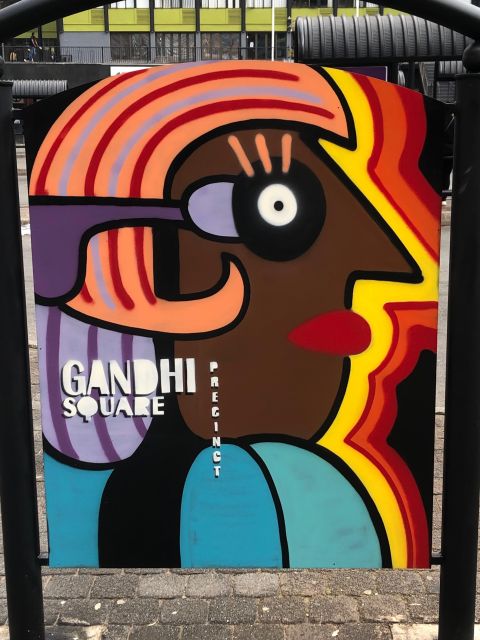
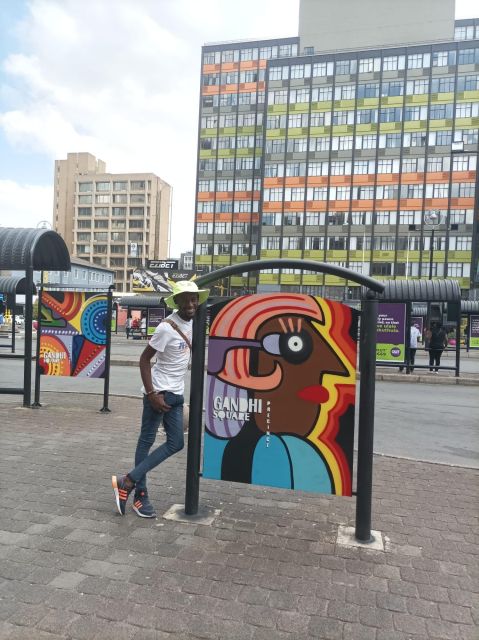
Walking along Main Street brings the tour to Gandhi Square, named for Mahatma Gandhi. This portion links the city to Gandhi’s time in South Africa while also turning toward the country’s major industry.
Johannesburg’s growth is inseparable from gold mining. The tour uses Main Street and Gandhi Square to explain how that industry helped create the city and drew people from many parts of the region. It also helps explain why Johannesburg became tied to so many conflicts and social changes in South African history.
You should expect the guide to do much of the interpretive work here. The appeal is not simply the square itself. It is the connection between a named public place, a major historical figure, and the economic forces that built Joburg.
This is also a good point to notice the contrast between the city’s grand ambitions and its present conditions. The route is designed to show both the importance of Johannesburg and the challenges it faces now. That balance is more useful than a tour that presents only one polished version of the city.
Carlton Centre and the ABSA Gallery

The Carlton Centre is another major landmark on the route. It is described as the fifth tallest building in Africa, giving you a clear sense of Johannesburg’s scale and its place among the continent’s major cities.
The tour also includes the ABSA Gallery, where works by artists from across Africa are exhibited. This creates another shift in subject, from towers and industry to contemporary artistic expression.
Entry tickets are not included, so you should check whether the gallery visit requires payment on the day. The supplied information does not state the admission price or guarantee a particular exhibition. Still, the gallery adds real value for anyone who wants to understand how African artists address identity, politics, place, and social change.
I would not book this experience expecting a long, specialist gallery visit. The itinerary contains many stops, so the gallery is likely one part of a broad city introduction. Its strength is the way it brings art back into the route after the discussions of labor, law, and industry.
Maboneng, street art, and the final coffee stop

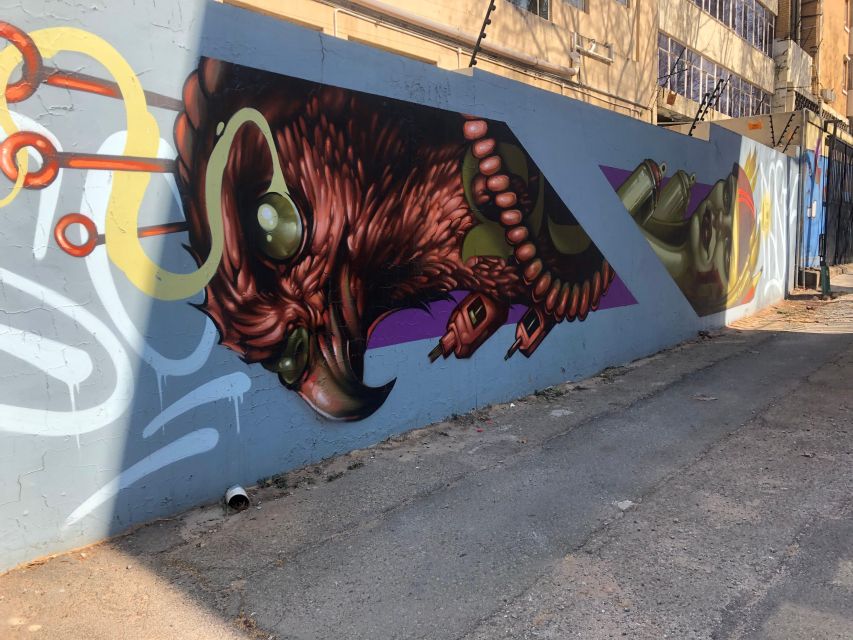
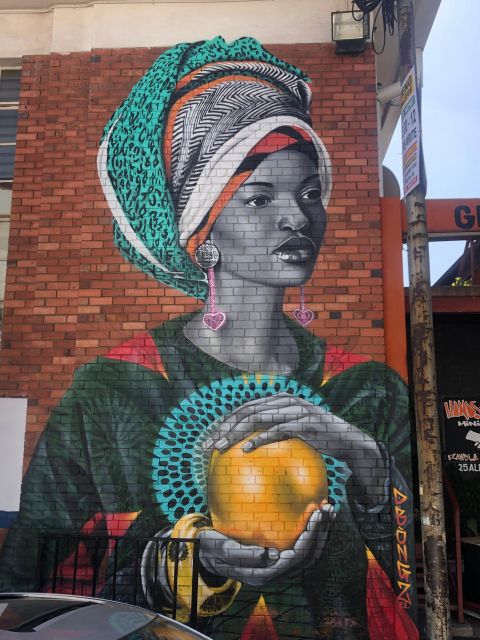
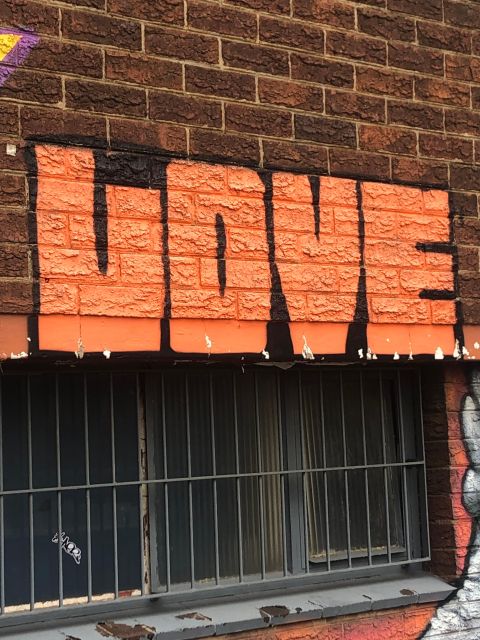
The last major location is Maboneng, described as Johannesburg’s art world. Here, you see local artists and their work, including the heartwarming street art highlighted as one of the tour’s main attractions.
Maboneng gives the excursion a more creative finish. After hearing about the city’s conflicts, laws, mines, and labor system, you get to see how artists respond to urban life. Street art can make difficult subjects easier to approach, while also showing that Johannesburg is not defined only by its past.
The route ends at Home of the Bean, a coffee shop that makes it easy to request an Uber. That is a practical ending, especially if you are still learning your way around the city. The activity ends back at the meeting point area, so plan your onward journey from there rather than assuming hotel drop-off.
I like this final stop because it leaves you in a place associated with local creative life instead of ending at a formal monument. You may want to linger for coffee, but the available information does not say whether a drink is included. The included meal is a local lunch, not a promise of additional refreshments.
What the $40 price includes and what it does not
At $40 per person, the tour offers good value if you would otherwise need to arrange a guide, city transport, and lunch separately. You are paying for local interpretation across several districts, transportation during the activity, and a meal.
The strongest value comes from access and context. A local guide can help you move through parts of central Johannesburg with more confidence and explain why each place matters. One past participant specifically praised the fact that the route reached the heart of the city in a way they would not have attempted alone.
Do not treat $40 as an all-inclusive sightseeing ticket. Hotel pickup and drop-off are not included, and entry tickets are separate. You also need to cover your own onward transport after the tour, although the final coffee-shop location is convenient for ordering an Uber.
The booking option allows you to reserve and pay later, which helps if your schedule is still shifting. Cancellation is available up to 24 hours in advance for a full refund. Those terms are useful, but I would still confirm the meeting point and guide assignment before the day of the walk because one reported booking ended in disappointment when nobody arrived.
Comfort, safety, and practical planning
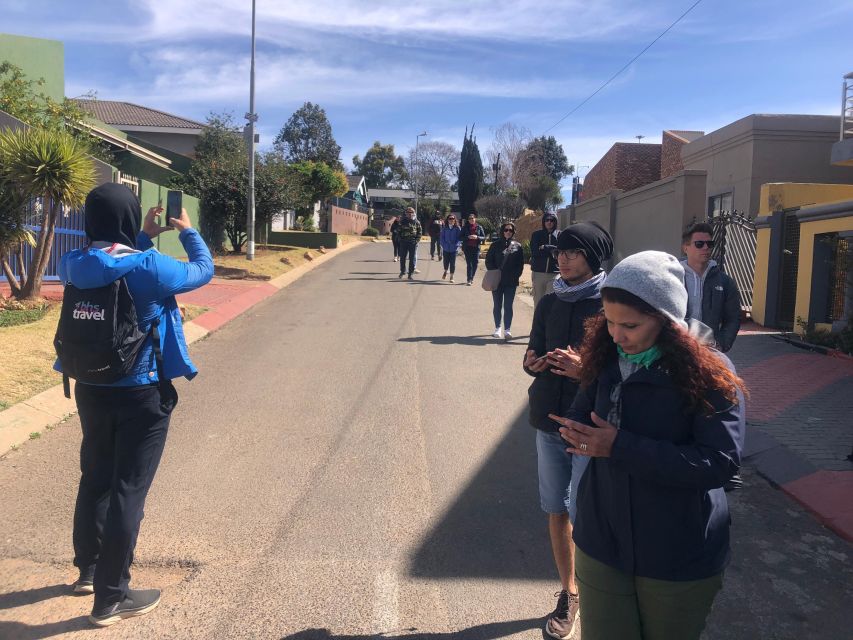
Wear comfortable shoes. This is the most important item on the packing list because the itinerary moves through multiple districts on foot.
Johannesburg can bring strong sun and changing conditions, so pack sunglasses, a sun hat, a hat if you prefer extra coverage, and biodegradable sunscreen. Bring a jacket as well, since the tour operates despite the weather and conditions may change during the day.
A camera and power bank are sensible choices. You will want your phone available for meeting-point directions and an Uber at the end, not just for photographs. Hand sanitizer or tissues are also listed, and they take up little room.
The activity is conducted in English. It is not suitable for wheelchair users, so anyone with mobility needs should consider the walking route and uneven access around city stops before reserving.
Weapons and sharp objects are not allowed. Smoking indoors, littering, and nudity are also prohibited. These rules are straightforward, but following them helps keep the experience respectful in public and cultural spaces.
The overall rating is 4.3 from 12 ratings, with several strong comments about the guide and the content. The clearest praise focuses on guides who explain Joburg well, with Tebogo receiving particular approval. The one serious complaint concerns a missed tour, so I would send a confirmation message before the meeting time.
Who should book the Johannesburg City Walking Excursion?
I would recommend this tour to you if you want history attached to real streets, prefer local explanation to a quick drive-by, and are comfortable walking through a changing city. It suits curious first-time visitors, people interested in South African politics and labor, and anyone who wants to see music, art, law, and industry in one route.
It may not suit you if you want a relaxed sightseeing day with hotel pickup, guaranteed indoor admissions, or a short route with little walking. Families with young children should also consider the serious historical material and the lack of stated duration.
Book it for the guide and the city connections, not for a stack of included attractions. Confirm the meeting point, ask about the walking distance and transportation, and budget for entry fees and your ride afterward. If those conditions work for you, $40 is a fair price for a direct, thoughtful introduction to Johannesburg’s central districts.
FAQ
Where does the Johannesburg City Walking Excursion start?
The tour starts at the Wing Republic. Look for a restaurant with beautiful black-and-white artwork as its painting.
Where does the tour end?
The activity ends back at the meeting point area, at Home of the Bean, a coffee shop where it is easy to request an Uber.
How much does the excursion cost?
The price is $40 per person.
Is lunch included?
Yes. A local lunch is included in the experience.
Is transportation included?
Yes. Transportation during the tour is included, but hotel pickup and drop-off are not.
Are entry tickets included?
No. Entry tickets are not included in the price.
What language is the tour conducted in?
The tour is conducted in English.
Is the excursion suitable for wheelchair users?
No. The activity is not suitable for wheelchair users.
Newest reviews from Johannesburg
- Cradle of Humankind and Maropeng Day Tour from Johannesburg★ 4.0 · 5 reviews
- Explore Soweto 8 Hour Tour with Lunch and Museum Visit★ 5.0 · 5 reviews
- 3 Day All Incl. Private Kruger Park Safari Incl. Transfer From Johannesburg★ 5.0 · 5 reviews
- Harties cableway Tour★ 4.5 · 5 reviews
- Pretoria Historical Tour★ 4.0 · 5 reviews
- Constitutional Hill and Soweto 5 hours tour.★ 5.0 · 5 reviews
- 5 Day Kruger National Park and Panorama Route Safari★ 4.5 · 5 reviews
- Luxury Car Johannesburg Airport Private Transfer★ 5.0 · 5 reviews
City Tours, compared.
Cape Town Hop-On Hop-Off City Tour with Optional Cruise
Read our review →
Johannesburg Hop-On Hop-Off City Tour with Soweto Option
Read our review →
Jo’berg in 1 Day: Soweto, Apartheid Museum & City Tour
Read our review →
Cape Town City Pass: Save Over 50% on 80+ Top Attractions
Read our review →
Soweto: Hop-On Hop-Off Bus, City Tour and Apartheid Museum
Read our review →

Browse the lists this tour appears in