
Reviewed · WORKSHOPS
Jeffreys Bay: Learn to Surf Group Lesson
Catch your first wave here. Jeffreys Bay Surf School offers a friendly, practical introduction to surfing at one of South Africa’s best-known surf beaches. The lesson begins on the sand, moves into waist-deep water, then returns to the beach before you try the full sequence in the ocean.
I like the small-group format, since beginners need more than a quick safety talk and a shove toward the waves. I also like that the board, wetsuit, changing room, and storage are included for $28 per person. The main consideration is that surfing depends on the sea, so rough weather or poor ocean conditions can force a rescheduled or canceled lesson.
In This Review
- Key points at a glance
- Starting at Jeffreys Bay Surf School
- The beach briefing and first three steps
- Practicing in waist-deep water
- Returning to the beach for the final two steps
- Trying to stand and ride your first wave
- Equipment, changing rooms, and practical comfort
- Is $28 good value?
- Who will enjoy this lesson most?
- Final verdict: book it for your first wave
- FAQ
- Where does the surf lesson begin?
- Where does the activity finish?
- Is the surfboard included?
- Is a wetsuit provided?
- What should I bring?
- Is the lesson suitable for children?
- Can the lesson be canceled because of weather?
Key points at a glance
- A five-step first lesson: You learn to paddle, catch a wave, stand, and ride toward the beach in a clear order.
- Small groups mean useful coaching: The format is designed to give each learner personal attention rather than leaving you lost among a crowd.
- A long-running local school: Jeffreys Bay Surf School has taught beginners since 2000 and is within walking distance of surf stores.
- Equipment is included: You receive a surfboard and wetsuit, with changing rooms and storage available at the meeting point.
- Good for families and mixed ages: The lesson is suitable for all ages, and children have enjoyed the session with instructors such as Lorenzo.
- A strong first-hour goal: With good conditions and patient coaching, some beginners have managed to stand on the board after about an hour.
Starting at Jeffreys Bay Surf School
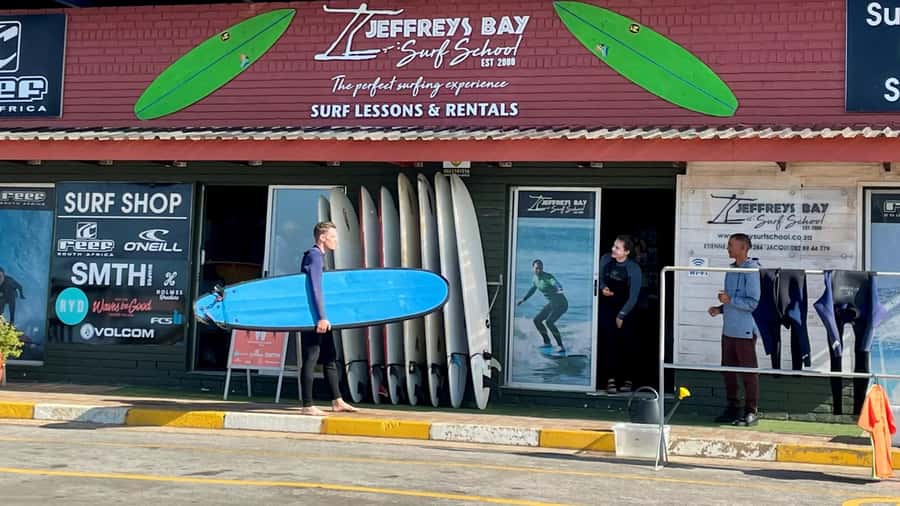
You meet at Jeffreys Bay Surf School, and the lesson ends at the same place. That simple setup matters. You do not need hotel transport, and you can walk to the school if you are already staying near the town’s surf shops.
The school was established in 2000, making it the oldest surf school in Jeffreys Bay according to the supplied details. That gives the lesson a useful local connection, especially in a town known for its surf culture. You are not being sent to a remote beach with no facilities. You begin close to changing rooms, storage, card facilities, and stores selling surf gear.
Bring your swimwear, towel, and sunscreen. A bathing costume is not supplied, and neither are food or drinks. Put on sunscreen before the lesson rather than waiting until you are standing on the sand. Water and sun can make a session feel cooler than expected, while your face and shoulders remain exposed.
The meeting point is also practical for families. You can leave belongings in the available storage, change before and after the session, and avoid carrying loose items onto the beach. Hotel pickup and drop-off are not included, so plan your own way to Jeffreys Bay Surf School.
A few more tours in South Africa worth putting side by side
- Cape Town: Malay Cooking Class and Lunch in Bo-Kaap
★ 4.8 · 515 reviews - Cape Town: Cape Malay Cooking Class in Bo-Kaap
★ 4.8 · 120 reviews - Cape Town: Bo-Kapp Walking Tour and Malay Cooking Class
★ 4.7 · 105 reviews
The beach briefing and first three steps
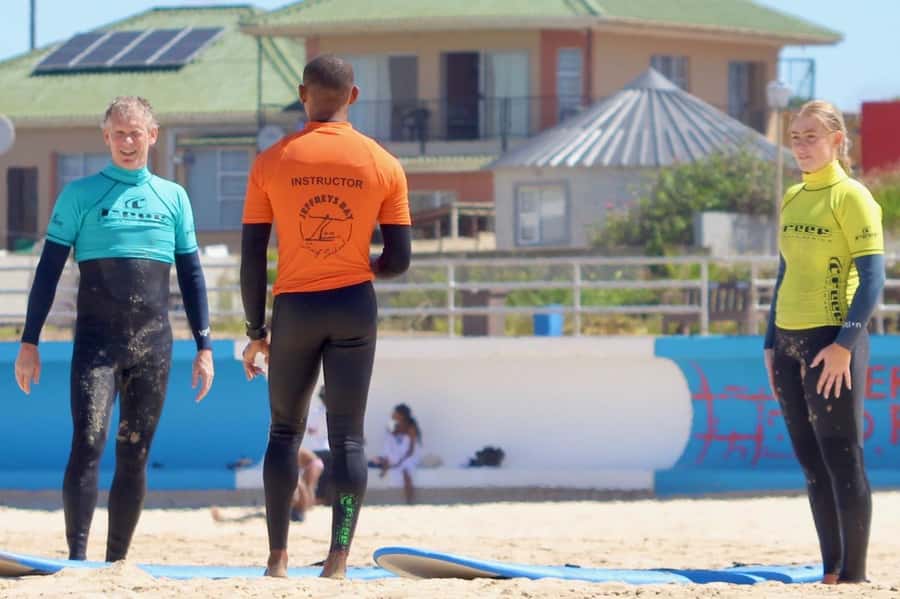
The lesson follows a five-step plan. First, your instructor explains and demonstrates steps one to three on the beach. This gives you a chance to understand the movement before you add moving water, a floating board, and the pressure of a real wave.
The early part focuses on the basic actions needed to begin surfing:
- Paddling the board
- Catching a wave
- Moving into the standing position
The order is sensible. A beginner often wants to think only about standing up, but getting onto a wave at the right speed comes first. If you cannot paddle or catch the wave, there is nothing to stand on.
The beach demonstration also lets you watch the instructor’s body position closely. Pay attention to where your hands go, how your weight shifts, and how quickly you need to move once the board starts gliding. I would treat this part as more than a warm-up. It is where you can ask questions without fighting the noise and movement of the sea.
Small groups are especially helpful here. A qualified instructor can check whether you understand the instructions before you enter the water. That personal attention is one of the strongest reasons to choose this lesson over a large, impersonal beginner session.
Practicing in waist-deep water
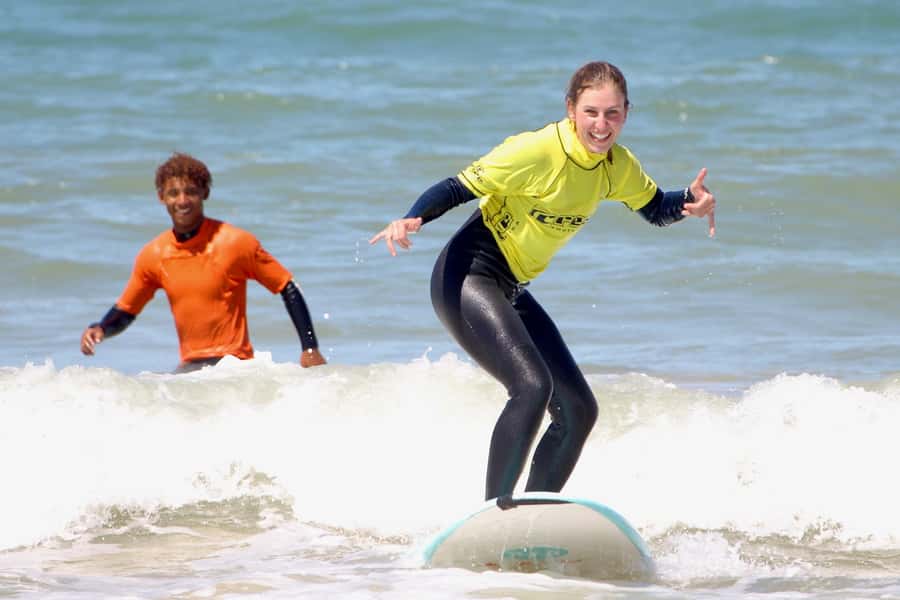
After the beach explanation, you take the first three steps into the ocean. Practice begins in waist-deep water, which gives you a controlled place to learn the feel of the board and the timing of a small wave.
This is not the point where you are expected to charge into the deeper surf. You work through the basic movements with the instructor nearby, repeating them until they feel more natural. You will need to coordinate your arms, legs, balance, and timing at once, so early attempts may feel clumsy. That is normal for a first lesson.
The waist-deep setting also makes the session less intimidating for a complete beginner. You can focus on the board and the instructions without needing advanced swimming or surfing skills. Still, surfing is an ocean activity, and the conditions matter. The lesson can be moved or canceled if extreme weather or ocean conditions make it unsuitable.
Once you have practiced the first three steps successfully, you return to the beach. This break is useful because it gives your instructor a chance to correct mistakes before you add the final movements. It also gives you a short reset. Beginners often learn more when they stop, listen, and try again instead of repeating the same error in the water.
Returning to the beach for the final two steps
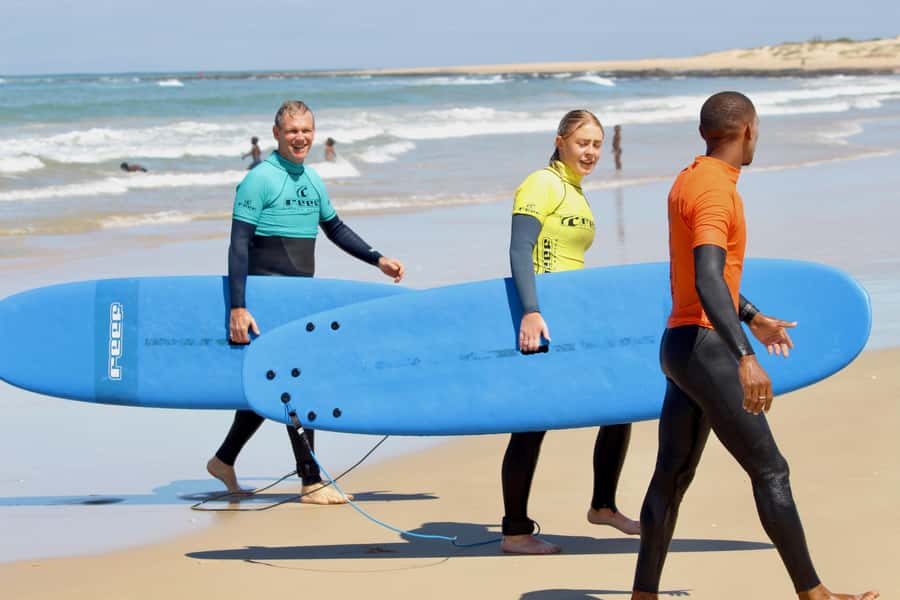
The second beach briefing covers the final two parts of the program. The goal is to connect the earlier skills into one smooth sequence: paddle, catch the wave, stand, and ride toward the beach.
That sounds simple. It is not. Standing on a surfboard requires quick movement and balance, often while your board is already sliding. The instructor breaks it into manageable pieces, then demonstrates what you should do when the wave begins to carry you.
This two-part teaching method is a real strength. You are not asked to remember five instructions at once while floating in the ocean. Instead, the lesson builds from dry-land practice to shallow-water work, then adds the final steps after you have had time to understand the basics.
If Lorenzo is your instructor, you can expect a warm and encouraging teaching style. He has been praised for being especially friendly, helping first-timers, and keeping children engaged. Angelo has also been singled out for giving close attention and clear directions. Instructor assignments can vary, so you should not assume either coach will lead your particular session, but the school’s teaching approach appears focused on patient guidance.
A completely different kind of day out on the same trip:
- Wine Tour: Paarl, Franschhoek & Stellenbosch incl 3 wineries
★ 5.0 · 3,940 reviews - Cape Town: Hop-On Hop-Off Bus Tour with Optional Cruise
★ 4.8 · 3,929 reviews - Cape Town: Cape of Good Hope & Penguins Day Tour with Pickup
★ 4.7 · 3,362 reviews - Zipline Cape Town – From Foot of Table Mountain Reserve
★ 5.0 · 3,179 reviews
Trying to stand and ride your first wave
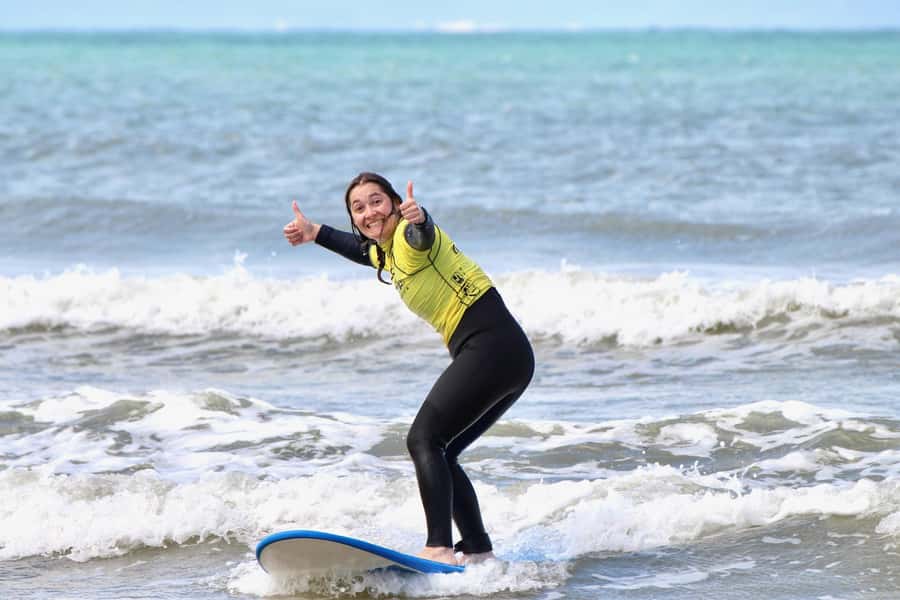
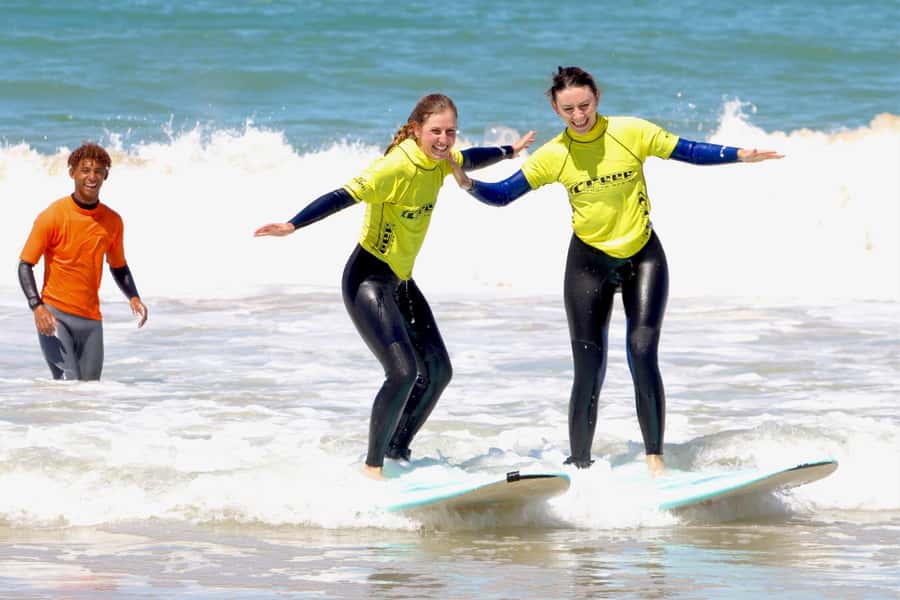
The final return to the ocean is where the lesson becomes memorable. You practice the full sequence and aim to stand on the board as a wave carries you toward the beach.
Some beginners have managed to stand after about an hour, though your result will depend on the ocean, your balance, your fitness, and how quickly the instructions click. I would treat standing up as a welcome goal, not a promise. Even if you spend much of the session kneeling, falling, and trying again, you are still learning the mechanics needed for another attempt.
The most useful mindset is to focus on the next wave rather than the perfect ride. Catching the wave cleanly is progress. Holding your position for a few seconds is progress. Standing briefly, even if you fall right away, is progress too.
The instructors’ role matters most at this stage. A coach can help choose a manageable wave, tell you when to paddle, and give a quick correction after each attempt. That is why the small-group setup has real value. You should have a better chance of getting individual feedback than you would in a packed class.
Children can also take part. The lesson is suitable for all ages, and the positive results with young participants suggest that the school can make the activity fun as well as instructional. Parents should still remember that surfing is weather-dependent and physically active, so a child’s comfort in the ocean matters.
Equipment, changing rooms, and practical comfort
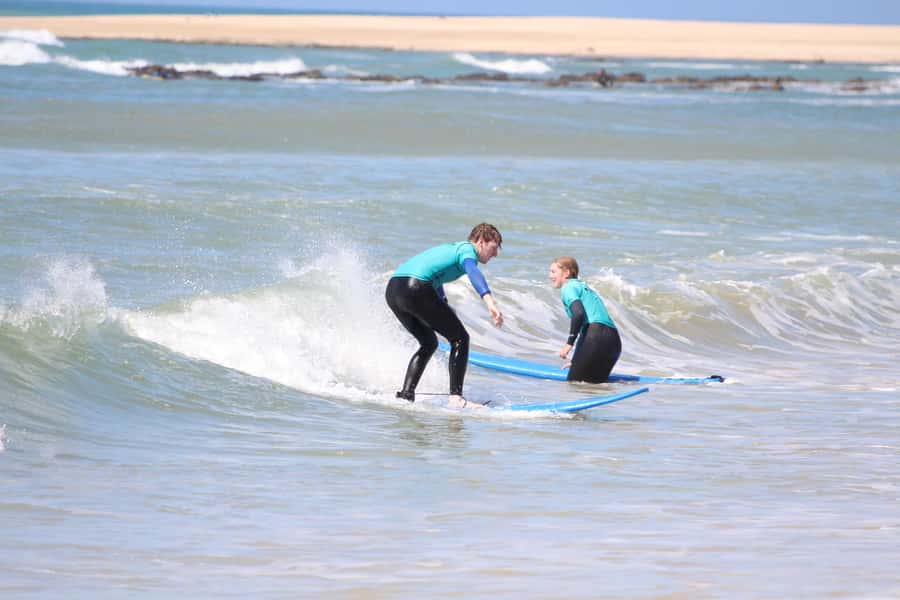
The $28 price includes a board and wetsuit. That makes the cost easier to judge because you do not need to rent the two main pieces of beginner equipment separately.
A surfboard is not just a floating platform. The correct beginner board gives you more stability while you learn to paddle and stand. The wetsuit helps you stay comfortable in the water, which matters when you are spending much of the session practicing rather than continuously moving.
Changing rooms are available, and storage is provided for your belongings. These are modest facilities, but they make the day easier. You can arrive in ordinary clothes, change at the school, and avoid taking unnecessary items onto the beach. Card facilities are also available.
You need to supply your own swimwear and towel. Food and drinks are not included, so handle those before or after the lesson. The information does not specify a meal break or refreshment service, so you should not count on either during the session.
Is $28 good value?
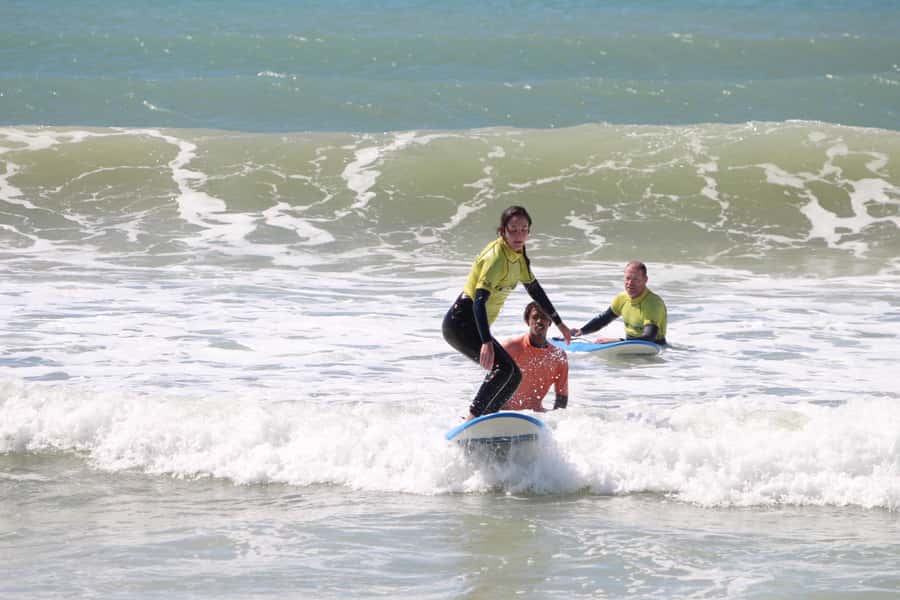
At $28 per person, this is a reasonable price for a first surf lesson because the essentials are included: instruction, board, wetsuit, changing facilities, and storage. You are paying for a structured lesson rather than simply hiring a board and trying to work everything out alone.
The value is strongest if you are a true beginner. A qualified instructor can help you avoid common errors, give you the right timing for a wave, and make the first attempt less stressful. The session also leaves you with basic skills to practice independently afterward.
The price is less attractive if you already surf confidently. The program is built around the basics, and experienced surfers may prefer equipment rental or a more advanced coaching session. No advanced lesson is described here, so I would choose this specifically for a first attempt or an early refresher.
You should also judge the price against the ocean conditions on the day. A lesson that is rescheduled because of extreme weather is not a failure of the school. It is a safety decision. Check your schedule before booking and leave some flexibility if surfing is a major part of your plans.
The reserve-now, pay-later option can help if you are arranging a wider South Africa trip. You can reserve a place without paying immediately, and cancellation is allowed up to 24 hours in advance for a full refund. Those terms are useful when weather and road plans may change.
Who will enjoy this lesson most?
I would recommend it to first-time surfers, families, couples, and friends who want a shared activity that feels active without requiring prior surfing experience. It also suits visitors who want to try surfing in Jeffreys Bay without buying or carrying equipment.
It is a good match if you appreciate clear instruction. The lesson does not throw you straight into the waves. You learn on the beach, practice in waist-deep water, return to the beach for more guidance, then try the full sequence.
You may want to reconsider if you dislike getting wet, have no flexibility in your schedule, or want a guaranteed successful ride. The sea decides how easy the lesson will be, and the weather can change the plan.
English is the listed teaching language. If you need instruction in another language, this may not be the right choice. The school is close to surf stores, though, so you can browse equipment and local surf goods before or after your session.
Final verdict: book it for your first wave
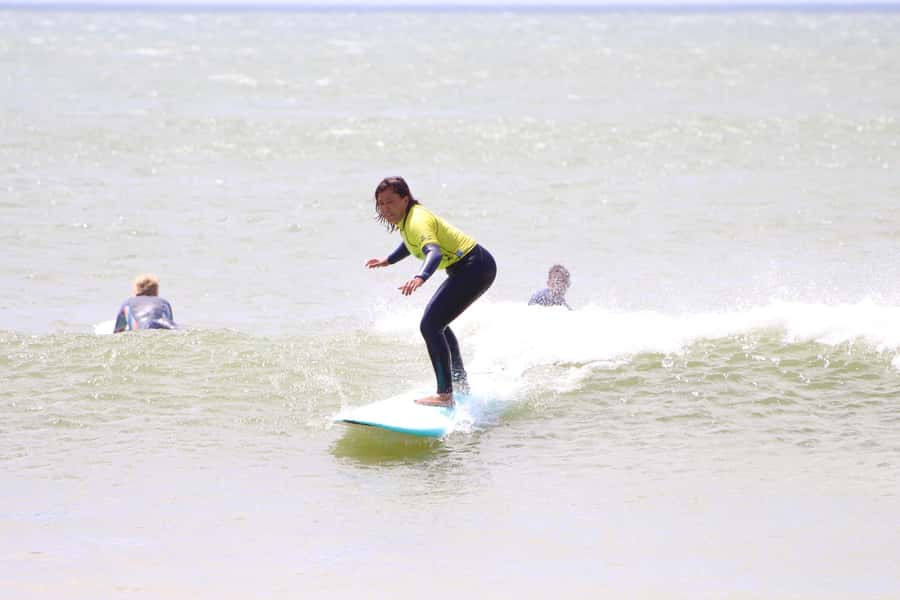
I would book this lesson if standing on a surfboard for the first time is on your Jeffreys Bay wish list. The $28 price includes the key gear, the five-step structure makes the lesson easy to follow, and the small groups give you a better chance of receiving useful coaching.
Look for a session with an open spot and keep your schedule flexible for ocean conditions. If you are lucky enough to work with Lorenzo or Angelo, expect attentive coaching and clear encouragement. Even if you do not stand on the first try, you should leave knowing how to paddle, catch a wave, position yourself, and keep practicing.
FAQ
Where does the surf lesson begin?
The lesson begins at Jeffreys Bay Surf School in Jeffreys Bay, Eastern Cape, South Africa.
Where does the activity finish?
The lesson ends back at the meeting point, Jeffreys Bay Surf School.
Is the surfboard included?
Yes. A surfboard is included in the lesson price.
Is a wetsuit provided?
Yes. A wetsuit is included.
What should I bring?
Bring swimwear, a towel, and sunscreen. A bathing costume, food, and drinks are not included.
Is the lesson suitable for children?
Yes. The lesson is suitable for all ages, and children can take part.
Can the lesson be canceled because of weather?
Yes. Surf lessons depend on weather and ocean conditions. Extreme conditions can lead to a rescheduled or canceled lesson.
Newest reviews from South Africa
- Half-Day Lion and Safari Park Tour★ 5.0 · 5 reviews
- Durban Shore Excursion: Valley of 1000 Hills and PheZulu Tour★ 5.0 · 5 reviews
- Cango Caves Oudtshoorn Day Tour★ 5.0 · 5 reviews
- Explore Atlantis Sand Dunes with a 1hour 30mins sandboarding tour★ 5.0 · 5 reviews
- Transfer from Cape Town City Center to Cape Town Airport★ 5.0 · 5 reviews
- Pneuma private travel & tours, creating memories and friends never forgotten★ 5.0 · 5 reviews
- QUAD BIKE FUN RIDE IN PAARL, BATTLE BUNKER WITH WILDX★ 4.4 · 5 reviews
- Private Transfer: CPT Airport to Cape Town in Luxury Van★ 4.0 · 5 reviews
Workshops, compared.



Private Surf Lesson in Cape Town – Transport & Photos Included
Read our review →
Jeffreys Bay: Private Surfing Lesson for Beginners
Read our review →
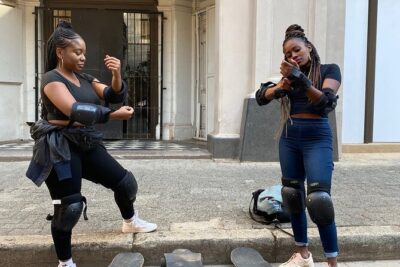
Exploring Johannesburg through Skateboarding – incl. skate lesson for beginners!
Read our review →Browse the lists this tour appears in