
Reviewed · BO-KAAP TOURS
Bo-Kaap: Walk with a local
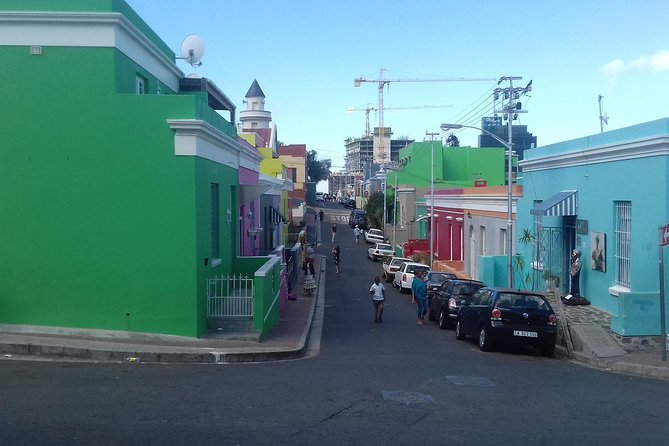
Bo-Kaap tells its story in color. This one-hour walk pairs famous painted homes with the voices of people who still live in the neighborhood, including guides such as Ilyas, Sadiq, Rafiq, Siddiq, and Sedick. I love the personal connection and the stop at Atlas Trading Company, where Cape Malay spices turn a photo walk into a sensory lesson. The main drawback is the short route: you will see a good slice of Bo-Kaap, but not every corner.
You meet at 71 Wale Street and return there at the end. I also like that rooibos tea or coffee and a local snack are included, since even a brief uphill walk feels better with a little refreshment. Wear solid, comfortable shoes, though, because cobblestones, uneven ground, and some slopes make this more than a flat stroll.
In This Review
- Key reasons this Bo-Kaap walk earns its high rating
- Why a local guide changes Bo-Kaap
- Starting at 71 Wale Street
- Walking through Bo-Kaap’s colorful streets
- Auwal Mosque and the Cape’s Muslim story
- The aromas of Atlas Trading Company
- Tea, coffee, and a taste of Bo-Kaap
- What the one-hour format gives you
- Price, group size, and practical value
- Shoes, weather, and the right time to go
- Who will enjoy this walk most
- Should you book Bo-Kaap: Walk with a local?
- FAQ
- Where does the Bo-Kaap walk begin?
- Where does the activity end?
- How long does the tour last?
- How much does the tour cost?
- What is included with the walk?
- Will the tour visit Auwal Mosque?
- Will the group stop at a spice shop?
- How many people can join the tour?
- Can I cancel for a full refund?
Key reasons this Bo-Kaap walk earns its high rating
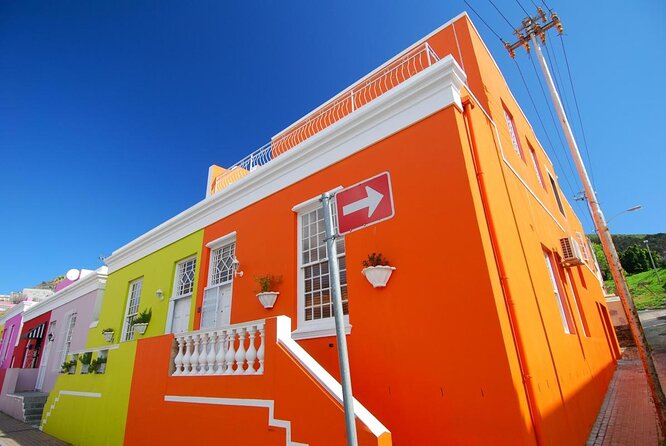
- Local family stories: Guides born and raised in Bo-Kaap explain the area through lived experience, not just dates and buildings.
- Auwal Mosque: Visit one of South Africa’s oldest mosques and an important place in Cape Town’s Muslim story.
- Atlas Trading Company: Smell the spices used in Cape Malay cooking and learn how food became an expression of freedom.
- Colorful streets with context: You get the photographs, but also the reasons behind Bo-Kaap’s painted homes and cultural identity.
- A homemade taste: Tea or coffee and a sweet local snack are included, with some outings featuring freshly made koesisters in a family home.
- Small-group feel: The maximum group size is 20, and the walk is short enough for questions and conversation.
Why a local guide changes Bo-Kaap
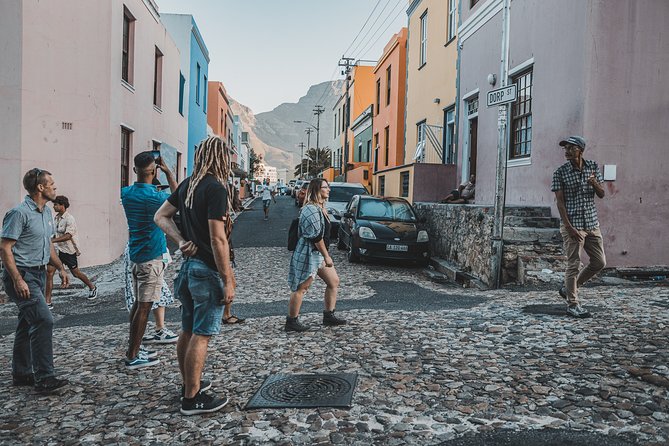
Bo-Kaap is easy to photograph and easy to misunderstand. Its candy-colored houses make a fine backdrop, but the neighborhood is far more than a collection of bright facades at the foot of Signal Hill.
This area is tied to slavery, Islam, migration, family life, and the long effort to protect a community from losing its identity. Enslaved people, artisans, and political exiles were brought to the Cape from places including Africa, India, Sri Lanka, Indonesia, and Malaysia. Their descendants helped shape the food, faith, language, and traditions associated with Bo-Kaap.
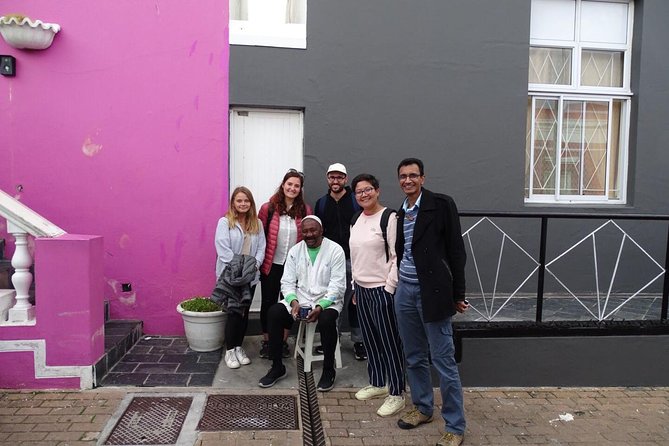
That is why the guide matters so much here. Ilyas, Sadiq, Rafiq, Siddiq, and Sedick are not simply pointing out streets on a map. They connect the public story with family memories and present-day concerns. Several guides are described as having grown up in Bo-Kaap and still living there, which gives the walk a direct, grounded quality.
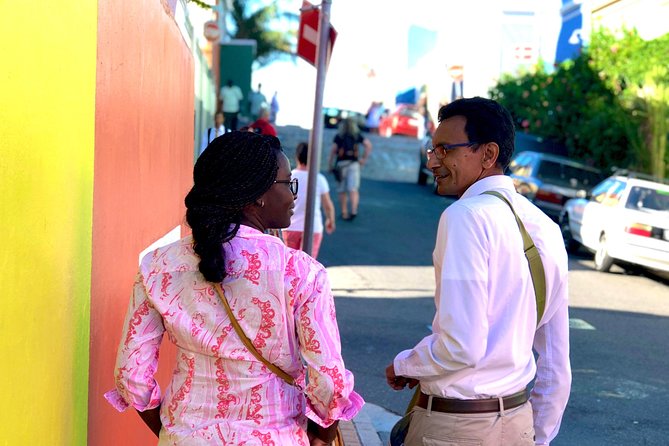
You may also meet people the guide knows along the way. One particularly personal version of the walk included greetings with local residents, a stop at a community garden, and a visit to the guide’s aunt, where the group tasted freshly baked koesisters. That kind of contact cannot be guaranteed with every guide or departure, but it shows what this experience is designed to offer: a neighborhood seen through local relationships rather than only through camera angles.
More Walking Tours in Cape Town
- Cape Town: Nathi Langa Township Walking Tour
★ 4.9 · 493 reviews - Cape Town: Art, Culture & History Walking Tour
★ 4.9 · 392 reviews - Cape Town: Street Art Walking Tour in Woodstock
★ 4.8 · 293 reviews
Starting at 71 Wale Street
The tour begins at 71 Wale Street in Schotsche Kloof. This is the practical starting point for an introduction to Cape Town and Bo-Kaap, so you get your bearings before heading into the streets.
The opening talk helps place the neighborhood within the wider story of Cape Town. That matters because Bo-Kaap’s past is linked to the Dutch colonial period and the arrival of enslaved people from across the Indian Ocean world. The guide also explains the area’s importance as the birthplace of Islam in the Cape, a phrase that gives the mosque visit and local customs their proper setting.
At this point, ask questions. The experience is built around conversation, and the strongest feedback focuses on guides who explain both historical events and current community concerns. Rafiq, for example, is praised for making the walk educational while keeping it warm and personal. Siddiq is described as offering insight into both the past and the present state of Bo-Kaap.
The meeting point is near public transportation, and the activity ends back at the same address. That return makes the walk easy to fit into a morning or afternoon in central Cape Town.
Walking through Bo-Kaap’s colorful streets
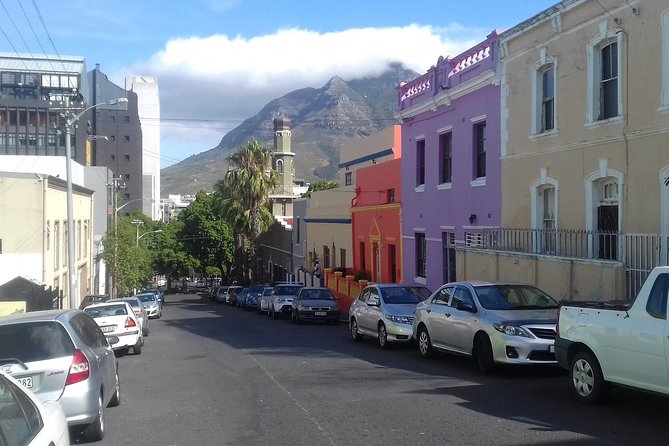
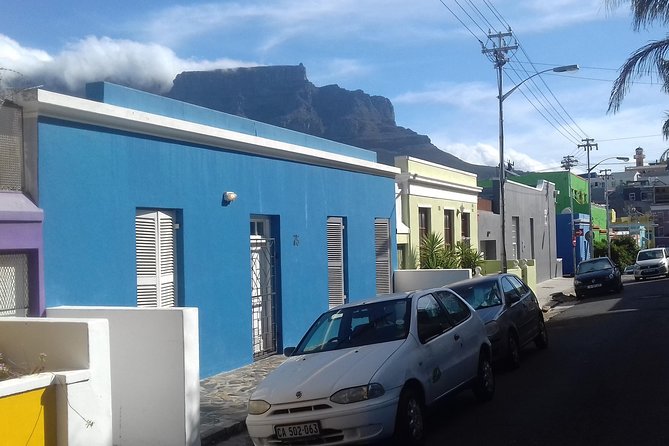
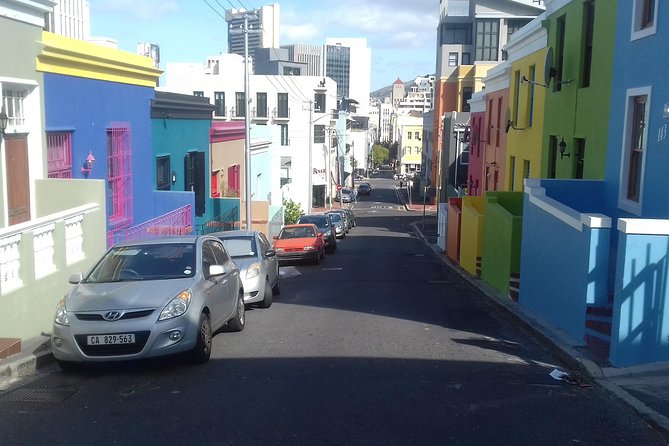
The main neighborhood walk is the visual heart of the experience. Bo-Kaap’s painted homes are among the most photographed streets in South Africa, and you will have plenty of chances to stop for pictures.
Still, the guide encourages you to look past the colors. You learn why the homes matter, how the neighborhood developed, and what these streets mean to families who have lived here for generations. Some routes use quieter lanes and lesser-known sections, while still covering the famous parts. That is a welcome change from simply stopping at one postcard view and moving on.
The pace is described as manageable, with time for questions and photographs. The route is only about an hour, but it is not entirely effortless. Expect some uphill walking, uneven cobblestones, and changes in elevation. One review specifically recommends solid shoes, and that is sensible advice even though the hills are not considered severe.
You should also keep your camera ready without treating the neighborhood as a stage set. Bo-Kaap is a lived-in community. A good guide helps you appreciate the houses while reminding you that people work, worship, raise families, and maintain daily routines here.
The walk can also give you a better sense of safety and local etiquette. Participants describe feeling well looked after, and guides who greet residents help create a respectful tone. At the same time, one person noted encountering a panhandler. That is a useful reminder that this is an urban neighborhood, not a controlled attraction.
Auwal Mosque and the Cape’s Muslim story
A visit to Auwal Mosque adds depth to the street scenes. It is recognized as one of the oldest mosques in South Africa and is central to Bo-Kaap’s place in Cape Muslim history.
The mosque is valuable because it connects the neighborhood’s religious life with the story of enslaved people and political exiles who came to the Cape. The experience does not treat Islam as a side note. It places faith at the center of Bo-Kaap’s identity.
The supplied details do not specify how long the group spends at the mosque or whether every part of the building is entered, so keep your expectations practical. You are going to an important site as part of a short walking tour, not signing up for a lengthy architectural visit. If you have questions about visiting rules or appropriate dress, ask the guide at the start.
This stop is especially useful if you are new to Cape Town’s history. Without it, the colorful buildings can seem purely decorative. With it, the neighborhood becomes a place shaped by worship, community, and resistance.
More Bo-Kaap walks:
- Cape Town: Malay Cooking Class and Lunch in Bo-Kaap
★ 4.8 · 515 reviews - Cape Town Walking Tour: Bo-Kaap & City Highlights
★ 4.8 · 161 reviews - Cape Town: Cape Malay Cooking Class in Bo-Kaap
★ 4.8 · 120 reviews - 1 Hour Cape Town Bo Kaap Photoshoot Experience
★ 5.0 · 61 reviews
The aromas of Atlas Trading Company
The stop at Atlas Trading Company brings the story into the kitchen. This famed Cape Town spice shop is known for the strong aromas of spices used in everyday Cape Malay cooking.
Smell is a powerful way to remember a place. Instead of hearing a list of ingredients and forgetting it later, you encounter the scents directly. The guide also explains how enslaved people used spices in their masters’ kitchens as an expression of freedom. That detail gives the food story real force: cooking was not only about nourishment, but also about preserving identity and finding room for creativity under harsh conditions.
Atlas is a brief stop, listed at about 10 minutes, so you should not expect a full cooking class or an extended shopping session. It works best as a focused introduction. You learn what flavors matter, why they matter, and how food continues to carry Cape Malay culture.
If you enjoy markets, food tours, or cooking, this part may be one of the highlights. If you prefer a long restaurant meal, it may feel too short. The strength is the connection between smell, memory, and history, not the amount of time spent inside the shop.
Tea, coffee, and a taste of Bo-Kaap
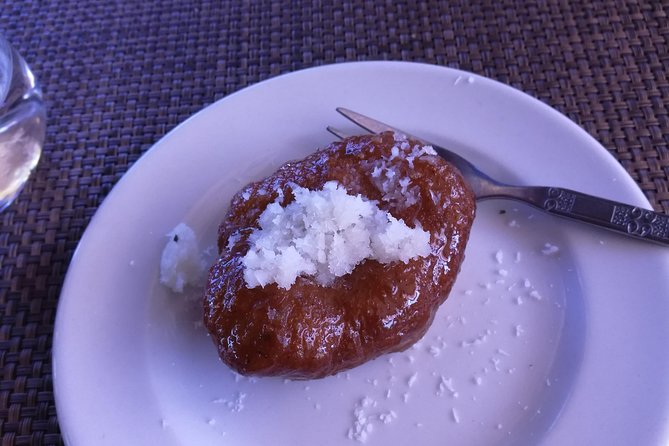
A cup of rooibos tea or coffee and a snack are included. It is a small detail, but it improves the walk in two ways. First, you get a short pause to drink and ask more questions. Second, you taste something connected to the community instead of simply looking at buildings.
The sweet treat may be a koesister, a Cape Malay pastry often made with spices. Some guides have taken groups to a relative’s home for a fresh, homemade version. Ilyas, for example, has been praised for arranging a visit to his aunt’s house, where the group received koesisters straight from the oven.
That family-home stop should be viewed as a possible personal touch rather than a promise for every departure. The included refreshment itself is part of the experience, while the exact setting and snack may depend on the guide and the day.
This is also a good moment to ask about food traditions, family recipes, and how Cape Malay cooking has developed. You get more value from the snack when you treat it as part of the lesson, not just a free extra.
What the one-hour format gives you
The tour lasts approximately one hour. The listed stops add up to about 45 minutes, but walking between them, pausing for photographs, and answering questions brings the overall experience closer to the advertised duration.
That short format is useful if you are building a full day in Cape Town. You can pair it with other sights in the City Bowl without giving up half your day. It also suits anyone who wants an introduction before deciding how much more time to spend in Bo-Kaap.
The trade-off is coverage. You will not explore every street, sample a full range of food, or spend a long time at each historic site. If you want a detailed architectural survey or a multi-course food experience, you should choose a longer tour.
For most people, the compact length is a strength. The route gives you the main visual appeal, the neighborhood’s central themes, a mosque, a spice stop, and a local snack without letting the walk become tiring or repetitive.
Price, group size, and practical value
At $25.31 per person, this is reasonably priced for a guided cultural walk in central Cape Town. The value comes less from the distance covered and more from the local interpretation, the small-group setting, the mosque visit, the Atlas stop, and the included drink and snack.
A maximum of 20 people is stated. The actual feel may vary with the size of your departure, but this is not designed as a private tour. A group of 20 can still work well for a short neighborhood walk, though you may need to stay close to hear the guide in busier areas.
The high rating of 4.9 from 131 ratings and a 98 percent recommendation rate fits the experience’s strongest features: warm guides, personal stories, historical context, and a sense of connection with local residents. The names change by departure, but the qualities repeatedly praised are consistent. Ilyas is singled out for his family connection and enthusiasm. Rafiq is noted for his friendly, intelligent presentation. Siddiq is valued for explaining both the community’s past and its concerns for the future.
Book roughly three weeks ahead if your schedule is fixed. The average booking point is 21 days in advance, which suggests that popular dates can fill before your arrival.
Shoes, weather, and the right time to go
Wear comfortable shoes with a firm sole. The walk includes hills, uneven cobblestones, and elevations that can be awkward in thin sandals or smooth-soled shoes.
Bring water, even though a drink is included. Cape Town weather can change, and one account describes a cool, overcast October morning where a light jacket was useful. The activity requires good weather, so a rainy or otherwise unsuitable day may lead to a new date or a full refund.
Morning can be a smart choice if you prefer cooler conditions and want to use the rest of the day elsewhere. If you are visiting alone, one person specifically recommends arranging transport to and from the tour in advance. The meeting point is near public transportation, but you should still allow time to arrive without rushing.
You receive confirmation when booking, and most people can participate. The experience ends at the starting point, which simplifies onward plans.
Who will enjoy this walk most
I recommend this for anyone who wants more than photographs of colorful houses. It is particularly useful for first-time visitors who need a clear introduction to Cape Town’s colonial past, Muslim heritage, and Cape Malay culture.
It also suits solo visitors, couples, families with older children, photographers, and anyone interested in food traditions. The pace allows for questions and picture stops, while the short duration keeps the commitment manageable.
You may want something else if your priority is a long food tasting, extensive mosque architecture, or a private route with no other participants. The group can reach 20 people, and the walk covers a compact area rather than the whole neighborhood.
The experience is also a good choice if you value local voices. Guides regularly stop to greet people they know, and their personal ties help you understand Bo-Kaap as a living community. That is the feature I would pay for here. The colorful walls get you there, but the human story gives the visit its meaning.
Should you book Bo-Kaap: Walk with a local?
Yes, if you want a short, affordable introduction that connects Bo-Kaap’s famous streets with its people, faith, food, and past. At $25.31, the drink and snack are welcome, but the real value is hearing the neighborhood explained by someone with family roots there.
Book it for a morning if you can, wear sturdy shoes, and leave room for questions. If you are hoping only for quick Instagram photographs, you may find the historical focus slower than expected. If you want to understand why Bo-Kaap matters, this is one of the better uses of an hour in Cape Town.
Free cancellation is available up to 24 hours before the start time for a full refund. Changes or cancellations inside that window are not accepted for a refund, and poor weather or failure to meet the minimum group size may result in another date or a refund.
FAQ
Where does the Bo-Kaap walk begin?
It begins at 71 Wale Street, Schotsche Kloof, Cape Town, 8001, South Africa.
Where does the activity end?
The walk ends back at the meeting point on Wale Street.
How long does the tour last?
The experience lasts approximately one hour.
How much does the tour cost?
The listed price is $25.31 per person.
What is included with the walk?
A cup of rooibos tea or coffee and a tasty snack are included.
Will the tour visit Auwal Mosque?
Yes. Visiting Auwal Mosque, one of South Africa’s oldest mosques, is one of the tour highlights.
Will the group stop at a spice shop?
Yes. The route includes a stop at Atlas Trading Company to smell spices used in Cape Malay cooking.
How many people can join the tour?
The activity has a maximum group size of 20 people.
Can I cancel for a full refund?
Yes, if you cancel at least 24 hours before the experience start time. Cancellations made less than 24 hours in advance are not refunded.
Newest reviews from Cape Town
- Explore Atlantis Sand Dunes with a 1hour 30mins sandboarding tour★ 5.0 · 5 reviews
- Transfer from Cape Town City Center to Cape Town Airport★ 5.0 · 5 reviews
- Pneuma private travel & tours, creating memories and friends never forgotten★ 5.0 · 5 reviews
- Cape Town Table Mountain and Peninsula Tour★ 5.0 · 5 reviews
- Private Transfer: CPT Airport to Cape Town in Luxury Van★ 4.0 · 5 reviews
- Cape Town Full Day Family Fun With Kids Private Tour★ 4.0 · 5 reviews
- Cape of Good Hope-Cape Point & Penguins from Cape Town★ 5.0 · 5 reviews
- Cape Town: Shark Cage Diving Tour (with Breakfast & Lunch)★ 4.8 · 5 reviews
Bo-Kaap Tours, compared.


Cape Town Walking Tour: Bo-Kaap & City Highlights
Read our review →



Cape Town Township Tour Including Langa Township and Bo-Kaap
Read our review →

Full-Day Kirstenbosch, Bo-Kaap, and Penguins Tour
Read our review →Browse the lists this tour appears in