
Reviewed · APARTHEID MUSEUM TOURS
Soweto & Apartheid Museum
Johannesburg’s past comes into focus here. This private Soweto and Apartheid Museum tour pairs major historical sites with a local guide who can explain the places between the stops. I like the personal format, the air-conditioned vehicle, and the chance to visit both famous landmarks and less polished parts of Soweto, including an informal settlement. The main drawback is time: five to seven hours sounds generous, but the schedule covers a lot of ground.
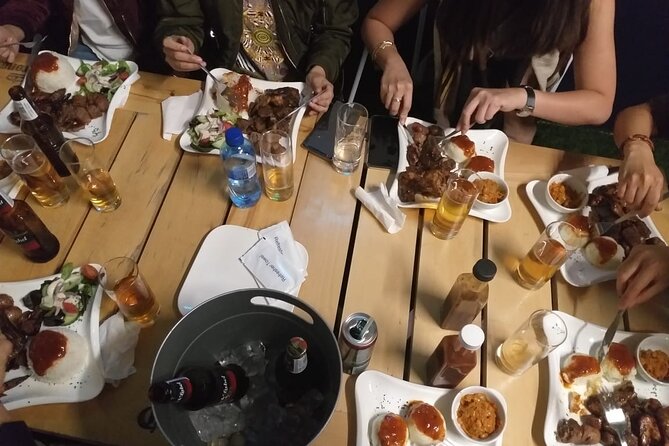
I also like that bottled water and snacks are included, since the day is built around several stops rather than a long sit-down meal. Guide Banele was praised for making the day feel well paced and personal, while Tsholo brought personal insight into apartheid’s lasting effects. You should plan to buy lunch separately, and remember that there is no restroom on board.
In This Review
- Key points to know before you book
- Why this private Johannesburg tour works
- FNB Stadium begins the day with scale
- Orlando Towers brings a bold visual landmark
- Soweto reveals the place behind the headlines
- Regina Mundi Church adds a human scale
- Vilakazi Street connects famous names
- Hector Pieterson Memorial makes the past immediate
- Freedom Square widens the political story
- The Apartheid Museum brings the pieces together
- Guides make the difference
- Is $97.26 per person a fair price?
- Who will get the most from this tour?
- Should you book the Soweto and Apartheid Museum tour?
- FAQ
- How long does the Soweto and Apartheid Museum tour last?
- Is hotel pickup available?
- Is this a private tour?
- What is included in the price?
- Is lunch included?
- Is there a restroom on the vehicle?
- Which places are visited in Soweto?
- Can I cancel for a full refund?
Key points to know before you book

- Private touring keeps the day personal: Only your group takes part, so the guide can shape the conversation around your interests.
- Soweto is more than a photo stop: The route includes Vilakazi Street, Mandela’s house, Desmond Tutu’s house, Regina Mundi Church, Freedom Square, and the Hector Pieterson Memorial and Museum.
- The Apartheid Museum gives the day its historical frame: You visit the main exhibition and a Mandela exhibition after seeing real places tied to South Africa’s past.
- The informal settlement visit adds difficult context: It offers a view of present-day Soweto beyond headline attractions, though some people may find this part emotionally demanding.
- FNB Stadium and Orlando Towers add visual variety: One is a major sports venue, while the other is one of Soweto’s most recognizable landmarks.
- The price reflects private transport and guiding: At $97.26 per person, the value is strongest if you want a full day of context without arranging several separate visits.
Why this private Johannesburg tour works
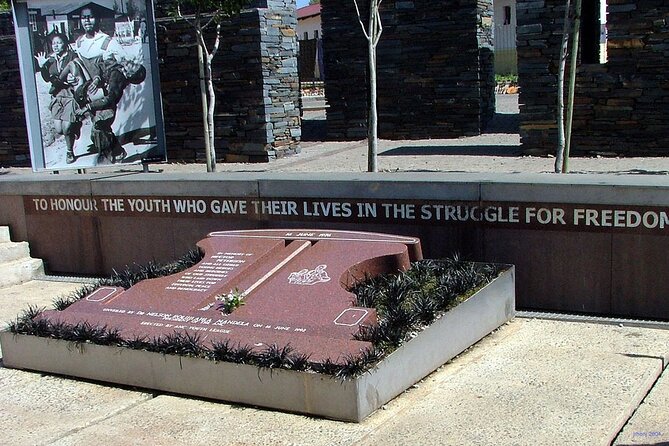
I see this as a history tour first, a sightseeing tour second. You are not simply driven to a museum and sent back to your hotel. The day connects places, people, and events across Soweto, then gives you time at the Apartheid Museum to organize what you have seen.
That order matters. A museum can explain apartheid through photographs, documents, and displays. Soweto gives the subject a physical setting. You see the roads, landmarks, homes, public places, and neighborhoods connected to the story. The guide fills in the links.
Because the tour is private, your group is not tied to strangers or a fixed discussion. That can make a real difference on a subject as serious as apartheid. You can ask questions as they occur, request more time at a particular stop, or keep moving if a location has given you enough to think about.
The tour lasts about five to seven hours, depending on the day and timing. Pickup is offered from select Johannesburg locations, and transport is in an air-conditioned vehicle. With snacks and water supplied, most of the basic comfort needs are covered.
More Museums in Johannesburg
- Soweto /Johannesburg and Apartheid Museum Guided Full Day Tour
★ 5.0 · 932 reviews - Jo’berg in 1 Day: Soweto, Apartheid Museum & City Tour
★ 4.8 · 524 reviews - Johannesburg: Full-Day Tour with Soweto and Apartheid Museum
★ 4.8 · 478 reviews
FNB Stadium begins the day with scale
The first stop is FNB Stadium, with about 30 minutes set aside and admission included. It gives you a sense of the scale of Johannesburg’s sporting and public life before the tour moves into more intimate historical places.
Thirty minutes is enough for an introduction and a look around, but not enough for a full stadium experience. You should think of this as a focused stop, not a stadium tour with extensive behind-the-scenes access.
That short visit also helps the day keep moving. Soweto contains many points of interest, and spending too long at the first landmark would leave less room for the places that require more explanation.
Orlando Towers brings a bold visual landmark
Orlando Towers receives another 30-minute stop. The towers are immediately recognizable and give the route a strong visual marker. They also help you understand that Soweto is not presented only through old photographs and solemn memorials.
The stop is brief, so do not expect a long activity session. Its value is in seeing one of the area’s best-known landmarks and hearing how it fits into the local setting. The tour then continues through Soweto itself.
This mix of stadium, towers, streets, homes, churches, and museums is one of the day’s strengths. You get more than one version of the township instead of a single carefully polished view.
Soweto reveals the place behind the headlines
The main Soweto portion lasts about two hours. This is where the tour earns its keep, since the route includes several locations with very different roles in South African history and daily life.
You pass Chris Hani Baragwanath Hospital, Maponya Mall, and Freedom Square. These places give the tour a broader frame. You are not looking only at memorials. You are also seeing institutions, shopping areas, and public spaces that form part of present-day Soweto.
The tour also includes a visit through an informal settlement. This can be one of the most revealing parts of the day, but it deserves a thoughtful approach. It is not a theme-park attraction. You are being shown a difficult side of life that is often missing from quick city sightseeing. Go with respect, listen carefully, and avoid treating the setting as a backdrop for casual photographs.
The phrase kasi life is used for township life, and this part of the tour is meant to give you a closer look at that setting. The experience is valuable because it complicates the story. Soweto is not only a place of struggle preserved in history. It is also a living community.
More apartheid history tours:
- Full-Day Soweto, Apartheid Museum and Lunch Tour
★ 5.0 · 410 reviews - Half Guided Day Tour of Soweto And Apartheid Museum
★ 5.0 · 356 reviews - Ultimate Johannesburg Soweto Experience with Apartheid Museum
★ 5.0 · 313 reviews - Soweto: Hop-On Hop-Off Bus, City Tour and Apartheid Museum
★ 4.5 · 250 reviews
Regina Mundi Church adds a human scale
Regina Mundi Church is one of the more personal stops. Churches can make political history feel less abstract, because they often served as places where people gathered, sought safety, organized, and remembered.
The tour gives you the chance to consider the role of a public place during a period when open opposition carried serious risks. Your guide is important here. The site itself cannot explain every connection, and the quality of the visit depends on how clearly the story is presented.
This is one reason I would choose a guided visit over trying to cover Soweto alone in a few hours. A map can get you from one place to the next. It cannot provide the same links between them.
Vilakazi Street connects famous names
Vilakazi Street brings together two of the most recognizable names in South African public life. The route includes Nelson Mandela’s house and Desmond Tutu’s house, making this a concentrated stop for political and social history.
Seeing both homes on the same street gives the visit a memorable sense of place. It also helps you move beyond broad textbook descriptions. Mandela and Tutu are not just names associated with national events. Their homes sit within an actual neighborhood, and the street forms part of Soweto’s modern identity.
The tour includes Mandela’s house, but the supplied details do not promise a particular length of visit or every interior feature. Keep your expectations practical. This is part of a wider route, not a stand-alone house museum visit lasting several hours.
Still, Vilakazi Street is an essential part of the day. It brings together memory, public figures, and everyday surroundings in a way that a separate museum display cannot quite match.
Hector Pieterson Memorial makes the past immediate
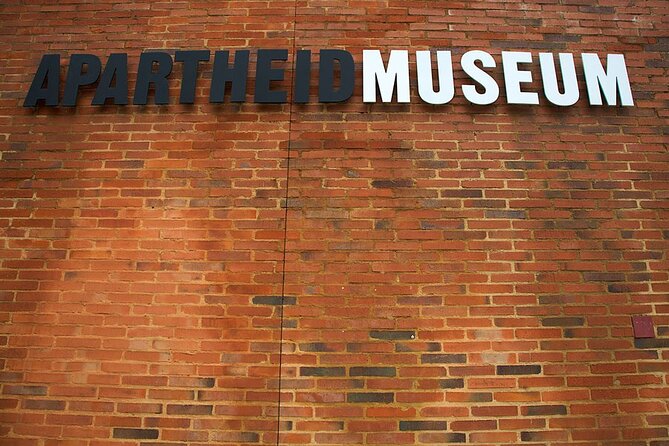
The Hector Pieterson Memorial and Museum is one of the key historical stops in Soweto. It is connected to the 1976 student uprising, a turning point in the struggle against apartheid.
The memorial gives the day a sharper emotional focus. After seeing broader sites and modern parts of Soweto, you arrive at a place centered on young people and protest. The museum setting allows you to spend time with the events rather than receiving only a quick explanation from the vehicle.
This is also a place where pacing matters. The listed time for the wider Soweto section is about two hours, and that includes several locations. You should not assume that every site receives a long, detailed visit. If the events of 1976 are especially important to you, tell your guide early that you would value enough time here.
Freedom Square widens the political story
Freedom Square adds another layer to the tour’s look at apartheid and resistance. It helps connect local history with the broader political movement that shaped modern South Africa.
I appreciate that the route includes public spaces as well as famous homes and museum buildings. Public squares can show how political ideas were shared and remembered. They also keep the day from becoming a parade of celebrity addresses.
The guide’s role again matters most in the gaps. The best part of this stop is not simply standing in the square. It is understanding why the place matters and how it fits with the other Soweto locations.
The Apartheid Museum brings the pieces together
After Soweto, you visit the Apartheid Museum for about an hour. Admission is included, and the visit covers the main Apartheid Exhibition and a Mandela Exhibition.
The museum is the day’s most concentrated history lesson. Its value comes from giving you a structured account after you have already seen the neighborhoods and landmarks tied to that account. The sequence helps you connect personal stories, political decisions, public protest, and the long effects of segregation.
One hour is useful, but it is not a leisurely museum visit. If you read every display closely, you could easily want more time. The tour is designed to give you a strong introduction rather than exhaustive coverage.
That time limit is the clearest tradeoff in the schedule. Combining Soweto with the museum makes the day efficient, but it means you cannot linger everywhere. If the Apartheid Museum is your top priority, a separate visit may give you more freedom. If you want the museum as part of a wider historical day, this arrangement works well.
Guides make the difference
The strongest praise for this experience centers on the guides. Banele was described as a source of clear information and practical care from pickup onward. The day was said to have the right balance of stops, with a good vehicle and a polite, efficient approach.
Tsholo was valued for adding personal insight into the continuing effects of apartheid and the challenges of reconciliation. That matters because the subject is not confined to the past. A good guide can help you understand why old policies still shape conversations about housing, opportunity, identity, and public memory.
You should not expect every guide to deliver the exact same personality or personal story. But the private format gives the guide room to make the day feel more conversational than a large coach tour.
The experience has a perfect five-star rating from 18 reviews and is recommended by 100 percent of respondents. That is encouraging, especially because the praise is specific: guides, pacing, vehicle comfort, and the balance between major sites and more difficult realities.
Is $97.26 per person a fair price?
At $97.26 per person, this is not the cheapest way to see Johannesburg. The value depends on what you would otherwise need to arrange yourself.
The price includes pickup from select Johannesburg locations, private transport, guiding, snacks, bottled water, and admission to FNB Stadium, Orlando Towers, and the Apartheid Museum. You are paying for a half-day to full-day experience with a driver-guide, rather than just entry to one museum.
The private format is especially useful for couples, families, or small groups who want to ask questions and avoid a large bus. Group discounts are offered, though the exact discount is not specified, so you should check the final price for your party.
Lunch is not included. I would budget time and money for a meal outside the tour arrangement, and I would use restroom facilities whenever they are available. There is no restroom on board.
The tour is booked an average of 53 days ahead, so early planning is sensible if your Johannesburg dates are fixed. Confirmation arrives at booking, and free cancellation is available until 24 hours before the start time. Within 24 hours, the payment is not refunded, and changes are not accepted.
Who will get the most from this tour?
I would recommend it to you if you want historical context but do not want to arrange transport between several widely separated places. It suits first-time visitors to Johannesburg, couples, families, and anyone who prefers a private conversation to a large group presentation.
It is also a strong choice if you want to see Soweto as a living place, not only as a set of memorials. The informal settlement visit, public spaces, homes, and modern landmarks give the day more range.
You may want a different plan if you prefer a slow museum visit with lots of reading time. An hour at the Apartheid Museum is a useful introduction, but it will feel short to serious museum readers.
The emotional tone also deserves thought. This is not a light sightseeing outing. The tour deals with apartheid, protest, inequality, political violence, and the continuing work of reconciliation. Snacks and air conditioning make the day comfortable, but the subject itself remains difficult.
Should you book the Soweto and Apartheid Museum tour?
Book it if you want a guided, private introduction to Johannesburg’s political past and present. The combination of Soweto’s major sites, an informal settlement visit, and the Apartheid Museum gives you more context than visiting a single attraction alone.
The best reasons to choose it are the private vehicle, guide-led storytelling, practical pickup, and strong reports about Banele and Tsholo. The main compromises are the packed schedule, separate lunch costs, and limited museum time.
I would book this tour early, especially if your dates are firm. Go ready to listen, ask respectful questions, and give the serious parts of the day the attention they deserve. That is when the tour is most useful.
FAQ
How long does the Soweto and Apartheid Museum tour last?
The experience lasts approximately five to seven hours.
Is hotel pickup available?
Pickup is offered from select locations in Johannesburg. You should confirm that your location is included when booking.
Is this a private tour?
Yes. Only your group participates in the activity.
What is included in the price?
The tour includes snacks, bottled water, an air-conditioned vehicle, and admission to the listed included attractions.
Is lunch included?
No. Lunch is not included in the tour price.
Is there a restroom on the vehicle?
No. There is no restroom on board.
Which places are visited in Soweto?
The route includes Chris Hani Baragwanath Hospital, Orlando Towers, Maponya Mall, Freedom Square, an informal settlement, Regina Mundi Church, Vilakazi Street, Nelson Mandela’s house, Desmond Tutu’s house, and the Hector Pieterson Memorial and Museum.
Can I cancel for a full refund?
Yes. You can cancel at least 24 hours before the experience start time for a full refund. Cancellations or changes made less than 24 hours before the start time are not accepted and are not refunded.
More Soweto Tours
- Johannesburg: Hop-On Hop-Off Bus with Optional Soweto Tour
★ 4.6 · 985 reviews - Johannesburg Hop-On Hop-Off City Tour with Soweto Option
★ 4.5 · 768 reviews - Half-Day Tour of Soweto Tour
★ 4.5 · 712 reviews - Soweto: Walking Tour with a Local Guide and Lunch
★ 4.9 · 648 reviews
Newest reviews from Johannesburg
- Cradle of Humankind and Maropeng Day Tour from Johannesburg★ 4.0 · 5 reviews
- Explore Soweto 8 Hour Tour with Lunch and Museum Visit★ 5.0 · 5 reviews
- 3 Day All Incl. Private Kruger Park Safari Incl. Transfer From Johannesburg★ 5.0 · 5 reviews
- Harties cableway Tour★ 4.5 · 5 reviews
- Pretoria Historical Tour★ 4.0 · 5 reviews
- Constitutional Hill and Soweto 5 hours tour.★ 5.0 · 5 reviews
- 5 Day Kruger National Park and Panorama Route Safari★ 4.5 · 5 reviews
- Luxury Car Johannesburg Airport Private Transfer★ 5.0 · 5 reviews
Apartheid Museum Tours, compared.

Soweto /Johannesburg and Apartheid Museum Guided Full Day Tour
Read our review →
Jo’berg in 1 Day: Soweto, Apartheid Museum & City Tour
Read our review →
Full-Day Tour with Soweto and Apartheid Museum
Read our review →
Full-Day Soweto, Apartheid Museum and Lunch Tour
Read our review →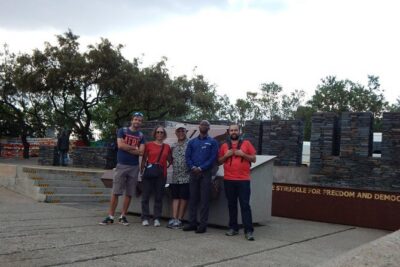
Half Guided Day Tour of Soweto And Apartheid Museum
Read our review →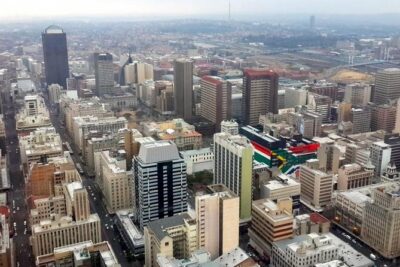
Ultimate Johannesburg Soweto Experience with Apartheid Museum
Read our review →
Soweto: Hop-On Hop-Off Bus, City Tour and Apartheid Museum
Read our review →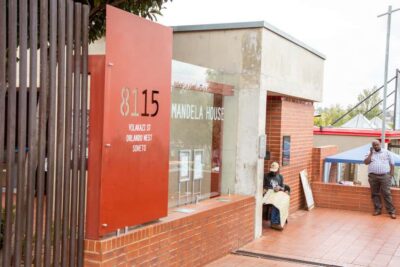
Johannesburg and Soweto Apartheid Full Day Tour w/Lunch
Read our review →Browse the lists this tour appears in