
Reviewed · APARTHEID MUSEUM TOURS
Johannesburg Historical, Apartheid Museum & Soweto
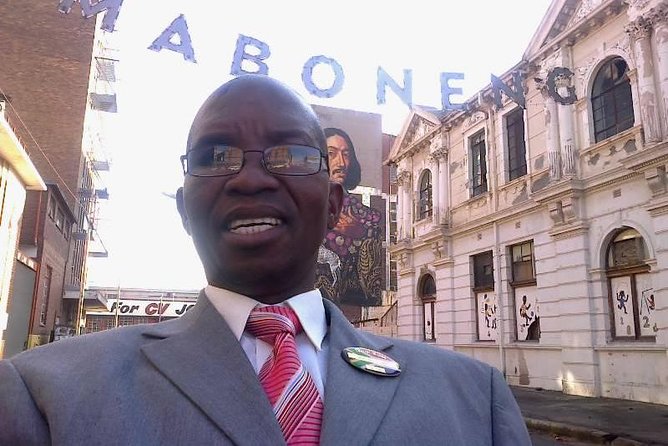
Johannesburg tells its story in layers. This private tour links the city’s gold-mining beginnings, apartheid-era prisons, modern neighborhoods, and Soweto in one packed outing. I like the private air-conditioned vehicle, which saves time between far-flung sights, and I like the chance to see both Johannesburg and Soweto rather than treating them as separate trips. The main caution is pace: with so many stops listed, you may need to choose between lingering at the Apartheid Museum and collecting quick looks elsewhere.
Guide Lesiba receives special praise for his local connections, flexible approach, and ability to adjust the day around a tight schedule. One useful detail: he has helped a visitor get back in time for a flight. Still, the advertised duration ranges from one to seven hours, so confirm the planned length and pickup details before setting out.
In This Review
- Key points at a glance
- Why this private Johannesburg tour works
- From a forgotten mine stope to the gold rush
- Constitution Hill: prison walls and a democratic future
- Maboneng and Newtown: Johannesburg changes direction
- The Apartheid Museum deserves your attention
- Soweto begins with a wider view
- Vilakazi Street and the people behind the history
- Hector Pieterson Memorial and the 1976 uprising
- Time, price, and what the day really includes
- Who should book this Johannesburg experience?
- Should you book it?
- FAQ
- How much does the tour cost?
- How long does the tour last?
- Is this a private tour?
- Is pickup offered?
- Is transportation included?
- Is bottled water included?
- Is admission to the Apartheid Museum included?
- Is admission to Mandela House included?
- Is lunch included?
- Can I cancel for a full refund?
Key points at a glance
- Constitution Hill puts democracy beside former prisons: You see the Old Fort and other prison buildings alongside South Africa’s Constitutional Court.
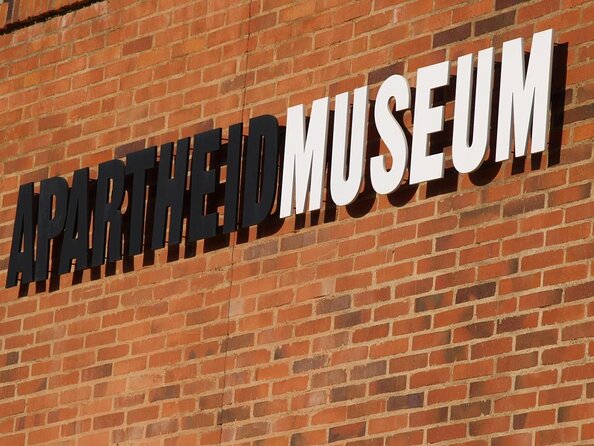
- The Apartheid Museum needs real time: Two hours is allowed, but the admission fee is extra and the museum can easily become the emotional center of the day.
- Soweto adds personal stories: Vilakazi Street, Mandela House, the Hector Pieterson Memorial, Orlando Towers, and Diepkloof show different sides of township life and political history.
- Johannesburg’s gold story begins underground: The preserved Ferreira mine stope and an old stamp battery connect today’s city to the 1886 gold rush.
- Maboneng and Newtown show urban change: These districts bring art, architecture, warehouses, bridges, and regeneration into the picture.
- Private touring gives you control: Your group travels alone, with bottled water included, and lunch available as an add-on.
Why this private Johannesburg tour works
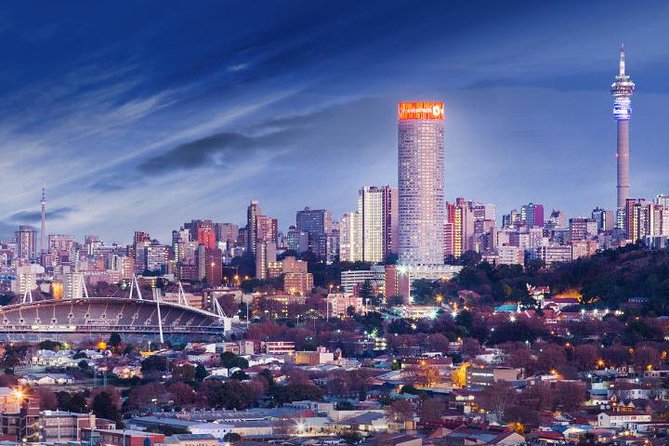
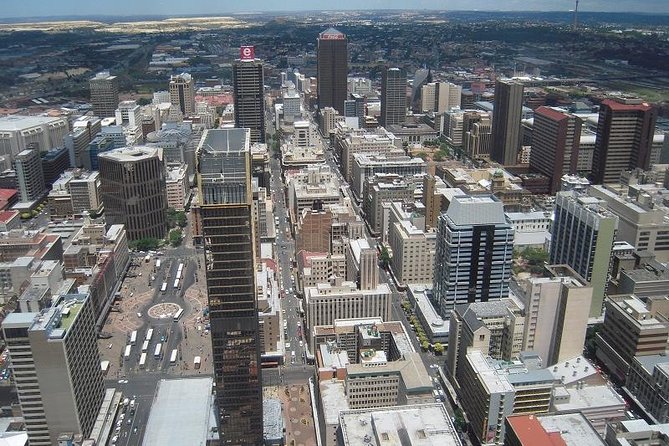
Johannesburg is spread out. The city center, Maboneng, Constitution Hill, the Apartheid Museum, and Soweto are not attractions you can neatly cover by walking from one to the next. A private vehicle makes a real difference here, especially if your time is limited or you are using Johannesburg as a stop before a flight.
The vehicle is air-conditioned, and bottled water is included. That sounds basic, but it matters on a long sightseeing day with repeated stops and time in the vehicle. You avoid figuring out several bus routes and can move directly from one neighborhood to the next.
This is a private activity, so only your group participates. That gives you room to ask questions, request a different emphasis, or spend more time at a place that matters to you. Lesiba is described as flexible and well connected across Soweto and the city. He also confirms pickup in advance, which is helpful when your schedule is tight.
The day is not a slow, single-theme museum visit. It is a fast overview with serious historical content. You will see traces of early gold mining, prison walls, artistic districts, apartheid landmarks, and Soweto locations tied to Nelson Mandela and the 1976 student uprising.
More Historical Tours in Johannesburg
- Soweto Township Cultural Tour incl Apartheid Museum and Nelson Mandela House
★ 5.0 · 30 reviews - Cradle of Humankind World Heritage Site
★ 5.0 · 15 reviews - Johannesburg: Soweto History Tour with Hotel Pickup
★ 4.8 · 14 reviews
From a forgotten mine stope to the gold rush
One of the most unusual early stops is the preserved Ferreira mine stope beneath a Standard Bank headquarters in central Johannesburg. During foundation work in the 1980s, builders found the entrance to a mine passage from the city’s first gold-mining period.
The stope takes its name from Ignatius Phillip Ferreira, a farmer, soldier, and prospector from Grahamstown. He came to Gauteng during the 1886 gold rush, founded one of the first mining camps in July of that year, and found gold three months later.
This small stop gives you useful context before the tour turns toward political history. Johannesburg did not begin as a polished business center. It grew rapidly around gold, mining labor, and the fortunes made from the ground beneath the city.
You also stop to see a stamp battery, the machinery once used to crush gold-bearing rock from underground. The scheduled time is only about 20 minutes, so think of it as a compact history lesson rather than a full mining museum visit.
Constitution Hill: prison walls and a democratic future
Constitution Hill is one of the strongest stops on the tour. The precinct brings together notorious former prisons and the Constitutional Court, creating a direct link between oppression and the democratic system that replaced it.
The Old Fort was built in the 1890s and later became part of a prison complex. The site also included sections used for different categories of prisoners, with harsh conditions shaped by race, status, and political control. Today, these buildings are museums.
The Constitutional Court sits beside them as a symbol of post-apartheid South Africa. That physical contrast is the point. You are not simply entering an old prison and then moving on to a courthouse. You are seeing how the country presents its past while building a new legal order.
About 90 minutes is allocated here, and admission is included. I would protect that time. The buildings carry more weight when you can pause, read, and listen rather than rushing through for photographs.
Constitution Hill sits on the ridge between Hillbrow and Braamfontein, overlooking central Johannesburg. The location also helps you understand the city’s geography. You are looking across a place shaped by rapid growth, forced separation, migration, and later efforts to repair the inner city.
Maboneng and Newtown: Johannesburg changes direction

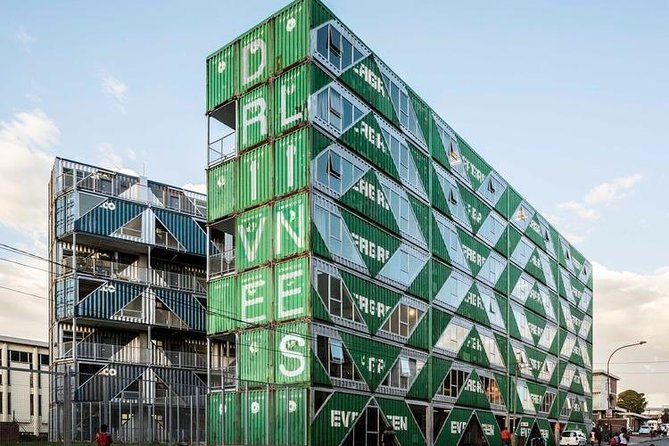
Maboneng means place of light in Sotho. The precinct grew from an effort to convert rundown industrial warehouses and factories on the eastern edge of the inner city into places for living, working, eating, and art.
You receive about an hour here, with no admission fee. Maboneng is useful because it shows a different Johannesburg from the one represented by prisons and mine machinery. Old industrial buildings have been given new uses, and the area aims to create a safer, more active urban district.
The tour does not present Maboneng as the whole answer to Johannesburg’s urban problems. That is wise. Regeneration can bring new energy, but it can also raise questions about who benefits and who can afford to remain. Your guide can help place the redevelopment in a local setting.
Newtown adds another piece. The area has developed as a cultural and tourist district, with artists of different backgrounds gathering there. You may also pass the large cable-stayed bridge completed in 2003, which links Newtown and Braamfontein across the railway tracks.
The bridge took 18 months to build and is described as the largest cable-stayed bridge in southern Africa. The short pass-through stop is more about seeing the city’s structure and regeneration than touring a single attraction.
More Museums in Johannesburg
- Soweto /Johannesburg and Apartheid Museum Guided Full Day Tour
★ 5.0 · 932 reviews - Jo’berg in 1 Day: Soweto, Apartheid Museum & City Tour
★ 4.8 · 524 reviews - Johannesburg: Full-Day Tour with Soweto and Apartheid Museum
★ 4.8 · 478 reviews - Full-Day Soweto, Apartheid Museum and Lunch Tour
★ 5.0 · 410 reviews
The Apartheid Museum deserves your attention
The Apartheid Museum is the tour’s central historical stop. It was the first museum of its kind and explains the rise and fall of apartheid through exhibits about the political system, racial separation, resistance, and its eventual end.
Two hours is scheduled here. That is enough for a serious visit, but not necessarily enough for every display. I would not treat this as a quick photo stop. The subject requires concentration, and the museum is likely to shape how you understand the other sites you see during the day.
Admission is not included, so add that cost when judging the total value. The tour includes all fees and taxes in general, but the separate note about Apartheid Museum admission is important. Lunch, snacks, and alcoholic drinks are also excluded.
The museum pairs well with Constitution Hill. Constitution Hill makes apartheid-era imprisonment physical and immediate. The Apartheid Museum gives you a broader national account. Seeing both in one day creates a stronger connection between individual suffering, government policy, resistance movements, and democratic change.
If you have only a few hours, ask your guide how much time will be spent here. The itinerary includes many stops, and the museum is the place where rushing would cost you the most.
Soweto begins with a wider view
The Soweto section is not limited to one famous house. The route includes Diepkloof, Orlando Towers, Vilakazi Street, Mandela House, the Hector Pieterson Memorial, Mzimhlophe station, and other township areas.
Diepkloof includes upper-class residential areas as well as hostels built to house large numbers of single male migrant workers. That contrast helps explain how apartheid-era labor systems shaped township communities. It also shows why Soweto cannot be reduced to a collection of tourist landmarks.
The tour also passes Chris Hani Baragwanath Hospital, described as the largest hospital in Africa and the third-largest in the world. The stop is brief, so expect a roadside look rather than a full visit.
At Orlando Towers, you see two cooling towers associated with one of the world’s notable bungee-jumping locations. You are not promised a jump, and the scheduled stop lasts about 15 minutes. It is a striking example of old industrial infrastructure given a new public use.
Soweto also includes Mzimhlophe station, where you pass areas connected with demonstrations during the Treason Trial period. The route includes a Coloured township known locally as Bulte, or Hills, a name tied to the mine dumps around the community. These shorter pass-through sections widen the story beyond the most famous names.
Vilakazi Street and the people behind the history
Vilakazi Street is one of the most important addresses in Soweto. It is associated with two Nobel laureates, Nelson Mandela and Archbishop Emeritus Desmond Tutu, who lived on the same street at different times.
The street is more than a line of historic houses. It remains a lived-in neighborhood, and the tour gives you a chance to see how political history and daily life occupy the same space. The planned stop is about 15 minutes, so do not expect a long neighborhood walk.
Mandela House at 8115 Vilakazi Street receives about 30 minutes, and admission is included. This small brick house was where Nelson Mandela’s family lived from 1946 into the 1990s. It is now a museum with artwork and displays connected to his life.
The house is valuable because it makes a famous political figure more concrete. You are seeing a home, not only a statue or a grand public building. With just half an hour, the visit will be focused, but it gives the Soweto portion a clear center.
Hector Pieterson Memorial and the 1976 uprising
The Hector Pieterson Memorial commemorates the 1976 Soweto uprising, when students protested the apartheid government’s language policy and broader system of racial control. Hector Pieterson was 12 years old when he was killed by police fire.
The memorial is connected to the photograph that helped show the world what happened. The tour notes that he was the first child to die by a police bullet during the protest, and that he is buried at Avalon Cemetery among many victims of apartheid.
About 30 minutes is planned here, and admission is not included. Expect a solemn stop rather than a scenic one. The memorial works best when you give yourself time to read and think about the young age of those involved.
This is another reason to ask about the total schedule. A rushed visit can turn a major historical site into a quick photograph. A private tour gives you a better chance of adjusting the pace, but only if you raise the issue at the start.
Time, price, and what the day really includes
The price is $107.48 per person. For a private tour covering central Johannesburg and Soweto, that can be fair value, especially if your group wants door-to-door transport and a guide focused only on you. The value improves when you have limited time and would otherwise need several separate rides.
The price is less attractive if you want long museum visits, a leisurely lunch, and extended time in each neighborhood. The route includes many short stops, and the stated duration can range from one to seven hours. That is a wide span, so confirm the exact plan before booking.
Included are the air-conditioned vehicle, bottled water, and all listed fees and taxes. The Apartheid Museum admission is specifically excluded, as are lunch, snacks, and alcoholic beverages. Lunch can be added, but the details and cost should be confirmed directly.
The tour offers pickup, group discounts, and a mobile ticket. Booking confirmation is provided at the time of booking. The listed opening hours show Monday and Tuesday from 8:30 AM to 1:30 PM for the stated operating period, so confirm that your desired date and pickup time fit those hours.
Free cancellation is available up to 24 hours before the start time. Changes or cancellations made less than 24 hours before departure are not accepted for a refund.
Who should book this Johannesburg experience?
I would recommend it to a first-time visitor who wants a broad introduction without managing Johannesburg’s transport alone. It suits families and small groups particularly well because everyone stays together in a private vehicle and the guide can explain the city at your group’s level.
It is also a good choice for a stopover. Lesiba has helped organize a day around a flight connection, including returning a visitor on time. If your flight schedule is tight, give the operator your exact departure time and ask for a realistic itinerary, not the longest possible list of stops.
History-focused visitors should make Constitution Hill, the Apartheid Museum, Mandela House, and the Hector Pieterson Memorial the priorities. Those sites carry the greatest weight. Maboneng, Newtown, the mine stope, and the gold stamp battery add useful city context, but they may be the places to shorten if time becomes tight.
You may prefer another format if you want a slow cultural walk, extended museum study, or a full day with no fixed route. This is a broad overview, not a deep visit to every district.
Should you book it?
Book this tour if you want to connect Johannesburg’s major historical themes in one private outing. The combination of Constitution Hill, the Apartheid Museum, and Soweto is its strongest feature, while the private vehicle and flexible guide make a complicated city easier to handle.
Before paying, confirm the exact duration, pickup point, museum admission cost, lunch arrangements, and which short stops are guaranteed. Ask for enough time at the Apartheid Museum and Hector Pieterson Memorial. If you do that, the $107.48 price can buy a useful, focused introduction to a city that deserves more than a quick drive-through.
FAQ
How much does the tour cost?
The listed price is $107.48 per person. Group discounts are offered.
How long does the tour last?
The approximate duration is listed as one to seven hours. Confirm the exact schedule when booking because the route includes many stops.
Is this a private tour?
Yes. Only your group participates in the activity.
Is pickup offered?
Yes. Pickup is offered, and the guide may confirm a convenient time and location in advance.
Is transportation included?
Yes. You travel in a private air-conditioned vehicle.
Is bottled water included?
Yes. Bottled water is included.
Is admission to the Apartheid Museum included?
No. Admission to the Apartheid Museum is not included.
Is admission to Mandela House included?
Yes. Admission to Mandela House is included.
Is lunch included?
No. Lunch is not included, although it can be added. Snacks and alcoholic beverages are also excluded.
Can I cancel for a full refund?
Yes, if you cancel at least 24 hours before the experience start time. Cancellations made less than 24 hours before the start time are not refunded.
More Soweto Tours
- Johannesburg: Hop-On Hop-Off Bus with Optional Soweto Tour
★ 4.6 · 985 reviews - Johannesburg Hop-On Hop-Off City Tour with Soweto Option
★ 4.5 · 768 reviews - Half-Day Tour of Soweto Tour
★ 4.5 · 712 reviews - Soweto: Walking Tour with a Local Guide and Lunch
★ 4.9 · 648 reviews
More Apartheid History Tours
- Half Guided Day Tour of Soweto And Apartheid Museum
★ 5.0 · 356 reviews - Ultimate Johannesburg Soweto Experience with Apartheid Museum
★ 5.0 · 313 reviews - Soweto: Hop-On Hop-Off Bus, City Tour and Apartheid Museum
★ 4.5 · 250 reviews - Johannesburg and Soweto Apartheid Full Day Tour w/Lunch
★ 4.9 · 219 reviews
Newest reviews from Johannesburg
- Cradle of Humankind and Maropeng Day Tour from Johannesburg★ 4.0 · 5 reviews
- Explore Soweto 8 Hour Tour with Lunch and Museum Visit★ 5.0 · 5 reviews
- 3 Day All Incl. Private Kruger Park Safari Incl. Transfer From Johannesburg★ 5.0 · 5 reviews
- Harties cableway Tour★ 4.5 · 5 reviews
- Pretoria Historical Tour★ 4.0 · 5 reviews
- Constitutional Hill and Soweto 5 hours tour.★ 5.0 · 5 reviews
- 5 Day Kruger National Park and Panorama Route Safari★ 4.5 · 5 reviews
- Luxury Car Johannesburg Airport Private Transfer★ 5.0 · 5 reviews
Apartheid Museum Tours, compared.

Soweto /Johannesburg and Apartheid Museum Guided Full Day Tour
Read our review →
Jo’berg in 1 Day: Soweto, Apartheid Museum & City Tour
Read our review →
Full-Day Tour with Soweto and Apartheid Museum
Read our review →
Full-Day Soweto, Apartheid Museum and Lunch Tour
Read our review →
Half Guided Day Tour of Soweto And Apartheid Museum
Read our review →
Ultimate Johannesburg Soweto Experience with Apartheid Museum
Read our review →
Soweto: Hop-On Hop-Off Bus, City Tour and Apartheid Museum
Read our review →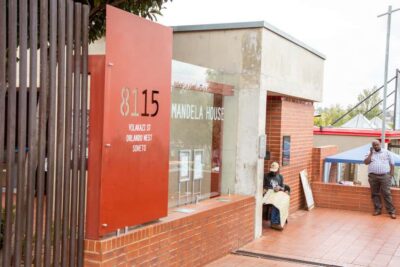
Johannesburg and Soweto Apartheid Full Day Tour w/Lunch
Read our review →Browse the lists this tour appears in