
Reviewed · APARTHEID MUSEUM TOURS
Apartheid Museum Guided Tour
A difficult past deserves your full attention. The Apartheid Museum Guided Tour turns South Africa’s painful story into a clear, emotional visit, using film, photographs, objects, and personal accounts to trace apartheid from its roots through liberation. I especially like the hotel pickup and drop-off around Johannesburg or Pretoria, plus the chance to have a guide such as Mo, John, Tsholo, or Banele add local context as you move through the museum.
I also like the small group limit of 12 people. It gives the experience a more personal feel than a large coach outing, and guides can answer questions along the way. The main caution is time: the scheduled museum visit lasts about three hours, but the exhibits contain enough material for much longer. If you read every panel and pause at the films, the tour may feel rushed.
In This Review
- Key points at a glance
- Why the Apartheid Museum belongs on your Johannesburg plans
- Pickup from Johannesburg or Pretoria keeps the day simple
- Entering the museum through apartheid’s divided world
- What a guide adds beyond the display panels
- Three hours is useful, but not generous
- Is $57.40 a fair price?
- Who will get the most from this experience?
- Practical advice before you go
- Should you book the Apartheid Museum Guided Tour?
- FAQ
- Where is the Apartheid Museum Guided Tour located?
- How long does the experience last?
- What is the price?
- Is pickup included?
- What transportation is provided?
- Is bottled water included?
- Is lunch included?
- How many people can join the tour?
- Can most people participate?
- Can I cancel for a full refund?
Key points at a glance
- A serious three-hour visit: The museum follows apartheid from its origins to the release of Nelson Mandela and South Africa’s move toward democracy.
- Pickup from Johannesburg or Pretoria: An air-conditioned vehicle takes care of the transport, which is useful if you are unfamiliar with Johannesburg.
- Guides add essential context: Mo, John, Tsholo, Pule, Marc, and Banele have all been praised for clear explanations, personal stories, and sensitive storytelling.
- Small groups up to 12: This is a better setup for questions and conversation than a large sightseeing bus.
- The price includes more than museum entry: At $57.40 per person, you are paying for transport, guiding, water, and convenience as well as access to the museum.
- Plan for emotional weight: This is not a quick photo stop. Give yourself quiet time before and after the visit.
Why the Apartheid Museum belongs on your Johannesburg plans
The Apartheid Museum is one of Johannesburg’s most important places to visit because it does more than display dates and political figures. It shows how racial separation entered daily life, law, work, housing, education, and movement. You are asked to look at the machinery of apartheid, but also at the people who lived under it and resisted it.
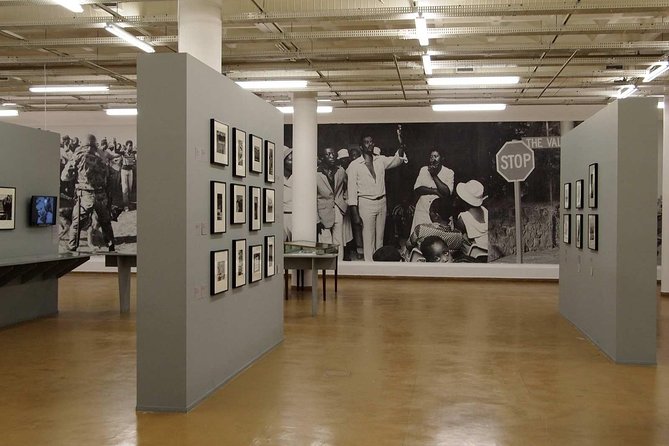
The museum opened in 2001 and sits within the Gold Reef City complex. Its exhibits combine photographs, film footage, artifacts, and written explanation. That variety matters. A long text panel can explain policy, but a photograph or period film can show how those policies affected real lives.
I would not treat this as a light museum stop between other attractions. The subject is painful, and the visit can leave you quiet for a while. That is part of its value. The museum gives you a stronger understanding of South Africa before you see places such as Soweto or learn more about Nelson Mandela.
The experience also helps explain why apartheid was not simply one bad law or one short political period. The museum lays out the forces that led to it, the way it was enforced, and the resistance that eventually helped bring it down. That wider frame is especially useful if you are visiting South Africa for the first time.
More Museums in Johannesburg
- Soweto /Johannesburg and Apartheid Museum Guided Full Day Tour
★ 5.0 · 932 reviews - Jo’berg in 1 Day: Soweto, Apartheid Museum & City Tour
★ 4.8 · 524 reviews - Johannesburg: Full-Day Tour with Soweto and Apartheid Museum
★ 4.8 · 478 reviews
Pickup from Johannesburg or Pretoria keeps the day simple
Stephenson Adventures includes pickup and drop-off from any hotel or place around Johannesburg or Pretoria. You travel in an air-conditioned vehicle, and bottled water is included. For many people, this is the most practical part of the experience.
Johannesburg is a large city, and getting to the museum on your own can involve planning routes, arranging a ride, and allowing time for traffic. The pickup service removes much of that work. It is also useful if you are traveling alone, arriving on a tight schedule, or staying outside the city center.
One particularly useful example comes from a passenger who arranged a long airport layover. Banele met that person at the airport, drove to the museum, guided the visit, and returned them afterward. That does not mean every airport transfer will follow the same arrangement, so you should confirm the plan when booking. Still, it shows how the service can work well for a short Johannesburg stopover.
The driver may also serve as your guide. Mo, for example, was praised for setting the historical scene during the drive and adding context on the way back. This turns transport time into part of the lesson instead of dead time in a car.
Allow for possible traffic delays. The museum visit itself is listed at about three hours, while the full experience lasts roughly three to four hours. The longer estimate likely reflects the driving and pickup schedule, but the exact timing depends on where you are staying.
Entering the museum through apartheid’s divided world
The visit begins at the Apartheid Museum, where the layout and exhibits establish the scale of the subject. The museum uses a timeline-like progression to show how South Africa moved from earlier racial systems into formal apartheid and then toward liberation.
One striking feature of the experience is the way information is presented in stages. You are not handed one giant lecture. Instead, the visit builds your understanding through written displays, visual material, film, and objects. That structure helps you follow a complicated subject without losing the human story.
You might find yourself moving slowly through certain sections. The material is designed to make you consider how government decisions became everyday rules. Passes, identity classifications, forced separation, and unequal rights were not abstract ideas. They shaped where people could live, work, study, and travel.
The museum also deals with resistance and repression. The story includes the growth of opposition, conflict, violence, and the pressure that eventually forced political change. The material concerning Mandela and the end of apartheid gives the visit a sense of direction, but it does not erase the damage that came before.
That balance is important. The museum is not simply a celebration of liberation. It asks you to understand what liberation had to overcome.
What a guide adds beyond the display panels
A self-guided museum visit can be worthwhile, but this tour gives you a person who can connect the pieces. The strongest praise has gone to guides who explain difficult ideas in plain language and answer questions without turning the visit into a formal classroom.
John has been praised for making the subject clear and engaging. Mo has been described as friendly and well informed, with useful local perspective during both the drive and museum visit. Tsholo has received especially warm feedback for explaining the cultural and historical setting in an easy-to-follow way and sharing personal stories.
Pule is another guide singled out for his strong command of South African history and his ability to hold an interesting conversation. Marc was praised for emotional storytelling that brought the past to life with care and respect. Banele has also been praised for professionalism, museum guidance, and historical explanation beyond the displays.
Guide assignments can change, so you should not book on the assumption that one specific person will lead your tour. The useful point is that the company has several guides who have earned strong marks for preparation, punctuality, and sensitivity.
That sensitivity matters here. A good guide should know when to explain, when to let you look, and when not to fill every quiet moment with words. The best balance allows you to receive background information and then spend time with the exhibits on your own.
More apartheid history tours:
- Full-Day Soweto, Apartheid Museum and Lunch Tour
★ 5.0 · 410 reviews - Half Guided Day Tour of Soweto And Apartheid Museum
★ 5.0 · 356 reviews - Ultimate Johannesburg Soweto Experience with Apartheid Museum
★ 5.0 · 313 reviews - Soweto: Hop-On Hop-Off Bus, City Tour and Apartheid Museum
★ 4.5 · 250 reviews
Three hours is useful, but not generous
The stated museum portion lasts about three hours. That is enough to gain a strong understanding of the main story, particularly if your guide helps you focus on the major sections. It is not enough for every visitor to read every panel, watch every film, and sit with each display at length.
One person found the visit rushed and felt it could have used another hour. I think that is the clearest practical warning attached to this tour. The museum contains a great deal of information, and the subject needs time. If you are the type who reads every label, plan to discuss timing with your guide at the start.
The good news is that the tour format can allow a mix of guided explanation and independent viewing. One passenger praised the balance between time with the guide and time to wander alone. That is the arrangement I would prefer here. You need the guide for structure, but you also need room to process what you are seeing.
If your schedule allows, avoid placing another demanding activity immediately afterward. The museum may be followed by a visit to Soweto or other Johannesburg sights on a separate day, but the supplied experience itself focuses on the Apartheid Museum. Give yourself breathing room.
The exact order and pace can depend on the guide and group. A small group of no more than 12 makes it easier to ask for a little extra time, though the schedule may still impose limits.
Is $57.40 a fair price?
The listed cost is $57.40 per person. That price should be judged as a guided transport experience, not simply as a museum admission fee.
The package includes an air-conditioned vehicle, hotel or location pickup and drop-off around Johannesburg or Pretoria, bottled water, and the services of a guide. The itinerary also shows the museum admission ticket as free within the tour details, so the price is mainly paying for transportation, planning, and interpretation rather than a costly standalone entry ticket.
For someone already staying near the museum and comfortable arranging transport, a cheaper independent visit may be possible. You would then give up the convenience of door-to-door service and the historical explanation provided during the drive and inside the museum.
For a first visit to Johannesburg, the added value is clear. You do not need to manage unfamiliar transport, and you have someone who can explain the background in a way that connects the displays. Solo visitors may find this especially helpful, as may anyone arriving on a short layover.
The small group limit also supports the price. You are not paying for a huge bus with a microphone and a fixed script. You are more likely to have direct contact with your guide and a chance to ask questions.
Lunch, coffee, tea, alcohol, and an onboard restroom are not included. Bring anything you need for the outing, especially if you are prone to getting hungry during a half-day activity. Bottled water is supplied.
Who will get the most from this experience?
I would recommend this tour to you if you want historical context, easy transport, and a guide who can explain South Africa in a human way. It is a strong choice for first-time visitors, solo visitors, couples, families with older children, and people using a long airport layover.
It also suits people who want more than a quick museum photograph. The visit asks for attention, and the guide can help you understand why the exhibits matter rather than leaving you to piece together the story alone.
You may prefer to visit independently if you want to set your own pace without a schedule. That option makes sense for readers who plan to spend most of a day at the museum, stop often, or return to sections after a first look.
The tour is less suited to anyone seeking a relaxed sightseeing outing. Apartheid is a difficult subject, and the museum presents it directly. Go with an open mind and expect the experience to be serious.
Practical advice before you go
Book at least a little ahead if your schedule is fixed. This experience is often reserved about 32 days in advance, which suggests that popular dates may fill before your arrival.
Wear comfortable clothing and shoes. The museum portion lasts around three hours, and you may want to stand, walk, pause, and read without discomfort.
Tell your guide if you want more explanation or more independent time. The strongest version of this visit is not a nonstop lecture. You should have room to ask questions, look closely, and sit quietly with difficult material.
Keep your schedule flexible around pickup. The tour offers service from Johannesburg and Pretoria, but driving time varies by location and traffic. If you are connecting with a flight, leave a proper buffer rather than cutting it close.
Free cancellation is available if you cancel at least 24 hours before the local start time. Cancellations within 24 hours are not refunded, and late changes are not accepted.
Should you book the Apartheid Museum Guided Tour?
Book it if you want the Apartheid Museum explained by a local guide and you value simple transport from Johannesburg or Pretoria. The guides receive especially strong praise for clear delivery, punctual pickups, cultural understanding, and respectful storytelling.
The biggest question is time. Three hours gives you a solid introduction, but not unlimited time for every exhibit. If you can accept a focused visit rather than an all-day museum stay, the $57.40 price is reasonable for the transport and guidance included.
I would book this tour for a first Johannesburg visit, a solo stopover, or anyone who wants help making sense of South Africa’s past. If you prefer to read at your own pace and spend the whole day with the displays, visit independently and allow more time.
FAQ
Where is the Apartheid Museum Guided Tour located?
The tour visits the Apartheid Museum, located within the Gold Reef City complex in Johannesburg, South Africa.
How long does the experience last?
The experience lasts approximately three to four hours, with about three hours listed for the museum visit.
What is the price?
The listed price is $57.40 per person.
Is pickup included?
Yes. Pickup and drop-off are offered from any hotel or place around Johannesburg or Pretoria.
What transportation is provided?
An air-conditioned vehicle is provided for the tour.
Is bottled water included?
Yes. Bottled water is included.
Is lunch included?
No. Lunch is not included. Alcoholic beverages, coffee, and tea are also not included.
How many people can join the tour?
The tour has a maximum group size of 12 people.
Can most people participate?
Yes. The activity information states that most people can participate.
Can I cancel for a full refund?
Yes, if you cancel at least 24 hours before the experience start time. Cancellations within 24 hours are not refunded, and changes made within that period are not accepted.
Newest reviews from Johannesburg
- Cradle of Humankind and Maropeng Day Tour from Johannesburg★ 4.0 · 5 reviews
- Explore Soweto 8 Hour Tour with Lunch and Museum Visit★ 5.0 · 5 reviews
- 3 Day All Incl. Private Kruger Park Safari Incl. Transfer From Johannesburg★ 5.0 · 5 reviews
- Harties cableway Tour★ 4.5 · 5 reviews
- Pretoria Historical Tour★ 4.0 · 5 reviews
- Constitutional Hill and Soweto 5 hours tour.★ 5.0 · 5 reviews
- 5 Day Kruger National Park and Panorama Route Safari★ 4.5 · 5 reviews
- Luxury Car Johannesburg Airport Private Transfer★ 5.0 · 5 reviews
Apartheid Museum Tours, compared.

Soweto /Johannesburg and Apartheid Museum Guided Full Day Tour
Read our review →
Jo’berg in 1 Day: Soweto, Apartheid Museum & City Tour
Read our review →
Full-Day Tour with Soweto and Apartheid Museum
Read our review →
Full-Day Soweto, Apartheid Museum and Lunch Tour
Read our review →
Half Guided Day Tour of Soweto And Apartheid Museum
Read our review →
Ultimate Johannesburg Soweto Experience with Apartheid Museum
Read our review →
Soweto: Hop-On Hop-Off Bus, City Tour and Apartheid Museum
Read our review →
Johannesburg and Soweto Apartheid Full Day Tour w/Lunch
Read our review →Browse the lists this tour appears in