
Reviewed · SOWETO TOURS
Soweto half day Tour
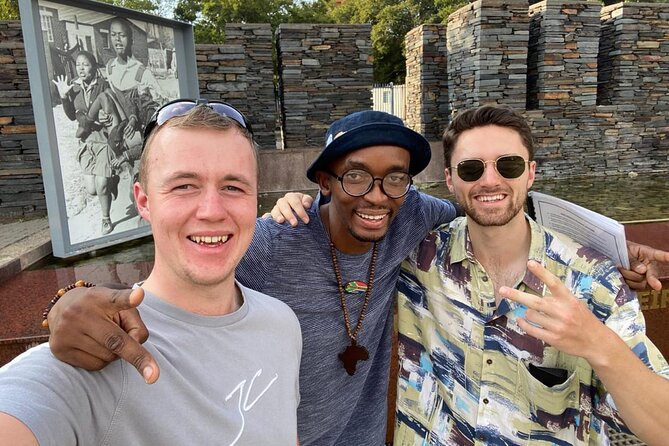
Soweto tells South Africa’s story in four hours. This half-day outing combines apartheid history with present-day township life, moving from Soccer City and Orlando Towers to Mandela House, the Hector Pieterson Museum, and Regina Mundi. I like the hotel pickup and air-conditioned transport, and I like that guides such as Mo, Banela, Banele, and Tsholo add personal stories and welcome questions.
The tour is also good value at $59.81 per person, especially if you are short on time in Johannesburg. My main caution is that four hours moves quickly, and the optional squatter camp visit, local guides, and stops involving community members may require extra tips and thoughtful attention.
In This Review
- Key points to know before booking
- Why this four-hour Soweto tour works
- Starting near FNB Stadium and Soccer City
- Diepkloof Park and the meaning of township life
- Orlando Towers, a bright Soweto landmark
- Vilakazi Street and two Nobel Peace Prize homes
- Mandela House at 8115 Vilakazi Street
- Hector Pieterson Museum and the 1976 uprising
- Regina Mundi, the people’s church
- Optional Kliptown Youth Program visit
- What the guide and vehicle add
- Is $59.81 good value?
- Who should book this Soweto experience?
- Should you book the Soweto half-day tour?
- FAQ
- How long is the Soweto tour?
- How much does the tour cost?
- Is hotel pickup available?
- Is transportation included?
- Is a guide included?
- Are meals and drinks included?
- Is the Kliptown Youth Program visit required?
- Can I cancel for a full refund?
Key points to know before booking
- Mandela and Tutu’s former homes are on the same famous street: Vilakazi Street gives the tour a strong focus, with time at both historic homes and a separate visit to Mandela House.
- You get hotel pickup from Johannesburg or Pretoria: This removes the need to arrange your own transport to Soweto.
- The tour links major landmarks with everyday life: Diepkloof Park and the optional Kliptown Youth Program visit add context beyond famous political sites.
- Guides are the main strength: Mo, Banela, Banele, and Tsholo are praised for clear explanations, local insight, patience, and flexibility.
- The schedule is full: The listed stops add up to about three hours, leaving roughly an hour for driving, transitions, and pickup.
- Budget for local tips: One detailed account advises you to carry money for community members who contribute at certain stops.
Why this four-hour Soweto tour works
Soweto is not a single museum or memorial. It is a large township with political landmarks, ordinary neighborhoods, places of worship, sports symbols, and communities still shaped by older housing policies. A useful visit needs to connect those pieces. This tour tries to do that in a short morning or afternoon.
You begin with a drive through several major points, then spend more time around Vilakazi Street and the sites linked to the 1976 Soweto Uprising. That structure makes sense. You get a broad first look, then slow down for the places that carry the greatest emotional and historical weight.
I especially like the balance between famous names and local life. Nelson Mandela’s home is essential, but a visit to only one former residence can make Soweto feel like a memorial district. The inclusion of Diepkloof Park, Orlando Towers, Regina Mundi, and the optional Kliptown Youth Program gives you a wider view.
The guide matters here more than almost any other feature. Mo is repeatedly praised for his insight and ability to make the experience memorable. Banela, who is described as being from Soweto, brings a personal point of view. Banele is praised for taking time at stops and answering questions, while Tsholo is noted for using local experts at some locations.
That human element helps you understand what you are seeing instead of simply taking photographs from a vehicle.
More Soweto tours:
- Johannesburg: Hop-On Hop-Off Bus with Optional Soweto Tour
★ 4.6 · 985 reviews - Soweto /Johannesburg and Apartheid Museum Guided Full Day Tour
★ 5.0 · 932 reviews - Johannesburg Hop-On Hop-Off City Tour with Soweto Option
★ 4.5 · 768 reviews
Starting near FNB Stadium and Soccer City

The first point is FNB Stadium, also known as Soccer City. The tour passes the stadium on the way toward Soweto, with about 15 minutes allocated to the stop and no separate admission charge listed.
The stadium is best known internationally for hosting the opening and closing ceremonies of the 2010 FIFA World Cup. It has also been connected with major historic events, so your guide can place this modern sports venue within the broader story of South Africa.
This is mainly an orientation stop rather than a long stadium tour. If you expect to enter the building or take a formal behind-the-scenes visit, this experience does not promise that. Think of it as a useful first landmark and a chance to understand the scale of the area before moving into Soweto.
For football fans, the stop has extra appeal. The tour also has a clear local football flavor, with one account ending its praise with a cheerful Orlando Pirates reference. You may find that sport gives the group an easy way to connect before the more serious historical sites begin.
Diepkloof Park and the meaning of township life
At Diepkloof Park, you get about 15 minutes to hear how Soweto developed and how kasi life is understood today. The word refers to township life and culture, and the stop is meant to connect the past with the present.
This is one of the most useful parts of the route because it keeps Soweto from being treated only as a backdrop for apartheid-era events. You can ask how housing and political policies affected different communities, and how those effects remain visible in the way neighborhoods are organized.
The short time is the limitation. Fifteen minutes is enough for an explanation and a few questions, but not enough for a long walk or detailed neighborhood study. If your main interest is present-day life, tell your guide early. One account describes a guide staying longer at places that mattered most to the group, so flexibility may be possible when timing allows.
Orlando Towers, a bright Soweto landmark
Orlando Towers receives about 20 minutes. The two colorful cooling towers have become one of Soweto’s most recognizable sights, and they offer a welcome change of tone after the political context at Diepkloof Park.
This is a good photo stop, but your guide also helps explain why industrial structures can become local symbols. The towers are not presented as a stand-alone attraction with a long activity program. They are part of the visual identity of Orlando and a clear marker that you are now inside Soweto.
I would keep your expectations practical. You have time to see the towers and hear their place in the neighborhood, not to spend a full afternoon there. The stop works best as part of the larger route.
A few more tours worth putting side by side
- From Johannesburg: Pilanesberg Nature Reserve Game Safari
★ 4.8 · 1,327 reviews - Full Day Ultimate Pilanesberg National Park Safari from Johannesburg or Pretoria
★ 4.5 · 718 reviews - Half-Day Tour of Soweto Tour
★ 4.5 · 712 reviews - Soweto: Walking Tour with a Local Guide and Lunch
★ 4.9 · 648 reviews
Vilakazi Street and two Nobel Peace Prize homes
Vilakazi Street is the heart of the tour. You have about 45 minutes here, followed by another 30 minutes at Mandela House. That gives this section more time than any other single part of the itinerary.
The street is famous for having been home to both Nelson Mandela and Archbishop Desmond Tutu, two Nobel Peace Prize winners. Walking here gives the political story a personal scale. Instead of hearing only about national leaders, you see the addresses connected with their daily lives.
The street is also an important place to think about how public memory works. Two internationally known figures lived on the same street, yet the area is also part of a living township rather than a sealed historic quarter. You should approach the visit with respect and curiosity, not just as a checklist of famous addresses.
The time can pass quickly. If you want photographs, listen to the guide, and visit both homes, stay organized. The tour may include local explanations at different points, and one detailed account specifically recommends being ready to tip local people who add to the experience.
Mandela House at 8115 Vilakazi Street

Mandela House, at No. 8115, is listed as a 30-minute stop. It is the former home of Nelson Mandela and now operates as a heritage site with sound, film, interpretive panels, and guided tours.
This is likely the most concentrated museum visit of the day. The materials help fill in details that a guide cannot cover while driving. You can expect a more structured presentation here, with the house itself providing the setting for Mandela’s personal and political story.
Thirty minutes is enough for a focused visit, but it is not a leisurely museum session. If you like reading every panel, you may need to move at a steady pace. If the site has a particularly strong hold on your attention, ask whether the guide can adjust the timing, though the full route still needs to fit within about four hours.
The itinerary lists no separate admission ticket cost for the stop. Still, you should check the final booking details for current arrangements, since the experience information identifies the visit but does not spell out every museum-entry procedure.
Hector Pieterson Museum and the 1976 uprising
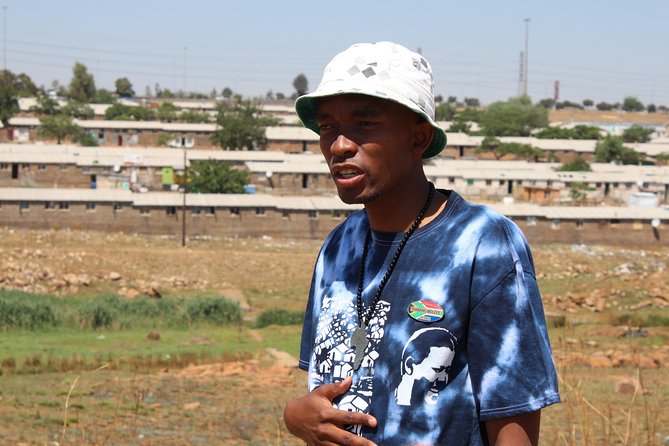
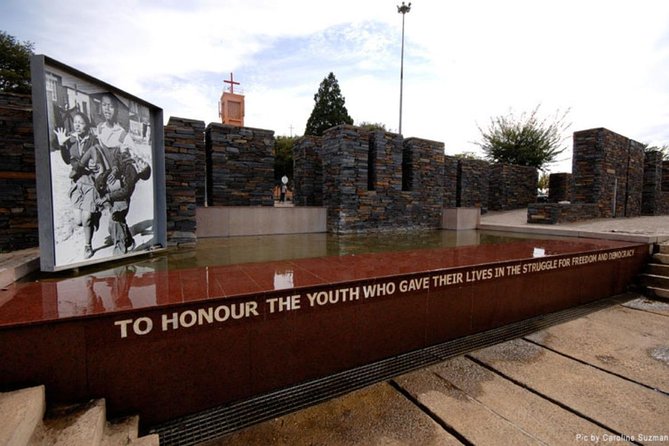
The Hector Pieterson Museum and Memorial receives about 30 minutes. It honors the 13-year-old Hector Pieterson, who was shot on June 16, 1976, during the Soweto Uprising. The site is now a national heritage site and a symbol of resistance to apartheid government brutality.
This is the point where the tour’s historical thread becomes especially direct. The uprising began after students protested the forced use of Afrikaans in schools, but the provided tour information focuses on Hector Pieterson and the memorial’s role in remembering the violence. Your guide can help place the museum within the wider events.
Give this stop your full attention. It is not light sightseeing, and the subject may be upsetting. The 30-minute allocation offers a short but meaningful visit, though anyone wanting a long museum reading session should plan a separate return visit.
The museum works well alongside Mandela House. Mandela House presents the life and public legacy of one leader, while Hector Pieterson’s memorial centers the cost paid by young people and ordinary residents. Together, the sites give you a broader view of the struggle.
Regina Mundi, the people’s church
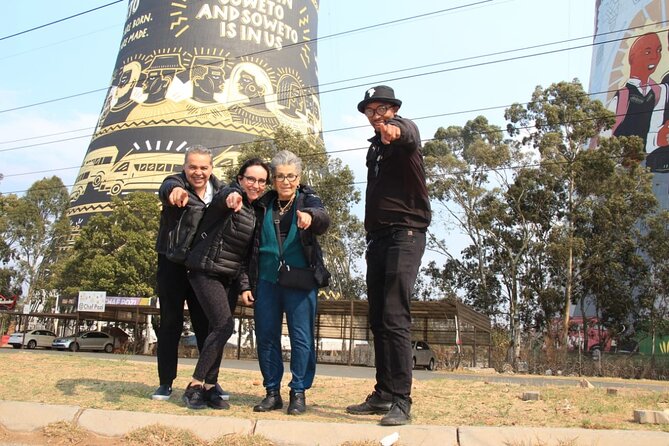
The tour spends about 15 minutes at Regina Mundi, known as the people’s church. The church played an important role in resistance against apartheid and is another example of how religious spaces became tied to political life.
This short visit is valuable because it shifts the story away from homes and museums. A church can serve as a meeting place, a shelter, and a place where people speak openly when other public spaces are restricted. Your guide’s explanation is essential here, since 15 minutes alone would not tell you why the building matters.
As with Diepkloof Park and Orlando Towers, this is a compact stop. You will get context and a look at the site, but not an extended visit. It is best viewed as one piece in a route that covers several kinds of places.
Optional Kliptown Youth Program visit
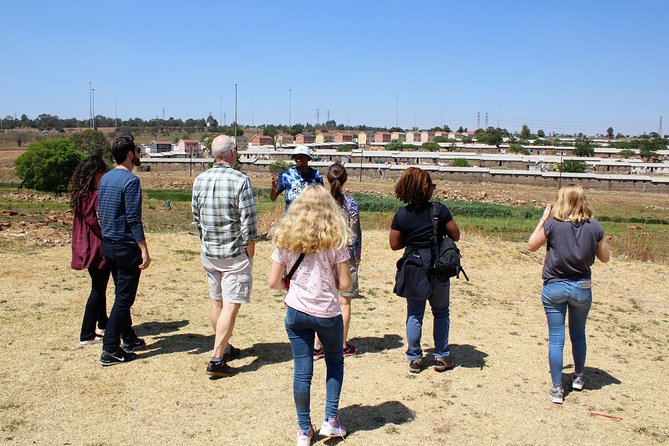
The final listed stop is the Kliptown Youth Program, with an optional squatter camp tour lasting about 15 minutes. This is the part of the experience most directly focused on housing conditions and current social realities.
One account describes walking through a shanty town with a local person and learning how housing and political policies work in real life. That can be a powerful addition to the day because it shows how the past connects with present housing challenges.
It is also the stop that calls for the most care. You are entering a community, not a themed attraction. Listen to your guide, follow local direction, ask before taking photographs, and avoid treating people’s homes as scenery. The supplied details do not state whether the optional visit is always available, so confirm this when booking or with your guide.
The review information also advises you to be prepared to tip local people at some stops. That is especially relevant here. Carrying small notes or having a clear tipping plan lets you support local contributors without making the exchange awkward.
What the guide and vehicle add
Pickup and drop-off are offered from hotels around Johannesburg or Pretoria. That is a real benefit because arranging your own transport to Soweto can add time, cost, and stress to a short visit.
The vehicle is air-conditioned, and bottled water is included. Johannesburg can make a four-hour outing feel tiring if you are moving between several sites, so a comfortable vehicle and water are useful rather than decorative extras.
A qualified guide accompanies you throughout the trip. The strongest praise is aimed at the guides’ ability to explain context, answer extra questions, and adjust attention toward stops that matter most to you. Mo is praised for making the experience informative and memorable. Banela’s connection to Soweto is particularly valuable if you want a personal local perspective.
Group size is not specified, so I would not assume a private tour or a tiny group. Group discounts are offered, which may make this a sensible choice for couples, families, or friends traveling together. If you need a very quiet or highly personalized pace, ask about group arrangements before paying.
Is $59.81 good value?
At $59.81 per person, I consider this a fair price for a four-hour guided outing with hotel transport from Johannesburg or Pretoria. You are paying not just for sightseeing, but for the vehicle, bottled water, guide, route planning, and access to several difficult-to-reach locations in one half-day.
The value is strongest if you have limited time in Johannesburg. You can cover Soccer City, Orlando Towers, Vilakazi Street, Mandela House, Hector Pieterson Museum, Regina Mundi, and possibly Kliptown without organizing separate rides.
The price includes no coffee, tea, lunch, soft drinks, or alcohol. You should eat beforehand or plan food separately, since the schedule is full and no meal is supplied. You should also allow money for tips at local stops.
The trade-off is depth. Four hours gives you a strong introduction, but not enough time to study every museum display or spend long periods in each neighborhood. If you want a slower cultural visit, use this tour as an introduction and return to the places that speak to you most.
Who should book this Soweto experience?
I would recommend it to first-time visitors to Johannesburg who want a clear introduction to Soweto without spending a full day on the road. It suits people who care about South African political history but also want to see ordinary township settings and major local landmarks.
It is a good fit for you if:
- You want hotel pickup and a planned route.
- You prefer a guide who can explain context as you go.
- You have about four hours available.
- You want to visit Mandela House and the Hector Pieterson Museum.
- You are comfortable approaching community visits with respect.
- You like asking questions and learning from local guides.
It may not suit you if you want a slow museum day, a food-focused outing, or a tour built around shopping and entertainment. The main purpose is education, history, and local context.
Most people can participate, according to the supplied booking information. Confirmation is provided at booking, mobile tickets are available, and you can cancel for a full refund up to 24 hours before the start time. Changes or cancellations within 24 hours are not accepted for a refund.
Should you book the Soweto half-day tour?
Book it if you want efficient, thoughtful coverage of Soweto and do not want to arrange transport yourself. The best parts are the combination of Mandela House, Hector Pieterson Museum, Regina Mundi, and local explanations from guides such as Mo, Banela, Banele, and Tsholo.
Go in expecting a full schedule, not a leisurely wander. Bring water-friendly clothing, questions, and money for local tips. Treat the optional Kliptown visit as a chance to listen and learn, not as a spectacle.
At $59.81, this is a strong choice for a first visit to Johannesburg, particularly if your time is limited and you want the history connected to present-day life.
FAQ
How long is the Soweto tour?
The tour lasts approximately four hours.
How much does the tour cost?
The listed price is $59.81 per person.
Is hotel pickup available?
Yes. Pickup and drop-off are offered from hotels around Johannesburg or Pretoria.
Is transportation included?
Yes. The experience includes an air-conditioned vehicle and bottled water.
Is a guide included?
Yes. A qualified guide accompanies you throughout the trip.
Are meals and drinks included?
No. Coffee, tea, lunch, soda or pop, and alcoholic beverages are not included.
Is the Kliptown Youth Program visit required?
No. The squatter camp tour at the Kliptown Youth Program is optional.
Can I cancel for a full refund?
Yes. You can cancel at least 24 hours before the start time for a full refund. Cancellations or changes made within 24 hours are not refunded.
Newest reviews from Johannesburg
- Cradle of Humankind and Maropeng Day Tour from Johannesburg★ 4.0 · 5 reviews
- Explore Soweto 8 Hour Tour with Lunch and Museum Visit★ 5.0 · 5 reviews
- 3 Day All Incl. Private Kruger Park Safari Incl. Transfer From Johannesburg★ 5.0 · 5 reviews
- Harties cableway Tour★ 4.5 · 5 reviews
- Pretoria Historical Tour★ 4.0 · 5 reviews
- Constitutional Hill and Soweto 5 hours tour.★ 5.0 · 5 reviews
- 5 Day Kruger National Park and Panorama Route Safari★ 4.5 · 5 reviews
- Luxury Car Johannesburg Airport Private Transfer★ 5.0 · 5 reviews
Soweto Tours, compared.

Soweto /Johannesburg and Apartheid Museum Guided Full Day Tour
Read our review →
Johannesburg Hop-On Hop-Off City Tour with Soweto Option
Read our review →

Soweto: Walking Tour with a Local Guide and Lunch
Read our review →
Jo’berg in 1 Day: Soweto, Apartheid Museum & City Tour
Read our review →
Full-Day Tour with Soweto and Apartheid Museum
Read our review →
Browse the lists this tour appears in