

Reviewed · SOWETO TOURS
Private Half Day Authentic Soweto Tour from Johannesburg or Pretoria
Soweto is best understood on foot. This private half-day tour brings you into the city’s neighborhoods with a guide born and raised in Soweto, rather than keeping you behind a bus window. I like the private pickup and drop-off from Johannesburg or Pretoria, and I like the focus on real streets, local meeting points, and difficult parts of South Africa’s past.
I also like the chance to walk through Motsoaledi informal settlement and visit Vilakazi Street, two very different sides of Soweto. The main drawback is that lunch, museum admission, and the Tuk-Tuk ride fee are extra, while the Hector Pieterson Museum is viewed from outside under the stated arrangements.
In This Review
- Key points to know before booking
- Why this private Soweto tour feels different
- FNB Stadium and the approach through Diepkloof
- Baragwanath shows Soweto in motion
- Walking through Motsoaledi informal settlement
- Regina Mundi and the meaning of Freedom Square
- Hector Pieterson Museum and the 1976 uprising
- Vilakazi Street and three famous Soweto addresses
- Mandela House, if your timing and budget allow
- Orlando Towers closes the tour with a different mood
- The Tuk-Tuk option and what the price really covers
- Who will get the most from five hours in Soweto
- Should you book this private Soweto tour?
- FAQ
- How long does the Soweto tour last?
- Does the tour include hotel pickup and drop-off?
- Is this a private tour?
- Is the tour available from Pretoria?
- Is the Tuk-Tuk ride included in the price?
- Is food included?
- Is admission to Mandela House included?
- Can I enter the Hector Pieterson Museum?
Key points to know before booking

- A local-born guide leads the visit: Your guide grew up in Soweto and explains its history and daily life from personal knowledge of the area.
- The tour is private: Only your own group takes part, which makes it easier to ask questions and adjust the pace.
- Motsoaledi is a hands-on stop: You walk through sandy streets, see local dwellings, and visit a day-care project supported through the tour.
- Vilakazi Street links major names: You pass the former homes of Nelson and Winnie Mandela and Archbishop Desmond Tutu.
- Extra costs need planning: Food, drinks, Mandela House admission, and the Tuk-Tuk ride fee are not included in the $111.86 price.
- It covers a lot in five hours: Expect a quick-moving introduction to Soweto, not a slow, single-neighborhood visit.
Why this private Soweto tour feels different

Soweto is often reduced to a few famous names and a few historic photographs. This tour tries to widen the picture. You see stadiums, taxi routes, informal housing, churches, memorials, civic spaces, political history, family homes, and entertainment sites in one morning or afternoon.
The private format matters. You are not sharing the vehicle with a large bus group, and the guide can explain things in a way that suits your questions. If you want to ask about apartheid-era protests, modern Soweto, local transport, or the meaning of a particular memorial, you have room to do so.
The guide is one of the strongest parts of the plan. Because the guide was born and raised in Soweto, the tour is designed to be more than a set of photo stops. You are encouraged to greet people and interact respectfully, not simply point a camera from the roadside.
That approach requires some thought from you. Soweto is a living community, not an open-air museum. Bring curiosity, listen carefully, and follow the guide’s advice about when photography is appropriate. The visit to Motsoaledi is especially sensitive because it involves people’s homes and daily lives.
More Soweto tours:
- Johannesburg: Hop-On Hop-Off Bus with Optional Soweto Tour
★ 4.6 · 985 reviews - Soweto /Johannesburg and Apartheid Museum Guided Full Day Tour
★ 5.0 · 932 reviews - Johannesburg Hop-On Hop-Off City Tour with Soweto Option
★ 4.5 · 768 reviews
FNB Stadium and the approach through Diepkloof
The first major landmark is FNB Stadium, also known as the National Football Stadium. It hosted the opening and closing ceremonies of the 2010 World Cup, giving you an immediate connection to one of South Africa’s most globally visible events.
The stop itself is brief, about 10 minutes, and admission is free. You do not come for a stadium tour. Instead, you pass the building and then enter the Diepkloof area, where vendors sell a wide mix of goods.
This short section helps establish the scale of Soweto. You begin with a famous sports venue, then move quickly into ordinary streets and commercial activity. I like that contrast because it avoids presenting Soweto only through monuments. The limitation is time. Ten minutes gives you an introduction, not a proper look at Diepkloof.
Baragwanath shows Soweto in motion
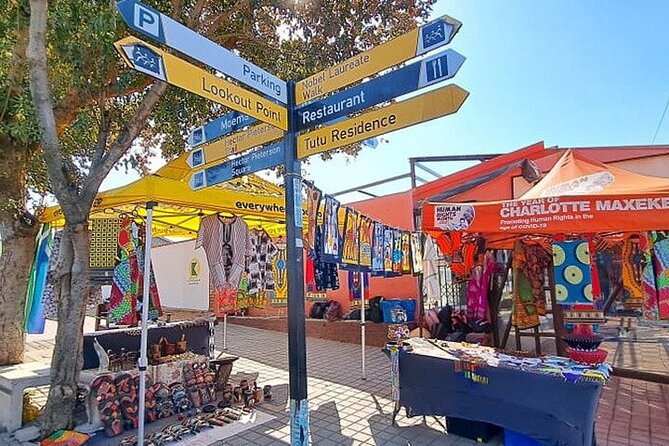
The route continues past Baragwanath Hospital, a major local landmark, and a large taxi rank. You also pass the historic suburb of Diepkloof before reaching the main walking stops.
This is another short segment, listed at about 10 minutes. Its value is not a formal attraction or entry ticket. It gives you a sense of how people move through Soweto and how important taxi transport is to daily life.
For you, this may be one of the less dramatic parts of the tour. There is no museum or major viewpoint here. Still, it helps connect the historic sites to the working city around them. You see Soweto as a place where people commute, trade, wait, and live, not only as a destination built for sightseeing.
Walking through Motsoaledi informal settlement
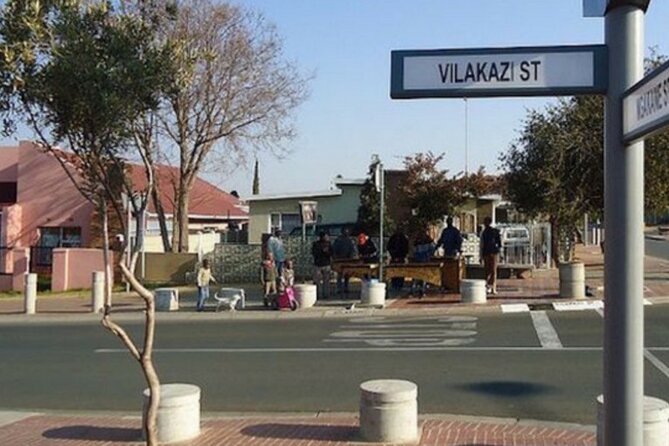
Motsoaledi is the tour’s most direct encounter with present-day hardship and community life. You leave the vehicle and walk through sandy streets with your guide, passing local dwellings and a typical informal settlement day-care center.
The tour operator and participating groups support the day-care center by visiting it. That gives the stop a practical purpose, though you should keep your expectations realistic. This is not a polished cultural attraction with staged performances. It is a neighborhood visit involving real residents.
Your guide explains how people live in the settlement and encourages respectful greetings and conversation. This can be the most meaningful part of the morning because it asks you to pay attention to daily life rather than only famous events.
It can also be the most uncomfortable part. Conditions are basic, and the setting may challenge visitors who prefer neatly arranged sightseeing. I consider that a reason to prepare, not a reason to avoid it. Listen to the guide, do not treat homes as photo props, and remember that the people you meet are not part of a show.
The stop lasts about 30 minutes. That is enough for a short walk and explanation, but not enough to understand every part of the settlement. The day-care visit also reflects the tour’s effort to connect tourism with a local community project.
A few more tours worth putting side by side
- From Johannesburg: Pilanesberg Nature Reserve Game Safari
★ 4.8 · 1,327 reviews - Full Day Ultimate Pilanesberg National Park Safari from Johannesburg or Pretoria
★ 4.5 · 718 reviews - Half-Day Tour of Soweto Tour
★ 4.5 · 712 reviews - Soweto: Walking Tour with a Local Guide and Lunch
★ 4.9 · 648 reviews
Regina Mundi and the meaning of Freedom Square
The route then enters Orlando West and stops outside Regina Mundi Church. You receive a quick overview before continuing toward Freedom Square and Walter Sisulu Square.
Regina Mundi is important in the story of Soweto’s struggle for freedom and equality. The stop is mainly explanatory, lasting about 25 minutes, so you should not expect an extended interior visit or a long church tour based on the supplied details.
The guide’s role is crucial here. A church facade alone cannot explain why the site matters. The tour is strongest when your guide links the building to the political events and community life that shaped Soweto.
Next comes Walter Sisulu Square, formally called the Walter Sisulu Square of Dedication, in Kliptown. This is the heart of the Freedom Square area and receives about 30 minutes.
The square provides space to understand the political ideals connected with the struggle for freedom and equality. It is less about one dramatic object and more about location, public memory, and the setting where national ideas were expressed.
I would pay close attention during the explanation here. Without context, the square can seem like an ordinary civic space. With the guide’s interpretation, it becomes one of the tour’s clearest links between Soweto and South Africa’s wider political story.
Hector Pieterson Museum and the 1976 uprising
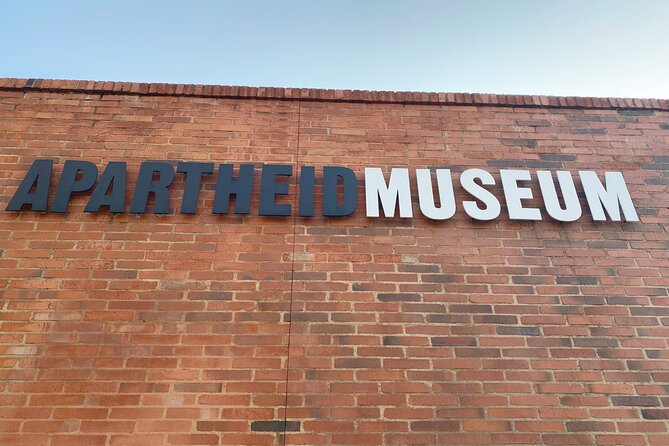
The Hector Pieterson Museum is in Orlando West, two blocks from where Hector Pieterson was shot and killed on June 16, 1976. The museum commemorates the Soweto uprising and the young people caught up in that historic confrontation.
The stated arrangement has the museum closed under COVID-19 regulations, so you view it from the outside while your guide gives a full description. Check the current opening position before you go, since museum access can change.
Even without entering, the stop matters. The location connects the museum to the surrounding streets and to the events represented by the famous image of Hector Pieterson being carried after he was shot. The guide’s explanation is especially important because the building alone cannot convey the full weight of the event.
You have about 30 minutes here. If the museum remains closed, that is a clear limitation. Anyone hoping for a detailed indoor museum visit should not book this tour on that assumption. Still, the outside stop and spoken history preserve much of the site’s importance.
Vilakazi Street and three famous Soweto addresses
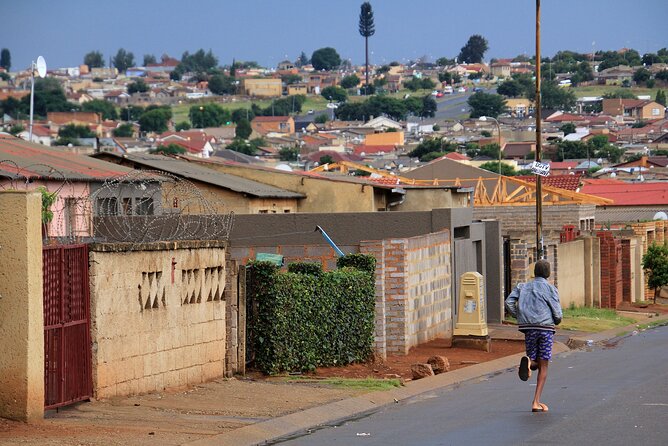
Vilakazi Street is one of the most recognizable parts of the tour. You walk or drive along a street associated with Nelson Mandela, Winnie Mandela, and Archbishop Desmond Tutu.
This is a lively cultural hub with monuments and well-known homes. It is also where Soweto’s public history feels most concentrated. Within a short stretch, you encounter connections to political leadership, religious leadership, family life, and the international story of South Africa.
The stop lasts about 30 minutes, so the pace remains brisk. You pass the homes of Nelson and Winnie Mandela and Archbishop Desmond Tutu, but the itinerary does not promise long visits at every address.
I like Vilakazi Street because it gives the tour a more approachable section after the heavier historical stops. You can look around, ask questions, and see how an important street functions today. At the same time, this is a popular part of Soweto, so it may feel more prepared for visitors than Motsoaledi. That difference is useful. Together, the two stops show both community life and public heritage.
Mandela House, if your timing and budget allow
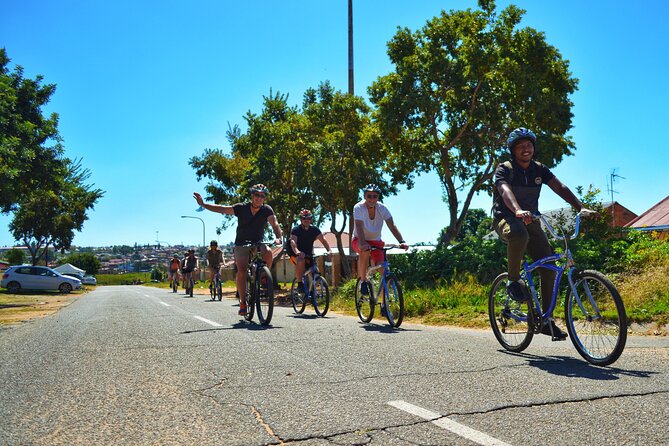
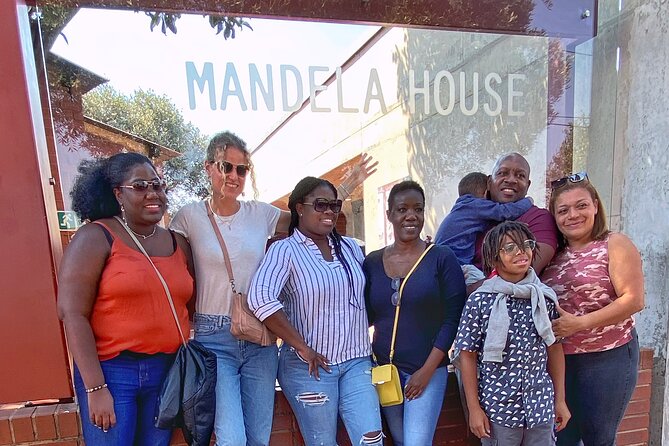
If time permits, you can stop at the Nelson Mandela Museum, commonly known as Mandela House. The visit takes about 20 minutes and admission is paid separately.
This is an optional addition rather than a guaranteed full museum visit. You should ask your guide early in the tour whether the timing works and confirm the entrance cost before deciding.
Twenty minutes is short for a museum, especially one connected to such a major figure. Still, it can be worthwhile if you want to see the former home rather than only pass it on Vilakazi Street. If you prefer a slower museum experience, you may find the timing too tight.
The extra fee is another part of the budget. The advertised price is $111.86 per person, but that figure does not include Mandela House admission, food, drinks, or the Tuk-Tuk ride fee. Those additions can affect the final cost, particularly for a private group.
Orlando Towers closes the tour with a different mood
The final stop is at the massive Orlando Towers. The morning ends here, with time to look around the craft market, watch people, and find something to eat and drink at a cafe.
The tour does not include lunch. Bring money for food and drinks, and do not count on a meal being part of the package. The stop lasts about 25 minutes, which is enough for a snack and a look around, but not necessarily enough for a relaxed meal plus an adventure activity.
You can also join a bungee jump from the towers if time permits and if you pay separately. The activity is optional, so you can simply enjoy the site and craft market if jumping from a tower is not your idea of a restful finish.
I like ending here because the tone changes. After churches, memorials, squares, and political history, the towers bring you back to recreation and local commerce. The tour does not leave you with only solemn memories. It shows another side of Soweto, one tied to food, crafts, people-watching, and a little nerve.
The Tuk-Tuk option and what the price really covers
The advertised cost is $111.86 per person, and the tour is often booked about 33 days ahead. That suggests you should not leave it until the last minute if your Johannesburg or Pretoria schedule is fixed.
Hotel pickup and drop-off are included, as is a local guide and the cultural tour of Soweto. The private arrangement adds value for couples, families, and small groups who want their own questions answered without waiting for a large coach group.
The wording around the Tuk-Tuk needs attention. The tour is described as a Tuk-Tuk cultural tour, but the Tuk-Tuk ride fee is listed as excluded. Confirm exactly what vehicle and ride arrangement your booking includes before paying.
The value is strongest if you want a guided introduction with transport and historical interpretation in one half-day. It is weaker if you expect every attraction, meal, museum ticket, and adventure activity to be included. Think of the price as payment for private guiding, hotel transfers, and the structured Soweto visit, with several optional expenses on top.
Group discounts are available. A larger private group may therefore find the per-person value more appealing, but you should check the final rate for your party.
Who will get the most from five hours in Soweto
I would recommend this tour to you if you want a focused first look at Soweto and prefer local explanation over independent wandering. It suits visitors staying in Johannesburg or Pretoria who value hotel pickup and want to cover several important areas without arranging separate transport.
It is also a good fit if you want to discuss South African history with someone from Soweto itself. The guide’s personal connection is central to the experience, particularly at Motsoaledi, Regina Mundi, Freedom Square, and the Hector Pieterson site.
Families can take part, but children must be accompanied by an adult. Most people can participate, and service animals are allowed. A child rate applies only when the child shares with two paying adults.
You may want another plan if your priority is a long indoor museum visit, a full meal, or a relaxed day in one neighborhood. Five hours sounds generous, but this tour includes nine stops and travel between them. The pace is designed for coverage.
Free cancellation is available if you cancel at least 24 hours before the start time. Changes or cancellations inside that window are not accepted for a refund, and cut-off times follow local time.
Should you book this private Soweto tour?
Book it if you want history tied to real streets and living communities, especially with a private guide who grew up in Soweto. The combination of Motsoaledi, Walter Sisulu Square, Hector Pieterson’s memorial site, Vilakazi Street, and Orlando Towers gives you a broad view in one morning or afternoon.
Before booking, budget for lunch, drinks, Mandela House admission, and the Tuk-Tuk fee. Also confirm whether the Hector Pieterson Museum has reopened and whether Mandela House fits your timing.
I would choose this tour for a first visit to Soweto, particularly if you have limited time in Johannesburg. I would skip it only if you want a slow museum day or a fully inclusive package with no extra costs. For a private introduction that connects difficult history with present-day Soweto, it offers strong value.
FAQ
How long does the Soweto tour last?
The tour lasts approximately five hours.
Does the tour include hotel pickup and drop-off?
Yes. Hotel pickup and hotel drop-off are included.
Is this a private tour?
Yes. Only your own group takes part in the activity.
Is the tour available from Pretoria?
Yes. Pickup is offered from Johannesburg or Pretoria.
Is the Tuk-Tuk ride included in the price?
The cultural tour is described as taking place on a Tuk-Tuk, but the Tuk-Tuk ride fee is listed as excluded. Confirm the exact arrangement before booking.
Is food included?
No. Food and drinks are not included. The tour ends at Orlando Towers, where you can buy food and drinks at your own cost.
Is admission to Mandela House included?
No. The Nelson Mandela House Museum visit is optional, subject to time, and admission is paid separately.
Can I enter the Hector Pieterson Museum?
The stated tour arrangements provide an outside view with a full explanation from the guide because the museum was closed under COVID-19 regulations. Check its current status before your visit.
Newest reviews from Johannesburg
- Cradle of Humankind and Maropeng Day Tour from Johannesburg★ 4.0 · 5 reviews
- Explore Soweto 8 Hour Tour with Lunch and Museum Visit★ 5.0 · 5 reviews
- 3 Day All Incl. Private Kruger Park Safari Incl. Transfer From Johannesburg★ 5.0 · 5 reviews
- Harties cableway Tour★ 4.5 · 5 reviews
- Pretoria Historical Tour★ 4.0 · 5 reviews
- Constitutional Hill and Soweto 5 hours tour.★ 5.0 · 5 reviews
- 5 Day Kruger National Park and Panorama Route Safari★ 4.5 · 5 reviews
- Luxury Car Johannesburg Airport Private Transfer★ 5.0 · 5 reviews
Soweto Tours, compared.
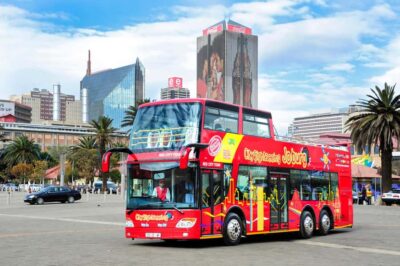

Soweto /Johannesburg and Apartheid Museum Guided Full Day Tour
Read our review →
Johannesburg Hop-On Hop-Off City Tour with Soweto Option
Read our review →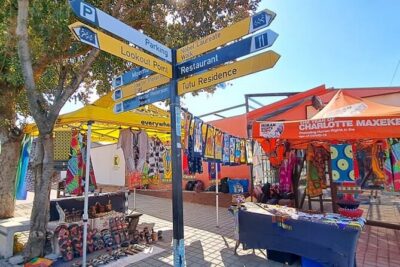

Soweto: Walking Tour with a Local Guide and Lunch
Read our review →
Jo’berg in 1 Day: Soweto, Apartheid Museum & City Tour
Read our review →
Full-Day Tour with Soweto and Apartheid Museum
Read our review →
Browse the lists this tour appears in