
Reviewed · JOHANNESBURG TOURS
Pretoria tour, Half Day experience
Pretoria reveals its secrets quickly. This four-hour outing brings you to Jacaranda City’s major landmarks, while local guides add the history and daily context that a quick self-guided visit can miss. I especially like the broad Pretoria views from the Voortrekker Monument and the chance to see the city through a local guide’s eyes. The main consideration is pace: with several important stops in about four hours, some visits are necessarily brief.
I also like that the group is capped at eight people, which should make questions and conversation easier than on a large coach. Guides Francois and Ben Modisane have received especially strong praise for explaining South African history and politics clearly. You should allow for a moderate amount of walking and remember that the experience is designed as an introduction, not a full-day museum tour.
In This Review
- Key points to know before booking
- Why a half-day in Pretoria works so well
- The Voortrekker Monument: two hours of history and views
- Ditsong Kruger Museum: a personal look at Paul Kruger
- City Hall and Melrose House: Pretoria’s civic and wartime story
- The Union Buildings and Pretoria’s political identity
- The guides can shape the whole experience
- Is $68.97 good value?
- Who should book this Pretoria tour?
- Should you book it?
- FAQ
- How long is the Pretoria tour?
- Where is the tour located?
- Is pickup available?
- How much does the tour cost?
- How many people can join the tour?
- Is the tour available on a mobile ticket?
- Is admission to the Voortrekker Monument included?
- Is admission to the Ditsong Kruger Museum included?
- How long is the visit to the Voortrekker Monument?
- How long are the Ditsong Kruger Museum and Union Buildings stops?
- Can I cancel for a full refund?
Key points to know before booking
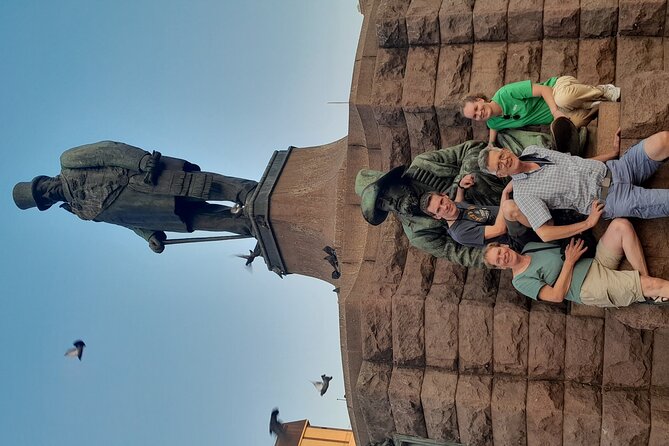
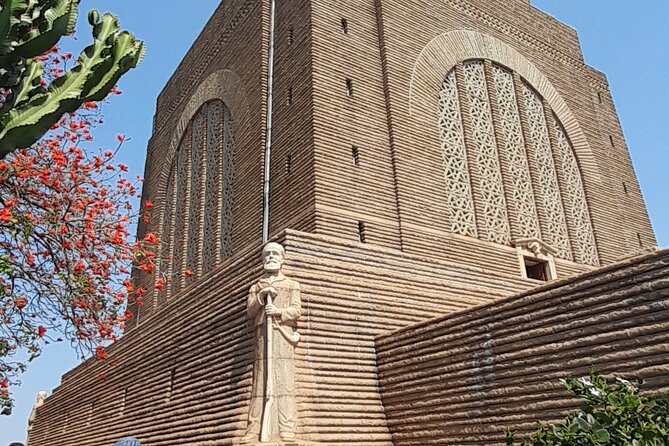
- The Voortrekker Monument takes about two hours, making it the main historical stop and the best place for wide views over Pretoria.
- Paul Kruger’s former home includes original furniture and fittings, giving the Ditsong Kruger Museum a personal feel.
- The Union Buildings explain Pretoria’s political importance, with free admission listed for this stop.
- The tour also passes Pretoria City Hall and Melrose House, two useful landmarks for understanding the city’s civic and wartime past.
- Guides are a major part of the experience, with Francois and Ben Modisane praised for calm, clear explanations and helpful local service.
- The price is $68.97 per person, with pickup offered, mobile ticketing, and free cancellation up to 24 hours before departure.
Why a half-day in Pretoria works so well
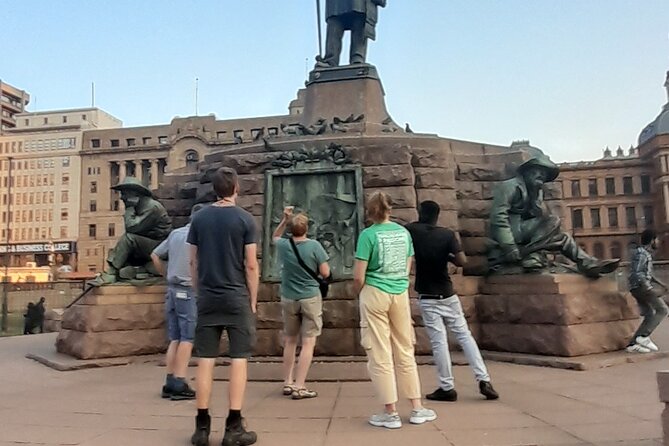
Pretoria can feel overlooked beside Johannesburg, yet the two cities offer different experiences. Johannesburg is often associated with business, modern urban life, and the major museums of Gauteng. Pretoria gives you government buildings, old civic landmarks, Boer history, and a calmer sense of place.
This tour works because it concentrates on the parts of Pretoria that help you understand the city. You are not simply being driven past buildings for a quick photograph. The route connects the Voortrekker story, Paul Kruger’s political era, the Anglo-Boer War, and the Union government that followed.
I like this kind of half-day plan when you have limited time in Gauteng. Four hours is long enough to gain a clear sense of Pretoria, but short enough to fit around other plans. You will need to accept that the schedule is selective. The Voortrekker Monument receives about two hours, while the Kruger Museum and Union Buildings receive about 30 minutes each. City Hall and Melrose House are included as additional points of interest, with more explanation offered during the drive.
The group limit of eight matters here. Pretoria’s story includes names, dates, political shifts, and competing viewpoints. A small group gives you a better chance to ask what a monument means today, rather than simply hearing a memorized speech and moving on.
A few more tours worth putting side by side
- From Johannesburg: Pilanesberg Nature Reserve Game Safari
★ 4.8 · 1,327 reviews - Johannesburg: Hop-On Hop-Off Bus with Optional Soweto Tour
★ 4.6 · 985 reviews - Soweto /Johannesburg and Apartheid Museum Guided Full Day Tour
★ 5.0 · 932 reviews
The Voortrekker Monument: two hours of history and views
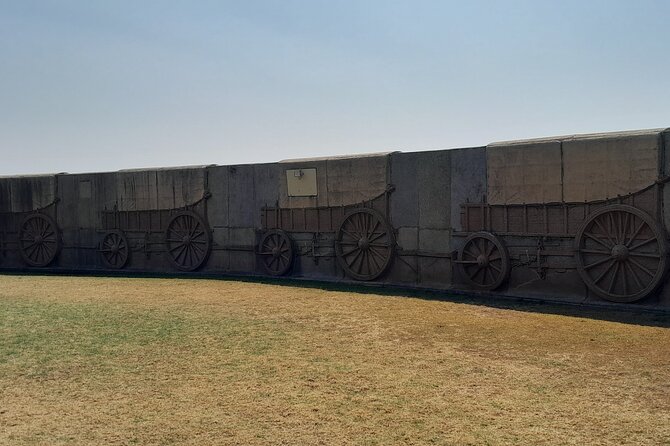
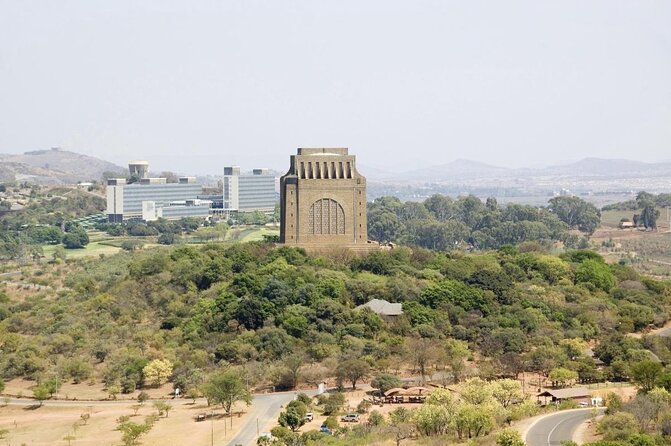
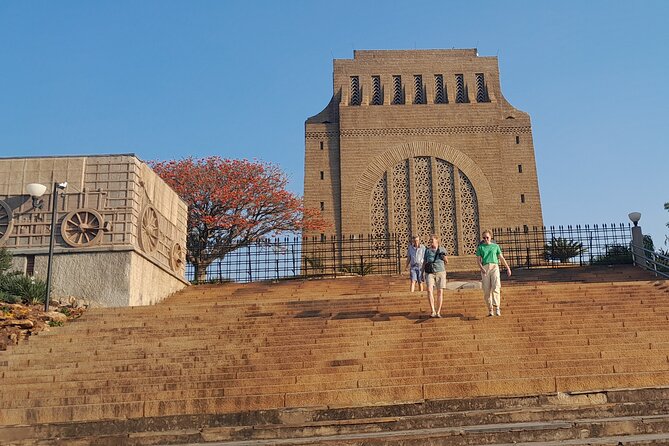
The Voortrekker Monument is the longest stop, and rightly so. It commemorates the Great Trek of 1836, when settlers moved away from the Cape Colony in search of a new home in the interior. The story includes battles such as the Battle of Blood River and the eventual establishment of the Transvaal Colony.
The monument is not a neutral piece of decoration. It reflects the Afrikaner account of migration, conflict, and nation-building. That makes a guide particularly useful. I would pay close attention to how your guide presents the events, including the effect of the Great Trek on African communities already living in the region.
The supplied tour details list admission as free, which makes this a strong part of the overall value. You get the largest block of time at the most substantial monument on the route without a separate admission charge.
The views are another reason to appreciate the stop. One review specifically praised the outlook over Pretoria and the surrounding gardens. Even if you are not drawn to military or political history, the elevated setting gives you a helpful sense of the city’s layout.
Allow yourself time to look beyond the main story. The monument is intended to commemorate a formative period, but it also opens questions about memory and identity in South Africa. A good guide can help you understand why this site matters to some people and why its interpretation requires care.
The two-hour allocation can feel generous if you prefer a quick overview. For history-minded visitors, though, it is the part of the tour least likely to feel rushed. Wear comfortable shoes and expect a moderate level of physical activity overall.
Ditsong Kruger Museum: a personal look at Paul Kruger
The Ditsong Kruger Museum occupies Paul Kruger’s former home at 60 Nkomo Street, previously known as Church Street. The house has a galvanized tin roof and a veranda, and it contains original fittings and furniture used by the Kruger family.
That detail changes the mood of the visit. Instead of seeing only a grand public monument, you get a domestic setting connected to a major political figure. The house helps you picture Paul Kruger and his wife in ordinary surroundings, including their connection to the Gereformeerde kerk directly opposite.
The church was where the couple attended Sunday services. Paul Kruger would sometimes say a few words when needed, although he was not a preacher. Small details like this are useful because they place the political figure inside a community and a household.
At the entrance, two marble lions welcome you to the property. They were donated by Barney Barnato, a friend of the Krugers. The lions are an unusual detail to watch for, especially if you enjoy the personal stories attached to historic buildings.
This stop lasts about 30 minutes, and admission is included. That is enough time for an introduction to the house and its main objects, but not enough for a slow, detailed museum visit. I would listen closely to the guide and ask questions while you are there. The value comes less from the size of the museum than from the connection between the building, the church, and the political history of the Transvaal.
City Hall and Melrose House: Pretoria’s civic and wartime story
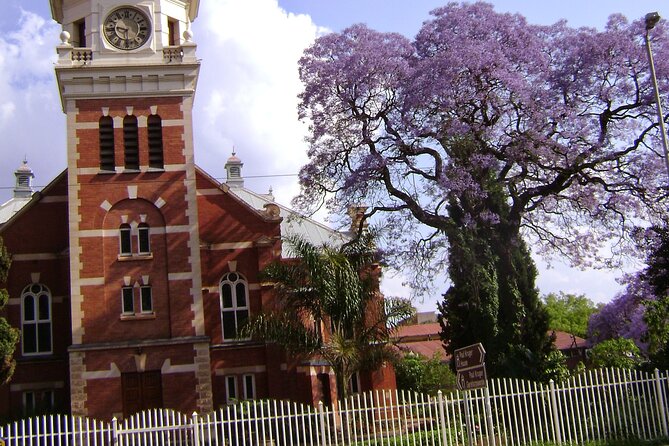
Pretoria City Hall adds a civic note to the tour. Its domed clock tower was inaugurated in 1935, and the carillon contains 32 cylindrical bells. Sir George Heys donated the carillon, linking the building to another stop, Melrose House.
That connection is worth noticing. The tour is not just a list of unrelated landmarks. It shows how Pretoria’s public buildings, wealthy residents, and political events overlap.
Melrose House, on Jacob Mare Street, is tied to the end of the South African War. The Vereeniging Peace was signed there on 31 May 1902, bringing the war to an end. During the conflict, the British requisitioned the house as their imperial headquarters in South Africa, and it became the residence of Lord Roberts, commander in chief of the British forces.
George Heys, the house’s owner, is another thread in the story. He also donated the City Hall carillon. These links give your guide useful material to explain while you travel between stops.
The timing for City Hall and Melrose House is not specified as a full separate visit, so I would treat them as orientation stops rather than assume you will have extended interior access. You may see the buildings from outside or receive a short explanation during the route. That is a limitation if you want to tour every room, but it keeps the half-day schedule workable.
For me, these landmarks are valuable because they broaden the story beyond the Voortrekker Monument. You see not only migration and conflict, but also municipal government, imperial power, and the negotiations that shaped modern South Africa.
A completely different kind of day out on the same trip:
- Johannesburg Hop-On Hop-Off City Tour with Soweto Option
★ 4.5 · 768 reviews - Full Day Ultimate Pilanesberg National Park Safari from Johannesburg or Pretoria
★ 4.5 · 718 reviews - Half-Day Tour of Soweto Tour
★ 4.5 · 712 reviews - Soweto: Walking Tour with a Local Guide and Lunch
★ 4.9 · 648 reviews
The Union Buildings and Pretoria’s political identity
The Union Buildings are the clearest answer to the question of why Pretoria is treated as South Africa’s administrative capital. Government headquarters are based at Meintjies Kop, in a complex designed by Sir Herbert Baker in a Renaissance style with classical elements.
Construction began in 1910 and was completed in 1913. The buildings therefore belong to the early Union period, when the separate British colonies were brought together under one national government.
The setting matters. Built on Meintjies Kop, the Union Buildings give the stop a strong sense of ceremony and authority. Even a short visit can help you understand why Pretoria became associated with national administration.
Admission is listed as free. The scheduled visit is about 30 minutes, so you should expect an overview rather than a lengthy architectural study. I would use the time to look at the design, the scale of the government precinct, and the way the buildings relate to Pretoria below.
This is also a good point to ask about modern South African politics. One of the strongest guide comments concerned learning about both history and politics from Francois. That combination is important. Pretoria’s government buildings are not merely old architecture. They remain tied to how South Africa is governed and how the country remembers its past.
Because the Union Buildings are a major symbol, this stop may be the most rewarding for visitors who want present-day context. The Voortrekker Monument looks back to the nineteenth century. The Union Buildings help connect that past to the country you see now.
The guides can shape the whole experience
The route is useful, but the guide is likely to determine how much you take away. Francois has been praised for clear explanations of South African history and politics, along with showing Pretoria from a local perspective.
Ben Modisane was also praised for explaining things calmly and clearly. His practical help went beyond the scheduled route: after the tour, he took one visitor from the hotel to the train station. That extra assistance is not something I would assume is included for everyone, but it suggests a thoughtful approach to local service.
I would use the small group to ask direct questions. The tour’s description emphasizes meeting local people and learning about lifestyle, but the listed stops are mainly historical and civic landmarks. Your best chance for local insight is through conversation with the guide during the drives and transitions.
The provider is Hominids Tours & Travel. Confirmation is sent at booking, mobile tickets are accepted, and pickup is offered. Service animals are allowed, and the tour is near public transportation. The group maximum is eight, a useful size for a more personal outing.
You should have a moderate level of physical fitness. The supplied information does not give exact walking distances or vehicle details, so ask the operator if you have mobility concerns or need a precise pickup arrangement.
Is $68.97 good value?
At $68.97 per person, this is not the cheapest way to see Pretoria, but the price can make sense if pickup, transport, and guiding are important to you. Admission is listed as free at the Voortrekker Monument and Union Buildings, while entry to the Ditsong Kruger Museum is included.
The real value lies in the interpretation and time saved. Pretoria’s landmarks are spread across different parts of the city, and arranging them independently would require planning transport, checking opening details, and researching the connections between each site. A guide also gives you context at places where a quick photograph would tell you very little.
The price is easier to justify for a first visit, especially if you are based in Johannesburg and want a compact introduction to Pretoria. It is less attractive if you already know the city, have your own transport, or prefer spending an entire morning inside one museum.
The 35-day average advance booking period suggests that you should not leave this until the last moment if your dates are fixed. I would also confirm pickup details before paying, since the experience is located in Pretoria but the tour information identifies Johannesburg as the location.
Free cancellation is available if you cancel at least 24 hours before the start time. Changes or cancellations made inside that period are not accepted for a refund.
Who should book this Pretoria tour?
I would recommend it to first-time visitors who want the main historical and political landmarks without committing to a full day. It also suits people who prefer a guide to explain difficult subjects in plain language.
History fans will get the most from the Voortrekker Monument, Kruger house, and Melrose House. Visitors interested in government and architecture will prefer the Union Buildings and City Hall. The tour can also work well for anyone staying in Johannesburg who wants a focused day trip without building a complicated route.
Families and small groups may appreciate the maximum of eight people, especially if they want to ask questions. A moderate fitness level is required, and the limited time at some stops may frustrate anyone who likes to examine every display slowly.
I would not choose this as your only Pretoria experience if you want a long museum visit, extended neighborhood time, or a detailed study of every landmark. I would choose it as a well-shaped introduction, then return independently to the place that interests you most.
Should you book it?
Book this tour if you want a compact, guided introduction to Pretoria with strong historical coverage, included museum access, and a small group. The best reasons are the two-hour visit to the Voortrekker Monument, the personal setting of Paul Kruger’s former home, and the chance to discuss South African politics with guides such as Francois or Ben Modisane.
Think twice if you dislike a firm schedule or want deep time at each site. At $68.97, the tour earns its price through transport, organization, and local explanation rather than expensive admissions. For a first look at Pretoria from Johannesburg, that is a fair trade.
FAQ
How long is the Pretoria tour?
The experience lasts approximately four hours.
Where is the tour located?
The tour is listed in Johannesburg, while the itinerary visits landmarks in Pretoria.
Is pickup available?
Yes, pickup is offered.
How much does the tour cost?
The price is $68.97 per person.
How many people can join the tour?
The maximum group size is eight people.
Is the tour available on a mobile ticket?
Yes, mobile tickets are accepted.
Is admission to the Voortrekker Monument included?
Admission is listed as free.
Is admission to the Ditsong Kruger Museum included?
Yes, admission to the Ditsong Kruger Museum is included.
How long is the visit to the Voortrekker Monument?
The planned stop lasts about two hours.
How long are the Ditsong Kruger Museum and Union Buildings stops?
Each of those stops is planned for about 30 minutes.
Can I cancel for a full refund?
Yes. You can cancel at least 24 hours before the experience start time for a full refund.
Newest reviews from Johannesburg
- Cradle of Humankind and Maropeng Day Tour from Johannesburg★ 4.0 · 5 reviews
- Explore Soweto 8 Hour Tour with Lunch and Museum Visit★ 5.0 · 5 reviews
- 3 Day All Incl. Private Kruger Park Safari Incl. Transfer From Johannesburg★ 5.0 · 5 reviews
- Harties cableway Tour★ 4.5 · 5 reviews
- Pretoria Historical Tour★ 4.0 · 5 reviews
- Constitutional Hill and Soweto 5 hours tour.★ 5.0 · 5 reviews
- 5 Day Kruger National Park and Panorama Route Safari★ 4.5 · 5 reviews
- Luxury Car Johannesburg Airport Private Transfer★ 5.0 · 5 reviews
Johannesburg Tours, compared.


Soweto /Johannesburg and Apartheid Museum Guided Full Day Tour
Read our review →
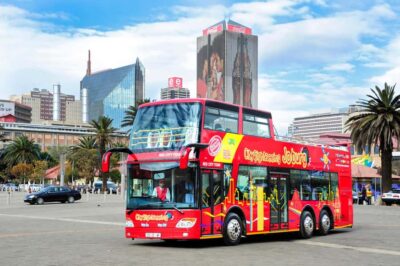
Johannesburg Hop-On Hop-Off City Tour with Soweto Option
Read our review →
Full Day Ultimate Pilanesberg National Park Safari from Johannesburg or Pretoria
Read our review →

Soweto: Walking Tour with a Local Guide and Lunch
Read our review →
Jo’berg in 1 Day: Soweto, Apartheid Museum & City Tour
Read our review →Browse the lists this tour appears in