
Reviewed · SOWETO TOURS
Johannesburg Soweto Highlights Tour
Soweto tells South Africa’s story in plain sight. This private tour links major sites across Soweto and central Johannesburg, from FNB Stadium and Mandela House to Constitution Hill and the old gold workings beneath downtown. I like the private vehicle and hotel or station pickup, which save you from arranging several separate rides. I also like the mix of political history, local neighborhoods, architecture, and city landmarks.
The main caution is timing. The advertised duration is roughly one to five hours, yet the route includes many stops, some with suggested visits of 20 to 45 minutes. You should confirm the day’s schedule and which entrance fees are included before you set out.
The tour costs $113.32 per person and is recommended by 92 percent of the people who rated it, with an overall score of 4.8 from 13 ratings. That is a strong result, though the small sample means I would place extra weight on the guide assigned to your group.
In This Review
- Key points to know before you book
- Why this tour works best as an introduction
- FNB Stadium and the opening view of Soweto
- Diepkloof and the complicated story of housing
- Chris Hani Baragwanath Hospital
- Orlando Towers, from industrial relic to local landmark
- Vilakazi Street and the Mandela connection
- Mandela House, a modest home with a complicated past
- Hector Pieterson Museum and the 1976 uprising
- Constitution Hill connects prison and democracy
- Braamfontein, Newtown, and the Mandela Bridge
- Downtown gold and the Mandela and Tambo office
- Price, comfort, and the real value
- Timing, missed stops, and how to protect your day
- Who should book this private Johannesburg tour?
- Should you book it?
- FAQ
- Where does the Johannesburg Soweto Highlights Tour take place?
- How much does the tour cost?
- How long does the tour last?
- Is hotel pickup available?
- Is this a private tour?
- Is transportation included?
- Is bottled water included?
- Is lunch included?
- Are museum entrance fees included?
- Can I cancel for a full refund?
Key points to know before you book
- Private sightseeing: Your party has the vehicle to itself, so you can ask questions and manage the pace more easily than on a large bus tour.
- Strong Soweto coverage: The route includes FNB Stadium, Orlando Towers, Vilakazi Street, Mandela House, and the Hector Pieterson Museum and Memorial.
- A serious historical focus: You hear about Nelson Mandela, Desmond Tutu, the 1976 student uprising, apartheid-era housing, and the road to democracy.
- Johannesburg is included too: Constitution Hill, Braamfontein, the Nelson Mandela Bridge, Newtown, and downtown landmarks extend the tour beyond Soweto.
- Included costs: Private transport, an air-conditioned vehicle, bottled water, and all listed taxes and fees are included. Lunch is not.
- Guide quality matters: One highly praised guide was Lesiba, especially for helping reschedule a delayed group. Another experience was weakened by thin explanations and missed stops.
Why this tour works best as an introduction
Soweto is not one single attraction. It is a large area with neighborhoods, memorials, sports sites, famous streets, and reminders of the apartheid government’s housing policies. A private vehicle lets you cover ground without trying to piece the area together on your own.
I like the route because it does not stop at the most familiar Mandela sites. You also see Diepkloof, Chris Hani Baragwanath Hospital, Orlando Towers, and the 1976 uprising memorial. Those places give you a better sense of how Soweto developed and why it matters.
The Johannesburg portion adds another layer. Constitution Hill connects the past to the present through the former prison and the Constitutional Court. Braamfontein, Newtown, the Nelson Mandela Bridge, the old Mandela and Tambo law office, and Ferreira’s mine stope show how the city grew around politics, industry, art, and gold.
The private format is valuable if you want conversation rather than a fixed script. It is also useful for families or small groups with limited time. Still, the quality of the day depends heavily on the guide’s preparation. Ask for a guide who can explain the political and social context, not just point out buildings.
More Soweto tours:
- Johannesburg: Hop-On Hop-Off Bus with Optional Soweto Tour
★ 4.6 · 985 reviews - Soweto /Johannesburg and Apartheid Museum Guided Full Day Tour
★ 5.0 · 932 reviews - Johannesburg Hop-On Hop-Off City Tour with Soweto Option
★ 4.5 · 768 reviews
FNB Stadium and the opening view of Soweto
The first stop is FNB Stadium, often called the Calabash or African Pot because of its rounded design. The stadium was rebuilt for 3.3 billion rand ahead of the 2010 FIFA World Cup and seats 87,436 people.
This is more than a sports stop. Nelson Mandela gave his first speech there after his release from prison in 1990, after serving 27 years. The stadium later hosted the 2010 World Cup opening and closing ceremonies and final, along with the 2013 Africa Cup of Nations final.
You receive about 20 minutes here, with no admission fee listed. That is enough for an outside look and an explanation of its importance, but not a stadium event or behind-the-scenes visit. If football is a major reason you want to go, ask exactly what access is planned.
Diepkloof and the complicated story of housing
Diepkloof Park, also called DK by some residents, gives the tour a chance to discuss class and housing within Soweto. The area is sometimes known as Rich Man’s Acre because its stands are larger and it was intended for more affluent Black residents.
Diepkloof Extensions housed middle- and upper-income Black professionals, many of whom worked for the state or in private professions. The government housing scheme offered full loans for both the stand and the structure, which helped create a neighborhood unlike the more cramped sections of apartheid-era town planning.
The stop is listed at about 20 minutes and has no separate admission fee. You will not find a conventional attraction here. Its value is in the explanation. Without context, you may simply see a residential area. With a good guide, you can better understand the economic differences that existed within Soweto.
Chris Hani Baragwanath Hospital

The route also passes Chris Hani Baragwanath Hospital, a vast medical complex covering about 173 acres. It has around 3,200 beds, approximately 6,760 staff members, and 429 buildings.
The figures are striking. About 70 percent of admissions are emergencies, and the accident, emergency, and ambulance services handle more than 350 patients each day. The hospital also includes major eye and maternity services, with tens of thousands of patients treated each year.
This is a drive-by or short explanatory stop rather than a hospital tour. That is appropriate. You should treat it as a chance to understand the scale of public health needs in the area, not as a sightseeing photo opportunity.
A few more tours worth putting side by side
- From Johannesburg: Pilanesberg Nature Reserve Game Safari
★ 4.8 · 1,327 reviews - Full Day Ultimate Pilanesberg National Park Safari from Johannesburg or Pretoria
★ 4.5 · 718 reviews - Half-Day Tour of Soweto Tour
★ 4.5 · 712 reviews - Soweto: Walking Tour with a Local Guide and Lunch
★ 4.9 · 648 reviews
Orlando Towers, from industrial relic to local landmark
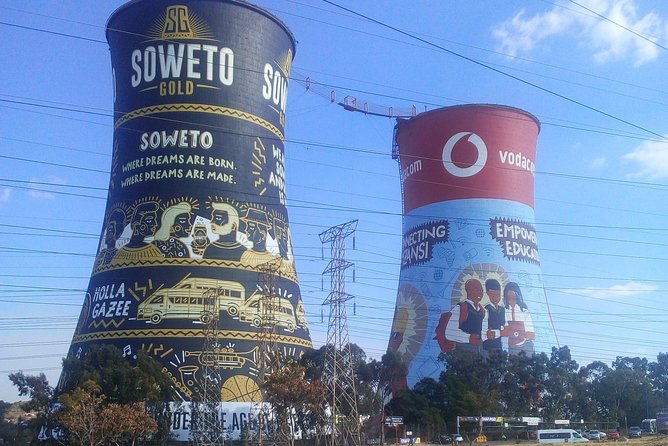
The two Orlando cooling towers are among Soweto’s easiest landmarks to recognize. Built in 1951, they once supported the cooling system at the Orlando power station. Their cooling ponds used sewage effluent from Klipspruit Sewage Works, an unusual detail that helps explain the industrial story behind the structures.
Today, the towers are painted. One works as an advertising surface, while the other carries a large mural. The site is also used for bungee jumping, BASE jumping, and a bungee swing.
You get around 20 minutes here, with no admission fee listed. The stop is mainly about the view, the industrial past, and the towers’ later use as an adventure venue. Do not assume a jump is included. It is not part of the tour description.
Vilakazi Street and the Mandela connection
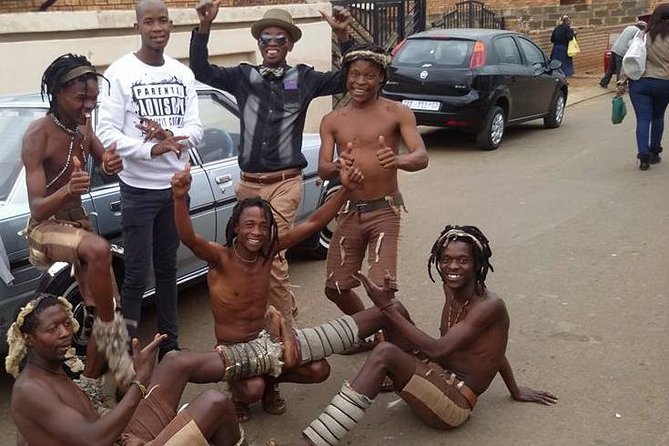
Vilakazi Street is the emotional center of the Soweto portion. It is famous for having been home to two Nobel Peace Prize laureates, Nelson Mandela and Archbishop Emeritus Desmond Tutu. That makes it the only street identified in the tour as having housed two Nobel laureates.
The street is named for Dr Benedict Wallet Vilakazi, a Zulu writer and educator. You have about 30 minutes here, which should allow time to take in the setting and hear why the street carries such weight.
This is a place where the guide’s storytelling matters. The road is not just a collection of famous addresses. It connects political leadership, religious opposition to apartheid, literature, and everyday family life. A short stop can feel rushed if you want time at both homes and the nearby museum.
Mandela House, a modest home with a complicated past
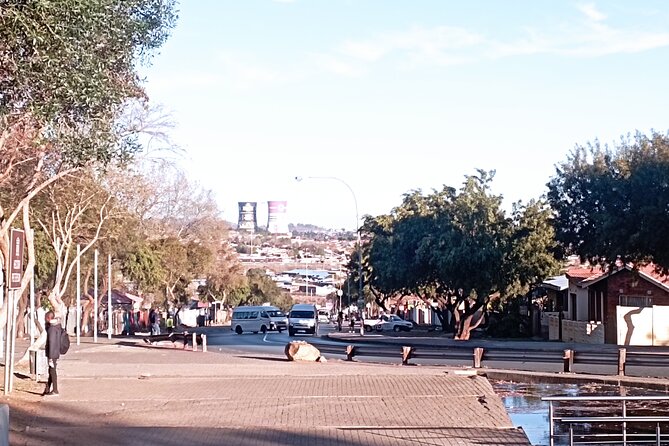
Mandela House sits at the corner of Vilakazi and Ngakane streets in Orlando West. Nelson Mandela and his family used the house from 1946 into the 1990s. He lived there first with Evelyn Ntoko Mase, then with Winnie Madikizela-Mandela after their divorce.
Mandela did not spend most of his time there once his role in the anti-apartheid struggle grew. He went underground before his 1962 arrest. Winnie continued living in the house with their daughters, Zenani and Zindzi, until she was banished to Brandfort in 1977.
After his release from prison in 1990, Mandela returned for only 11 days before moving to a larger and more secure home. That detail keeps the house in perspective. It is intimate and modest, but it was also tied to a public life that increasingly made ordinary domestic life impossible.
About 30 minutes is allocated, and admission is included. This is one of the clearest value points in the tour because you do not need to arrange a separate visit. Still, ask whether the allotted time includes entry and a proper look inside, since the overall route has many competing stops.
Hector Pieterson Museum and the 1976 uprising
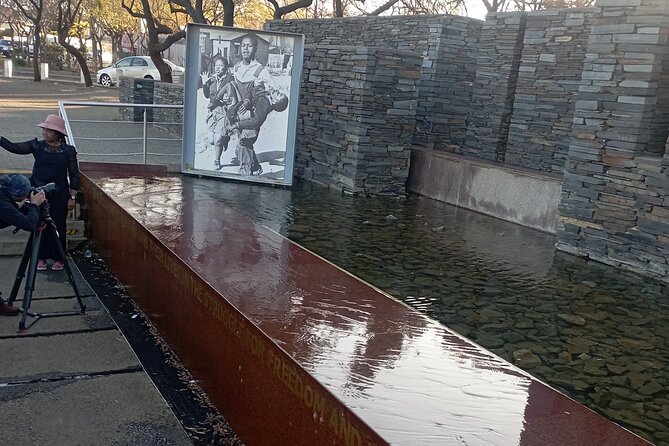
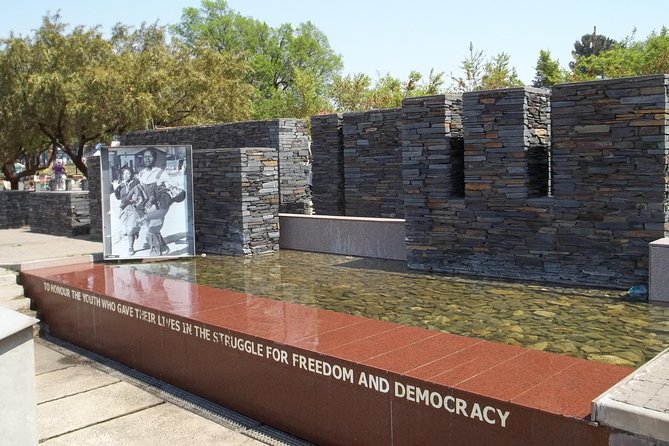
The Hector Pieterson Museum and Memorial covers one of the defining moments of modern South African history. On June 16, 1976, high school students in Soweto protested the forced use of Afrikaans as a teaching language in Black secondary schools.
The students planned to gather at Orlando Stadium before marching to the regional offices of the Department of Bantu Education. Their signs called for an end to Afrikaans instruction and demanded power for the people and a free South Africa. They also sang Nkosi Sikelel’ iAfrika, a hymn that later became part of the national anthem.
The museum is named for Hector Pieterson, whose death became a symbol of the uprising. The tour allows about 45 minutes, but admission is not included. This is the stop where you should protect your time. If the guide wants to shorten the museum visit to fit the rest of the route, I would ask to keep the full 45 minutes if possible.
Constitution Hill connects prison and democracy
Constitution Hill is in Johannesburg rather than Soweto, but it is a fitting continuation. The site was once a prison and military fort. Today it houses South Africa’s Constitutional Court and functions as a museum about the country’s movement toward democracy.
The contrast is powerful: a place once associated with state control now houses the court responsible for protecting citizens’ rights. You have about 30 minutes, and admission is not included.
That short time may be enough for an overview, but it is not enough for every part of the precinct. If Constitution Hill is a priority, confirm whether your visit is a guided exterior explanation or includes entry into the museum areas. The same advice applies to the Hector Pieterson Museum.
Braamfontein, Newtown, and the Mandela Bridge
Braamfontein brings a younger, more creative side of Johannesburg into the route. Its public art and graffiti give the neighborhood a different feel from the memorial and government sites earlier in the day. The listed time is 20 minutes, so expect a quick look rather than a long independent wander.
The Nelson Mandela Bridge links Braamfontein and northern Johannesburg with Newtown across 42 working railway lines. At 284 metres, it is described as the largest cable-stayed bridge in southern Africa. The bridge is best understood as a city connection with symbolic meaning, carrying Mandela’s name across a major divide.
Nearby, Sci-Bono is a science center focused on maths, science, and technology education. Turbine Hall, built between 1927 and 1934 as one of Johannesburg’s major steam-driven power stations, now belongs to Newtown’s arts and culture precinct.
These stops are useful for showing that Johannesburg is not only about apartheid memorials. It is also a city of engineering, education, reused industrial buildings, and public art. Time is limited, so you should expect outside views and explanations unless the guide confirms entry.
Downtown gold and the Mandela and Tambo office
The final Johannesburg references reach into the city center. In 1952, Nelson Mandela and Oliver Tambo worked from a modest downtown office that carried their names. It was the office of South Africa’s first Black-owned law firm, established during the early years of National Party rule.
The stop is listed at about 10 minutes and has no admission fee. That is enough for a short explanation, but not a long visit.
The tour also points out Ferreira’s mine stope beneath the Standard Bank headquarters. The old mine entrance was found during construction in the 1980s and preserved as a small museum. It takes its name from Ignatius Phillip Ferreira, an early gold prospector whose name also survives in a Johannesburg district.
This final stop helps explain why Johannesburg grew where it did. Gold shaped the city’s economy, buildings, labor patterns, and political life. It is a small site with a large connection to the city’s origins.
Price, comfort, and the real value
At $113.32 per person, this is not the cheapest way to see Soweto. You are paying for a private vehicle, air conditioning, bottled water, pickup from a preferred location such as a hotel or train station, and a route that covers both Soweto and Johannesburg.
For a group of several people, the price becomes easier to justify because you are sharing the private vehicle and guide. It also saves planning time. You do not need to work out separate transport between distant areas or decide which historical sites fit together.
Lunch is not included, so plan for that separately. No meal stop is specified. The tour is near public transportation, and most people can participate, but the supplied information does not give detailed accessibility notes.
The biggest value question is not the vehicle. It is the guide. A highly rated experience with Lesiba included careful rescheduling when a group arrived late and had hotel confusion. That kind of flexibility can matter on a complicated trip. At the same time, one less successful outing had a good vehicle and driver but weak explanations and several missed points. For this experience, clear guiding is worth more than a polished car.
Timing, missed stops, and how to protect your day
The route contains at least nine main stops plus several shorter points of interest. The published stop times add up to several hours before driving time, museum entry, or lunch. Since the stated duration ranges from one to five hours, you should ask for a firm start and finish time.
You should also confirm whether Regina Mundi is included. One group specifically wanted to see the church but did not visit it, despite expecting it on the program. That is a useful warning: the route may change, and not every named point will necessarily receive a stop.
Before booking, ask these practical questions:
- How long will the tour last on my chosen date?
- Which museums will we enter?
- Is admission to Constitution Hill included?
- Is admission to the Hector Pieterson Museum included?
- Will there be time inside Mandela House?
- Is Regina Mundi part of the route?
- Where will lunch fit, since it is not included?
Free cancellation is available if you cancel at least 24 hours before the start time. Changes or cancellations within 24 hours are not refunded.
Who should book this private Johannesburg tour?
I would choose this tour if you want a broad first look at Soweto and Johannesburg, especially if you have only one day or prefer not to manage local transport yourself. It suits small groups, families, and visitors who want to ask questions as they go.
It is also a good fit if you want more than a Mandela-only outing. The hospital, housing areas, cooling towers, student uprising museum, gold mine, bridge, and former prison add useful context.
I would hesitate if you want long museum visits, a slow neighborhood walk, or a tightly guaranteed schedule. The route is ambitious, and the mixed feedback shows that a missed stop or weak explanation can reduce the value quickly.
Should you book it?
Book it if private transport, a wide route, and flexible conversation matter most to you. At $113.32 per person, the price can be fair for a small group that wants transport and a full introduction in one booking.
Before paying, confirm the exact duration, the entrance fees, and the stops that will receive real visit time. If the operator can confirm a strong guide, with Lesiba’s praised flexibility as a useful example, this can be a thoughtful and efficient way to begin understanding Johannesburg’s past and present.
FAQ
Where does the Johannesburg Soweto Highlights Tour take place?
The tour takes place in Johannesburg and Soweto, South Africa. The route includes Soweto landmarks and several sites in central Johannesburg.
How much does the tour cost?
The listed price is $113.32 per person.
How long does the tour last?
The stated duration is approximately one to five hours. Because the route includes many stops, confirm the expected duration when booking.
Is hotel pickup available?
Yes. Pickup is offered from a preferred location, such as a hotel or train station.
Is this a private tour?
Yes. Only your group participates in the private tour or activity.
Is transportation included?
Yes. Private transportation in an air-conditioned vehicle is included.
Is bottled water included?
Yes. Bottled water is included.
Is lunch included?
No. Lunch is not included in the tour price.
Are museum entrance fees included?
Admission to Mandela House is included. Admission to the Hector Pieterson Museum and Constitution Hill is not included.
Can I cancel for a full refund?
Yes, if you cancel at least 24 hours before the experience start time. Cancellations within 24 hours are not refunded, and changes within that period are not accepted.
Newest reviews from Johannesburg
- Cradle of Humankind and Maropeng Day Tour from Johannesburg★ 4.0 · 5 reviews
- Explore Soweto 8 Hour Tour with Lunch and Museum Visit★ 5.0 · 5 reviews
- 3 Day All Incl. Private Kruger Park Safari Incl. Transfer From Johannesburg★ 5.0 · 5 reviews
- Harties cableway Tour★ 4.5 · 5 reviews
- Pretoria Historical Tour★ 4.0 · 5 reviews
- Constitutional Hill and Soweto 5 hours tour.★ 5.0 · 5 reviews
- 5 Day Kruger National Park and Panorama Route Safari★ 4.5 · 5 reviews
- Luxury Car Johannesburg Airport Private Transfer★ 5.0 · 5 reviews
Soweto Tours, compared.

Soweto /Johannesburg and Apartheid Museum Guided Full Day Tour
Read our review →
Johannesburg Hop-On Hop-Off City Tour with Soweto Option
Read our review →

Soweto: Walking Tour with a Local Guide and Lunch
Read our review →
Jo’berg in 1 Day: Soweto, Apartheid Museum & City Tour
Read our review →
Full-Day Tour with Soweto and Apartheid Museum
Read our review →
Browse the lists this tour appears in