

Reviewed · SOWETO TOURS
Johannesburg: Soweto Half-Day Tour
Soweto puts South Africa’s past on ordinary streets. This five-hour tour is a useful introduction to the township, combining major freedom-struggle sites with local markets, informal housing areas, churches, and everyday scenes. I like the way it moves beyond a quick photo stop at Mandela House, and I like that the guide adds context before you reach each place.
The strongest part is usually the guiding. Guides including Mark, Lebo, Thapelo, Sello, Carson, Patience, and William have been praised for clear explanations, warmth, patience, humor, and local insight. The main drawback is time: five hours covers a lot, so some stops can feel hurried. A visit inside the Nelson Mandela House Museum also costs extra.
In This Review
- Key points to know before booking
- Why Soweto deserves more than a quick photo stop
- Pickup in Johannesburg and the road south
- Diepkloof vendors and the first walk
- Vilakazi Street and two Nobel peace laureates
- Hector Pieterson Museum and June 16, 1976
- Regina Mundi Church and the role of faith
- Informal settlement visit: meaningful, but handle it carefully
- Cooling towers, the university, and Baragwanath Hospital
- What the guides add to the experience
- Is $74 good value for five hours?
- Who should book this Soweto tour?
- FAQ
- How long does the Soweto tour last?
- Where does pickup take place?
- Is transport included?
- What language is the tour conducted in?
- Is the Hector Pieterson Museum included?
- Is Regina Mundi Church included?
- Can I enter the Nelson Mandela House Museum?
- Will I see Mandela’s former home?
- Is food included?
- Is the tour wheelchair accessible?
- Should you book it?
Key points to know before booking
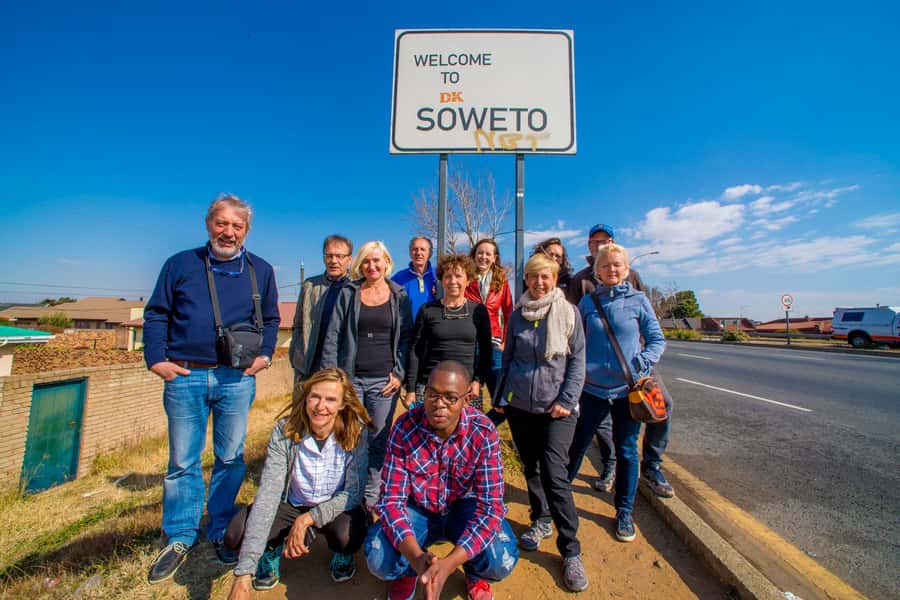
- Vilakazi Street brings major history into one short walk: You pass the former home of Nelson Mandela and the home of Archbishop Emeritus Desmond Tutu on the same famous street.
- The Hector Pieterson Museum adds emotional weight: Entrance is included, and the 1976 student uprising is explained through the story of the young boy whose death became a symbol of resistance.
- The tour shows present-day Soweto, not only its famous names: You visit Diepkloof vendors, see an informal settlement, and pass the Baragwanath taxi rank and hospital.
- Your guide makes the difference: The best experiences depend on a guide who can explain apartheid, local customs, and current life with care.
- The $74 price is reasonable for a short city tour: Hotel pickup, return transport, included museum entry, a live English-speaking guide, and WiFi add practical value.
- The format is best for a first look: If you want long museum visits or extended time in one neighborhood, a full-day outing may suit you better.
Why Soweto deserves more than a quick photo stop
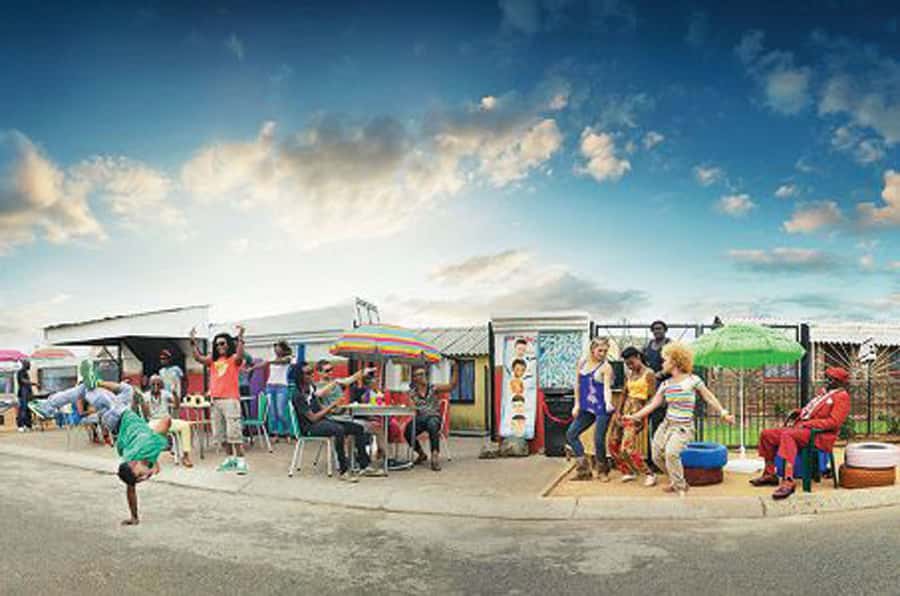
Soweto is short for South Western Township, a large urban area southwest of Johannesburg. It is often presented to visitors through the names of Nelson Mandela, Desmond Tutu, Hector Pieterson, and the 1976 student uprising. Those names matter, but Soweto is not simply an open-air history lesson.
The point of this tour is to connect the famous events with streets where people shop, commute, worship, study, and live today. You see formal neighborhoods beside informal settlements, busy vendor areas beside historic homes, and major public buildings alongside modest housing.
That mix gives you a more useful picture than a stop at one museum alone. You begin to understand that apartheid is not only a subject in a textbook. Its effects shaped where people could live, work, and study, and those divisions still influence daily life.
I would choose this tour early in a Johannesburg visit if I wanted a broad orientation. It gives you enough background to make later visits to the Apartheid Museum, Constitution Hill, or Mandela House more meaningful.
More Half-Day Tours in Johannesburg
- Half-Day Tour of Soweto Tour
★ 4.5 · 712 reviews - Johannesburg and Soweto: Half-Day Tour
★ 4.8 · 439 reviews - From Johannesburg: Lion & Safari Park Half-Day Tour
★ 4.6 · 384 reviews
Pickup in Johannesburg and the road south
The tour begins with pickup at your Johannesburg hotel or residence. After a short briefing, you travel in a comfortable vehicle toward Soweto. The drive takes about 45 minutes each way, depending on the route and traffic.
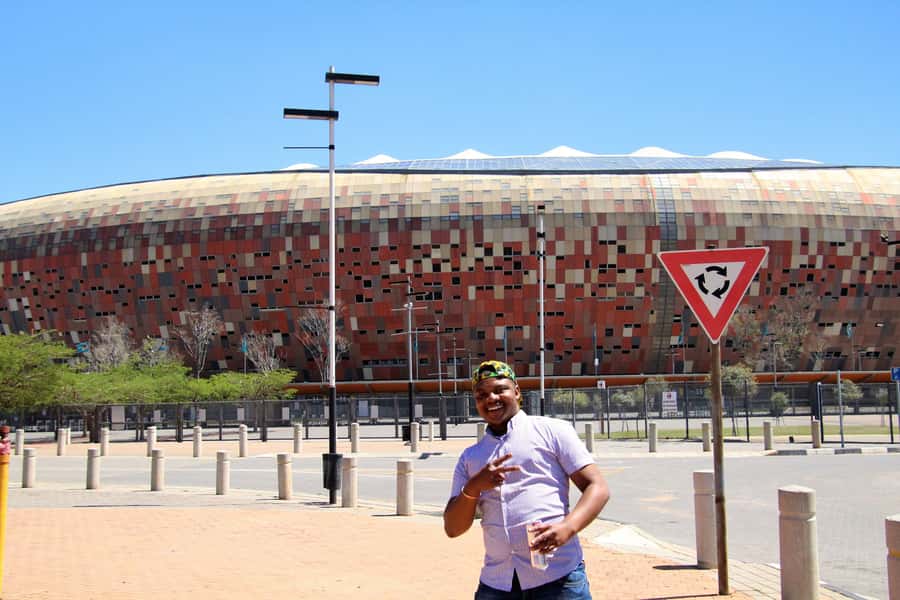
The road itself provides an opening chapter. You pass the National Football Stadium, used for the opening and closing ceremonies of the 2010 World Cup. That sight links South Africa’s political past with a more recent moment of national celebration.
The guide usually explains what you are about to see during the drive. Carson, for example, was praised for previewing the next stop so the museum and streets made better sense on arrival. That habit matters because Soweto can otherwise seem like a rapid string of names and landmarks.
Pickup included in the $74 cost is especially helpful if you are staying in Johannesburg and do not want to arrange a separate taxi. The return journey also keeps the half-day schedule simple. Still, you should allow the full five hours rather than treating this as a short two-hour outing.
Diepkloof vendors and the first walk
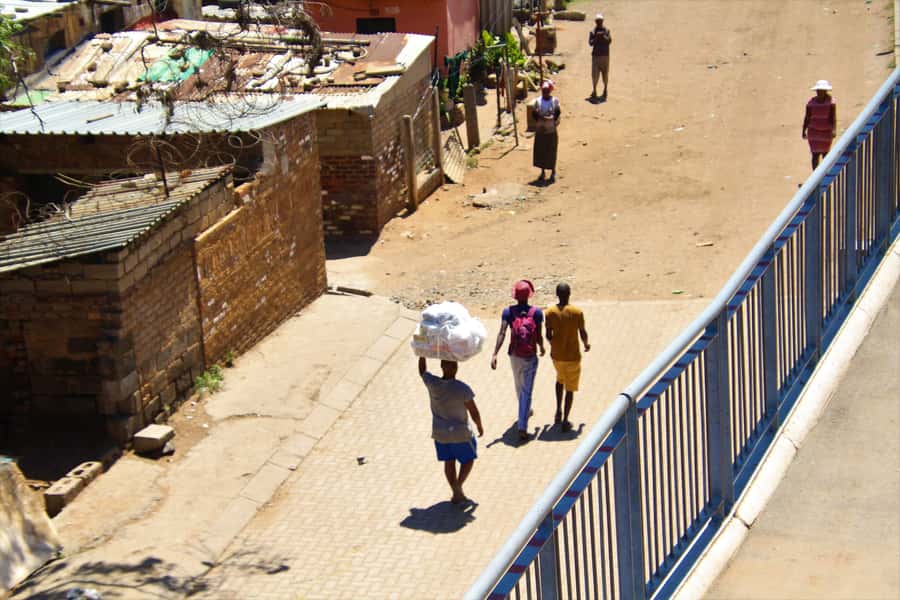
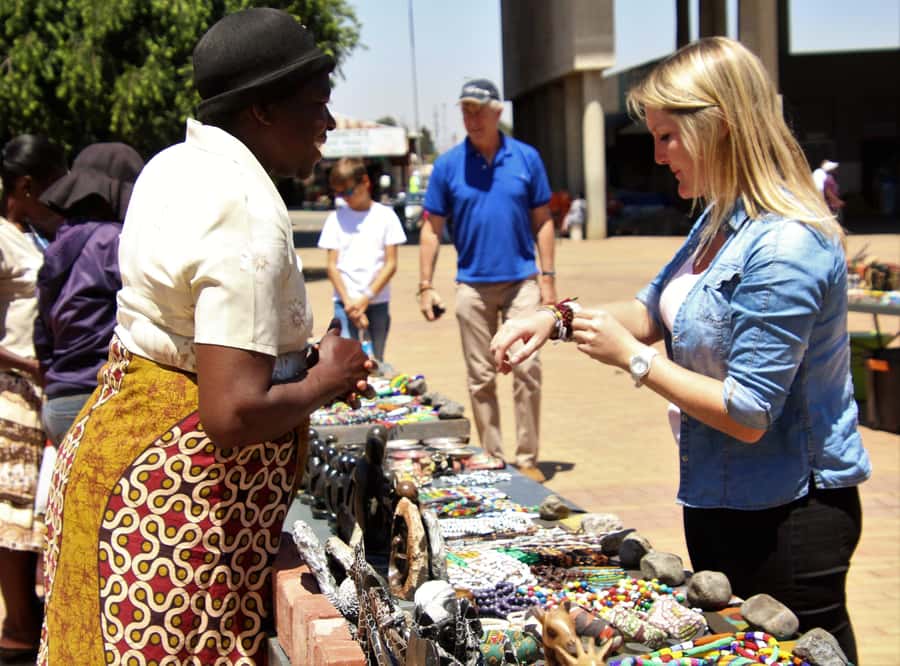
In Diepkloof, you leave the vehicle for a walk of about 30 minutes. The area is known for street vendors selling a wide range of goods, and this is one of the first moments when the tour shifts from sightseeing to ordinary local life.
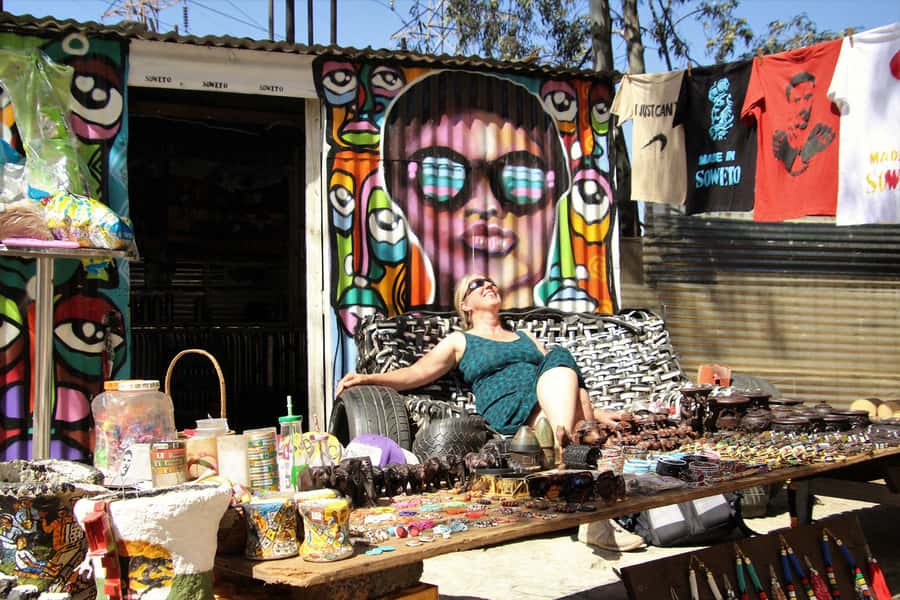
You might see stalls and roadside trade rather than polished tourist displays. That is part of the value. The guide can explain what you are seeing and help you move through the area with awareness.
This stop is also a reminder to behave respectfully. Ask before photographing people, especially vendors and children. Avoid treating poverty as scenery. Keep the group together, listen to the guide, and follow any local advice about where to walk.
The walk is not long, but it helps break up the vehicle time. It also gives you a chance to observe the township at street level rather than through a window.
Vilakazi Street and two Nobel peace laureates

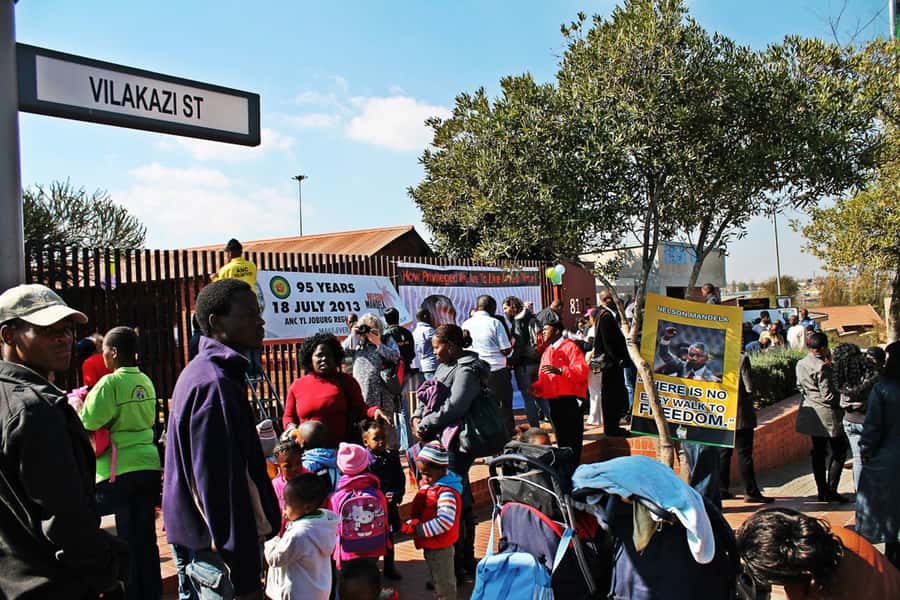
The tour then reaches Orlando West and Vilakazi Street, perhaps the best-known address in Soweto. Nelson Mandela once lived here, and Archbishop Emeritus Desmond Tutu also has a home on the street. That makes Vilakazi Street unusual in a very literal way: two Nobel peace prize winners are linked to the same neighborhood.
You drive past the former homes of Mandela and Tutu, as well as the home associated with Winnie Madikizela-Mandela. The tour provides time for sightseeing and photographs, but the homes are generally viewed from outside unless you pay separately to enter the Mandela House Museum.
That distinction is important. If you want to see the interior of Mandela’s former residence and the museum displays, budget for an extra entrance fee payable on arrival. If you only want a quick orientation and exterior photographs, the included tour may be enough.
I like this stop because the street makes national history feel close and human. These are not distant monuments in a grand government district. They are homes along a neighborhood street, connected to the personal side of a political struggle.
More Soweto tours:
- Johannesburg: Hop-On Hop-Off Bus with Optional Soweto Tour
★ 4.6 · 985 reviews - Soweto /Johannesburg and Apartheid Museum Guided Full Day Tour
★ 5.0 · 932 reviews - Johannesburg Hop-On Hop-Off City Tour with Soweto Option
★ 4.5 · 768 reviews - Soweto: Walking Tour with a Local Guide and Lunch
★ 4.9 · 648 reviews
Hector Pieterson Museum and June 16, 1976
Entrance to the Hector Pieterson Museum is included, and it is one of the most important parts of the outing. The museum explains the Soweto uprising of June 16, 1976, when students protested against the compulsory use of Afrikaans in schools.
The death of Hector Pieterson became one of the defining images of that day. He was a young boy, and his death helped bring international attention to the violence of apartheid rule. The subject is painful, and you should expect this visit to carry more emotional weight than the roadside sightseeing.
Several people have described the museum and the memorial material as deeply moving. That response is understandable. The exhibits give the uprising a human scale, focusing not only on policy but also on children, families, education, and the price paid by young people.
The museum visit is valuable because it gives structure to what you see outside. Afterward, Vilakazi Street and the wider township are not just photo locations. You have a clearer sense of the forces that shaped Soweto and the courage of its residents.
Time is the limitation. One past participant wished for an extra hour and suggested reducing less essential stops to allow more time at the museum and other key sites. If museums are your priority, pay close attention to the day’s schedule and ask your guide how long you will have inside.
Regina Mundi Church and the role of faith
Regina Mundi Church is another included stop. Its name means Queen of the World, and it has a major place in the story of resistance in Soweto. The church offered refuge and a meeting place during the apartheid years.
The visit helps widen the story beyond political leaders and student protests. Religious institutions were part of community life, and churches could provide space for people who had few safe places to gather.
The church also gives the tour a quieter pause between streets, vehicles, and museum displays. Your guide can connect its role to the wider struggle and explain why this building matters to local residents.
As with the museum, the value depends on the explanation. A brief stop without context would be easy to forget. A thoughtful guide can make the building’s place in Soweto’s story clear.
Informal settlement visit: meaningful, but handle it carefully
The tour continues into an informal settlement, sometimes described as one of the poorer parts of Soweto. You may interact with local residents and see living conditions that differ sharply from the more established neighborhoods.
This is one of the most memorable parts of the experience, but it is also the part that calls for the most care. Some people appreciate the chance to meet residents and learn about daily life directly. Others feel uncomfortable entering or viewing private homes, and that concern is fair.
You should not assume that poverty automatically creates a suitable tourist attraction. Ask what is appropriate before taking photographs. If you are invited into a home, remain respectful, keep the visit brief, and do not handle belongings. You can also tell the guide if you would prefer not to enter private spaces.
Some past participants suggested bringing small gifts such as sweets, paper, or pencils for children. I would treat this cautiously. Do not hand out items without guidance, and remember that the supplied tour information says personal purchases are not included. Cash is not required, and you should never feel pressured to give money.
This stop can add real understanding when handled with dignity. It becomes less useful when people feel they are being displayed for visitors. A good guide should explain the setting, protect local privacy, and give you room to decide how involved you want to be.
Cooling towers, the university, and Baragwanath Hospital
Back in the vehicle, you see more of Soweto’s visual markers. The cooling towers are among the area’s most recognizable sights and make strong photographs. You also pass the Soweto campus of the University of Johannesburg, adding an educational and modern note to the route.
The tour ends with a view of Chris Hani Baragwanath Hospital, described as the largest hospital in the world. You also pass the Baragwanath taxi rank, an important transport point in the township.
These are drive-by sights, not extended visits. Their value comes from helping you understand the scale and movement of Soweto. A taxi rank tells you something about how people get around; a university shows the role of education; the hospital points to the public services supporting a huge urban population.
One practical note: not every stop will have the same emotional or visual impact. The museum, Vilakazi Street, and the informal settlement usually provide the most substance. The stadium, cooling towers, taxi rank, and hospital are useful supporting sights, but they may feel brief if you want more time at the central sites.
What the guides add to the experience
Guide quality is the tour’s strongest feature. The guide names praised for clear and engaging work include Mark, Lebo, Thapelo, Sello, Carson, William, Patience, Thabang, Tshepo, Warren, Stanley, Goodman, and others.
The repeated strengths are consistent: clear history, local pride, patience, humor, help with photographs, and attention to group comfort. One person traveling alone still received the full tour when the booking proceeded, while another praised a guide for making frequent photo stops and explaining each next destination during the drive.
That personal element is important in Soweto. Facts about apartheid are necessary, but they do not explain everything. A local guide can show how history connects to family, neighborhood, education, work, and identity.
The experience is conducted in English, with a live guide. If you have questions, ask them. The tour becomes much better when you treat it as a conversation rather than a moving lecture.
Is $74 good value for five hours?
At $74 per person, this is not the cheapest way to see Soweto, but the price is fair for what is included. You receive Johannesburg pickup and return transport, a comfortable vehicle, a live English-speaking guide, entry to the Hector Pieterson Museum, entry to Regina Mundi Church, and onboard uncapped WiFi.
The tour also covers several areas that would be difficult to connect efficiently on your own in half a day. You would need to arrange transport between Diepkloof, Orlando West, the museum, the informal settlement, and the southern sights. The guide supplies the route and the context.
Food and personal purchases are not included. The Nelson Mandela House Museum also costs extra, so add that fee if the interior visit matters to you.
The strongest value comes if you want an organized first look at Soweto without spending a full day. It is less ideal if you prefer to linger, take long walks, or study one museum in detail.
Free cancellation up to 24 hours before departure and the reserve-now, pay-later option make the booking flexible. Pickup is available from Johannesburg accommodation, and the activity is listed as wheelchair accessible.
Who should book this Soweto tour?
I would recommend it to first-time visitors who want history and present-day community life in the same outing. It suits anyone with only half a day in Johannesburg, especially if hotel pickup and a set route will make the visit easier.
It is also a good choice for people who want a guide to explain difficult subjects. The 1976 uprising, informal settlements, and apartheid’s long effects deserve more than a quick online summary.
You may want a different format if you dislike group sightseeing, feel strongly about not visiting poor residential areas, or want extended time inside museums. In that case, ask about a private arrangement or choose a museum-focused day.
FAQ
How long does the Soweto tour last?
The tour lasts five hours, including the journey from Johannesburg and the return trip.
Where does pickup take place?
Pickup is available from your hotel or residence in Johannesburg.
Is transport included?
Yes. Transfers in a comfortable vehicle from Johannesburg are included.
What language is the tour conducted in?
The live tour is conducted in English.
Is the Hector Pieterson Museum included?
Yes. Entrance to the Hector Pieterson Museum is included in the tour price.
Is Regina Mundi Church included?
Yes. Entrance into Regina Mundi Church is included.
Can I enter the Nelson Mandela House Museum?
Entry into the Nelson Mandela House Museum is optional and costs extra. The fee is payable on arrival.
Will I see Mandela’s former home?
Yes. The route takes you along Vilakazi Street and provides a view of Mandela’s former home. You also see the homes associated with Desmond Tutu and Winnie Madikizela-Mandela.
Is food included?
No. Food and personal purchases are not included.
Is the tour wheelchair accessible?
Yes. The activity is listed as wheelchair accessible.
Should you book it?
Book this Soweto tour if you want a well-organized, five-hour introduction that joins major political history to everyday township life. The included museum and church entries, Johannesburg pickup, and strong record of warm, informed guides make the $74 price reasonable.
Go in with respect, especially at the informal settlement. Give the museum enough attention, ask questions, and consider paying extra for Mandela House if you want more than an exterior view. If you can accept a busy schedule and a few brief drive-by stops, this is a useful and worthwhile way to begin understanding Soweto.
Newest reviews from Johannesburg
- Cradle of Humankind and Maropeng Day Tour from Johannesburg★ 4.0 · 5 reviews
- Explore Soweto 8 Hour Tour with Lunch and Museum Visit★ 5.0 · 5 reviews
- 3 Day All Incl. Private Kruger Park Safari Incl. Transfer From Johannesburg★ 5.0 · 5 reviews
- Harties cableway Tour★ 4.5 · 5 reviews
- Pretoria Historical Tour★ 4.0 · 5 reviews
- Constitutional Hill and Soweto 5 hours tour.★ 5.0 · 5 reviews
- 5 Day Kruger National Park and Panorama Route Safari★ 4.5 · 5 reviews
- Luxury Car Johannesburg Airport Private Transfer★ 5.0 · 5 reviews
Soweto Tours, compared.

Soweto /Johannesburg and Apartheid Museum Guided Full Day Tour
Read our review →
Johannesburg Hop-On Hop-Off City Tour with Soweto Option
Read our review →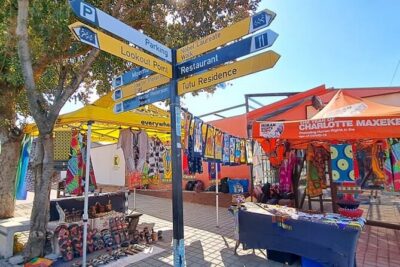

Soweto: Walking Tour with a Local Guide and Lunch
Read our review →
Jo’berg in 1 Day: Soweto, Apartheid Museum & City Tour
Read our review →
Full-Day Tour with Soweto and Apartheid Museum
Read our review →
Browse the lists this tour appears in