
Reviewed · WHALE WATCHING
Hermanus: Boat Based Whale Watching Experience
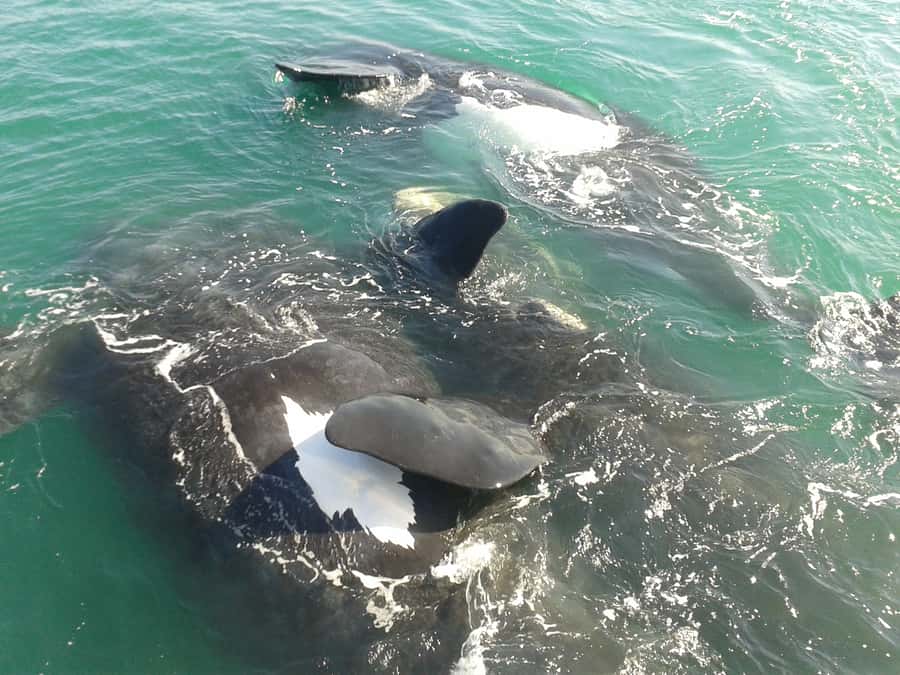
Whales can make a quiet sea feel enormous. From Hermanus New Harbour, this 90-minute boat trip gives you a close, respectful look at whales in Walker Bay, with dolphins, seals, seabirds, and fine views back toward Hermanus. I especially like the expert crew and the chance to watch from a roomy upper deck when conditions allow. The main catch is simple: whales are wild animals, and rough seas or late-season departures can reduce the sightings.
I also like the careful operating style. Once whales are found, the boat stops and disengages its engines so the propellers do not threaten the animals. You may see a mother and calf, a whale breaching, or a curious animal approaching the boat, but you should come ready for nature to set the schedule.
In This Review
- Key points before you book
- Why Hermanus is such a strong whale-watching base
- Arriving at Hermanus New Harbour
- The safety briefing and boarding routine
- Crossing Walker Bay and searching for whales
- The whale encounter, handled with care
- Dolphins, seals, seabirds, and surprise sightings
- Weather, sea sickness, and what to wear
- Is $93 a fair price?
- Who will enjoy this trip most?
- My practical verdict
- FAQ
- Where does the whale-watching boat leave from?
- How early should I arrive?
- How long does the trip last?
- What animals might I see?
- Can I see whales from the top deck?
- Are whales guaranteed?
- Is the experience suitable for children?
- What should I wear?
- Is water provided?
- Is there an extra harbor charge?
- Can I cancel the booking?
Key points before you book
- Best whale months: August through October generally offer the strongest chance of seeing Southern Right Whales in Walker Bay, while late November and December can be quieter.
- A proper ocean outing: This is not a short harbor cruise. Expect open water, wind, spray, and possible rough waves.
- Wildlife beyond whales: Dolphins, seals, seabirds, and occasional unusual sightings such as sunfish may appear along the route.
- Upper-deck views: You can use the top deck before departure in good weather, or after whales are located if conditions are poor.
- Good crew-to-wildlife balance: The boat approaches carefully, then stops with engines off rather than chasing the whales.
- Allow about two hours: The advertised duration is 90 minutes, but the complete outing may last 1.5 to 2 hours.
Why Hermanus is such a strong whale-watching base
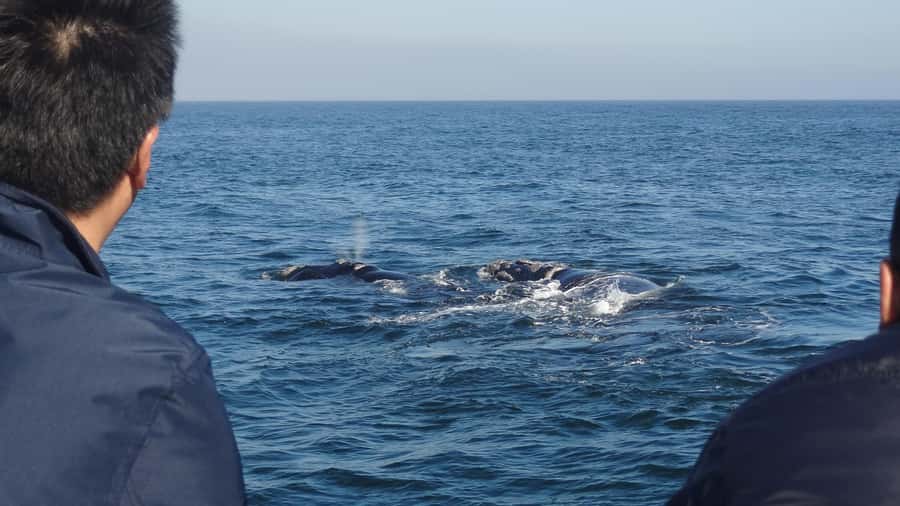
Hermanus sits beside Walker Bay, a stretch of water known for regular whale sightings during the Southern Right Whale season. The town is famous for shore-based viewing, but a boat gives you a very different angle. Instead of looking out from cliffs or the waterfront, you are on the same moving surface as the animals.
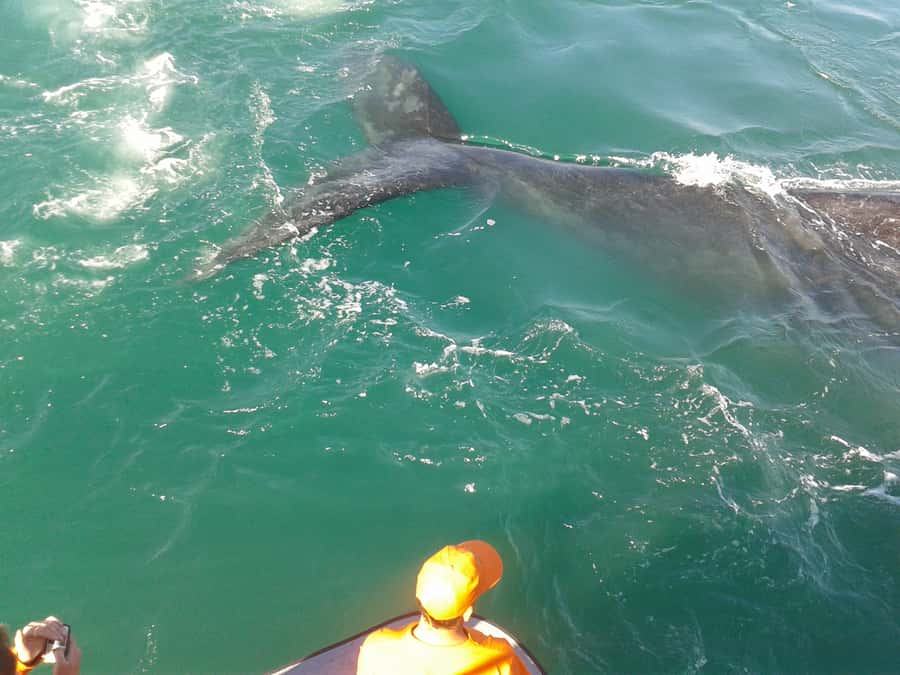
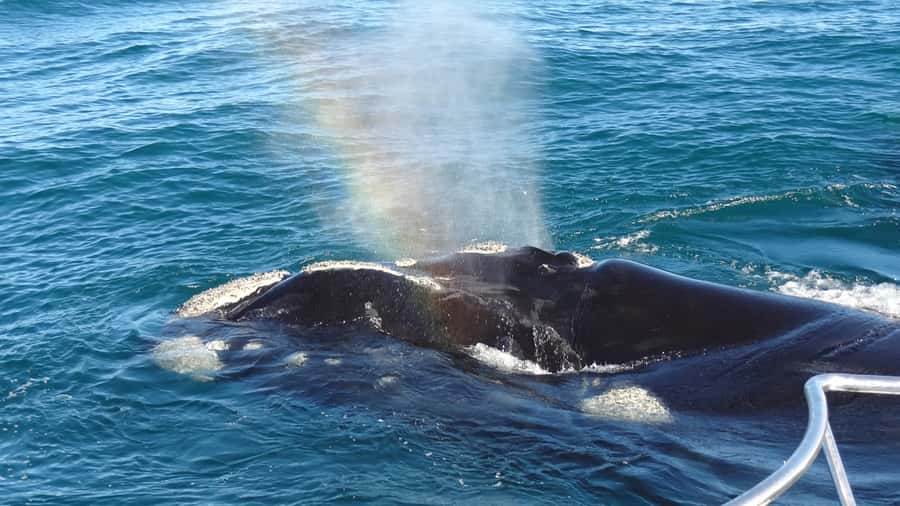
That change of viewpoint matters. A whale seen from land can seem like a dark shape offshore. From the boat, you may watch its back roll through the water, see a blow rise into the air, or catch a tail lifting before the animal disappears. If a whale approaches, the moment feels less like a performance and more like a brief meeting between two curious species.
The route also gives you fresh views of Hermanus and the Western Cape. The coastline, harbor, and open bay look different from the water, even if you have already explored town on foot. I would treat the scenery as an important part of the trip, not just something to fill time while the crew searches.
More Whale Watching in Hermanus
- Hermanus: Whale and Dolphin Watching Boat Trip
★ 4.6 · 807 reviews - Boat Based Whale Watching from Hermanus
★ 4.5 · 205 reviews - Whale Watching Walking Tours (Land-Based) – from JUNE 2025
★ 5.0 · 88 reviews
Arriving at Hermanus New Harbour
You need to make your own way to Hermanus New Harbour. After entering the harbor, look for the orange building on the right-hand side. Tickets are issued on arrival, around 30 minutes before departure, so arrive early enough to find the building, check in, and listen to the instructions without rushing.
There is a small harbour entrance fee of R5, payable separately. It is minor, but keep some South African currency available so this extra charge does not catch you by surprise.
Coffee is provided on arrival, and water is available on the boat. That is a useful touch, especially on a chilly morning, though you should not treat the coffee as a full breakfast. Wear warm clothes from the start. The harbor may feel comfortable while you wait, but conditions often feel cooler once the boat is moving.
The safety briefing and boarding routine
Before departure, the crew gives a safety briefing. This covers the basic rules for moving around the boat and helps you understand where you can stand or sit during the trip.
In good weather, you may be allowed onto the upper deck before leaving the harbor. This is the best place for wide views and open-air photography. If the weather is poor, access to the top deck may be delayed until the boat has located the whales. That rule is sensible, since a high deck becomes less comfortable and less secure in wind or rough water.
The boats are described as comfortable and fast, with an upper deck that gives good sightlines. One useful design feature is the presence of tables rather than only rows of seats, which can work well for families or small groups. Space can vary by departure, so arrive promptly if having room to move around matters to you.
Flat shoes are required. I would avoid loose sandals, high heels, or anything that makes it hard to keep your footing. Sea conditions can change quickly, and the boat may move sharply when crossing waves.
Crossing Walker Bay and searching for whales
Once you leave the harbor, the trip becomes a real ocean ride. The crew searches the bay while you take in views of the coast and watch for movement on the surface. The search may be brief, or it may take more time, depending on where the animals are and how many remain in the bay.
This is the point where expectations matter. No responsible operator can promise a whale sighting, and the crew makes this clear when conditions are less favorable. Late in the season, some whales have already migrated, so the boat may spend longer looking or find fewer animals. One December trip produced many dolphins but no guaranteed whale encounter, while other late-season outings still found whales.
The timing of your departure can affect comfort as well as sightings. One account noted that the sea became rougher in the afternoon, making photography harder. Morning trips may feel calmer, but the supplied information does not promise a particular sea state at any hour. Check the forecast and keep your plans flexible.
More whale watching in South Africa:
- Whale, Dolphin & Penguin Island Cruise
★ 5.0 · 687 reviews - From Cape Town: Hermanus Whale Watching Boat Trip
★ 4.4 · 378 reviews - Plettenberg Bay: Whale Watching Boat Cruise
★ 4.4 · 362 reviews - Whale Watching from Gansbaai
★ 5.0 · 327 reviews
The whale encounter, handled with care
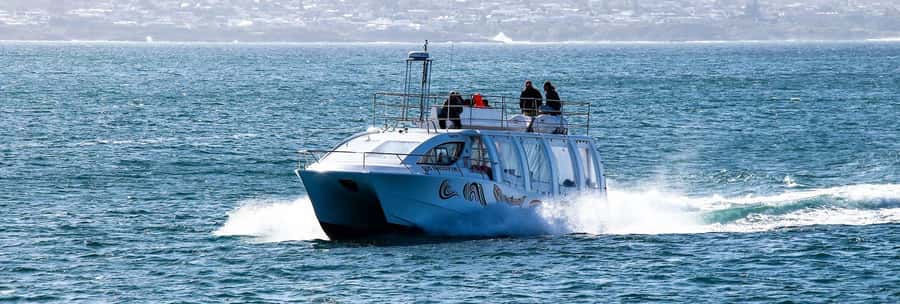
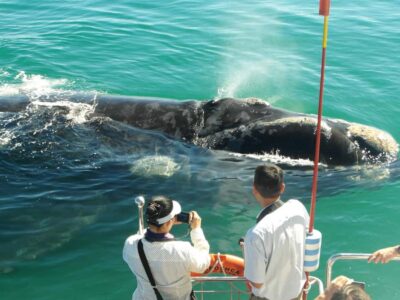
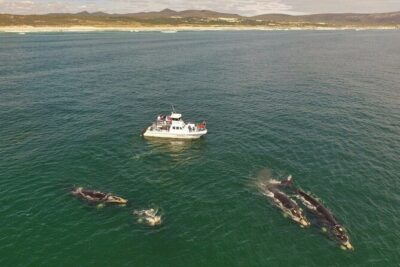
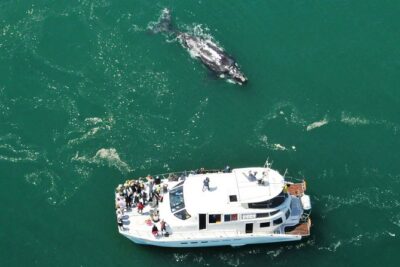
When the crew spots whales, the vessel is permitted to move closer. It then stops and disengages the engines to protect the animals from the propellers. That pause is one of the best parts of the experience. You are not watching a boat chase a whale. You are sitting quietly while the whale decides what to do next.
Southern Right Whales are the main seasonal draw, and the boat may also encounter other whale types. Several outings recorded two or even three types of whales. Mother-and-calf pairs are a particularly memorable sight, with calves sometimes surfacing beside their mothers or appearing in the distance during playful behavior.
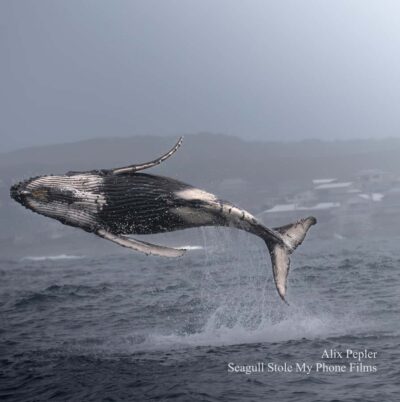
Breaching is never guaranteed, but it can happen. A breach, tail movement, or close approach may last only seconds, so keep watching rather than staring only at your phone screen. A camera with a fast shutter is useful, but your eyes are more reliable than your lens when the action is sudden.
The crew’s role is important here. Guides such as Philip, Peter, and other members of the team have been praised for explaining whale behavior and answering questions clearly. They also help locate animals from a distance, which can save you from scanning empty water for the entire trip.
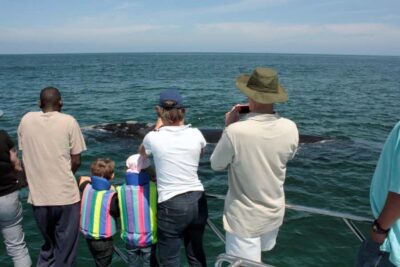
The whales may sometimes approach the vessel for what feels like people watching. That does not mean you should expect them to come close every time. The best attitude is to appreciate the sighting on the animals’ terms.
Dolphins, seals, seabirds, and surprise sightings
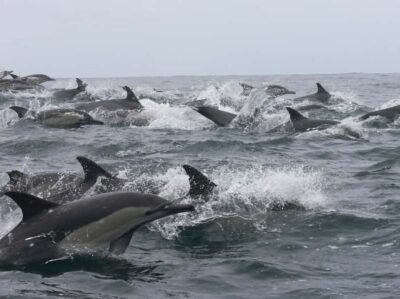
Whales receive top billing, but the bay can offer a broader marine-life show. Dolphins are a frequent highlight, with sightings ranging from a few animals to very large groups. A pod moving beside the boat or spreading across the water can be as exciting as the whales, especially when the animals travel quickly near the surface.
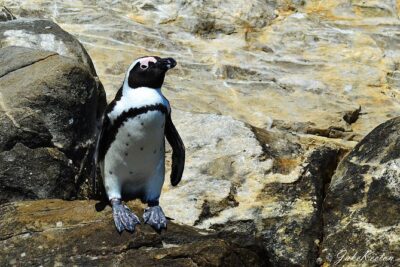
Seals may appear along the route, and seabirds add movement above the water. There have also been reports of a sunfish surfacing beside the boat, a less common sight that shows why it pays to keep scanning in every direction.
Still, marine life varies from trip to trip. One outing may bring whales, dolphins, and seals. Another may produce whales but no dolphins. A late-season boat could find a large dolphin group while whale sightings are limited. I appreciate that the experience does not pretend every departure will deliver the same list of animals.
The crew provides information as the trip unfolds. That turns empty stretches of sea into useful viewing time, since you learn what to look for and why the animals behave as they do. The presentation before departure also explains which whale types might be present, helping you recognize the differences once the search begins.
Weather, sea sickness, and what to wear
The biggest practical drawback is the sea itself. Several accounts describe rough waves, and one partner became seasick during a trip. If you regularly suffer from motion sickness, this may not be the easy outing you imagine from the phrase whale watching.
Bring a jacket, warm layers, a windbreaker, a sun hat, sunscreen, and weather-appropriate clothing. You may need all of them in the same afternoon. The wind can feel sharp on the upper deck, while the sun can still be strong on the water.
Wear flat, secure shoes. Keep your belongings close and protect cameras from spray. If you are sensitive to motion, choose a seat or position that helps you feel stable, and ask the crew for practical guidance before departure. The provided information does not promise a specific motion-sickness service, so bring any personal remedy you normally use.
Trips are weather permitting. A cancellation or change caused by weather is part of the reality of going to sea, not a flaw in the idea of the tour. The flexible booking policy allows cancellation up to 24 hours ahead for a full refund, and you can reserve now and pay later.
Is $93 a fair price?
At $93 per person, this is not a budget harbor ride. You are paying for a purpose-built boat trip, crew guidance, wildlife searching, water onboard, and the possibility of a close encounter with large wild animals. Coffee on arrival is included, while the R5 harbor fee is not.
The value is strongest from August through October, when whale activity is more likely and mother-and-calf sightings can be especially rewarding. If you are already staying in Hermanus and this is a major reason for your visit, the price feels easier to justify. The experience can also be worthwhile from Cape Town, though the supplied information does not include transportation from the city, so you would need to arrange your own way to the harbor.
The value is weaker if you require guaranteed whales, dislike open water, or have only a narrow schedule. You may see dolphins and seals instead, but the operator cannot control migration patterns or sea conditions. Think of the fee as payment for skilled searching and access to the bay, not a guaranteed wildlife result.
Who will enjoy this trip most?
I would recommend it to families, couples, photographers, wildlife fans, and anyone who wants more than a shore view. The activity is suitable for all ages, and the upper deck gives children and adults a better chance to see animals around the boat.
It also suits people who enjoy informed guiding. The crew does more than point at a fin. They explain the possible whale types, answer repeated questions patiently, and identify animals from far off. That helps you understand the encounter instead of simply collecting a photograph.
I would hesitate to recommend it to anyone who becomes easily seasick or dislikes cold, windy conditions. The boat is comfortable, but comfort at sea is not the same as comfort on land. A warm jacket and realistic expectations will improve your chances of enjoying the outing.
My practical verdict
This is one of Hermanus’s most worthwhile water-based activities because it combines serious wildlife watching with a scenic ride across Walker Bay. I like the respectful engine-off approach, the strong guiding, and the chance to see dolphins and seals even when whales are scarce.
Book it if whales are high on your South Africa plans, especially for an August, September, or October visit. Arrive 30 minutes early, bring warm layers, wear flat shoes, and allow up to two hours rather than planning an immediate appointment afterward.
Skip it if rough seas are a deal breaker or if you need a guaranteed sighting. For everyone else, $93 buys a genuine chance to see whales behaving naturally, and that uncertainty is part of what makes the encounter feel real.
FAQ
Where does the whale-watching boat leave from?
The trip leaves from Hermanus New Harbour. After entering the harbor, go to the orange building on the right-hand side.
How early should I arrive?
Arrive 30 minutes before the scheduled departure time. Tickets are provided when you arrive on the day.
How long does the trip last?
The stated duration is 90 minutes, but the complete boat trip may last 1.5 to 2 hours.
What animals might I see?
You may see whales, dolphins, seals, and seabirds. Sightings vary by trip and season.
Can I see whales from the top deck?
In good weather, you may use the top deck before departure. If conditions are poor, access may be allowed only after the whales have been located.
Are whales guaranteed?
No. Whale watching depends on weather, sea conditions, and the animals’ location and migration timing.
Is the experience suitable for children?
Whale watching is suitable for all ages. Children should wear warm clothing and secure, flat shoes.
What should I wear?
Wear warm clothing, a jacket or windbreaker, a sun hat, sunscreen, and weather-appropriate clothing. Flat shoes are recommended.
Is water provided?
Yes. Water is available on the boat, and coffee is provided on arrival.
Is there an extra harbor charge?
Yes. You must pay an entrance fee of R5 when entering the harbor.
Can I cancel the booking?
You can cancel up to 24 hours before the trip for a full refund. You can also reserve and pay later, which keeps your plans flexible.
More Boat Trips in South Africa
- Cape Town: Hop-On Hop-Off Bus Tour with Optional Cruise
★ 4.8 · 3,929 reviews - Cape Town Hop-On Hop-Off City Tour with Optional Cruise
★ 4.5 · 1,793 reviews - Cape Town: Sunset Champagne Cruise
★ 4.6 · 1,083 reviews - St Lucia: Hippo and Crocodile Cruise on a 15-Seat Vessel
★ 4.6 · 807 reviews
Newest reviews from South Africa
- Half-Day Lion and Safari Park Tour★ 5.0 · 5 reviews
- Explore Atlantis Sand Dunes with a 1hour 30mins sandboarding tour★ 5.0 · 5 reviews
- Durban Shore Excursion: Valley of 1000 Hills and PheZulu Tour★ 5.0 · 5 reviews
- Cango Caves Oudtshoorn Day Tour★ 5.0 · 5 reviews
- Transfer from Cape Town City Center to Cape Town Airport★ 5.0 · 5 reviews
- Pneuma private travel & tours, creating memories and friends never forgotten★ 5.0 · 5 reviews
- QUAD BIKE FUN RIDE IN PAARL, BATTLE BUNKER WITH WILDX★ 4.4 · 5 reviews
- Private Transfer: CPT Airport to Cape Town in Luxury Van★ 4.0 · 5 reviews
Whale Watching, compared.
Browse the lists this tour appears in