
Reviewed · CITY TOURS
From Durban: Half Day Durban City Tour
Durban reveals itself in layers. This half-day outing gives you Golden Mile views and a close look at the city’s African and Indian market life, not just a bus ride past landmarks. I especially like the small group size, capped at eight, and the chance to visit Warwick Triangle, where daily commerce feels far more local than a standard sightseeing stop. The main drawback is time: 210 minutes covers a lot of ground, but some stops are brief.
I also like the practical hotel pickup from Durban’s beachfront and the mix of history, harbor views, gardens, and city streets. Guides such as Frank Kahts and David have earned praise for clear English, humor, and helpful commentary. Still, you should confirm your pickup before departure, since one February 2024 booking reported a tour that did not operate and did not receive a prompt response or refund.
In This Review
- Key points at a glance
- A useful first look at Durban in three and a half hours
- Starting along Durban’s Golden Mile
- City Hall, the harbor, and Durban’s working side
- Warwick Triangle: the tour’s most genuine stop
- Thirty minutes at Durban Botanic Gardens
- What the small group changes
- The guide can make or break the morning
- Who will get the most from this Durban tour?
- Is the $61 cost good value?
- Should you book the Durban City Tour?
- FAQ
- How long does the Durban City Tour last?
- Is hotel pickup included?
- What language is the tour conducted in?
- How many people are in the group?
- Is lunch included?
- What places are visited?
Key points at a glance
- Warwick Triangle is the most distinctive stop: Nine markets sit around Durban’s biggest public transport interchange, with about 6,000 vendors serving roughly 460,000 daily commuters.
- The Golden Mile puts Durban’s seaside character first: You travel along the renewed beachfront promenade and view the Point Waterfront.
- You get more than city streets: The route includes City Hall, the small craft harbor, sugar terminals, harbor warehouses, and a view toward the harbor from the University of Natal, Durban Campus.
- The Botanic Gardens provide a calm break: You have about 30 minutes to see part of Durban’s historic garden setting.
- The group is genuinely small: With no more than eight participants, the guide can usually keep the outing personal and easy to manage.
- The timing suits a busy schedule: Pickup begins around 8:30 AM, the tour starts at 9:00 AM, and you return near 12:30 PM.
A useful first look at Durban in three and a half hours
This is an introductory tour, not a full examination of Durban. That is its strength. You get a broad sense of how the city brings together Zulu culture, Indian communities descended from 19th-century indentured laborers, colonial-era institutions, seafront development, port activity, and green public spaces.
The experience uses an air-conditioned minibus, with hotel collection and return from Durban beachfront properties. That saves you from arranging a taxi between several scattered sights. It also means you spend less energy navigating a city you may not yet know.
The $61 price is fair if you value transport and a local guide. You are paying for roughly three and a half hours, return transfers, several photo stops, admission access to the Botanic Gardens visit, and time in the markets. It is less appealing if you prefer to explore slowly on foot or want extended time inside each place.
More City Tours in Durban
- Durban: City Sightseeing and Walking Tour
★ 4.6 · 98 reviews - Durban: Top 10 City Sights and Walking Tour
★ 4.1 · 69 reviews - Durban City Sightseeing and Walking Tour
★ 4.5 · 59 reviews
Starting along Durban’s Golden Mile
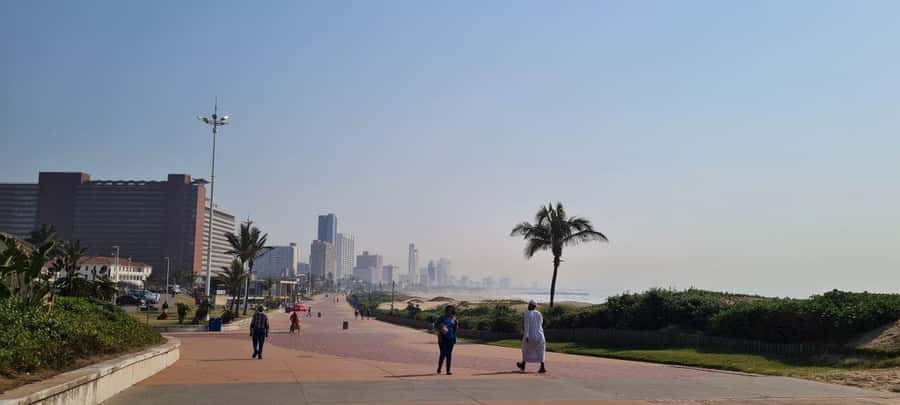
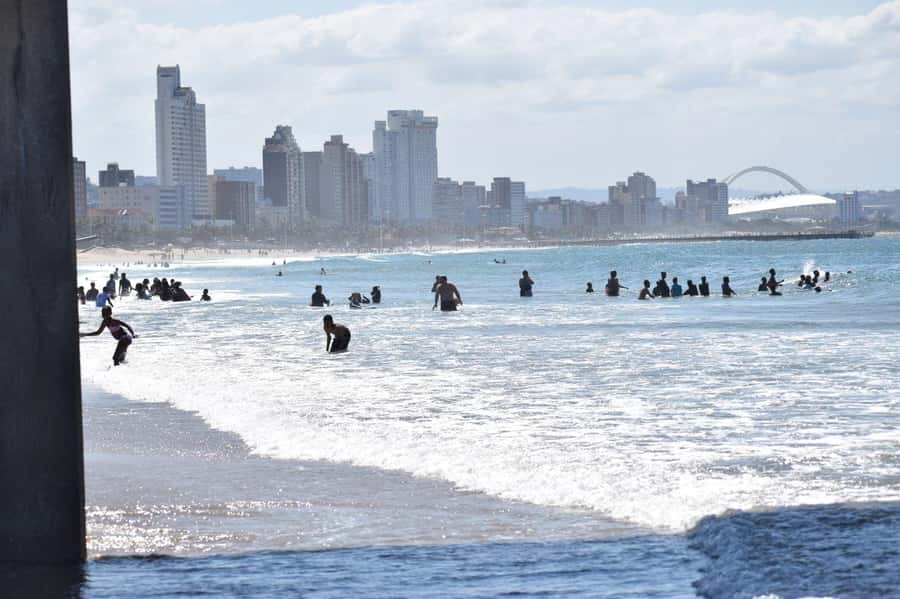
The tour begins with the Golden Mile, Durban’s well-known beachfront promenade. The name refers to the long stretch of public beach and seafront activity, and the route gives you a quick sense of the city’s relationship with the Indian Ocean.
You pass the upgraded Point Waterfront as well. This section helps connect old Durban with newer waterfront development. I like beginning here because it gives you an immediate visual anchor: broad sea views, beaches, and the city’s public edge before the minibus turns inland.
The Golden Mile portion is primarily a scenic drive rather than a long walking session. Expect views and commentary, not a beach morning. If you want time on the sand, swimming, or a long promenade stroll, plan that separately.
A photo stop at Moses Mabhida Stadium is also included. The stadium is one of Durban’s most recognizable modern landmarks, and the stop gives you a chance to take pictures rather than simply glimpse it through a moving window. The supplied schedule allows about 15 minutes at each of two Durban photo stops, so keep your expectations realistic. This is enough for photos and orientation, not a stadium tour.
City Hall, the harbor, and Durban’s working side
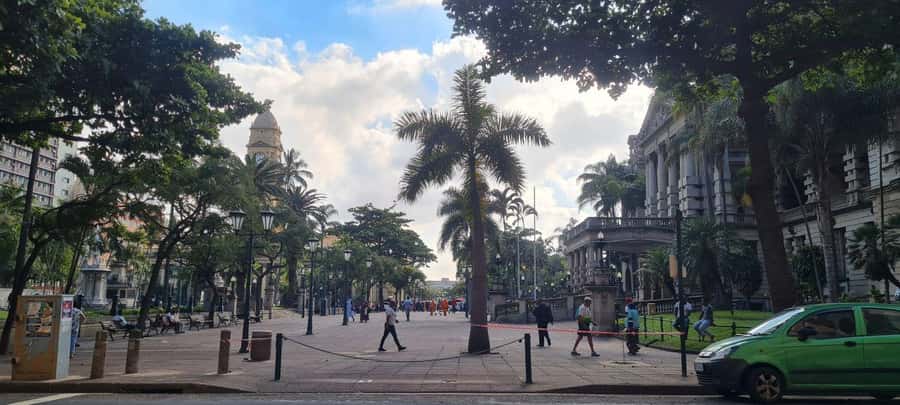
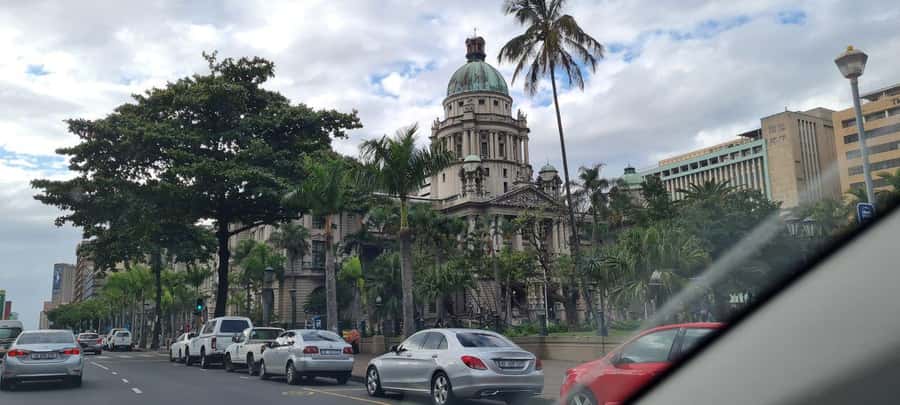
From the seafront, the route moves through central Durban and past City Hall. The building is described as majestic, with an amusing story attached to its history. The guide supplies the meaning here, since the value of this pass-by lies in the explanation as much as the architecture.
You then reach the small craft harbor, described as the eighth-largest harbor in the world. The drive continues past sugar terminals and busy harbor warehouses. This is useful context because Durban is not only a seaside leisure city. Its port and trade routes have shaped work, movement, and the city’s connection with the wider region.
The route also passes the University of Natal, Durban Campus, with views toward the harbor below. This is a scenic drive, and the changing elevation gives you a different angle on the port area. You are not visiting the university as a campus attraction, so treat it as part of the route rather than a separate stop.
I appreciate this section because it avoids making Durban look like a postcard city with beaches and gardens alone. You see infrastructure, shipping, commerce, and public institutions. The drawback is that much of it is viewed from the vehicle, so passengers who want to study buildings or port operations in detail may find the pace quick.
Warwick Triangle: the tour’s most genuine stop
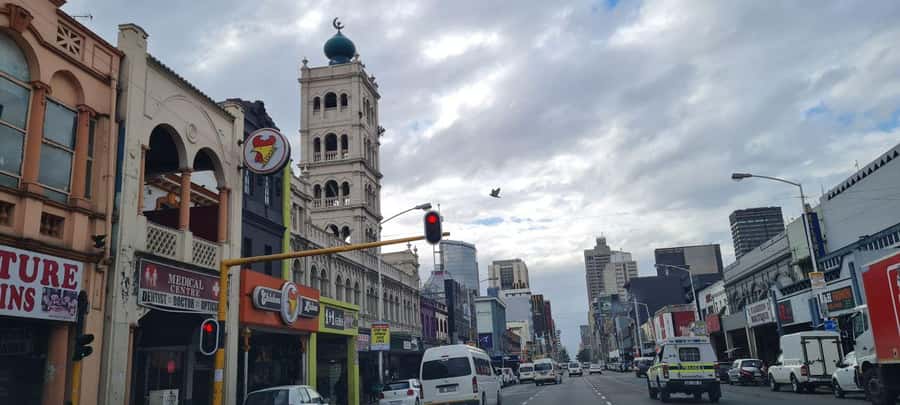
Warwick Triangle is the part I would value most on this outing. It is home to nine distinct markets built around Durban’s largest public transport interchange. About 6,000 street vendors sell goods there, serving an estimated 460,000 daily commuters.
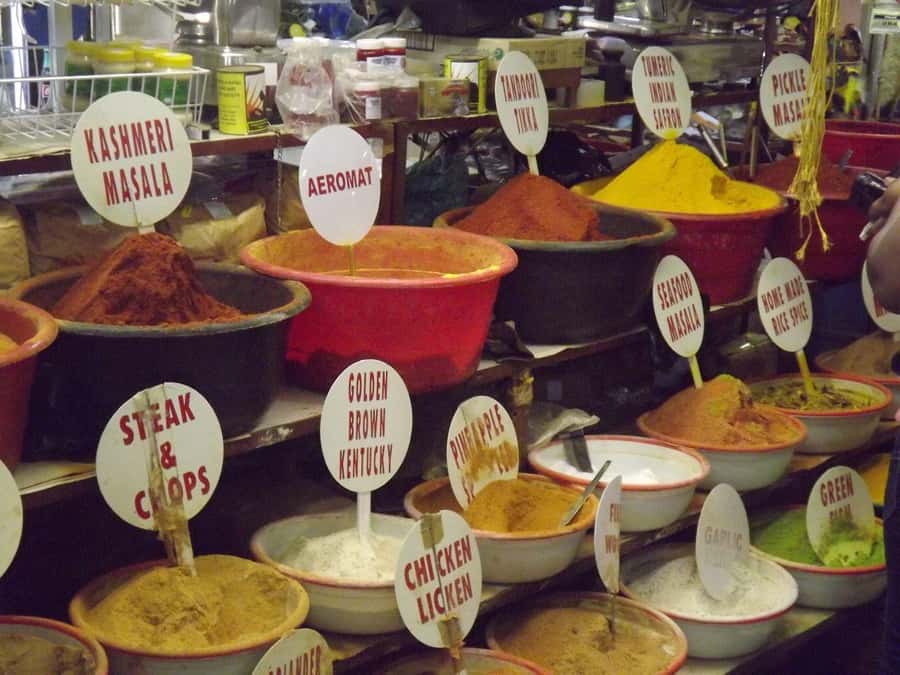
That scale matters. This is not a small souvenir market arranged for sightseeing. It is a working commercial district tied to everyday transport and trade. The tour includes African and Indian markets, giving you a direct look at two important strands of Durban’s cultural life.
You have around 30 minutes for shopping and exploration. That is enough to experience the noise, movement, colors, and range of goods, but it is not enough to understand every market or browse at leisure. Stay close to the guide and keep your belongings secure in any busy public market. The supplied information does not promise specific purchases or food tastings, so you should see this as an orientation visit rather than a shopping expedition with a set product list.
A local guide matters most here. A good guide can explain what you are seeing and help you move through the area with more confidence. Frank Kahts received particularly warm praise for his clear English, useful information, and ability to respond to the people in his group. That kind of personal guidance can make a short market visit much more meaningful.
A few more tours worth putting side by side
- Durban: 30-Minute Harbor Boat Cruise
★ 4.7 · 665 reviews - Durban: 1-Hour Boat Cruise from Wilson’s Wharf
★ 4.7 · 496 reviews - Durban Point Waterfront: Luxury Canal Boat Cruise
★ 4.4 · 298 reviews - Durban: Pontoon Boat Harbor Cruise
★ 4.4 · 182 reviews
Thirty minutes at Durban Botanic Gardens
The Botanic Gardens add welcome contrast after the traffic, harbor, and markets. You have about 30 minutes to visit, which gives you a short green pause within the city.
Do not expect enough time to cover every path or explore the gardens at a slow pace. The stop is best viewed as a compact introduction. You can stretch your legs, enjoy the setting, and get a change of rhythm before returning to the minibus.
This stop also broadens the tour’s picture of Durban. The city is not defined only by its oceanfront and commercial center. The garden visit shows a quieter side and gives the itinerary some breathing room.
Comfortable shoes, sunglasses, a sun hat, sunscreen, and light comfortable clothing are sensible choices. Those items are useful for the garden, market, and outdoor photo stops alike.
What the small group changes
The tour is limited to eight participants, which is a real advantage over a large coach outing. You spend less time waiting for people to board, and it is easier to hear the English-speaking guide. A small group also gives you a better chance to ask about Durban’s history, markets, and neighborhoods.
The vehicle is an air-conditioned minibus. That matters in a warm city and makes the longer scenic drives more comfortable. The total duration is 210 minutes, with about 20 minutes of transport at both the beginning and end according to the schedule.
The exact shape of the day can vary with pickup arrangements and traffic. Seven beachfront hotel pickup points are listed, including Hilton Durban, The Balmoral, Garden Court Marine Parade, Southern Sun Elangeni and Maharani, Blue Waters Hotel, The Edward, and Garden Court South Beach. Return service is offered to these beachfront properties as well.
Pickup begins around 8:30 AM for a 9:00 AM start. You should be back near your hotel around 12:30 PM. That timing leaves the afternoon free for a longer beach visit, lunch, or another Durban activity.
The guide can make or break the morning
The strongest positive comments focus on the guides. Frank Kahts is praised for well-informed commentary, easy-to-understand English, and attention to the group. David is also described as an excellent guide with a good sense of personality. Other feedback calls the guiding friendly, helpful, and informative.
That is important because several parts of the tour are short. At City Hall, the harbor, the stadium, and the university, the guide’s explanation turns a quick view into a useful lesson. At Warwick Triangle, the guide helps connect the market to Durban’s wider social and transport life.
One piece of feedback also suggests that the guide did not know enough about current entertainment options in the neighborhood. You should not book this tour expecting nightlife planning or a current list of places to go after dark. Its focus is daytime sightseeing, history, culture, and orientation.
There is also one serious reliability warning in the supplied booking record. A February 2024 customer reported that the tour did not take place, received no clear information, and had trouble getting a response or refund. Most of the available feedback is positive, but I would still confirm the pickup time and meeting details shortly before the day of the tour.
Who will get the most from this Durban tour?
I would recommend it most strongly to first-time visitors staying on the Durban beachfront. The hotel transfer, compact schedule, and broad route help you get your bearings without spending half a day planning taxis and locations.
It also suits cruise passengers who need an efficient introduction to the city. One past booking included a return to a ship even though the normal pickup and drop-off point was on the promenade. That extra transfer was not listed as a standard inclusion, so you should confirm any port transfer directly rather than assume it is guaranteed.
The tour is a good fit if you enjoy seeing how a city works. The market and harbor sections offer more local texture than a route limited to grand buildings and viewpoints. You will also like it if you want a guide to explain Durban’s mix of Zulu, Indian, and colonial influences.
I would choose another format if your priority is long, unhurried time in the Botanic Gardens, serious shopping, a detailed stadium visit, or an extended walk through the city center. The schedule gives you a taste of each area, not hours in one place.
Is the $61 cost good value?
For $61 per person, the package offers solid convenience. You receive air-conditioned transport, a local English-speaking guide, hotel pickup and drop-off, a stadium photo stop, the gardens, the markets, and a route that covers both the seafront and working port areas.
The best value comes from the logistics. Durban’s sights are spread out, and a half-day minibus makes it possible to see several of them without arranging separate rides. The small group limit adds value too, since the experience should feel more personal than a large bus tour.
The value is weaker for independent visitors already comfortable with local transport and walking. You may prefer spending the same morning at one market or taking your own time along the Golden Mile. The tour is paying for structure and interpretation, not simply entry to a list of attractions.
Free cancellation is available up to 24 hours before departure, and you can reserve while paying later. Those terms make the booking less rigid, but they do not remove the need to verify that the operator has your correct hotel and pickup information.
Should you book the Durban City Tour?
Book it if you want a practical first look at Durban, especially from a beachfront hotel. The strongest reasons are the small group, the guide-led visit to Warwick Triangle, the mix of city and port views, and the simple morning schedule.
I would rate it as a useful orientation tour rather than a complete city experience. You will see more of Durban’s character than on a standard landmark drive, but the 30-minute stops require you to keep moving.
For the best experience, wear comfortable shoes, protect yourself from the sun, and ask the guide questions while you are at the markets and harbor viewpoints. Confirm your pickup before departure, and book with the understanding that the tour’s value lies in its range, local context, and convenience.
FAQ
How long does the Durban City Tour last?
The tour lasts 210 minutes, or three and a half hours. It begins at 9:00 AM, with pickup starting around 8:30 AM, and returns to hotels near 12:30 PM.
Is hotel pickup included?
Yes. Complimentary collection and drop-off are available from Durban beachfront hotels, including the listed properties such as Hilton Durban, The Balmoral, Blue Waters Hotel, The Edward, and others.
What language is the tour conducted in?
The tour has a live English-speaking local guide.
How many people are in the group?
The tour is limited to eight participants.
Is lunch included?
No. Lunch is not included in the tour price.
What places are visited?
The experience includes a drive along the Golden Mile, a photo stop at Moses Mabhida Stadium, views of Durban City Hall and the harbor area, a visit to Durban Botanic Gardens, and a visit to the African and Indian markets at Warwick Triangle.
Newest reviews from Durban
- Durban Shore Excursion: Valley of 1000 Hills and PheZulu Tour★ 5.0 · 5 reviews
- Zulu Cultural Experience: Zulu Village + Tribal Markets + Traditional Zulu Food★ 5.0 · 5 reviews
- From Durban: 2-Day Lesotho Guided Trip with Lodging & Meals★ 4.9 · 5 reviews
- Isandlwana and Rorke’s Drift Battlefields Tour★ 5.0 · 5 reviews
- From Durban: Oribi Gorge & Lake Eland Adventure Tour★ 5.0 · 5 reviews
- Hluhluwe Safari & Emdoneni Wild Cat Project Day Tour from Durban★ 5.0 · 6 reviews
- Full Day Isimangaliso Wetlands Park -Croc & Hippo &Game Fr Durban★ 4.5 · 6 reviews
- Drakensberg Kamberg Cave Art & Mandela Capture Site Day Tour★ 4.1 · 6 reviews
City Tours, compared.
Cape Town Hop-On Hop-Off City Tour with Optional Cruise
Read our review →
Johannesburg Hop-On Hop-Off City Tour with Soweto Option
Read our review →
Jo’berg in 1 Day: Soweto, Apartheid Museum & City Tour
Read our review →
Cape Town City Pass: Save Over 50% on 80+ Top Attractions
Read our review →
Soweto: Hop-On Hop-Off Bus, City Tour and Apartheid Museum
Read our review →

Browse the lists this tour appears in