
Reviewed · CITY TOURS
Durban City Sightseeing Tour
Durban rewards curious visitors. This half-day tour connects the Golden Mile, Zulu culture, Indian influence, and historic city sights in one compact outing. I especially like the small group size of up to eight people and the chance to see the Phansi Museum, a less familiar stop filled with Southern African art and objects. The tour also includes hotel pickup and drop-off, which makes a short visit to Durban much easier.
I like the way the tour links places to people and food, especially through the Warwick Triangle market and a possible taste of bunny chow. Guides such as Wendy, Thompson, Togo, Leon, and Paul have been praised for making the trip friendly and informative. The main consideration is that the Phansi Museum is closed on weekends, and the cable car at Moses Mabhida Stadium costs extra.
In This Review
- Key points to know before booking
- Durban in three hours: a useful first look
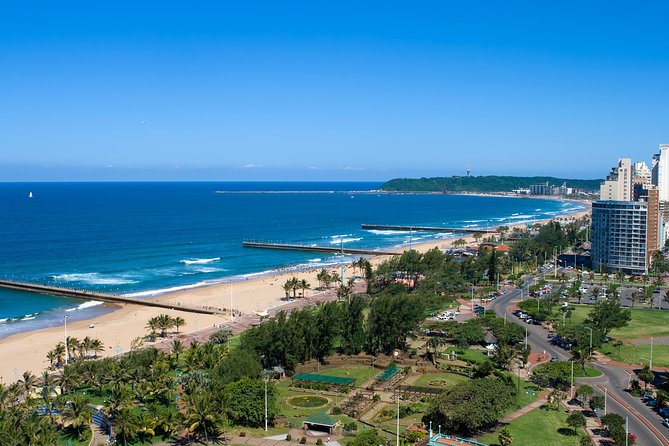
- The Golden Mile and Durban’s seafront
- City Hall and the stories behind the buildings
- Phansi Museum: Southern African objects with a story
- Durban Botanic Gardens, founded in 1849
- Warwick Triangle and Durban’s Indian influence
- Moses Mabhida Stadium and the optional cable car
- How much value do you get for $52.59?
- The guides make the difference
- Practical details before you go
- Who should book this Durban tour?
- Should you book it?
- FAQ
- How long does the Durban City Sightseeing Tour last?
- What time does the tour begin?
- Where does the tour start and end?
- Is hotel pickup included?
- Is the Phansi Museum open every day?
- Is admission to the Phansi Museum included?
- Is food included in the tour?
- Does the tour include the Moses Mabhida Stadium cable car?
- How many people can join the tour?
- Are car seats available for young children?
Key points to know before booking
- See Durban through several cultures: The tour explains Zulu, colonial, and Indian influences instead of treating the city as just a beachfront stop.
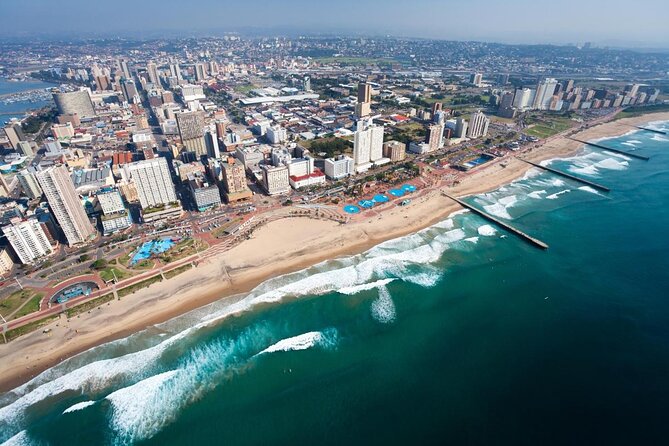
- Ride along the Golden Mile: This popular promenade gives you a quick look at Durban’s seaside life, hotels, restaurants, shops, and everyday visitors.
- Phansi Museum adds real depth: Its collection includes Zulu jewelry, beadwork, ceramics, headrests, clay pots, and other Southern African objects.
- Botanic Gardens date to 1849: You will see large trees from Africa, Asia, and the Americas, plus an orchid house.
- Warwick Triangle brings local flavor: The African and Indian market helps connect Durban’s past with its food and commerce.
- Keep extra money for add-ons: Museum admission, food, drinks, and the Moses Mabhida cable car are not included.
Durban in three hours: a useful first look
This is a good orientation tour for a first visit to Durban. In about three hours, you move from the oceanfront to the city center, then on to museums, gardens, markets, and stadium views. You will not have time for a slow, detailed visit at every stop, but you will get a strong sense of how the city fits together.
The tour starts at 9:00 a.m. with pickup from selected central Durban hotels. The stated meeting point is the Hilton Durban at 12-14 Walnut Road, and the tour returns to the starting point at the end. Pickup and drop-off are included, a welcome convenience if you do not want to arrange taxis between scattered sights.
The vehicle carries no more than eight people. That matters here. Durban’s story involves several communities and many layers, so a smaller group gives you a better chance to ask questions and hear the guide clearly. The minimum operating requirement is two people, so solo booking is possible only if the tour reaches that minimum.
More City Tours in Durban
- Durban: City Sightseeing and Walking Tour
★ 4.6 · 98 reviews - Durban: Top 10 City Sights and Walking Tour
★ 4.1 · 69 reviews - Durban City Sightseeing and Walking Tour
★ 4.5 · 59 reviews
The Golden Mile and Durban’s seafront
The first major stretch is Durban’s Golden Mile, the beachfront promenade that runs past hotels, restaurants, and shops. It is a practical introduction to the city because Durban’s public life is closely tied to the sea. You get a look at the broad shore, the resort side of town, and the people using the waterfront for very different reasons.
Keep your eyes open at the water’s edge. You might see traditional healers collecting seawater in bottles for medicinal use. You may also see Indian women in saris walking along the beach. These small details help you notice Durban as a lived-in city, not just a place built for holiday photos.
The promenade is more than scenery. It gives the guide a chance to explain how Durban’s Zulu roots, colonial development, and Indian population have shaped the city. The visit is brief, so do not expect a long beach walk or free time at the shops. Think of this part as a moving introduction, with the vehicle doing most of the work.
City Hall and the stories behind the buildings
The route passes Durban City Hall, where the guide adds stories about the building and its past. This is one of the points where a guide can make a short drive useful. A city hall may look like another grand civic building, but amusing local stories give it character and help you place Durban’s colonial-era development in context.
You will not get a long architectural tour here. The value comes from the explanation during the drive. That makes the guide important, and the strongest feedback about this tour focuses on the people leading it. Togo, described as a Zulu guide, was praised for combining information with a friendly manner. Leon and Paul were also singled out for making the day interesting and helping a first-time visitor understand Durban.
If you enjoy hearing the human side of a city, this part should suit you. If you want extended time inside historic buildings, the schedule may feel quick.
Phansi Museum: Southern African objects with a story
The Phansi Museum is the most distinctive cultural stop on the route. It holds one of the largest publicly accessible collections of Southern African artifacts and traditions. The collection includes beadwork, headrests, Zulu clay pots, jewelry, ceramics, and other objects connected to daily life and ceremony.
You spend about 30 minutes here, exploring with the guide. That is enough for a focused introduction, though not enough to examine every display at length. The museum admission is not included, so budget for that separately. It is also closed to visitors on weekends, a crucial point when choosing your date.
I like this stop because it gives substance to the broader discussion of Zulu culture. Instead of hearing only general facts while looking out of a vehicle window, you see physical objects made and used within Southern African traditions. The pieces can help you understand craft, status, ceremony, and domestic life in a more direct way.
The museum is likely to appeal most to people who enjoy cultural history and material objects. Families with young children may find the visit less engaging if they prefer active attractions, although the short duration keeps it manageable.
A few more tours worth putting side by side
- Durban: 30-Minute Harbor Boat Cruise
★ 4.7 · 665 reviews - Durban: 1-Hour Boat Cruise from Wilson’s Wharf
★ 4.7 · 496 reviews - Durban Point Waterfront: Luxury Canal Boat Cruise
★ 4.4 · 298 reviews - Durban: Pontoon Boat Harbor Cruise
★ 4.4 · 182 reviews
Durban Botanic Gardens, founded in 1849
The Botanic Gardens offer a change of pace after the city streets and museum displays. Founded in 1849, the gardens contain large trees from Africa, Asia, and the Americas. You also see a magnificent orchid house, which gives the visit a more focused horticultural feature.
The planned stop lasts about 20 minutes. That is enough for a pleasant look and a few photographs, but not enough for a full garden visit. If you love plants, you may wish you had more time to wander. Still, the short stop works well in a city orientation because it shows another side of Durban, one that is quieter and more spacious than the beachfront.
The gardens also reinforce the city’s global connections. The plant collection reflects movement between continents, much as Durban’s population reflects movement among Zulu communities, colonial settlers, and Indian immigrants. You do not need to be a serious gardener to appreciate the contrast between the trees, orchid house, and urban setting.
Comfortable shoes are sensible, even though the visit is short. The tour is not described as a long walking program, but you will get more from the gardens if you can walk comfortably for the available time.
Warwick Triangle and Durban’s Indian influence
A visit to the African and Indian market at Warwick Triangle brings the tour closer to everyday commerce. This is an important inclusion because Durban’s Indian influence is not presented only as a historical footnote. It appears in food, trade, family traditions, and the texture of the city.
The tour explains the arrival of Indian immigrants during the 19th century, when many came to South Africa as indentured servants. That history helps explain why Indian culture has such a strong place in Durban today. The food is one of the clearest examples.
Bunny chow is the dish most closely linked to this part of the tour. It is a famous South African meal with Indian roots, and the guide may arrange a tasting or finish the tour with a bunny chow meal. Food and drinks are not included unless specifically stated, so check what your booking covers and bring extra money if you want to sample it.
One guest praised ending the tour with bunny chow at the wharf. That detail gives you a useful expectation: the day can finish with a local meal rather than only a photograph stop. Since food is not included, ask the guide about the plan on the morning of the tour.
The market may be the most rewarding stop for people who want a sense of present-day Durban. It also requires an open mind. This is a working market, not a staged cultural show, and the schedule is short. Stay close to the group and listen to the guide’s advice.
Moses Mabhida Stadium and the optional cable car
The tour also includes the chance to ride the cable car to the top of Moses Mabhida Stadium. The ride is at your own expense, so it is not part of the basic price. If the cable car is operating and time allows, the view gives you a broad look over Durban and the coast.
This is an optional choice that suits people who want a strong final viewpoint. It may be less appealing if you are watching your spending or prefer to focus on the cultural stops. Since the advertised duration is only about three hours, confirm with the guide how much time is available before paying for the ride.
The stadium is an easy place to appreciate Durban’s scale. After seeing the beachfront, city center, market, museum, and gardens at street level, you get a chance to view the city from above. Just remember that this is an extra-cost decision, not an included feature.
How much value do you get for $52.59?
At $52.59 per person, the tour is priced as a guided city introduction rather than a simple sightseeing bus ride. You are paying for transport, hotel pickup and drop-off, a professional guide, and access to several parts of Durban that would be difficult to connect efficiently on your own in three hours.
The value is strongest if you are in Durban briefly, staying centrally, or want a useful first orientation before exploring independently. The small group limit of eight also helps justify the price. You get a more personal format than a large coach tour, with better conditions for questions and conversation.
The price does not cover museum admission, food, drinks, or the Moses Mabhida cable car. Those extras can raise the final cost, so plan your budget around the basic fee plus whatever you choose to add. If you skip the optional cable car and meal, the included transport and guide remain the main value.
A private taxi route might let you choose your own stops, but it would not necessarily provide the same historical explanation. This tour works best when you want context as well as transport.
The guides make the difference
The most praised part of this experience is the guiding. Wendy and Thompson were credited with making the tour memorable, while Leon and Paul were praised for creating an interesting introduction for a first visit. Togo received particular credit for being an informed, friendly Zulu guide and for finishing the day with bunny chow.
Those names matter because the itinerary covers several subjects that need careful explanation. A short stop at a museum or market can feel thin without a guide who connects it to Durban’s past and present. The available feedback also points to friendly, well-behaved, neat service, along with a willingness to help when one participant became ill.
Of course, individual guide assignments can vary. You should book this for the structure and subject matter, not with the assumption that a particular named guide will lead your departure.
Practical details before you go
The tour lasts approximately three hours and begins at 9:00 a.m. Pickup is offered from selected central Durban hotels, while the listed meeting point is the Hilton Durban. Confirm your pickup details after booking because the tour requires confirmation within 48 hours and remains subject to availability.
A minimum of two people is required for the outing to operate. The maximum group size is eight. Children up to age three must sit in a car seat, and car seats are subject to availability at booking. Parents may bring their own.
Most people can participate, but you should be ready for short visits and some walking at the gardens, museum, market, and other stops. If you become ill during the tour, tell the guide promptly. The operator follows South African government-approved tourism health and safety protocols. Any required COVID testing or quarantine costs are your responsibility, so travel insurance is sensible.
The cancellation rule is strict: the experience is non-refundable and cannot be changed for any reason. Only book once your date and plans are firm.
Who should book this Durban tour?
I would recommend it to first-time visitors, cruise or short-stay visitors, couples wanting a guided introduction, and anyone interested in how Zulu, colonial, and Indian influences meet in one city. It also suits people who value a small group and hotel transport more than long, leisurely visits at individual attractions.
It may not be right for you if you want a full day at the Botanic Gardens, an extended museum visit, or plenty of unplanned time at the beach and market. The schedule is compact, and some attractions are viewed from the vehicle or visited briefly.
Book on a weekday if the Phansi Museum is important to you. Bring money for admission, food, and the optional stadium cable car. If bunny chow interests you, ask early whether a meal stop is planned.
Should you book it?
Yes, if you want a friendly, well-organized introduction to Durban in half a day. The best features are the small group, hotel transport, cultural range, and guides who appear to take the city’s stories seriously. The Phansi Museum and Warwick Triangle also give the tour more substance than a standard drive past landmarks.
I would skip it only if you already know Durban well or prefer to explore at your own pace. For a first visit, $52.59 is reasonable value, provided you understand that admission, food, drinks, and the cable car are extra. Choose a weekday, keep the morning free, and you should finish with a clearer sense of what makes Durban distinct.
FAQ
How long does the Durban City Sightseeing Tour last?
The tour lasts approximately three hours.
What time does the tour begin?
The stated start time is 9:00 a.m.
Where does the tour start and end?
The listed meeting point is the Hilton Durban at 12-14 Walnut Road, Durban Central. The tour ends back at the meeting point.
Is hotel pickup included?
Yes. Pickup and drop-off are included from selected central Durban hotels.
Is the Phansi Museum open every day?
No. The Phansi Museum is closed to visitors on weekends.
Is admission to the Phansi Museum included?
No. Museum admission is not included in the tour price.
Is food included in the tour?
Food and drinks are not included unless specifically stated. Bunny chow may be available as part of the experience, but you should budget separately for food.
Does the tour include the Moses Mabhida Stadium cable car?
No. The cable car ride is available at your own expense.
How many people can join the tour?
The tour has a maximum of eight participants and requires at least two people to operate.
Are car seats available for young children?
Children up to age three must use a car seat. Car seats are subject to availability, and parents may bring their own.
Newest reviews from Durban
- Durban Shore Excursion: Valley of 1000 Hills and PheZulu Tour★ 5.0 · 5 reviews
- Zulu Cultural Experience: Zulu Village + Tribal Markets + Traditional Zulu Food★ 5.0 · 5 reviews
- From Durban: 2-Day Lesotho Guided Trip with Lodging & Meals★ 4.9 · 5 reviews
- Isandlwana and Rorke’s Drift Battlefields Tour★ 5.0 · 5 reviews
- From Durban: Oribi Gorge & Lake Eland Adventure Tour★ 5.0 · 5 reviews
- Hluhluwe Safari & Emdoneni Wild Cat Project Day Tour from Durban★ 5.0 · 6 reviews
- Full Day Isimangaliso Wetlands Park -Croc & Hippo &Game Fr Durban★ 4.5 · 6 reviews
- Drakensberg Kamberg Cave Art & Mandela Capture Site Day Tour★ 4.1 · 6 reviews
City Tours, compared.
Cape Town Hop-On Hop-Off City Tour with Optional Cruise
Read our review →
Johannesburg Hop-On Hop-Off City Tour with Soweto Option
Read our review →
Jo’berg in 1 Day: Soweto, Apartheid Museum & City Tour
Read our review →
Cape Town City Pass: Save Over 50% on 80+ Top Attractions
Read our review →
Soweto: Hop-On Hop-Off Bus, City Tour and Apartheid Museum
Read our review →

Browse the lists this tour appears in