
Reviewed · TOWNSHIP TOURS
Cape Town: Guided Township Tour with Hotel Pickup
History here is personal. This full-day Cape Town tour links District Six, Langa, Bonteheuwel, and Gugulethu with a visit to Robben Island. I like the local walking guide in Langa, where you hear about township life from someone connected to the community. I also like the clear historical arc, from forced removals to Mandela’s prison cell.
The main catch is cost and planning. The advertised $54 covers hotel pickup, transport, and the township portion, but Robben Island tickets are extra at R600 per adult and R310 per child, subject to weather and availability. You also make your own way back from the waterfront.
In This Review
- Key points to know before booking
- Why this Cape Town tour matters
- Starting with District Six and forced removal
- Langa, Cape Town’s oldest township
- Bonteheuwel and the mechanics of Apartheid
- Gugulethu and Cape Town after Apartheid
- A short break at the V&A Waterfront
- Robben Island and Mandela’s prison cell
- Timing, transport, and the return trip
- Is $54 good value?
- Who should book this experience?
- Final verdict: book it with one important condition
- FAQ
- Is Robben Island included in the tour price?
- Who books the Robben Island ticket?
- What Robben Island departure time should I choose?
- Can the Robben Island visit be canceled?
- What happens if Robben Island is canceled?
- Where does the tour start?
- Where does the tour end?
- Is lunch included?
- What identification should I bring?
- Is the tour wheelchair accessible?
Key points to know before booking
- District Six sets the tone: You begin at the site where residents were forcibly removed under the Group Areas Act of 1950.
- Langa is the heart of the day: A local guide leads a walking visit through Cape Town’s oldest township.
- Bonteheuwel shows forced relocation in practice: You learn how District Six residents classified as colored were moved there.
- Gugulethu brings the story into the present: The guide explains how life and community structures have changed since Apartheid ended.
- Robben Island is not included: Reserve the ferry and prison tour yourself, preferably for the 1 p.m. or 3 p.m. departure.
- The tour ends at the V&A Waterfront: Hotel pickup is included, but return transport is not.
Why this Cape Town tour matters
Cape Town’s postcard views tell only part of the story. This tour takes you beyond the waterfront and mountain viewpoints to places shaped by Apartheid’s forced separation of people.
I value that approach because the townships are not treated as a quick drive past poor neighborhoods. The guide explains the laws, the removals, and the social effects that still shape daily life. You hear about the past, but you also learn how communities have developed since Apartheid ended.
The experience combines two very different kinds of history. The township visit focuses on living communities and present-day social conditions. Robben Island gives you a preserved site of political imprisonment, including Nelson Mandela’s cell. Together, they make the day more useful than either stop alone.
The tone is serious. You may see overcrowding and poverty, and some parts of the visit can feel uncomfortable. That is not a reason to avoid the tour, but you should arrive ready to listen rather than treat the townships as a sightseeing backdrop.
More Township Tours in Cape Town
- Half-Day Tour Through Cape Town’s Townships
★ 4.8 · 979 reviews - Cape Town: Nathi Langa Township Walking Tour
★ 4.9 · 493 reviews - Cape Town: Robben Island Ferry Ticket and Townships Tour
★ 4.5 · 400 reviews
Starting with District Six and forced removal
Pickup is available from the V&A Waterfront, Cape Town City Centre, Tamboerskloof, Sea Point, Camps Bay, and Gardens. The air-conditioned vehicle matters here, since you spend much of the day moving between districts and the waterfront.
The first major stop is District Six. You have about 30 minutes here, enough to understand why this site is central to Cape Town’s modern story.
Under the Group Areas Act of 1950, the government classified neighborhoods by race and forced residents out of areas designated for other groups. District Six was one of the most painful examples. Families were removed, homes were demolished, and residents were sent to townships farther from the city center.
This opening gives the rest of the day a clear purpose. When you later visit Langa and Bonteheuwel, you understand that these communities were not simply built as ordinary suburbs. Many were shaped by laws that controlled where people could live, work, and travel.
The stop is brief, so do not expect a long museum visit or an exhaustive historical lecture. Its value comes from providing the basic framework before you enter the townships themselves.
Langa, Cape Town’s oldest township
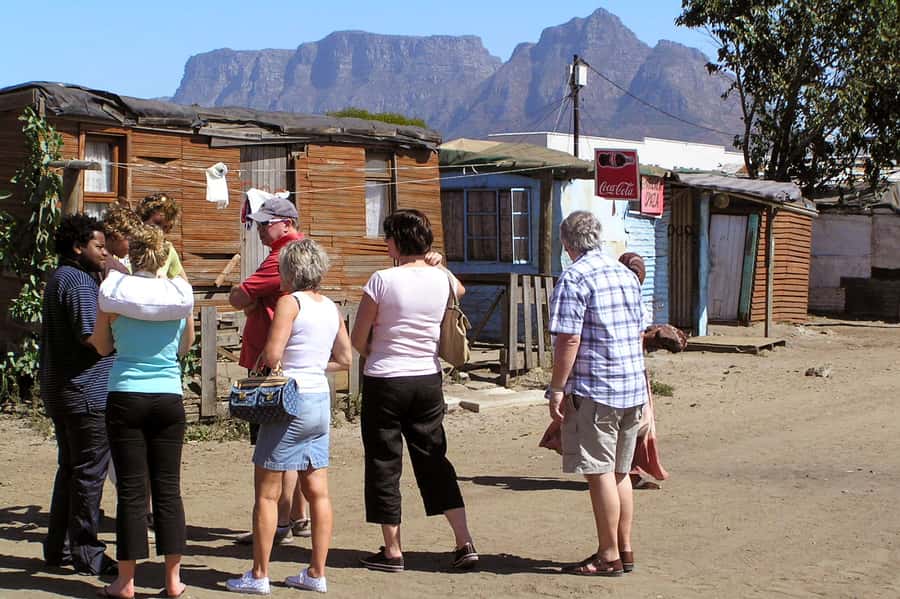
Langa is the most personal part of the tour. The guided walk lasts about an hour and is led by a local site guide. The guide explains township life, past and present, while showing you parts of the community on foot.
This is where the tour earns its reputation. Guides such as Godfrey, Nelson, Song, Seemon, and Simo have been praised for making the subject approachable and for sharing firsthand connections to township life. Exact guide assignments can change, but the local perspective is the feature to look for.
You may visit homes, a daycare center, or other community spaces when available. These details have made the walking portion especially meaningful for families and solo visitors. You are not just hearing about Apartheid regulations in the abstract. You are seeing how housing, family life, and local institutions fit into the story.
The guide also discusses the rules that shaped township communities. These included racial classification, restricted movement, and the separation of residential areas from the city’s economic center. You learn how those policies affected ordinary routines, not just political leaders.
The experience is often described as welcoming and safe, but it is important to behave respectfully. Ask before taking photographs, listen to your guide, and remember that Langa is a home for residents, not an open-air exhibit.
The walk is not presented as a polished attraction. That is part of its strength, but it also means conditions may feel basic. Wear comfortable shoes, carry your identification, and bring water. One useful improvement would be to have water available on the vehicle, since the day includes walking and several transfers.
Bonteheuwel and the mechanics of Apartheid

The stop at Bonteheuwel lasts around 30 minutes. It adds an important piece to the story because this township was developed for residents forcibly removed from District Six who were classified as colored.
That detail helps you see how Apartheid operated through official categories. It was not only a matter of separating black and white residents. The government also divided communities within the broader population and assigned people to specific residential areas.
Your guide explains the rules used in these townships and how they affected everyday life. This is a short stop, so think of it as a focused explanation rather than a full walking tour.
Bonteheuwel also prevents the day from becoming a single-location story. Langa and Gugulethu have their own identities and histories, while Bonteheuwel shows another result of state-planned relocation. The stops work best together.
A completely different kind of day out on the same trip:
- Wine Tour: Paarl, Franschhoek & Stellenbosch incl 3 wineries
★ 5.0 · 3,940 reviews - Cape Town: Hop-On Hop-Off Bus Tour with Optional Cruise
★ 4.8 · 3,929 reviews - Cape Town: Cape of Good Hope & Penguins Day Tour with Pickup
★ 4.7 · 3,362 reviews - Zipline Cape Town – From Foot of Table Mountain Reserve
★ 5.0 · 3,179 reviews
Gugulethu and Cape Town after Apartheid

The next half-hour is spent in Gugulethu, a township described as home to more than 300,000 residents. Here, the emphasis shifts toward how communities have changed since the fall of Apartheid.
The guide discusses social and economic conditions, along with the ways people have built lives in places originally shaped by segregation. You get a more current view than you would from a museum display alone.
This part is valuable because it avoids suggesting that Apartheid ended all inequality in one day. The tour connects past laws with present conditions, showing why housing, income, opportunity, and access to services remain important parts of Cape Town’s story.
At the same time, the visit is not meant to explain every issue facing Gugulethu. It offers an introduction, framed by the guide’s own experience and local knowledge. If you want a detailed study of modern South African economics, you will need other sources as well.
A short break at the V&A Waterfront
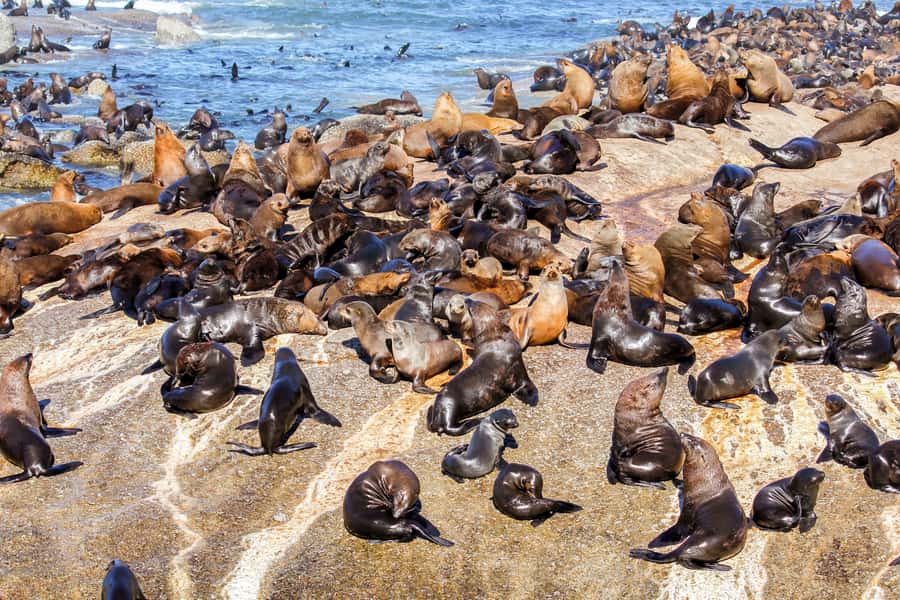
The group stops at the V&A Waterfront for lunch, with about 30 minutes scheduled. Lunch is not included, so budget for your own meal.
The waterfront is a practical meeting point with restaurants, shops, Table Mountain views, and the Nelson Mandela Gateway for Robben Island. It also provides a sharp contrast with the townships you have just visited.
Thirty minutes is not a leisurely lunch break. You may need to choose something quick, especially if you are catching an afternoon ferry. Keep an eye on the time and avoid wandering far from the departure area.
This is also where you need to manage the Robben Island arrangements. The township operator does not pre-book the ferry or prison tour. You must reserve your own ticket online or at the Nelson Mandela Gateway building, and the tour information advises choosing the 1 p.m. or 3 p.m. departure.
Robben Island and Mandela’s prison cell
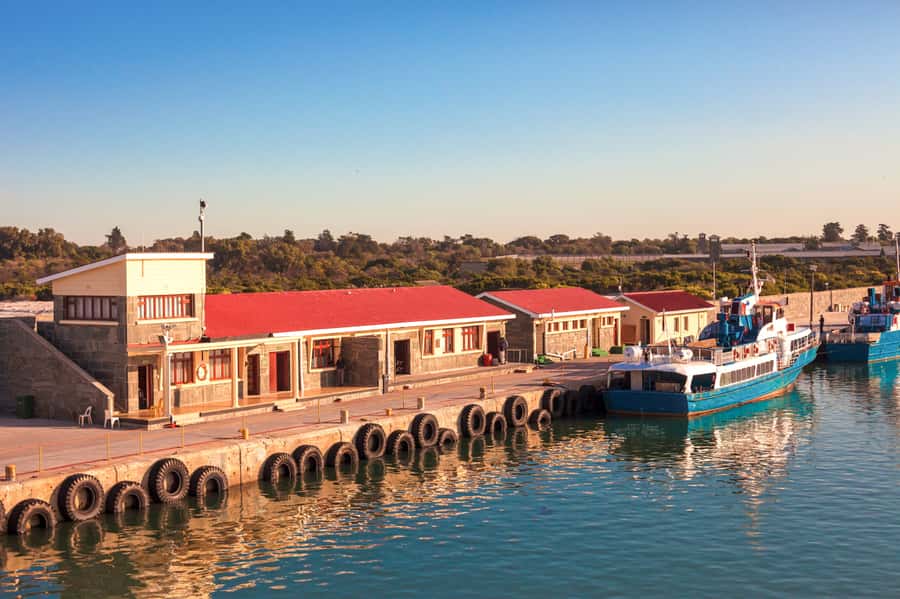
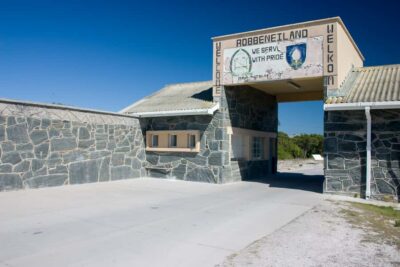
Robben Island takes about four hours, including the ferry and island tour. The ferry leaves from the waterfront and returns there after the visit.
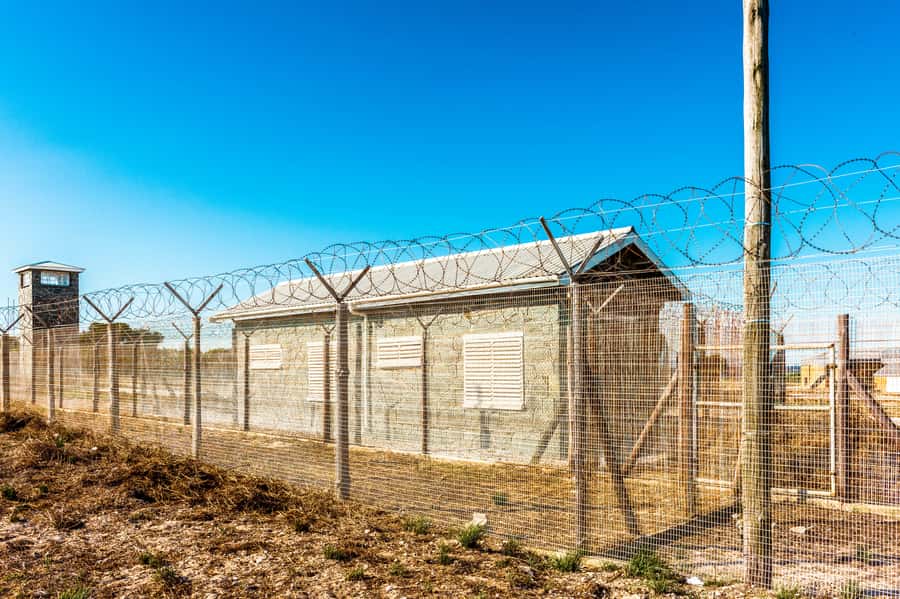
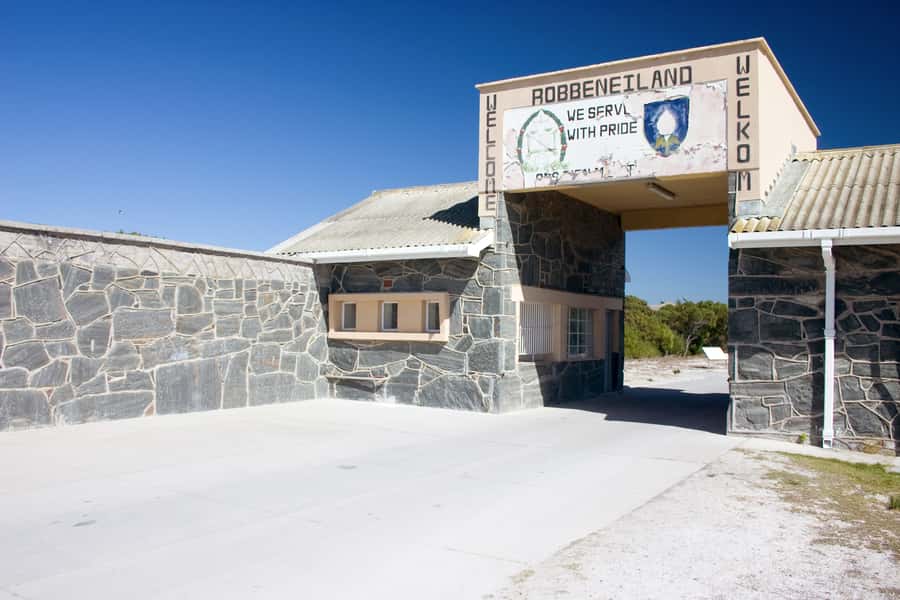
The island is closely associated with Nelson Mandela, who spent 18 of his 27 years in prison there. You visit the maximum-security prison and see Mandela’s cell as part of a guided tour.
The prison portion is often the emotional high point of the day. The township guide gives you context about Apartheid and its effects on communities. On Robben Island, you encounter the physical place where political prisoners were confined.
A former prisoner may lead the prison tour, as happened for several past departures, and that personal account can make the conditions easier to understand. Guides such as Sipoh have been praised for explaining prison life in a direct and compelling way.
Do not treat the ferry as guaranteed. Departures can be canceled because of strong wind, large waves, fog, or other weather conditions. Several past visitors had the Robben Island section canceled for this reason, while the township portion still went ahead. The operator has refunded the canceled Robben Island activity in such cases, but you should confirm the current refund process before booking.
Availability creates another risk. The tour provider does not hold the island tickets for you, and the ferry can sell out. If Robben Island is essential to your Cape Town plans, reserve the ferry directly as soon as your dates are fixed. A morning island visit may offer more backup options, but this package specifically advises the 1 p.m. or 3 p.m. afternoon departures, so check the timing carefully before committing.
Timing, transport, and the return trip

The published duration is eight hours. The schedule includes about 30 minutes at District Six, 30 minutes of driving, one hour in Langa, 30 minutes each in Bonteheuwel and Gugulethu, a 30-minute lunch break, and roughly four hours at Robben Island.
That makes for a full day with little spare time. The air-conditioned vehicle is useful during the long transfers, and hotel pickup removes the need to find an early meeting point.
Pickup instructions deserve extra care. One past booking had confusion over the Victoria and Alfred Hotel location and the map pin. Confirm the exact pickup address with the operator, especially if you are staying near the waterfront rather than at a clearly named hotel.
The tour ends at The Silo Hotel, not at your original pickup location. Return transport to your hotel is not included. From the waterfront, you will need to arrange your own taxi or other transport.
Large bags and luggage are not allowed, and you should bring a passport or other identification document. The provider requests passport or ID numbers for Robben Island booking. South African citizens provide an ID number and date of birth instead. Copies of a passport, birth certificate, or driver’s license are accepted, but carry the document you used for the booking.
The activity is listed as wheelchair accessible. Since the day includes a guided walking tour and a ferry and island visit, confirm the exact arrangements for your mobility needs before paying for the island ticket.
Is $54 good value?
At $54 per person, the base tour offers a useful amount of transport and guiding for a full day. You receive hotel pickup, an air-conditioned vehicle, a driver-guide, the District Six visit, and the guided Langa walk.
The price looks less attractive if you assume Robben Island is included. It is not. Add R600 per adult or R310 per child for the ferry and guided prison tour, then account for lunch and your own ride back to the hotel.
Even with those extras, the combination can be good value if you want both the townships and Robben Island in one day. You avoid arranging separate transport across several parts of Cape Town, and the guides provide a connecting story rather than isolated stops.
The value depends heavily on your priorities. If you mainly want a relaxed sightseeing day, the schedule may feel rushed and the subject matter too serious. If you want to understand how Apartheid affected real communities, the local guide and walking visit make the base price worthwhile.
The rating of 4.4 from 536 reviews suggests a strong overall response, but it also leaves room for occasional problems. Weather cancellations, pickup confusion, ferry availability, and the extra costs are the main issues to manage.
Who should book this experience?
I would recommend it to first-time visitors who want historical context beyond Cape Town’s central attractions. It suits adults, families with older children, and solo visitors who prefer a structured introduction to difficult subjects.
Families can find the township walk especially useful because local guides explain the past through homes, schools, and personal stories. Several visitors also found the tour comfortable as solo women, though you should still follow the guide’s advice and remain with the group.
The day is less suitable if you dislike walking, need a slow schedule, or want an intimate small-group format. The group size is not specified, so do not assume a private tour.
It is also not ideal for a tight itinerary. Robben Island may be canceled by weather, and the township tour itself fills most of a day. Leave room in your schedule rather than placing another major attraction immediately afterward.
Final verdict: book it with one important condition
Book this tour if you want a serious, human look at Cape Town’s Apartheid past and present-day township life. The Langa walk is the strongest part, thanks to local guides who explain the area through personal experience, while Robben Island adds a powerful historical site.
Book the Robben Island ticket yourself before the day, confirm the pickup point, bring identification, and remember that you must arrange your own ride home. If the ferry is canceled, the township portion can still make the day worthwhile, but do not pay for the package assuming the island visit is guaranteed.
FAQ
Is Robben Island included in the tour price?
No. The Robben Island ferry and guided tour are not included. The stated cost is R600 per adult and R310 per child, with discounts for South African citizens.
Who books the Robben Island ticket?
You must arrange the ticket yourself online or at the Nelson Mandela Gateway building at the V&A Waterfront. The tour provider does not pre-book it.
What Robben Island departure time should I choose?
The tour information advises booking the afternoon departure at 1 p.m. or 3 p.m. Check ferry availability before confirming your township tour.
Can the Robben Island visit be canceled?
Yes. Ferry tickets depend on weather and availability. Wind, large waves, or fog can cause cancellations.
What happens if Robben Island is canceled?
The township portion can still take place. The supplied tour information and past booking experiences indicate that the canceled Robben Island activity may be refunded, but confirm the current process with the provider.
Where does the tour start?
Pickup is available from hotels in the V&A Waterfront, Cape Town City Centre, Tamboerskloof, Sea Point, Camps Bay, and Gardens.
Where does the tour end?
The tour ends at The Silo Hotel. A return transfer to your hotel is not included.
Is lunch included?
No. The tour stops at the V&A Waterfront for lunch, but you pay for your own meal.
What identification should I bring?
Bring the passport or ID document used for the booking. A passport, birth certificate, or driver’s license is accepted, and copies are allowed. South African citizens provide an ID number and date of birth.
Is the tour wheelchair accessible?
The activity is listed as wheelchair accessible. Because it includes a walking tour and a ferry visit, confirm the specific arrangements with the provider before booking.
Newest reviews from Cape Town
- Explore Atlantis Sand Dunes with a 1hour 30mins sandboarding tour★ 5.0 · 5 reviews
- Transfer from Cape Town City Center to Cape Town Airport★ 5.0 · 5 reviews
- Pneuma private travel & tours, creating memories and friends never forgotten★ 5.0 · 5 reviews
- Cape Town Table Mountain and Peninsula Tour★ 5.0 · 5 reviews
- Private Transfer: CPT Airport to Cape Town in Luxury Van★ 4.0 · 5 reviews
- Cape Town Full Day Family Fun With Kids Private Tour★ 4.0 · 5 reviews
- Cape of Good Hope-Cape Point & Penguins from Cape Town★ 5.0 · 5 reviews
- Cape Town: Shark Cage Diving Tour (with Breakfast & Lunch)★ 4.8 · 5 reviews
Township Tours, compared.

Half Day Township Tour in Cape Town South Africa
Read our review →


Authentic 3–4 Hour Cultural Township Experience
Read our review →Browse the lists this tour appears in