
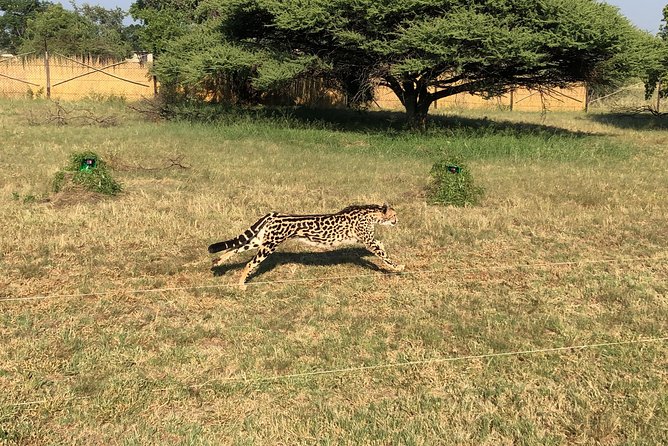
Reviewed · CHEETAH AND ELEPHANT ENCOUNTERS
Ann Van Dyk Cheetah Centre Tour from Johannesburg or Pretoria
Fast cats, serious conservation, and a long road. The Ann Van Dyk Cheetah Centre gives you a close look at cheetahs, African wild dogs, and other rescued animals while a guide explains their behavior and future in the wild. I especially like the choice between a weekend cheetah run and a weekday cheetah interaction, plus the ease of hotel pickup from Johannesburg or Pretoria. The main drawback is the drive, which can take about two hours each way from Johannesburg, making this a longer outing than the advertised three-hour centre visit may suggest.
I also like that the entry fees, bottled water, transport, and activities are included. You do not need to rent a car or work out a route through unfamiliar suburbs and highways. The price, about $225.67 per person, is not low, but it can make sense if you value a private transfer, a small group capped at 15 people, and a conservation-focused visit.
The centre is not a traditional open safari. Some animals live in managed enclosures, and the experience can feel closer to a wildlife sanctuary than a national park. That distinction matters, especially if you want animals roaming across a huge open reserve.
In This Review
- Key points to know before you book
- Why the Ann Van Dyk Centre is worth your time
- The drive from Johannesburg or Pretoria
- What happens at the centre
- Choosing the weekend cheetah run
- What to expect on a weekday
- The African wild dogs deserve equal billing
- The rescued animals and the zoo question
- Is the $225.67 price good value?
- Who should book this experience?
- Practical tips for making the day better
- Should you book the Ann Van Dyk Cheetah Centre tour?
- FAQ
- Where is the Ann Van Dyk Cheetah Centre tour based?
- How long does the tour last?
- Is hotel pickup included?
- Does the tour include entrance fees?
- Is lunch included?
- Can I see a cheetah run?
- Are African wild dogs part of the visit?
- What is the minimum age for children?
- What is the cancellation policy?
Key points to know before you book
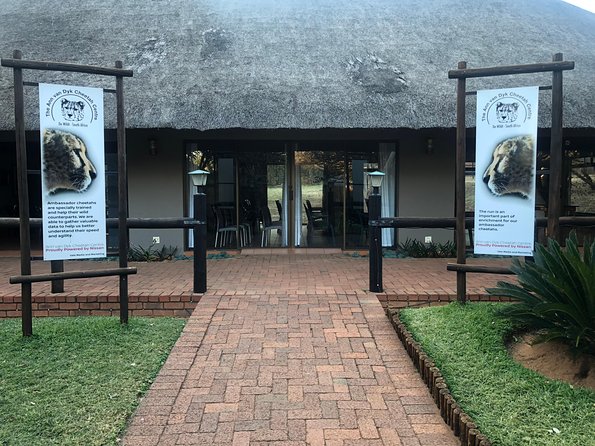
- Weekend visits include a cheetah run: This is the best choice if seeing the animal’s speed is your top priority.
- Weekday visits offer a cheetah interaction: You can see the animals in their spacious enclosure rather than watching the run.
- African wild dogs are a major attraction: The centre supports wild dog breeding and larger rewilding work, and feeding time may include the dogs following the safari vehicle.
- The drive takes planning: From Johannesburg, the journey can be about two hours each way, so allow more than the centre visit alone.
- The guide adds real value: Talks cover cheetah biology, behavior, conservation status, and the work behind breeding and release programmes.
- Age and height rules apply: Children must be with an adult, the minimum age is 7, and the minimum height is 1.2 metres.
Why the Ann Van Dyk Centre is worth your time
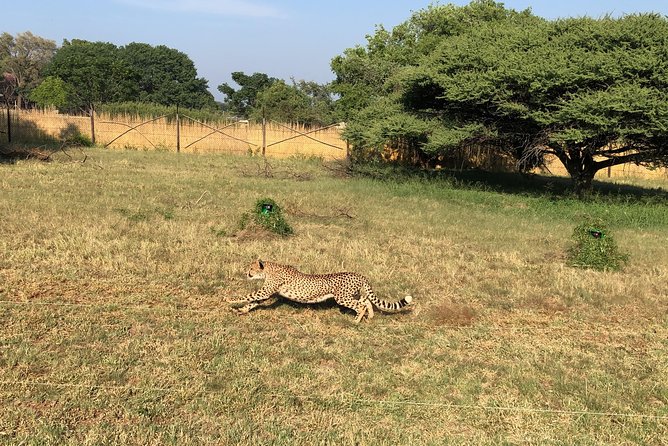
The centre was founded in 1971, with cheetah breeding as its original purpose. Its work now reaches beyond cheetahs. Programmes support African wild dogs and other species, while rescued animals that cannot return safely to the wild are cared for on site.
That conservation purpose gives the visit more weight than a simple animal display. You are not only looking at a beautiful cat behind a fence. You are learning about breeding, genetic diversity, rewilding, and the difficult choices involved in returning animals to nature.
One especially useful point is that not every animal at the centre can be released. Some were injured, poorly treated, or otherwise left unable to survive in the wild. For those animals, a protected home is safer than an ambitious release attempt. This helps explain why the centre includes animals that may appear to live in zoo-like settings.
The setting also helps. The centre lies beneath the Magaliesberg Mountains, giving the drive and the visit a scenic backdrop. It is not the wide-open setting of Pilanesberg or Kruger, but the natural surroundings make the centre feel less like an urban attraction.
More cheetah and elephant encounters:
- Ann van Dyk Cheetah Centre
★ 4.5 · 15 reviews - Elephant Sanctuary Tour from Johannesburg
★ 5.0 · 14 reviews - Ann Van Dyk Cheetah Centre Tour from Johannesburg or Pretoria
★ 5.0 · 8 reviews
The drive from Johannesburg or Pretoria
Pickup and return transport are provided from hotels in Johannesburg or Pretoria, and port pickup is also included. This is a major practical advantage because the centre is outside the city and a rental car would add cost, navigation, and driving responsibility to the day.
From Johannesburg, the road trip may take around two hours each way. Traffic can affect the timing, especially on Johannesburg freeways. One guide, Francois, was praised for using back roads to keep the trip moving when traffic built up. That sort of local route knowledge can make a real difference.
Pretoria is the more convenient base for this outing. The centre is closer to Pretoria than to Johannesburg, and Pretoria also puts you nearer to other attractions in the same general direction, including the Elephant Sanctuary and Pilanesberg Game Reserve. If you are choosing a hotel mainly for day trips, that location can save road time.
The tour includes bottled water, which is a small but useful touch. Lunch and other food are not included, so eat before departure or make your own plan for food around the schedule. The supplied details do not specify a meal stop, so do not count on lunch being part of the outing.
What happens at the centre
The main visit is a guided tour of the centre’s breeding, rescue, and other animal programmes. Your guide explains cheetah biology, behavior, and conservation status while taking you around the facility.
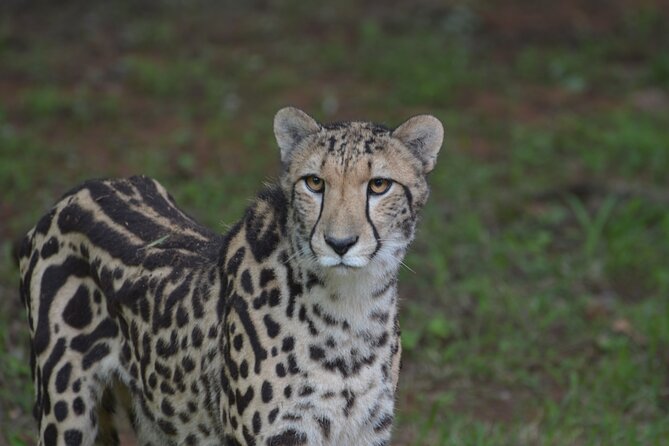
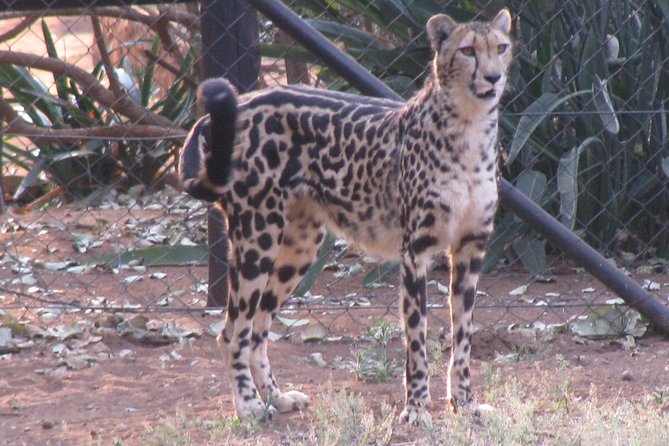
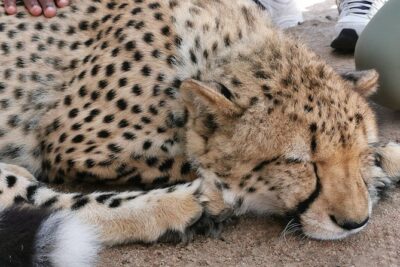
The focus is naturally on cheetahs. You may see standard cheetahs as well as the striking king cheetah, whose unusual coat pattern makes it a favorite for photographs. The centre’s work also includes breeding animals for genetic diversity and supporting efforts to return cheetahs to the wild.
One important figure associated with the centre’s conservation work is more than 800 cheetahs reintroduced into the wild. That number helps you understand why the breeding programme matters. A successful conservation centre is not simply collecting animals. Its goal is to help maintain a viable wild population.
The visit also includes African wild dogs, sometimes called African painted dogs. These animals are among the most memorable parts of the experience. They are social, fast, and very different from cheetahs. If feeding takes place from a safari vehicle, the dogs may follow and hunt the vehicle, giving you a lively sense of their speed and pack behavior.
Other animals at the centre can include brown hyena, caracal, serval, African wild cat, vultures, large bird species, antelope, wildebeest, meerkats, and ostriches. The exact mix can change as animals are added or moved through the centre’s programmes.
This variety is useful if you want more than a single-species visit. It also creates the main point of debate. The cheetah and wild dog work feels closely tied to rewilding and breeding. Some of the other animals are permanent residents because they cannot return to nature, so their enclosures may feel more like a sanctuary or zoo than a safari.
Choosing the weekend cheetah run
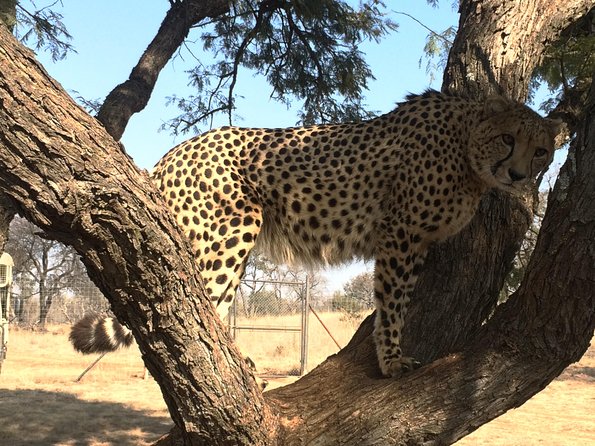
If you can choose your date, the weekend programme is the obvious pick for many people. It includes a cheetah run, allowing you to see the animal’s explosive speed in action.
A cheetah at rest is already an impressive sight, but a running demonstration gives you a better sense of what makes the species special. The moment is brief, so keep your camera ready and listen carefully to the guide’s instructions.
The run is also a good fit for children old enough to meet the age and height rules, provided they are comfortable with a structured animal programme. You are not wandering freely among large predators. This is a managed activity with staff controlling the setting.
The drawback is scheduling. If your visit falls on a weekday, you should not expect the run. The weekday programme includes a cheetah interaction in the animals’ spacious enclosure instead. That offers a different kind of experience, with more time to observe behavior at close range, but it does not provide the same burst of action.
A few more tours worth putting side by side
- From Johannesburg: Pilanesberg Nature Reserve Game Safari
★ 4.8 · 1,327 reviews - Johannesburg: Hop-On Hop-Off Bus with Optional Soweto Tour
★ 4.6 · 985 reviews - Soweto /Johannesburg and Apartheid Museum Guided Full Day Tour
★ 5.0 · 932 reviews - Johannesburg Hop-On Hop-Off City Tour with Soweto Option
★ 4.5 · 768 reviews
What to expect on a weekday
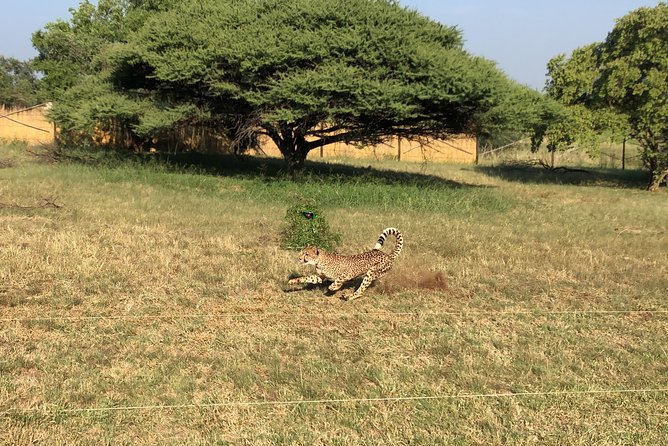
A weekday visit includes a cheetah interaction rather than the weekend run. This can suit you if you prefer a slower look at the animals and more time to listen to the guide.
The interaction takes place in a spacious enclosure, according to the tour details. That wording is important. This is not a claim that you will pet a cheetah or walk freely with one. The experience is designed around seeing the animals in their managed space while staff handle the activity.
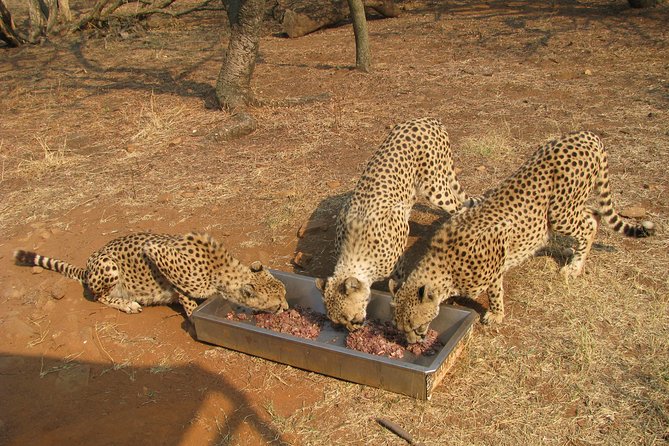
Guides at the centre have been praised for combining clear facts with warm explanations. Nicole, for example, was described as especially good at making animal behavior easy to understand, while Wilson was praised for the calm authority he showed during feeding. Those personal touches can turn a short visit into something you remember.
You should also expect photography opportunities. The animals are close enough for strong pictures, though light, enclosure design, and animal movement will affect the result. A phone can work well, but keep your attention on the guide and the animals rather than spending the entire visit behind a screen.
The African wild dogs deserve equal billing
Many people book this outing for cheetahs and leave talking just as much about the wild dogs. That is one of the centre’s strengths.
African wild dogs are not simply an extra animal on the route. The centre supports breeding and larger rewilding programmes for them, giving the visit a broader conservation focus. Their social behavior also makes them fascinating to watch.
During feeding, the dogs may follow the safari vehicle and appear to chase it. This creates a more active experience than a quiet enclosure viewing. You get a practical sense of how fast and coordinated they are, though the activity remains controlled by the staff.
If wild dogs are high on your list, ask about the feeding portion when you book or before the tour begins. The details provided do not promise that every departure includes the same feeding sequence, so it is best not to treat it as guaranteed.
The rescued animals and the zoo question
A fair review needs to address the centre’s mixed character. Some people may feel that animals other than cheetahs are kept in zoo-like conditions. That criticism comes from the fact that the centre is not a fully open reserve, and the animals are viewed in managed habitats.
There is also an important reason for this arrangement. The centre houses rescued animals that cannot be released successfully. An injured or badly treated animal may lack the skills, health, or temperament needed to survive. Releasing it could put the animal at greater risk.
That does not mean every visitor will love every enclosure. If you want an entirely wild setting, choose a game reserve instead. If you want to understand how rescue, captive breeding, and reintroduction work, the centre offers a more focused lesson.
I would approach the experience with the right expectation: this is a conservation centre with some safari-style elements, not a full safari drive across unfenced wilderness.
Is the $225.67 price good value?
At about $225.67 per person, this is a costly half-day outing. The price is easier to justify when you use the included services: hotel or port pickup and drop-off, entrance fees, activities, bottled water, taxes, and a guide.
Transport is the biggest value item. Getting from Johannesburg to the centre on your own would require a rental car, fuel, navigation, and a willingness to drive a long route. With this tour, you can sit back and let the driver handle it.
The small maximum group size of 15 also helps. The actual group may be smaller, and some departures have effectively felt close to private, with a couple, guides, a driver, and the pickup representative. Still, you should not assume a private tour unless your booking specifically says so.
The price is less attractive if you are already staying near the centre, have your own car, or plan to visit several wildlife attractions in one day. In that case, a standard entry option may offer better value. But for a first South African wildlife outing from Johannesburg or Pretoria, the convenience and conservation focus can make the cost reasonable.
Who should book this experience?
I would recommend it most strongly to:
- First-time visitors who want a wildlife outing without arranging a car
- Cheetah enthusiasts and photographers
- Families with children aged 7 or older who meet the 1.2 metre height minimum
- People interested in breeding and reintroduction programmes
- Anyone hoping to see African wild dogs
- Visitors staying in Pretoria who want an easy day trip toward the Magaliesberg area
It may be less suitable if you want a full-day safari with large herds roaming across open plains. It is also not ideal if you dislike long drives or prefer to spend most of your time in Johannesburg itself.
The centre works best as a focused wildlife day. It gives you close views, strong guide commentary, and a chance to support work aimed at keeping threatened species alive in the wild.
Practical tips for making the day better
Choose a weekend if the cheetah run is your priority. Choose a weekday if you prefer the cheetah enclosure interaction and a calmer programme.
Consider staying in Pretoria if your schedule includes this centre, the Elephant Sanctuary, or Pilanesberg. The location may reduce driving compared with a Johannesburg base.
Bring a camera, sun protection, and comfortable clothing. Bottled water is supplied, but lunch and other drinks are not. Since the road trip can be long, have food before pickup or confirm your day’s meal plan.
Children must be accompanied by an adult. The minimum age is 7, and the minimum height is 1.2 metres. Most people can participate, but the height rule is firm enough that you should check it before paying.
You can cancel for a full refund up to 24 hours before the start time. Changes or cancellations inside that 24-hour window are not accepted for a refund. Booking confirmation normally arrives at once, although bookings made within two days of departure may take up to 48 hours and depend on availability.
Should you book the Ann Van Dyk Cheetah Centre tour?
Book it if you want close encounters with cheetahs, a strong chance of seeing African wild dogs, and a guide-led look at conservation work. The weekend run is the most exciting option, while weekday interactions offer a more measured visit.
Skip it if your main goal is a classic open-country safari or if the long journey from Johannesburg sounds tiring. The centre’s managed setting will not suit everyone, but its breeding, rescue, and reintroduction work gives the visit a clear purpose.
For me, the best reason to go is the combination of cheetah conservation and wild dog programmes. Add dependable pickup, included entry fees, and guides such as Nicole, Wilson, and Francois, and this becomes a worthwhile choice for a first wildlife day near Johannesburg or Pretoria.
FAQ
Where is the Ann Van Dyk Cheetah Centre tour based?
The experience is based at the Ann Van Dyk Cheetah Centre near Johannesburg, beneath the Magaliesberg Mountains. Pickup is offered from hotels in Johannesburg or Pretoria.
How long does the tour last?
The tour is listed as approximately three hours. The drive from Johannesburg can take about two hours each way, so you should allow substantially more time for the complete outing.
Is hotel pickup included?
Yes. Hotel pickup and drop-off are included in Johannesburg or Pretoria. Port pickup and drop-off are also listed as included.
Does the tour include entrance fees?
Yes. All entrance fees, activities, taxes, and other listed fees are included.
Is lunch included?
No. Lunch, food, and drinks are not included. Bottled water is provided.
Can I see a cheetah run?
Yes, if you choose a weekend visit. Weekend programmes include a cheetah run. Weekday visits include a cheetah interaction in the animals’ spacious enclosure instead.
Are African wild dogs part of the visit?
Yes. The guided visit includes the centre’s cheetah and wild dog breeding and other programmes. African wild dogs are among the animals you may see.
What is the minimum age for children?
The minimum age is 7 years. Children must be accompanied by an adult, and there is also a minimum height requirement of 1.2 metres.
What is the cancellation policy?
You can cancel up to 24 hours before the experience start time for a full refund. Cancellations or changes made less than 24 hours before the start time are not accepted for a refund.
Newest reviews from Johannesburg
- Cradle of Humankind and Maropeng Day Tour from Johannesburg★ 4.0 · 5 reviews
- Explore Soweto 8 Hour Tour with Lunch and Museum Visit★ 5.0 · 5 reviews
- 3 Day All Incl. Private Kruger Park Safari Incl. Transfer From Johannesburg★ 5.0 · 5 reviews
- Harties cableway Tour★ 4.5 · 5 reviews
- Pretoria Historical Tour★ 4.0 · 5 reviews
- Constitutional Hill and Soweto 5 hours tour.★ 5.0 · 5 reviews
- 5 Day Kruger National Park and Panorama Route Safari★ 4.5 · 5 reviews
- Luxury Car Johannesburg Airport Private Transfer★ 5.0 · 5 reviews
Cheetah and Elephant Encounters, compared.
Cheetah Outreach Tour Somerset West, Gordon’s Bay and Strand Beaches
Read our review →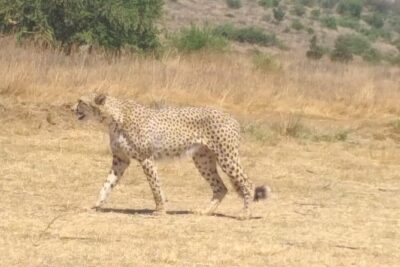
Elephant Sanctuary Tour from Johannesburg or Pretoria
Read our review →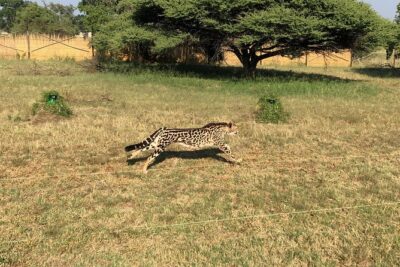
Ann Van Dyk Cheetah Centre Tour from Johannesburg or Pretoria
Read our review →
Cape Town Giraffe House, Cheetah Encounter and Wine Tasting Tour
Read our review →
Browse the lists this tour appears in