
Reviewed · MUSEUMS
The Heart of Cape Town Museum Admission Ticket
Medical history becomes very real here. The Heart of Cape Town Museum takes you into the original operating rooms used for the world’s first successful heart transplant in 1967, with restored equipment, photographs, film, and a guided account of the operation. I like the authentic operating rooms and the way the tour connects medical progress with the personal stories of donor Denise Darvall and surgeon Christiaan Barnard. I also like that a trained guide is included rather than offered as an expensive extra.
The main drawback is that this is a specialist museum, not a broad Cape Town attraction. Young children may find the subject matter difficult, and the booking information has had some confusing changes in the past, so I would confirm the current tour time and opening status before setting out.
In This Review
- Key points to know before you go
- Why this small museum matters in Cape Town
- Entering the restored operating rooms
- The guided story of Denise Darvall and Christiaan Barnard
- Exhibits, film, and time to explore alone
- How much value do you get for $17.34?
- Timing, booking, and the small-group format
- Who will enjoy this museum most?
- Practical advice for a better visit
- Should you book the Heart of Cape Town Museum?
- FAQ
- How long does the Heart of Cape Town Museum visit last?
- What is included in the admission price?
- Does the museum offer guided tours?
- What are the scheduled tour times?
- Can children visit the museum?
- Is the museum suitable for service animals?
- Can I cancel for a refund?
Key points to know before you go
- The original operating rooms remain the star attraction: They are restored and arranged to show the setting of the 1967 operation.
- The guide adds real value: A certified guide explains the events with silicone models and short reenactments.
- The visit lasts about 90 minutes to two hours: The guided portion is roughly an hour and a half, with extra time available for the exhibits.
- The museum focuses on people as well as medicine: You learn about Denise Darvall, Christiaan Barnard, and the events leading up to the transplant.
- The group is kept small: The maximum group size is 15 people, which should make the explanation easier to follow.
- Check the schedule carefully: Guided tours are listed at 9am, 11am, 1pm, and 3pm, with bookings essential.
Why this small museum matters in Cape Town
Cape Town has no shortage of scenic viewpoints, historic neighborhoods, and major sightseeing stops. This museum offers something different: a close look at one event that changed modern medicine.
On December 3, 1967, surgeon Christiaan Barnard and his team performed the first successful human heart transplant at Groote Schuur Hospital in Cape Town. The museum is located at the hospital and preserves the operating rooms connected with that event. You are not simply looking at a display about an operation. You are standing in the setting where the operation took place.
That distinction gives the visit its force. Medical displays can feel dry when reduced to dates and equipment. Here, the rooms provide a physical sense of the pressure and uncertainty surrounding the procedure. The museum also sets the transplant within a wider story, showing the developments that made it possible.
I found the focus more thoughtful than a simple celebration of Barnard. The displays cover his fame and the attention that followed, including the less restrained side of his celebrity. That balance matters. It presents him as an important surgeon while still acknowledging the personal and public consequences of becoming famous almost overnight.
More Museums in Cape Town
- Museum of Contemporary African Art: Fast-Track Zeitz MOCAA
★ 4.4 · 204 reviews - Cape Town: Private Guided Tour of Cape Town Diamond Museum
★ 4.7 · 156 reviews - ROBBEN ISLAND MUSEUM TOUR, WITH OPTIONAL LAST MINUTE TICKETS
★ 3.4 · 85 reviews
Entering the restored operating rooms
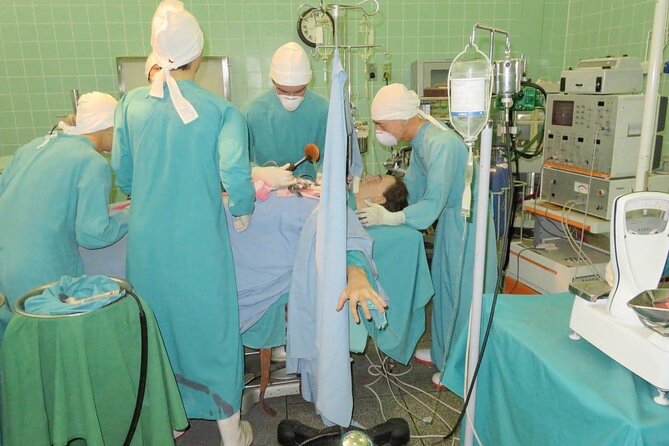
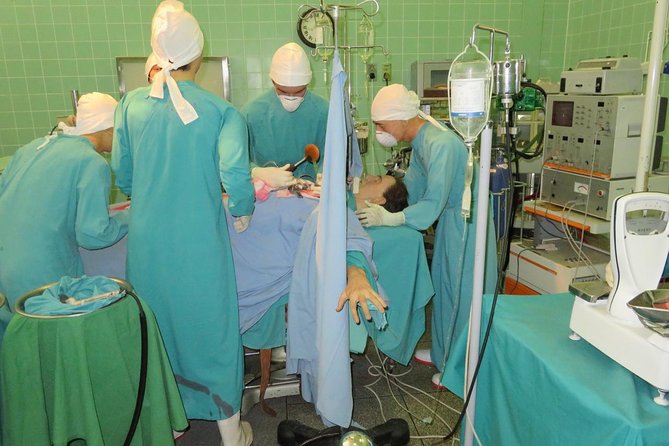
The original operating rooms are the emotional center of the visit. They have been restored and arranged as they were on the day of the transplant, giving you a visual connection to the operation that photographs alone cannot provide.
You can expect the guide to move through the room while explaining what happened and why the operation was so important. Silicone models help explain the medical process, and the guide reenacts key moments. These demonstrations are designed to make a complicated event easier to understand, even if you have no medical background.
The effect is more dramatic than graphic. The museum is dealing with a serious subject, but the emphasis is on medical history, teamwork, and human courage. Still, the subject involves death, organ donation, and major surgery. That is why the museum advises against bringing pre-school children and very young youngsters.
The restored rooms are not a substitute for a modern science center with interactive exhibits at every turn. If you want hands-on technology or a large collection of medical artifacts, this may feel limited. If you want a direct connection to a landmark event, the rooms deliver something much stronger.
The guided story of Denise Darvall and Christiaan Barnard
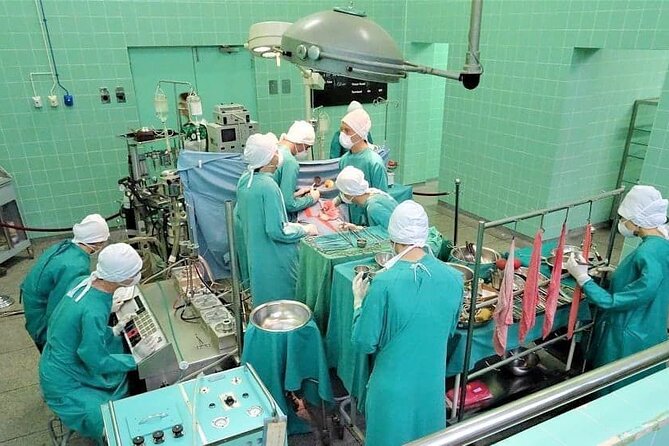
The guide is central to the experience. The tour is not merely a walk through rooms with labels on the wall. A trained and certified guide describes the events of the day and helps place the transplant in its human setting.
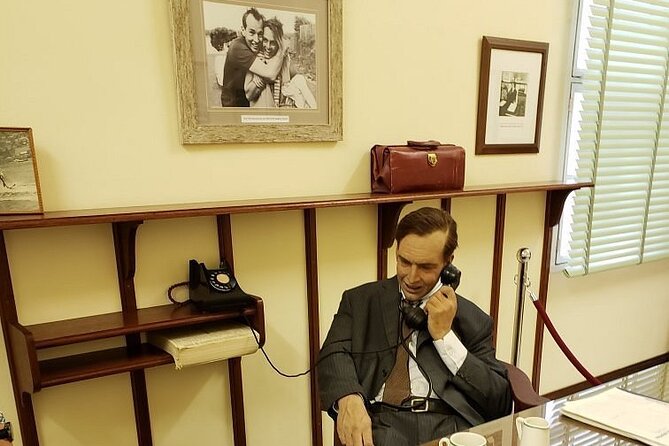
You learn about Denise Darvall, the donor, as well as Barnard and the surgical team. This is important because the operation can otherwise be told only as a story of scientific achievement. Including Darvall keeps the human cost and generosity of organ donation in view.
The guide also explains the events that led to the transplant. That background helps you understand that the operation did not appear from nowhere. It came after years of medical development, testing, debate, and preparation.
A strong guide can make a major difference here. The most positive comments about the experience praise the guide’s clear explanations, warm manner, and ability to make the story memorable. One guide was described as both well educated and entertaining, while another was praised for bringing passion and humor to the presentation.
English is used for the tour, and one visitor who was not a native English speaker found parts of the explanation difficult to follow. If English is not your first language, you may want to allow extra time to read the displays after the guided portion. The photographs, documents, film, and models give you several ways to understand the story beyond spoken commentary.
Exhibits, film, and time to explore alone
The visit includes more than the operating rooms. A timeline traces the steps leading to the transplant, while photographs and documents add detail about the people and medical work involved.
A film is also part of the museum experience. It covers the development of the transplant and gives you another way to follow the story. The combination of film, written material, and the guide works well because each format does a different job.
The guided tour lasts about an hour and a half. Afterward, you can spend more time looking through the displays on your own. I would not rush away when the guide finishes. The first pass gives you the main story, but the documents and photographs are easier to appreciate once you know the basic sequence of events.
The tour information gives an approximate duration of 90 minutes, while additional details describe the full experience as roughly two hours. The difference probably reflects time spent viewing the exhibits before or after the formal tour. Plan for around two hours if you want to take your time.
A completely different kind of day out on the same trip:
- Wine Tour: Paarl, Franschhoek & Stellenbosch incl 3 wineries
★ 5.0 · 3,940 reviews - Cape Town: Hop-On Hop-Off Bus Tour with Optional Cruise
★ 4.8 · 3,929 reviews - Cape Town: Cape of Good Hope & Penguins Day Tour with Pickup
★ 4.7 · 3,362 reviews - Zipline Cape Town – From Foot of Table Mountain Reserve
★ 5.0 · 3,179 reviews
How much value do you get for $17.34?
The listed price is $17.34 per person. That is not the cheapest short museum visit, especially when you compare it with Cape Town attractions that offer several hours of sightseeing. The value depends on your interest in medicine and on whether the guided explanation is running.
For the price, you receive museum admission and a guided tour. The guide is included, not added as a separate charge. That improves the value because the original operating rooms make more sense when someone explains what happened there.
The experience also has a clear point of difference. You are not paying for a generic collection of medical objects. You are paying to see a specific place tied to a major event in medical history, then hear the story explained in that setting.
I would call the price fair for visitors with a real interest in medicine, surgery, organ donation, or twentieth-century history. It may feel expensive if you are choosing attractions at random or if you expect a large museum with many galleries.
The museum itself has also had price changes. One past admission price was listed as 350 South African rand for foreign visitors, with the increase criticized as costly. Since prices can change, use the current booking price as your guide rather than relying on an older printed figure.
Timing, booking, and the small-group format
The museum is described as accepting visits during opening hours, but guided tours are listed at 9am, 11am, 1pm, and 3pm. Bookings are essential, so do not treat this as a place where you can always walk in and expect immediate entry.
The mobile ticket is useful because you can keep confirmation on your phone. Advance booking is also intended to help you avoid the ticket line and secure entry.
There is one practical warning. Past booking information produced conflicting experiences, including cases in which people arrived when the museum was not operating. The museum has also had a period when tours were briefly closed. Because of that history, I would contact the museum before traveling there, especially if your visit depends on one specific tour time.
The listed telephone number is +27 21 404 1967. Confirm the opening status, the day’s guided tour times, and whether your booking has been received. This extra check takes only a moment and could save a wasted trip.
The maximum group size is 15 people. That is a helpful limit for a room-based museum. You should be close enough to hear the explanation and see the models without feeling lost in a crowd.
Who will enjoy this museum most?
I would recommend the museum first to adults with an interest in medicine, surgery, science, nursing, or medical ethics. It also suits anyone who wants a less conventional Cape Town sight, one that gives you a clearer sense of the city’s role in international medical history.
The experience can work well for older children and teenagers who are comfortable with serious subjects. The museum specifically warns that pre-school children and young youngsters are not recommended. Children must be accompanied by an adult.
You may also find it meaningful if you or someone close to you has a connection with heart surgery or organ donation. One particularly personal visit became emotional because a surgeon involved in the first transplant had previously traveled to England to perform a lifesaving heart operation on the visitor’s husband. You cannot predict that kind of connection, but it shows how the museum can reach beyond textbook history.
I would be less likely to recommend it if you have only a short time in Cape Town and want the city’s major sights. The museum is focused, and the visit is mainly indoors. It will not give you Table Mountain views, street life, or a broad introduction to South African culture.
Practical advice for a better visit
Try to arrive for a guided tour rather than simply planning to browse. The explanation is included in the admission price, and the guide supplies the context that turns the operating rooms from preserved spaces into a coherent story.
Allow two hours, even though the formal tour is about 90 minutes. That gives you time for the film, photographs, documents, and timeline after the guide has finished.
Keep your phone ticket ready, but do not assume that a mobile confirmation removes the need to verify the booking. The museum has strict booking requirements, and past operating changes make a quick confirmation worthwhile.
If you are visiting with family, explain the subject beforehand. The museum deals with a donor, brain death, surgery, and a landmark transplant. Those are important subjects, but they are not ideal for every child.
If English is not your strongest language, listen closely during the tour, then use the written exhibits and film to reinforce the main points. You may not catch every spoken detail, particularly if the guide moves quickly.
Should you book the Heart of Cape Town Museum?
I would book this experience if you want a thoughtful, unusual museum visit and have an interest in how modern heart surgery developed. The restored operating rooms, human stories, and included guide make it more memorable than a standard display of medical objects.
I would skip it if you are looking for a fast, visually spectacular attraction or a general overview of Cape Town. This is a focused visit, and its subject matter is serious.
Before paying, confirm that the museum is operating on your chosen date and reserve one of the listed tour times. Cancellation is free up to 24 hours before the start time, but cancellations within 24 hours are not refunded. With that check in place, the museum offers a valuable two-hour pause from the usual sightseeing circuit and a powerful look at a Cape Town event that changed medicine worldwide.
FAQ
How long does the Heart of Cape Town Museum visit last?
The guided tour lasts about one and a half hours. The full visit may take roughly two hours if you stay afterward to view the exhibits, film, photographs, and documents.
What is included in the admission price?
Admission and a guided tour are included. Food and drinks are not included.
Does the museum offer guided tours?
Yes. A trained and certified guide leads the tour, using silicone models and reenactments to explain the first successful heart transplant.
What are the scheduled tour times?
The listed guided tour times are 9am, 11am, 1pm, and 3pm. Bookings are essential.
Can children visit the museum?
Children must be accompanied by an adult. The museum is a good learning experience for some older children, but pre-school children and young youngsters are not recommended.
Is the museum suitable for service animals?
Yes. Service animals are allowed.
Can I cancel for a refund?
You can cancel at least 24 hours before the experience start time for a full refund. Cancellations or changes made within 24 hours are not accepted for a refund.
Newest reviews from Cape Town
- Explore Atlantis Sand Dunes with a 1hour 30mins sandboarding tour★ 5.0 · 5 reviews
- Transfer from Cape Town City Center to Cape Town Airport★ 5.0 · 5 reviews
- Pneuma private travel & tours, creating memories and friends never forgotten★ 5.0 · 5 reviews
- Private Transfer: CPT Airport to Cape Town in Luxury Van★ 4.0 · 5 reviews
- Cape Town Table Mountain and Peninsula Tour★ 5.0 · 5 reviews
- Cape of Good Hope-Cape Point & Penguins from Cape Town★ 5.0 · 5 reviews
- Cape Town Full Day Family Fun With Kids Private Tour★ 4.0 · 5 reviews
- Garden Route 5 Day Hiking & Safari Adventure from Cape Town★ 5.0 · 5 reviews
Museums, compared.

Soweto /Johannesburg and Apartheid Museum Guided Full Day Tour
Read our review →
Jo’berg in 1 Day: Soweto, Apartheid Museum & City Tour
Read our review →
Full-Day Tour with Soweto and Apartheid Museum
Read our review →
Full-Day Soweto, Apartheid Museum and Lunch Tour
Read our review →
Half Guided Day Tour of Soweto And Apartheid Museum
Read our review →
Ultimate Johannesburg Soweto Experience with Apartheid Museum
Read our review →
Soweto: Hop-On Hop-Off Bus, City Tour and Apartheid Museum
Read our review →
Museum of Contemporary African Art: Fast-Track Zeitz MOCAA
Read our review →Browse the lists this tour appears in