Reviewed · CAPE TOWN TOURS
South African Cultural Biltong-Making Experience in Cape Town
Biltong turns a snack into a story. In a cosy Sea Point home, you learn how South Africa’s beloved dried meat is cut, seasoned, cured, and stored, while Greg and Lindi share family stories, Afrikaans sayings, folk music, and strong coffee. I like the small six-person limit, which keeps the session personal, and I like that you do more than watch: you prepare your own biltong sticks. The vegan alternative also makes this unusual food experience accessible to more people.
I also like the cultural range. This is not just a cooking lesson. You hear about Khoisan food traditions, the Great Trek, the origins of Afrikaans, and the marriage of an English Soutie and an Afrikaans Boeremeisie. The main thing to consider is that the workshop takes place in a private home, so it suits you best if you enjoy friendly conversation and an informal setting rather than a polished commercial kitchen.
In This Review
- Key points at a glance
- Why biltong is more than South African jerky
- Inside the Sea Point voorkamer
- The biltong-making lesson, step by step
- Coffee, beskuit, music, and Afrikaans sayings
- A personal look at South African culture
- Is $37.58 good value?
- Who will enjoy this Cape Town activity?
- Practical planning for 165 High Level Road
- Should you book Soutie’s Biltong Making Experience?
- FAQ
- Where does the biltong-making experience begin and end?
- How long does the experience last?
- How many people can join the activity?
- Is there a vegan option?
- What food and drink are included?
- Is public transportation available near the meeting point?
- What is the cancellation policy?
Key points at a glance
- You make biltong sticks by hand: Learn how to select, cut, marinate, season, cure, and store the meat.
- The group is limited to six people: This creates a relaxed setting where you can ask questions and take part.
- The experience includes South African culture: Hear stories about Khoisan foodways, the Great Trek, Afrikaans, and local sayings.
- Vegans have their own option: The plant-based version gives non-meat eaters a chance to join the tasting and preparation.
- Food and drink are part of the lesson: Taste biltong, homemade Karringmelkbeskuit, and strong moerkoffie served in a tin mug.
- You leave with something to eat: You receive biltong sticks to enjoy during your stay or take home, with extra available to buy.
Why biltong is more than South African jerky
Biltong is often compared with American jerky, but that shortcut misses some useful differences. The workshop explains that biltong is a South African dried meat snack made with beef, game meat, or ostrich. Its seasoning is tied to local tastes, and the preparation method gives it its own texture and character.
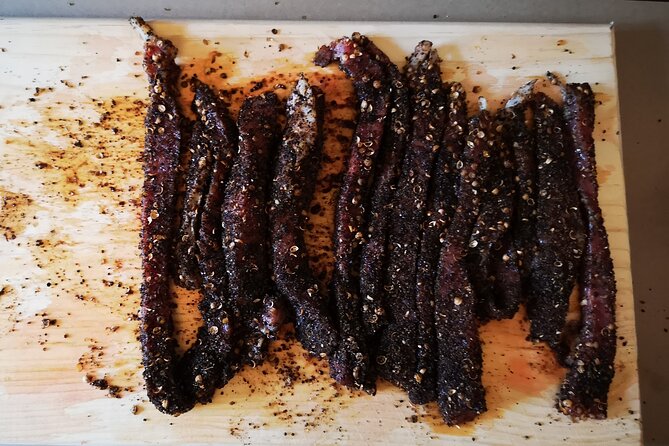
The lesson begins with the basics. You learn how to choose suitable meat, cut it into strips, add marinade and spices, and prepare it for curing. The final steps cover drying and storage, so you are not left with a recipe that ends at the fun part.
That practical detail matters. If you buy biltong from a shop, you taste the result but may not understand why one piece is soft, another is dry, or a third has a sharper spice mix. Here, the process gives you a better sense of what you are eating. You can ask questions as the hosts work through each stage and then prepare biltong sticks yourself.
The workshop also makes a useful distinction between food and identity. Biltong is not presented as a random snack invented for tourists. The story reaches back to Khoisan hunter-gatherers, then moves through the pioneers of the Great Trek, who added spice to the tradition. That gives the food a place in South African history without turning the session into a formal lecture.
A few more tours worth putting side by side
- Wine Tour: Paarl, Franschhoek & Stellenbosch incl 3 wineries
★ 5.0 · 3,940 reviews - Cape Town: Hop-On Hop-Off Bus Tour with Optional Cruise
★ 4.8 · 3,929 reviews - Cape Town: Cape of Good Hope & Penguins Day Tour with Pickup
★ 4.7 · 3,362 reviews
Inside the Sea Point voorkamer
The meeting point is 165 High Level Road in Sea Point, Cape Town. The experience begins and ends there, and the setting is a home voorkamer, a traditional lounge or front room. This is an important part of the activity. You are not being moved through a large venue or a busy demonstration space. You sit down, meet the hosts, and settle into a small social gathering.
Greg and Lindi shape the experience around their own family story. Greg is the English Soutie, while Lindi is the Afrikaans Boeremeisie. Their relationship gives the cultural talk a human focus. Instead of presenting English and Afrikaans culture as distant subjects, they explain how two different backgrounds come together in daily life.
I would expect the tone to be friendly and informal. The hosts use tall tales, jokes, classic Afrikaans sayings, and personal stories to keep the history moving. That style works well for anyone who likes learning through conversation. It may be less suitable if you want a tightly timed cooking class with a formal instructor and a printed set of technical instructions.
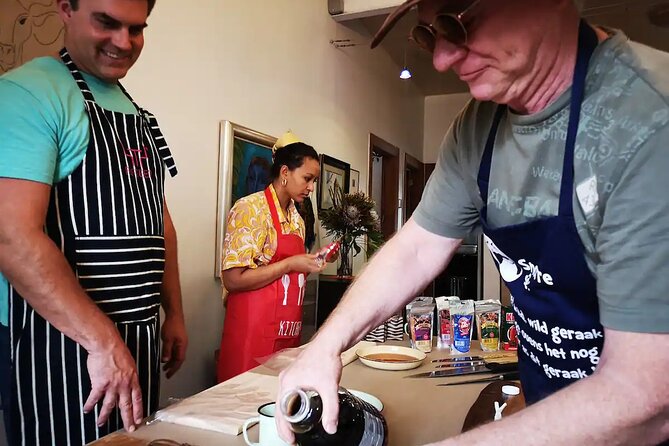
The maximum group size is six. That is one of the strongest features here. A small group gives you more room to handle the ingredients, ask about the spice blend, and hear the stories without competing with a crowd. It also means the atmosphere can feel more like being welcomed into someone’s sitting room than attending a standard city excursion.
The biltong-making lesson, step by step
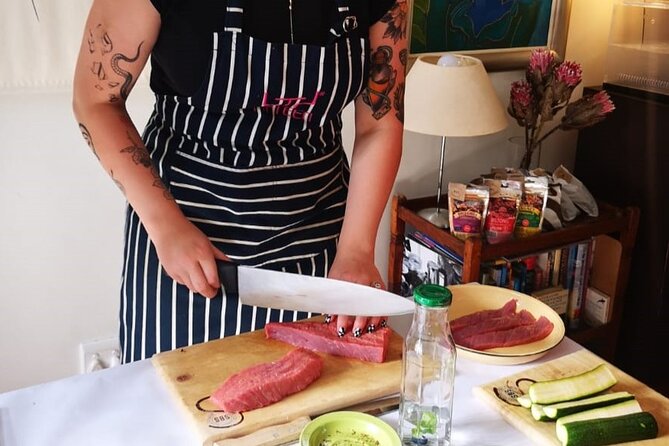
The central part of the session is the hands-on demonstration. You start with meat selection, then move through cutting, marinating, seasoning, curing, and storage. The description does not promise that you will complete a full long curing process during the 90-minute visit, so think of this as a practical introduction to the method rather than a full production cycle.
The preparation is the part where you get your hands involved. You learn how the meat is shaped into strips and how the seasoning is applied. You also get the chance to prepare biltong sticks, which makes the lesson more memorable than simply watching Greg demonstrate the technique.
The spice discussion is especially useful for first-time biltong eaters. South African biltong has a flavor profile that may be unfamiliar if you mainly know jerky. The hosts explain how the ingredients work together, and you can taste the finished product as you learn.
The experience includes samples of biltong sticks. You can eat them during the session or take them with you. There is also an opportunity to buy more, although it is wise to confirm current stock and pricing when you book or arrive. One past suggestion was that biltong and spice for sale would be useful, so availability may change.
A vegan option is available as well. The information does not specify the exact ingredients or preparation method, so you should ask the hosts for details if you have allergies or strict dietary requirements. Still, the inclusion is a real strength. You can take part in the tasting and the cultural conversation even if meat is not part of your diet.
Coffee, beskuit, music, and Afrikaans sayings
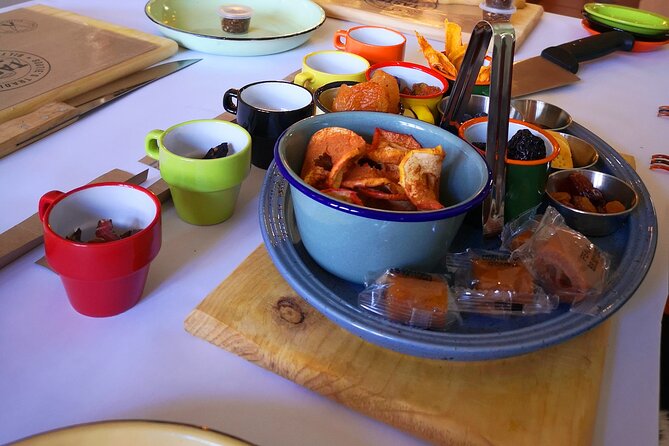
Food is only one part of the hour and a half. You also get a piece of homemade Karringmelkbeskuit, a traditional South African buttermilk rusk. It is served with moerkoffie, strong coffee prepared in a simple style and served in a tin mug.
The coffee and rusk help explain the character of the experience. You are not only learning a recipe. You are being introduced to the small rituals that make a home gathering feel local. The tin mug and homemade snack are modest touches, but they give the session a sense of place.
Boeremusiek, or Afrikaans folk music, plays in the background. The hosts also use catchy Afrikaans songs to create a relaxed mood and show the warmth they associate with South Africa’s rainbow culture. If you enjoy music and informal conversation, these details add a lot. If you prefer a quiet workshop, you may find the singing and storytelling more social than expected.
You learn a few Afrikaans expressions along the way. That is practical for the rest of your time in South Africa, even if you remember only a handful of phrases. The language lesson also covers the origin of Afrikaans, described here as the only European language born in Africa. The subject is presented through the hosts’ English and Afrikaans family backgrounds, rather than as a dry language class.
A completely different kind of day out on the same trip:
- Zipline Cape Town – From Foot of Table Mountain Reserve
★ 5.0 · 3,179 reviews - Cape Town: Table Mountain Cable Car, Hop-On Hop-Off Bus Tour
★ 4.6 · 3,157 reviews - Cape Point and Boulder’s Penguins Full Day Tour
★ 5.0 · 3,118 reviews - From Cape Town: Cape Point & Boulders Beach Full-Day Tour
★ 4.8 · 3,032 reviews
A personal look at South African culture
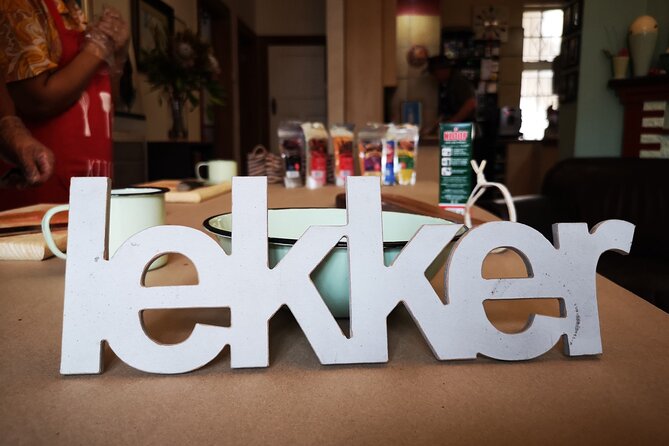
The history portion gives the biltong lesson more weight. You hear how food traditions connect with the Khoisan, how the Great Trek shaped the seasoning associated with biltong, and how language reflects the country’s complicated mix of cultures.
You also hear the story of an English Soutie marrying an Afrikaans Boeremeisie. That personal tale gives the session a clear thread. It helps you understand why the hosts combine different customs, languages, music, and food in one room.
This is likely to appeal most if you enjoy cultural experiences built around a local family. You do not simply collect facts about Cape Town. You see how the hosts interpret their own backgrounds and share them through food. I like that the experience allows room for humor and tall tales, since a good story can make a new word or unfamiliar dish easier to remember.
At the same time, keep your expectations sensible. This is a 90-minute introduction, not a complete course in South African history or Afrikaans culture. The stories are snippets, and the lesson stays centered on biltong. That balance is helpful for a short holiday activity, but anyone seeking a detailed academic treatment should choose a longer cultural program.
Is $37.58 good value?
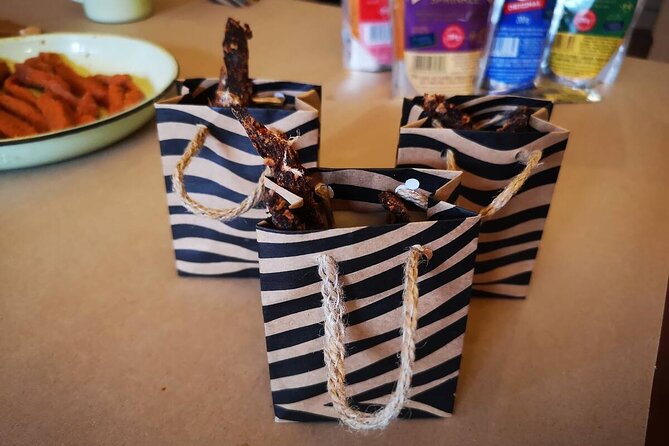
The price is $37.58 per person. For 90 minutes, that is more than you would pay for a packet of biltong and a takeaway coffee, but the comparison is not quite fair. You are paying for instruction, food samples, a hands-on activity, cultural storytelling, music, and time with two hosts in a six-person setting.
I see the value in the personal format. A large demonstration could show you how biltong is made, but it would not offer the same chance to prepare your own sticks or ask direct questions. The small group also makes the cost easier to justify for couples, families, and friends who want an activity that feels different from a normal restaurant meal.
The value is strongest if you take part fully. Taste the different biltong, ask about curing and storage, try the Afrikaans phrases, and pay attention to the family story. If you only want a quick snack, the price may feel high. If you want a food lesson tied to local culture, it is more reasonable.
The activity is often reserved about 25 days ahead. That suggests you should not leave it until the last moment, especially if your Cape Town dates are fixed. The experience accepts a mobile ticket, which keeps arrival simple.
Who will enjoy this Cape Town activity?
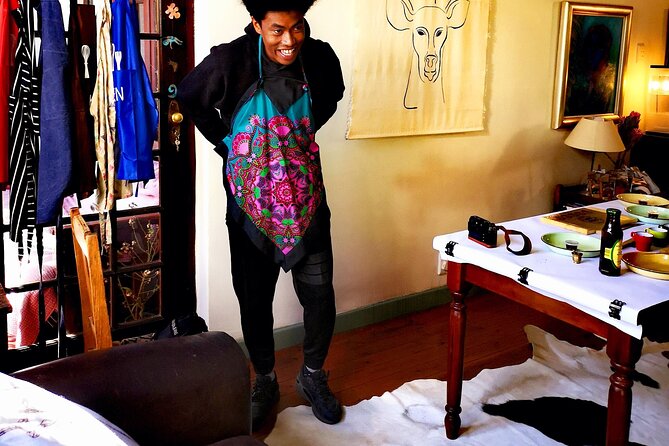
I would recommend it to anyone who likes food with a story. It suits first-time biltong eaters, curious cooks, couples, small groups of friends, and people who prefer local homes and personal contact to large sightseeing operations.
It is also a good choice for repeat Cape Town visitors. One person who already lived in Cape Town still learned new things about South African history and biltong, which suggests the session is not only for newcomers.
Families may enjoy it if children are comfortable with tasting unfamiliar food and sitting through conversation. The supplied information does not give a minimum age, so check before booking if you are bringing young children.
Vegetarians and vegans should also consider it because a vegan alternative is offered. Ask about ingredients in advance if you have allergies, as the available details do not list specific allergens or preparation arrangements.
This may not suit you if you want a walk through Cape Town, a long cooking class, or a large group with a set entertainment schedule. It is a seated home experience, and its appeal depends on conversation, food, and the hosts’ personality.
Practical planning for 165 High Level Road
The experience is near public transportation, which helps if you are staying elsewhere in Cape Town. The supplied details do not name a specific bus route or train stop, so check your route to 165 High Level Road before setting out.
Plan for about one hour and 30 minutes. The session ends back at the meeting point, so you can arrange another activity afterward without needing to coordinate a second pickup location. Still, leave yourself a little breathing room if you have a strict dinner reservation.
Confirmation is provided at booking, and the mobile ticket means you can show your booking on your phone. The group maximum is six, so this is not designed for a large tour party.
Cancellation is free if you cancel at least 24 hours before the local start time. A cancellation made less than 24 hours before the start is not refunded, and late changes are not accepted. The activity also requires a minimum number of people. If that minimum is not met and the session is canceled, you are offered another date or experience, or a full refund.
Should you book Soutie’s Biltong Making Experience?
Book it if you want a small, friendly Cape Town activity that combines food preparation with language, music, and personal history. The chance to make biltong sticks, taste a vegan alternative, drink strong coffee from a tin mug, and hear Greg and Lindi explain their Soutie and Boeremeisie backgrounds gives the session more substance than a simple tasting.
I would especially choose it early in your stay if you want an introduction to South African flavors and expressions. You can then recognize biltong, beskuit, Boeremusiek, and Afrikaans phrases during the rest of your visit.
Skip it if you are looking for a full meal, a long historical tour, or a highly formal cooking school. For everyone else, the small group, hands-on preparation, and warm home setting make the $37.58 fee a fair price for a memorable 90-minute experience.
FAQ
Where does the biltong-making experience begin and end?
It begins at 165 High Level Road, Sea Point, Cape Town, 8060, South Africa, and ends back at the same meeting point.
How long does the experience last?
The activity lasts approximately one hour and 30 minutes.
How many people can join the activity?
The experience has a maximum of six travelers.
Is there a vegan option?
Yes. A vegan alternative is offered as part of the biltong-making experience.
What food and drink are included?
You can taste biltong sticks, homemade Karringmelkbeskuit, and strong moerkoffie served in a tin mug. You can eat the biltong sample or take it home.
Is public transportation available near the meeting point?
Yes. The experience is near public transportation.
What is the cancellation policy?
You can cancel for a full refund up to 24 hours before the experience start time. Cancellations or changes made less than 24 hours before the start are not accepted for a refund.
Newest reviews from Cape Town
- Explore Atlantis Sand Dunes with a 1hour 30mins sandboarding tour★ 5.0 · 5 reviews
- Pneuma private travel & tours, creating memories and friends never forgotten★ 5.0 · 5 reviews
- Transfer from Cape Town City Center to Cape Town Airport★ 5.0 · 5 reviews
- Private Transfer: CPT Airport to Cape Town in Luxury Van★ 4.0 · 5 reviews
- Cape Town Table Mountain and Peninsula Tour★ 5.0 · 5 reviews
- Cape Town Full Day Family Fun With Kids Private Tour★ 4.0 · 5 reviews
- Cape of Good Hope-Cape Point & Penguins from Cape Town★ 5.0 · 5 reviews
- Garden Route 5 Day Hiking & Safari Adventure from Cape Town★ 5.0 · 5 reviews
Cape Town Tours, compared.

Wine Tour: Paarl, Franschhoek & Stellenbosch incl 3 wineries
Read our review →

Cape of Good Hope & Penguins Day Tour with Pickup
Read our review →
Table Mountain Cable Car, Hop-On Hop-Off Bus Tour
Read our review →
Cape Point and Boulder’s Penguins Full Day Tour
Read our review →