
Reviewed · MUSEUMS
Skip the Line: District Six Museum Admission Ticket
Cape Town’s past is written on the floor. The District Six Museum turns a former neighborhood into a personal, moving lesson about apartheid, forced removals, and the people who lost their homes. I like the low price and the freedom to explore independently. I also like the chance to hear from former District Six residents.
The main consideration is ticket acceptance. One booking resulted in the visitor having to pay again because the museum did not accept the issued ticket, although a refund was advised. Check your voucher before setting out, and allow up to 90 minutes if you want time for the displays and staff conversations.
In This Review
- Key points to know before you go
- Why District Six still matters in Cape Town
- The District Six Museum floor map
- Photographs, recordings, and personal testimony
- Meeting the museum staff
- A flexible 30-minute to 90-minute visit
- Is $3.71 good value?
- Who will get the most from this museum?
- Getting there and practical details
- How to plan your visit around Cape Town
- Booking, cancellation, and the ticket warning
- Should you book the District Six Museum ticket?
- FAQ
- Where is the District Six Museum located?
- How much does admission cost?
- How long does the visit take?
- Is the ticket flexible?
- Is a guided tour included?
- Can I visit without a guide?
- Who may lead the optional guided tour?
- What is included in the ticket?
- Are food and drinks included?
- Is the museum accessible by public transportation?
- Are service animals allowed?
- How many people can join the activity?
- Can I cancel for a refund?
Key points to know before you go
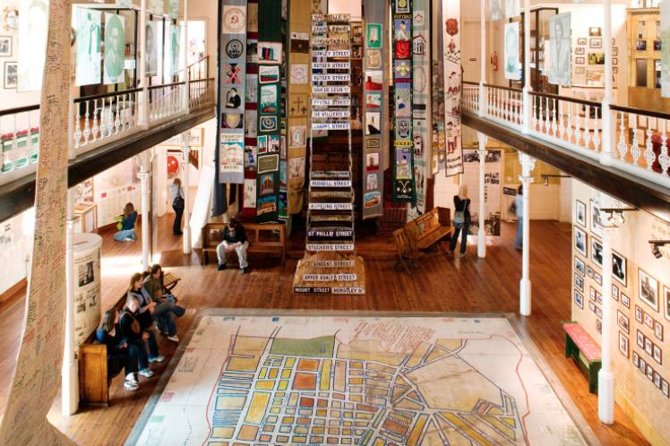
- A street map covers the museum floor: Former residents marked the locations of homes that were demolished.
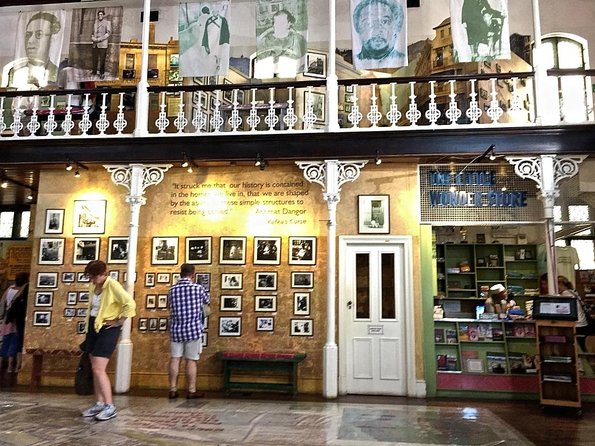
- The story is told through people: Photographs, recordings, and personal testimonials put faces and voices to apartheid’s forced removals.
- You choose your pace: The ticket allows an independent visit, while a guided tour is available for an additional fee.
- Former residents may guide the story: Museum staff include people who were displaced from District Six.
- It is a short, affordable stop: At $3.71 per person, the museum fits easily into a Cape Town sightseeing day.
- Allow 30 minutes to 90 minutes: A quick visit gives you the main story, while a longer stay leaves room for discussion and reflection.
Why District Six still matters in Cape Town
District Six was once a mixed community near central Cape Town. It was home to musicians, artists, families, and people involved in both respectable work and street life. That mix mattered. It showed how people from different racial and cultural backgrounds lived close together before apartheid policies tore the community apart.
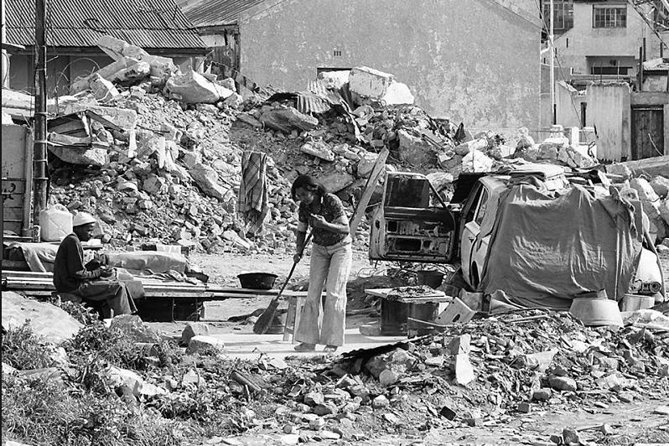
During apartheid, the government declared District Six a white area. Residents were forcibly removed over a period of about 20 years, and much of the neighborhood was demolished. The physical destruction was only one part of the damage. Families lost homes, businesses, schools, neighbors, and the everyday connections that made the area feel like home.
The museum does not present this as a distant political chapter. It focuses on names, addresses, photographs, recorded voices, and memories. That approach gives you a clearer sense of what forced removal meant at street level. You are not just reading about a law. You are seeing where people lived and considering what happened when those places were erased.
I find that setting especially useful if you are new to South African history. The museum offers enough background to make the subject understandable, but it does not bury the human story under dates and official language.
More Museums in Cape Town
- Museum of Contemporary African Art: Fast-Track Zeitz MOCAA
★ 4.4 · 204 reviews - Cape Town: Private Guided Tour of Cape Town Diamond Museum
★ 4.7 · 156 reviews - ROBBEN ISLAND MUSEUM TOUR, WITH OPTIONAL LAST MINUTE TICKETS
★ 3.4 · 85 reviews
The District Six Museum floor map
The most distinctive feature is the large street map spread across the ground floor. Former residents wrote notes on it to show where their demolished homes once stood. This is a simple idea, but it changes how you read the museum.
Instead of viewing District Six as an abstract area on a city map, you can picture a neighborhood made up of individual homes. Each handwritten note represents a family, a daily routine, and a place that once had meaning. The map helps connect the broader apartheid policy to specific addresses.
Take your time here. If you rush across the map, you will miss the detail that makes it powerful. Look at the handwritten markings and use them as a way to get your bearings before moving through the other displays.
The floor map also gives the museum a participatory feel. It records memory in the words of the people who lived there, rather than presenting only an official account. For many visitors, this is the part that stays with them after they leave.
Photographs, recordings, and personal testimony
The museum uses photographs, recordings, and testimonials to explain life in District Six and the period of demolition and removal. These materials help you see the area as a real community rather than a symbol.
Photographs can show the social character of the neighborhood, while recordings and spoken memories bring a different kind of weight. A written panel may explain what happened, but a personal account can help you understand the fear, anger, confusion, and loss behind the policy.
The displays also cover the people who made District Six distinctive. Musicians and artists lived there, alongside families and people connected with gangs. The result was not a polished story of a perfect community. It was a human one, with ordinary life, creativity, conflict, and strong local ties.
That honesty is important. The museum does not need to pretend that District Six was free of problems in order to show why its destruction was wrong. You get a picture of a complicated neighborhood that was still a home to many people.
Meeting the museum staff
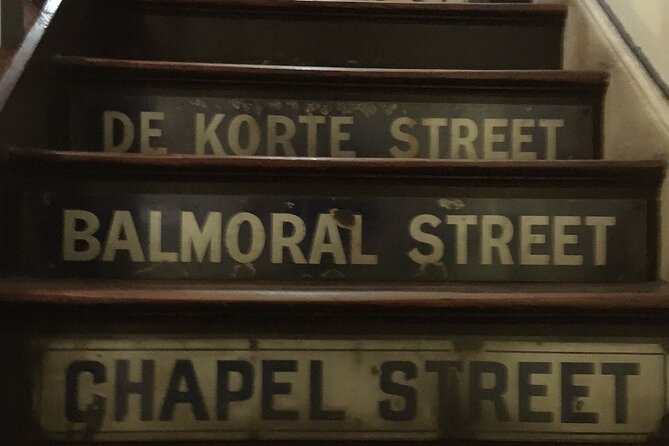
The staff are a major part of the visit. Many were displaced residents themselves and can share personal memories of District Six. Their stories add something that a self-guided display cannot always provide.
If you visit independently, speak with staff when the opportunity arises. They can help explain the exhibits and may offer details that are not obvious from the photographs or written material. The information feels more immediate when it comes from someone with a direct connection to the neighborhood.
An optional guided tour gives this personal element a larger role. Guides may be former District Six residents, and their connection to the subject can make the visit more direct and emotional. The guided option costs extra, so it is not included in the $3.71 admission price.
I would choose the guide if you want context, personal stories, and the chance to ask questions. I would choose the self-guided visit if you prefer quiet reflection or need to keep your budget and schedule tight.
A completely different kind of day out on the same trip:
- Wine Tour: Paarl, Franschhoek & Stellenbosch incl 3 wineries
★ 5.0 · 3,940 reviews - Cape Town: Hop-On Hop-Off Bus Tour with Optional Cruise
★ 4.8 · 3,929 reviews - Cape Town: Cape of Good Hope & Penguins Day Tour with Pickup
★ 4.7 · 3,362 reviews - Zipline Cape Town – From Foot of Table Mountain Reserve
★ 5.0 · 3,179 reviews
A flexible 30-minute to 90-minute visit
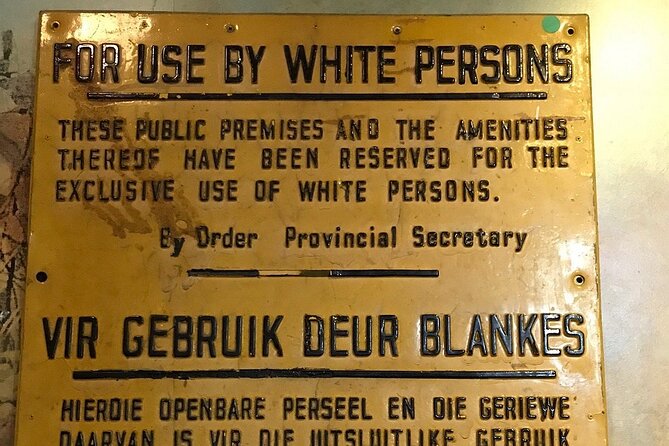
The museum works well as a short stop, but the stated visit length has a wide range. You can see the central displays in around 30 minutes, while a slower visit with staff conversations may take up to 90 minutes.
That flexibility is useful in Cape Town. You do not need to commit half a day to understand the museum’s main message. At the same time, you should not treat it as a quick photo stop. The material asks for attention, and the personal accounts reward a slower pace.
The prepaid ticket lets you arrive at a time that suits you. This is helpful if you are fitting the museum between other central Cape Town sights. Still, flexible arrival does not remove the need to confirm that the mobile ticket will be accepted. A previous visitor had to pay again because the venue did not accept a Viator-issued ticket, and the booking company later advised requesting a refund.
That problem may have been unusual, but it is the one practical warning I would take seriously. Have your mobile ticket ready, and keep the booking details available in case staff need to check them.
Is $3.71 good value?

At $3.71 per person, this is one of the least expensive cultural stops you can add to a Cape Town itinerary. The price includes entrance to the museum, not food, drinks, or the optional guided tour.
The value comes from the quality of the subject matter rather than the size of the building or the number of rooms. You are paying a small amount for access to photographs, recordings, testimonials, the floor map, and the chance to speak with staff connected to District Six.
I would not judge this visit by minutes per dollar. A 30-minute stop can still be worthwhile if it helps you understand the city and South Africa’s recent past. If you stay longer and speak with staff, the low admission cost looks even better.
The extra charge for a guided tour deserves a separate decision. It may be worth it if you want a personal account from a former resident and more explanation along the way. If you are comfortable reading displays and taking your time, the basic ticket should be enough.
Who will get the most from this museum?

The museum suits adults who want historical context, but it also caters to children. The visual displays and personal stories can make a difficult subject easier to discuss with older children and teenagers.
It is a particularly good choice if you want to understand apartheid through daily life. A general city tour may explain the political system, but the museum shows how that system affected homes and neighborhoods.
I would also recommend it to visitors who have limited time. The museum’s central message can be understood in a short visit, and you can stay longer if the material catches your attention.
You should think carefully about the emotional side. The subject is forced removal, family loss, and the destruction of a community. This is not a light attraction, and you may want to place it at a point in your day when you have time to process what you have seen.
Getting there and practical details
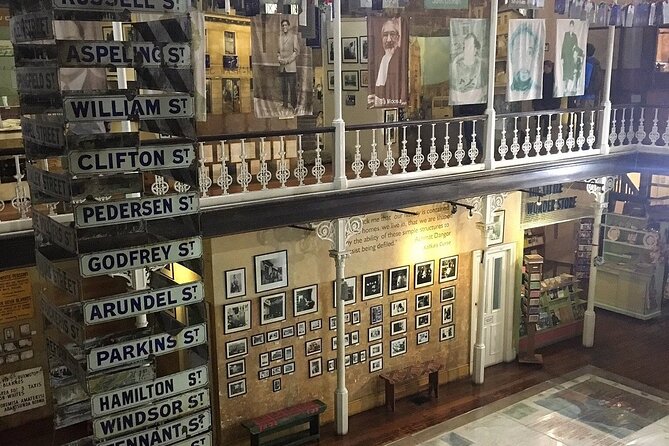
The museum is near public transportation, so you do not need to depend entirely on a private vehicle. The supplied information does not give a precise walking route or transport timetable, so check your route locally before leaving.
A mobile ticket is provided, which makes the booking easy to carry on your phone. Since there was one reported ticket acceptance problem, I would save the confirmation where you can access it quickly and verify the venue details before arrival.
Service animals are allowed, and most people can participate. The activity has a maximum group size of 15 people, although the admission ticket also supports a self-guided visit. A smaller guided group can make it easier to hear personal stories and ask questions.
Food and drinks are not included. Plan to eat before or after the museum rather than expecting a refreshment stop as part of the visit.
How to plan your visit around Cape Town
Because the museum takes between 30 minutes and 90 minutes, it is easy to place into a day of central Cape Town sightseeing. I would avoid squeezing it into a ten-minute gap. Even a short visit deserves enough time to read the displays and study the floor map.
If you want the guided option, check its availability and price before you go. The admission ticket alone does not include the guide. For a self-guided visit, arrive with a little patience and ask staff questions when appropriate.
The museum can also help you understand other places in Cape Town. After learning how District Six residents were removed, later visits to different parts of the city may carry more meaning. The museum gives you a human reference point for understanding the effects of apartheid beyond government buildings and official memorials.
That is one reason I consider it a useful first or early stop during a Cape Town visit. It frames the city’s past before you move on to its scenery, markets, and historic streets.
Booking, cancellation, and the ticket warning
You can cancel for a full refund if you do so at least 24 hours before the experience start time. Cancellations made within 24 hours are not refunded, and changes during that period are not accepted. The cut-off follows local Cape Town time.
The mobile ticket is convenient, but the ticket acceptance issue means you should not assume that every phone voucher will work without question. If the museum does not accept the ticket and you pay again, request the refund through the booking company, as advised in the response to the affected booking.
The experience is booked about 15 days ahead on average. That suggests some advance planning is sensible, though the flexible arrival feature gives you room to fit it into your schedule.
Should you book the District Six Museum ticket?
Book it if you want an affordable, serious, and personal history stop in Cape Town. The low price, flexible timing, floor map, photographs, recordings, and former residents on staff give the museum more weight than its short visit time might suggest.
Choose the optional guided tour if personal explanation matters to you. Choose the basic ticket if you prefer to read at your own pace and keep costs down.
I would skip it only if your schedule is extremely tight or you are looking solely for scenic entertainment. For everyone else, the museum offers a clear way to understand how apartheid changed real homes and real lives. Just confirm the mobile ticket before arrival, and allow more than 30 minutes if you want the visit to feel complete.
FAQ
Where is the District Six Museum located?
The museum is in Cape Town, South Africa.
How much does admission cost?
The admission ticket costs $3.71 per person.
How long does the visit take?
The approximate duration is 30 minutes to 1 hour and 30 minutes.
Is the ticket flexible?
Yes. The ticket allows you to arrive at a time that suits you.
Is a guided tour included?
No. A guided tour is an optional extra and is not included with the entrance ticket.
Can I visit without a guide?
Yes. You can explore the museum independently and move through the displays at your own pace.
Who may lead the optional guided tour?
The guided tours may be led by former residents of District Six.
What is included in the ticket?
The ticket includes museum entrance.
Are food and drinks included?
No. Food and drinks are not included.
Is the museum accessible by public transportation?
Yes. The museum is near public transportation.
Are service animals allowed?
Yes. Service animals are allowed.
How many people can join the activity?
The maximum group size is 15 people.
Can I cancel for a refund?
Yes. You can receive a full refund if you cancel at least 24 hours before the experience start time. Cancellations within 24 hours are not refunded.
More Skip the Line
- Cape Town: District Six Museum Skip-the-Line Entrance Ticket
★ 4.0 · 21 reviews - Skip the Line: World of Birds Admission Ticket
★ 5.0 · 5 reviews - Skip the Line: Highgate Ostrich Farm Tour Ticket
★ 4.5 · 110 reviews
Newest reviews from Cape Town
- Explore Atlantis Sand Dunes with a 1hour 30mins sandboarding tour★ 5.0 · 5 reviews
- Transfer from Cape Town City Center to Cape Town Airport★ 5.0 · 5 reviews
- Pneuma private travel & tours, creating memories and friends never forgotten★ 5.0 · 5 reviews
- Cape Town Table Mountain and Peninsula Tour★ 5.0 · 5 reviews
- Private Transfer: CPT Airport to Cape Town in Luxury Van★ 4.0 · 5 reviews
- Cape Town Full Day Family Fun With Kids Private Tour★ 4.0 · 5 reviews
- Cape of Good Hope-Cape Point & Penguins from Cape Town★ 5.0 · 5 reviews
- Cape Town: Shark Cage Diving Tour (with Breakfast & Lunch)★ 4.8 · 5 reviews
Museums, compared.

Soweto /Johannesburg and Apartheid Museum Guided Full Day Tour
Read our review →
Jo’berg in 1 Day: Soweto, Apartheid Museum & City Tour
Read our review →
Full-Day Tour with Soweto and Apartheid Museum
Read our review →
Full-Day Soweto, Apartheid Museum and Lunch Tour
Read our review →
Half Guided Day Tour of Soweto And Apartheid Museum
Read our review →
Ultimate Johannesburg Soweto Experience with Apartheid Museum
Read our review →
Soweto: Hop-On Hop-Off Bus, City Tour and Apartheid Museum
Read our review →
Museum of Contemporary African Art: Fast-Track Zeitz MOCAA
Read our review →Browse the lists this tour appears in