
Reviewed · SHARK CAGE DIVING
CapeTown: Shark Cage Diving Experience with Scuba
Sharks are only part of the story. This Cape Town sea trip combines a 30-minute underwater cage session with a boat ride around False Bay, where seals, dolphins, whales, and seabirds may join the show. I like the small maximum of 12 people, and I like that the crew explains shark behavior rather than treating the animals as a circus act. The main catch is simple: wildlife follows its own schedule, and rough weather can cancel the outing.
I also like the practical setup. Scuba equipment, snacks, and drinks are included, while the crew works to keep the mood calm for first-timers. You should know that the water can feel cold, wetsuits can make it harder to stay low in the cage, and hotel transfers cost extra.
In This Review
- Key points to know before you book
- Starting at Simon’s Town for a False Bay sea outing
- The safety briefing and getting into the cage
- Seal Island and the first wildlife sightings
- Underwater with Bronze Whalers at Seal Island
- Cape Point, Blue Sharks, and Mako Sharks
- What happens when the sharks do not appear
- Seasickness, cold water, and small practical details
- Is $218.26 a fair price for three and a half hours?
- Who should choose this Cape Town shark cage experience?
- Should you book it?
- FAQ
- Where does the experience begin?
- Where does the activity end?
- How long does the experience last?
- How many people can join the tour?
- What sharks might I see at Seal Island?
- Can I see Blue Sharks or Mako Sharks?
- When are Great White Sharks usually seen?
- Is scuba equipment provided?
- Are hotel transfers included?
- Should I bring a towel?
- What happens if bad weather cancels the outing?
- Can I cancel my booking?
Key points to know before you book
- Bronze Whaler sharks are the main sighting now: The usual shark at Seal Island is the Bronze Whaler, while Blue and Mako sharks may be seen off Cape Point.
- Great White sightings are seasonal: The best stated period for Great Whites is April through September, but no shark sighting is guaranteed.
- A 12-person limit matters: The smaller boat group allows more room for questions and personal help from the crew.
- The underwater session can last about 30 minutes: A respirator tank and cage let you stay below the surface for a meaningful amount of time.
- The boat ride can be rewarding even without sharks: Seals, dolphins, whales, penguins, and seabirds have all been part of the day.
- Weather can change your plans: Poor conditions may lead to a new date, a different location, or a full refund.
Starting at Simon’s Town for a False Bay sea outing
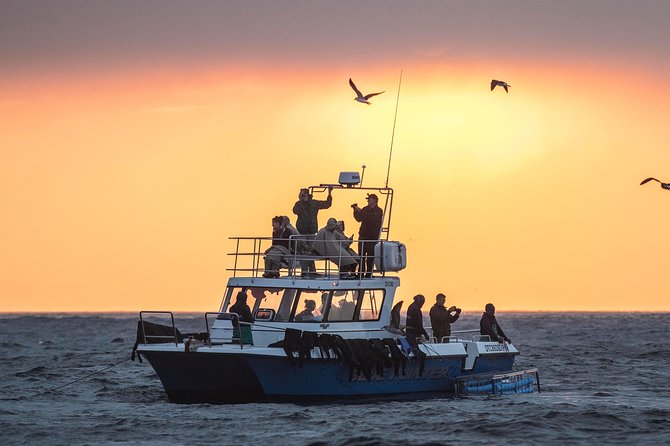
The meeting point is at 1 Wharf Street in Simon’s Town, a useful location for anyone already staying around the Cape Peninsula. The activity lasts about three and a half hours and returns to the same place, so you can plan the rest of your day without arranging a separate pickup from another harbor.
Hotel transportation is not included. You need to ask about a transfer when booking, and you should allow for an additional charge. This matters because Cape Town’s sights are spread out, and Simon’s Town is not a quick hop from every part of the city.
The company confirms bookings within 48 hours, subject to availability. I would avoid placing this outing on the final morning of your Cape Town visit. Weather can force a change, and you want enough time to accept another date if the sea is too rough.
The boat carries no more than 12 people. That is a useful limit for an activity where you may need help with a wetsuit, weight belt, mask, or respirator. It also makes it easier to hear the crew’s explanations instead of waiting for a guide to reach a large crowd.
More Dive Trips in Cape Town
- Shark Cage Diving and Viewing with transport from Cape Town
★ 4.5 · 576 reviews - Cape Town: Gansbaai Eco-Friendly Shark Cage Diving Cruise
★ 4.6 · 326 reviews - Shark Cage Diving Cape Town
★ 4.5 · 114 reviews
The safety briefing and getting into the cage
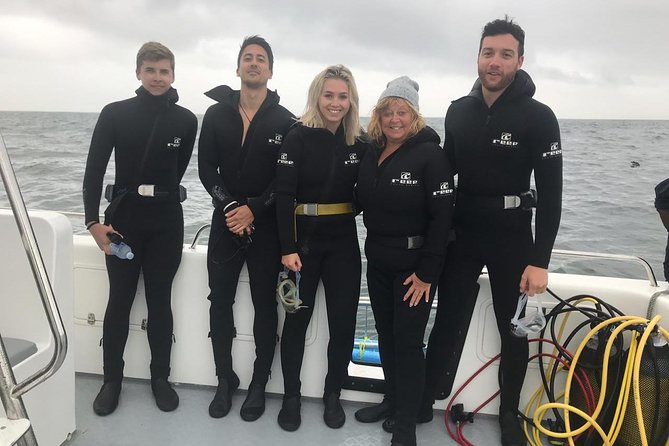
The crew leads the day from start to finish. Before you enter the water, you receive instructions on the equipment and the cage. The tone appears to be both serious and friendly, which is important when you are dealing with cold water, moving boats, and large wild animals.
This is not a hands-off outing. The crew keeps an eye on how people are doing and helps with nerves. One especially reassuring detail is the way crew member Cat reportedly checked on an anxious participant rather than simply insisting that everything would be fine. That sort of attention is worth more than a dramatic speech when you are standing in a cage with sharks nearby.
The equipment is supplied, including scuba gear and the respirator system used underwater. You do not need to bring your own kit. You do need to bring a towel, because towels are not supplied, and you will want dry clothes after leaving the water.
A swimsuit is a smart choice. Wear clothes that are easy to put on and remove, since changing in and out of wet gear can be awkward. A hat and warm clothing for after the session are also sensible. Even on a pleasant Cape Town day, wind on a boat can make you feel chilly once you are wet.
The buoyancy of the wetsuits deserves an honest warning. One family found it difficult to get low and remain below the surface because the suits kept pushing them upward. The crew explained that the weight belt and foot bar are there to help you stay in position, but this can still frustrate children or anyone new to underwater equipment.
Seal Island and the first wildlife sightings
Seal Island is one of the visual highlights of the outing, even though the main purpose is the shark cage. The boat passes the island, where large numbers of seals can be seen resting and swimming. This gives you something interesting to watch before the cage session begins and helps put the local marine world in context.
The seals may also appear near the shark area. That combination can be striking: the animals are part of the same busy marine environment, rather than isolated attractions arranged for a show. The boat ride has included close seal sightings, and some outings have also produced views of penguins.
Dolphins are another possible bonus. A large pod has joined the boat route on some days, turning the ride into a wider wildlife trip. You may also see whales, with humpback whales appearing unexpectedly on one especially fortunate outing.
None of this should be treated as a promise. The crew can work to attract sharks, but it cannot summon dolphins, whales, or seals on command. Still, the route gives the morning more value than a trip that depends entirely on one animal appearing at one spot.
Seabirds can add another small surprise. Subantarctic skuas have been seen close enough for fish to be fed from people’s hands. That is an unusual detail, but it also shows how varied the boat portion can be. If you enjoy coastal wildlife, keep watching between the major events.
Underwater with Bronze Whalers at Seal Island
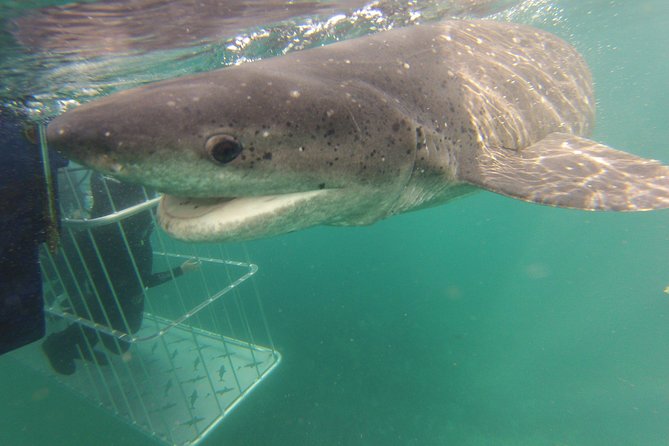
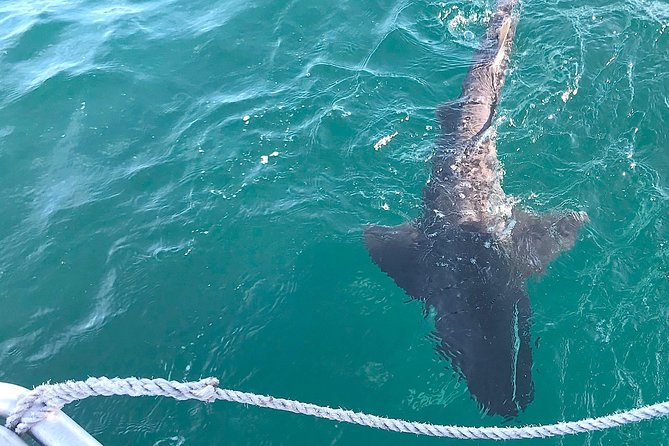
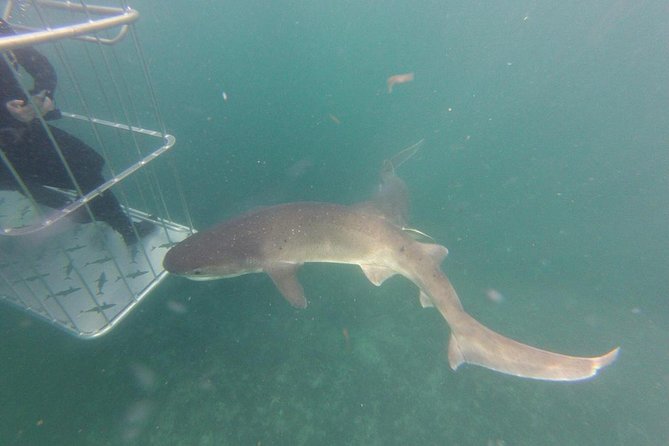
At present, Bronze Whaler sharks are the main animals expected around Seal Island. These are large, active sharks, and seeing them from inside a cage provides the thrill without asking you to enter the water unprotected.
The cage session can last about 30 minutes. That is long enough to settle your breathing, learn how to use the foot bar, and watch the water instead of merely taking a quick look before climbing out. One particularly successful outing produced about 20 sharks during that period, while another group saw three different sharks.
You should keep expectations realistic. The animals may approach closely, or they may remain distant. Some days produce many sharks, and some produce none. The crew can use its experience to improve the chances, but the wildlife remains wild.
This uncertainty is the central strength and weakness of the activity. If you need a guaranteed shark encounter, no responsible company can offer that. If you can accept a day of observation, with seals, dolphins, whales, birds, and ocean scenery as worthwhile alternatives, the experience makes more sense.
The cold water is another factor. Some people describe it as very cold but worth tolerating. Others find the water more comfortable than expected. Personal tolerance varies, and the wetsuit is there for a reason. Bring warm clothes for the ride back, even if you feel fine when you first enter the cage.
The respirator tank helps you remain underwater for the full session. If you already have scuba experience, you may find the equipment easier to manage. If you are new to it, listen carefully to the crew and use the support points in the cage instead of fighting the water’s movement.
More Shark Cage Diving in Cape Town
- From Hermanus: Cruise with Shark Cage Dive and Lunch
★ 4.4 · 184 reviews - Cape Town: Shark Cage Dive
★ 4.7 · 46 reviews - Shark Cage Diving with transport from Cape Town
★ 5.0 · 22 reviews - Cape Town: Shark Cage Diving with Snacks and Soft Drinks
★ 5.0 · 21 reviews
Cape Point, Blue Sharks, and Mako Sharks
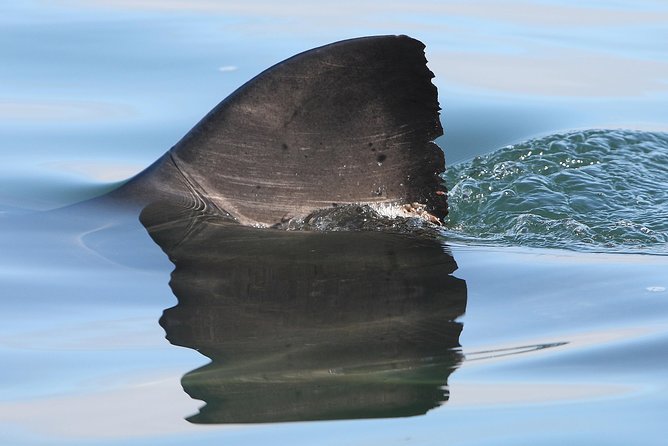
The operation also runs shark trips off Cape Point, where Blue Sharks and Mako Sharks may be seen. This gives the company more than one marine setting and means the exact location can depend on conditions and the type of shark being sought.
The information provided does not promise that every booking includes both Seal Island and Cape Point. Ask about the planned location when you confirm your date, particularly if one species matters most to you.
Great White Sharks are usually seen from April through September. That is useful seasonal guidance, but it should not be read as a guarantee. Shark numbers and weather still vary, and the crew cannot control which animals appear.
I would choose your booking date with flexibility in mind. The team has moved outings to a different day when conditions were poor, and some customers were glad they waited for a calmer, more pleasant sea. Others were unhappy when a cancellation disrupted carefully arranged Cape Town plans.
That conflict is unavoidable in a sea-based activity. Going out in unsafe or miserable conditions would be a worse result than changing the date. Still, you should understand the policy before you build your entire itinerary around this one morning.
What happens when the sharks do not appear
A no-shark day is possible. On those occasions, the crew may still show you seals, dolphins, penguins, birds, or whales, and the boat ride can remain a worthwhile part of the experience.
The crew’s attitude matters most on such a day. The staff continue working to attract the sharks and appear to share the disappointment when the animals stay away. In some cases, a complimentary return voucher valid for two years has been offered.
That voucher can soften the risk if you have enough time to return to Cape Town. It is less useful if this is a once-in-a-lifetime visit and you are leaving the country shortly afterward. Ask how the voucher works before you rely on it as compensation.
I would also remember that the most memorable wildlife outings are often not the ones you can script. A morning with no sharks but thousands of seals and passing dolphins can still become a strong Cape Town memory. That is not the same as getting the encounter you paid for, but it is a fair way to judge the full boat experience.
Seasickness, cold water, and small practical details
Seasickness is a genuine concern. Several people on one outing became ill, even though many had taken medication. If you are prone to motion sickness, ask a medical professional about suitable tablets before you go, and follow the product instructions.
The boat’s movement, wind, and waiting time around the shark site can all add to the problem. Eat sensibly before departure and keep your focus on the horizon when possible. The supplied snacks and drinks are useful, but they are not a substitute for planning ahead.
Bring your own towel. This is the easiest item to forget and one of the most annoying to lack after a wet activity. Add a swimsuit, dry clothes, a warm layer, and a hat for the ride after the cage session.
There is also a hygiene point worth asking about. One participant disliked sharing a respirator mouthpiece, although the operator stated that the mouthpieces are sanitized. If this concerns you, ask how the equipment is cleaned and whether individual or disposable mouthpieces are available before you arrive.
Most people can take part, according to the activity information. The provided details do not spell out every medical or swimming requirement, so ask the operator directly if you have a health concern, mobility issue, or worry about using the equipment.
Is $218.26 a fair price for three and a half hours?
At $218.26 per person, this is not a cheap morning. The price is easier to justify if you value the full package: a small group, boat time around False Bay, crew support, supplied scuba equipment, a roughly 30-minute cage session, and the possibility of several kinds of marine life.
The value drops if you only want a Great White sighting or regard every minute outside the cage as wasted time. Sharks are not guaranteed, transfers are extra, and bad weather can alter the plan.
I see the 12-person maximum as one of the strongest reasons to consider the cost. A large boat with a crowded cage would make the price harder to defend. A small group gives you a better chance of receiving help with the gear and asking questions without competing with dozens of other people.
Snacks and drinks are included, which is convenient but not a major reason to book. The real value lies in the crew’s supervision and the chance to observe sharks in a controlled cage while learning about their biology and behavior.
The best comparison is not with a guaranteed aquarium encounter. It is with other wildlife outings where conditions and animals remain unpredictable. If you are comfortable paying for access, expert handling, and a serious chance of seeing sharks, the price can be reasonable. If certainty matters more than authenticity, you may find it expensive.
Who should choose this Cape Town shark cage experience?
I would recommend it to adults, families, and solo visitors who want a close look at sharks without an oversized group. It also suits anyone who enjoys the wider marine setting and would be pleased to see seals, dolphins, whales, penguins, or birds along the way.
People with some scuba experience may feel more at ease using the respirator and managing the wetsuit’s buoyancy. Beginners can still participate, but you should be ready for a short learning curve and listen closely to the crew’s instructions.
I would think twice if you become severely seasick, dislike cold water, or need a fixed schedule with no room for a weather change. I would also avoid booking it immediately before an airport departure or an important day trip.
The overall rating is 4.5 out of 5 from 146 ratings, which fits the pattern of the experience: strong praise for the crew, organization, and wildlife variety, alongside real disappointment when weather cancels the trip or sharks fail to appear.
Should you book it?
Book this experience if you want a small-group marine outing with a serious chance of seeing sharks, plus the possibility of seals, dolphins, whales, and seabirds. I especially like the expert crew, the 12-person limit, and the amount of time available in the cage.
Do not book it expecting a guaranteed Great White or a perfectly predictable timetable. Choose a date with some flexibility, ask about transfers and the planned location, take seasickness precautions, and bring a towel and warm clothes.
For the best chance of enjoying the day, treat the sharks as the headline rather than the entire script. If the ocean sends Bronze Whalers your way, you may get the thrilling encounter you came for. If it sends seals, dolphins, or whales instead, you can still have a memorable morning on the water.
FAQ
Where does the experience begin?
It begins at 1 Wharf Street, Simon’s Town, Cape Town, 7975, South Africa.
Where does the activity end?
The activity ends back at the Simon’s Town meeting point.
How long does the experience last?
The outing lasts approximately three hours and 30 minutes.
How many people can join the tour?
The maximum group size is 12 people.
What sharks might I see at Seal Island?
Bronze Whaler sharks are currently the main shark seen at Seal Island.
Can I see Blue Sharks or Mako Sharks?
Blue Sharks and Mako Sharks may be seen on trips off Cape Point.
When are Great White Sharks usually seen?
Great White Sharks are usually seen from April through September.
Is scuba equipment provided?
Yes. Scuba equipment is included for the underwater cage session.
Are hotel transfers included?
No. Transfers to and from your hotel cost extra, so you should ask about them when booking.
Should I bring a towel?
Yes. Towels are not included, so bring your own.
What happens if bad weather cancels the outing?
You will be offered a different date or a full refund if poor weather causes the cancellation.
Can I cancel my booking?
You can cancel for a full refund if you do so at least 24 hours before the experience starts. Cancellations or changes made less than 24 hours before the start time are not accepted for a refund.
Newest reviews from Cape Town
- Explore Atlantis Sand Dunes with a 1hour 30mins sandboarding tour★ 5.0 · 5 reviews
- Transfer from Cape Town City Center to Cape Town Airport★ 5.0 · 5 reviews
- Pneuma private travel & tours, creating memories and friends never forgotten★ 5.0 · 5 reviews
- Private Transfer: CPT Airport to Cape Town in Luxury Van★ 4.0 · 5 reviews
- Cape Town Table Mountain and Peninsula Tour★ 5.0 · 5 reviews
- Cape of Good Hope-Cape Point & Penguins from Cape Town★ 5.0 · 5 reviews
- Cape Town Full Day Family Fun With Kids Private Tour★ 4.0 · 5 reviews
- Cape Town: Shark Cage Diving Tour (with Breakfast & Lunch)★ 4.8 · 5 reviews
Shark Cage Diving, compared.
From Hermanus or Cape Town: Shark Cage Diving Experience
Read our review →
Shark Cage Diving and Viewing with transport from Cape Town
Read our review →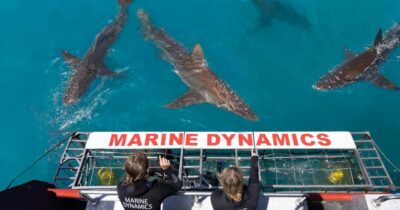
Gansbaai Eco-Friendly Shark Cage Diving Cruise
Read our review →
Half-Day White Shark Cage Diving from Gansbaai
Read our review →
Shark Cage Diving – Adventure Meets Conservation!
Read our review →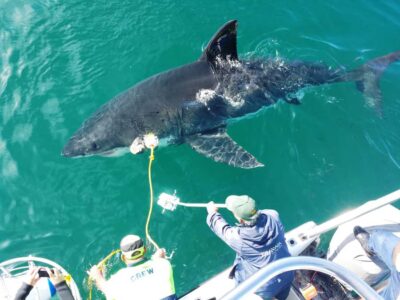
Browse the lists this tour appears in