
Reviewed · TOURS
Cape Town: The Diamond Works Institute Sparkling Tour
Diamonds have a surprisingly human story. At The Diamond Works Institute in Cape Town, you can follow a stone from rough rock to polished jewelry, watch Tanzanite being shaped, and try a few playful high-tech displays along the way. I like the free admission, which makes this an easy addition to a Cape Town day, and I like the clear look at cutting, polishing, and goldsmith work. The main consideration is that the visit takes place at a jewelry institute, so you may feel some pressure to buy before you leave.
You begin with sparkling wine or juice, then move through South African diamond history, jewelry design, gold work, and Tanzanite polishing. The explanations are warm and easy to follow, and staff have even helped a visitor arrange an Uber after a pickpocketing incident. Allow room for a sales conversation, but do not let that stop you from enjoying the tour itself.
In This Review
- What makes this Cape Town tour worth your time
- Finding The Diamond Works beside the Rockefeller Hotel
- South African diamonds from discovery to display
- Watching a rough diamond become a finished stone
- Designing jewelry with CAD technology
- Meeting the third-generation goldsmiths
- The Tanzanite studio and the Essence of Africa
- The Taylor Burton diamond on a virtual red carpet
- Kimberley, 1872, through virtual reality
- Who will enjoy the Sparkling Tour most
- Practical value, timing, and what to bring
- Should you book The Diamond Works Sparkling Tour?
- FAQ
- Where is The Diamond Works Institute in Cape Town?
- How much does the Sparkling Tour cost?
- What is included with the tour?
- Is food included?
- Is parking included?
- What languages are available?
- Can I design my own jewelry?
- Can I see Tanzanite being polished?
- Can I cancel for a full refund?
What makes this Cape Town tour worth your time
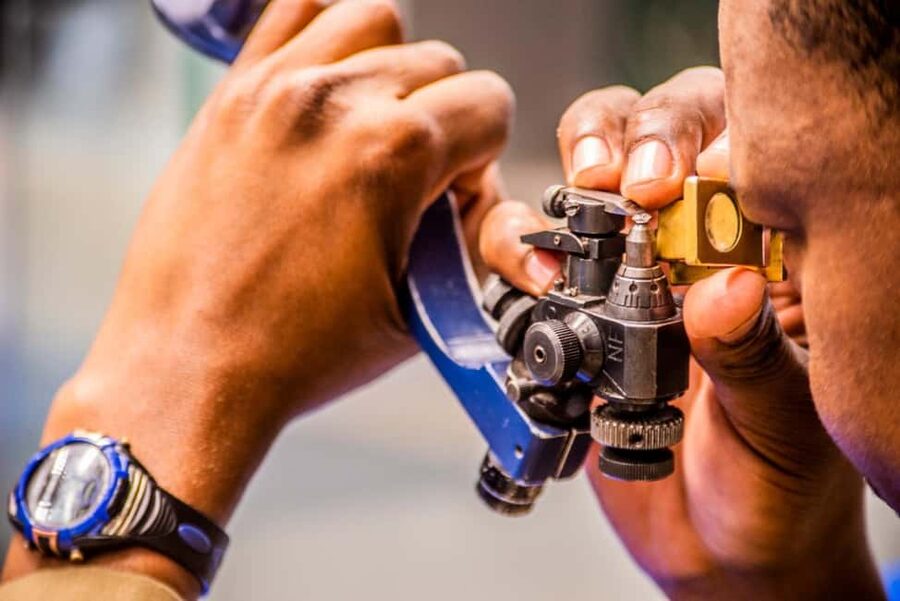
- A free introduction to diamond craft: See how rough stones are cut and polished without paying an admission fee.
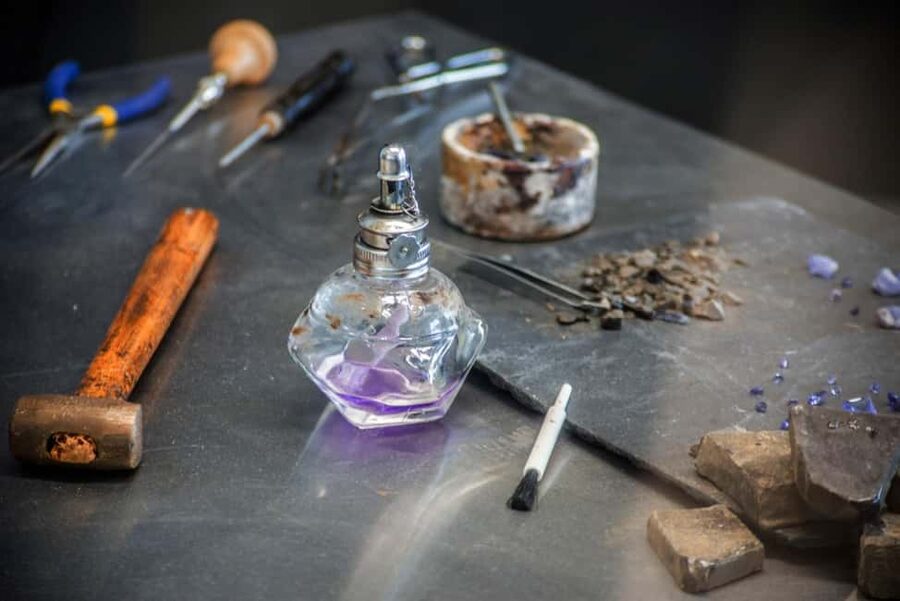
- Tanzanite polishing in a working studio: Visit the only operating Tanzanite polishing studio of its kind in the Southern Hemisphere that is open to the public.
- A virtual Taylor Burton photograph: Use augmented reality to appear with the famous Taylor Burton diamond neckpiece.
- Kimberley in 1872 through VR: Travel back to the early diamond digs and mine your own virtual diamond.
- A real jewelry design option: Use CAD technology to create a bespoke design and print a wax model.
- Helpful, multilingual staff: The tour is offered in English, Afrikaans, Turkish, French, and German.
Finding The Diamond Works beside the Rockefeller Hotel
The meeting point is The Diamond Works Institute next door to the Rockefeller Hotel. Look for artwork on the outside wall, which helps identify the entrance.
This is a useful stop if you are already visiting central Cape Town. You do not need to organize a separate transfer as part of the activity, and the tour ends where it begins. Parking is not included, so you will need to make your own arrangements if you are driving.
The welcome sets a pleasant tone. You receive sparkling wine or juice before the presentation begins. That small touch makes the visit feel more like a hosted showroom tour than a formal museum admission. If you do not drink alcohol, the juice option keeps things simple.
The price is the biggest advantage: the listed cost is $0 per person. That gives you a chance to see a specialist jewelry operation, learn about diamond production, and try the digital displays without spending money on a ticket. Still, free usually means the business hopes you will consider a purchase, so treat the shopping element as part of the setting rather than a surprise.
A few more tours worth putting side by side
- Wine Tour: Paarl, Franschhoek & Stellenbosch incl 3 wineries
★ 5.0 · 3,940 reviews - Cape Town: Hop-On Hop-Off Bus Tour with Optional Cruise
★ 4.8 · 3,929 reviews - Cape Town: Cape of Good Hope & Penguins Day Tour with Pickup
★ 4.7 · 3,362 reviews
South African diamonds from discovery to display
The first major section explains how diamonds became part of South Africa’s story. You learn about their discovery, their role in the country’s economy, and the people connected with the early industry.
The subject can easily become dry, but the tour connects history to the object in front of you. A diamond is not simply a shiny stone in a case. It begins as rough material, passes through skilled hands, and gains value through cutting, polishing, design, and setting.
I find this historical introduction useful because it gives context to everything that follows. When you later see a polished stone or a finished neckpiece, you have a better sense of the work and commercial history behind it.
The tour does not appear to be a long academic lecture. The appeal is the mix of short explanations, demonstrations, and visual displays. That makes it suitable if you want a practical introduction rather than a specialist course in geology.
Watching a rough diamond become a finished stone
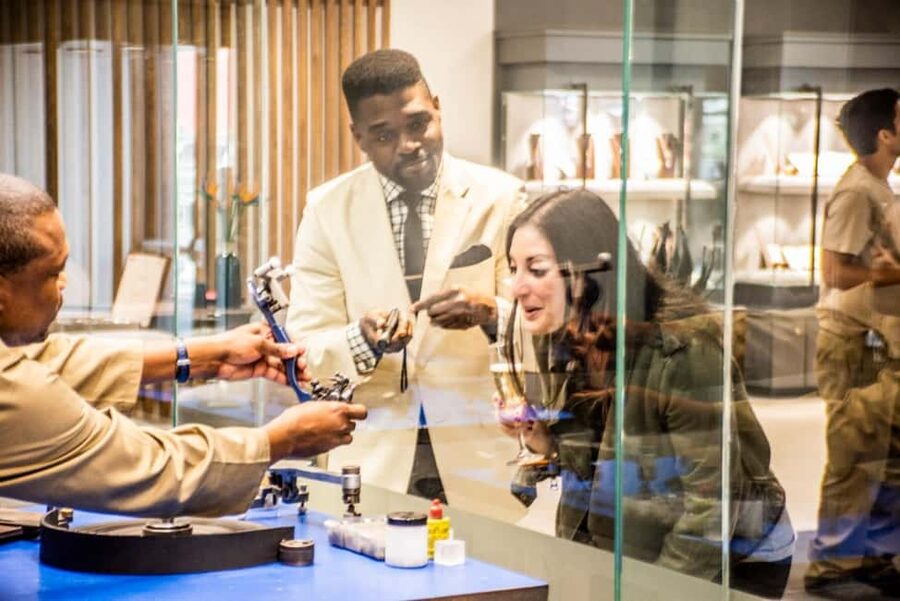
The cutting and polishing section is the heart of the visit. You can watch how a rough diamond is assessed, shaped, and polished until its inner brilliance appears.
This is where the tour earns its place on a Cape Town sightseeing plan. Jewelry shops usually show you the finished piece. Here, you get a look at the careful work that happens before the stone reaches a showcase.
Pay attention to the contrast between the rough material and the finished diamond. The value is not just in the stone’s natural properties. It also comes from the judgment and precision required to decide how to cut it. A poor cut can waste material or limit the way light moves through the stone.
The presentation is especially good for first-time visitors. One visitor described learning a great deal about the cutting process and diamond information, while another praised the clear explanations and attentive staff. That is useful guidance if you are wondering if the tour will feel too sales-focused or too technical. The teaching is a real part of the visit.
You will not be handling valuable diamonds yourself, but you can observe the process and ask questions. The exact amount of time spent here is not stated, so the length of the demonstration may vary.
Designing jewelry with CAD technology
The 3D jewelry design section gives you a chance to move from observer to creator. Using CAD technology, you can design a bespoke piece and print a wax replica of the model.
This is a more substantial offering than a standard showroom sketch. The wax copy helps you see the shape and proportions of your design before it is made in precious metal. If you are considering a ring, pendant, or another custom piece, that preview can make the decision easier.
The institute says master goldsmiths can turn the design into a finished original within 24 hours. That is a strikingly quick option, although you should ask about the exact cost, materials, and delivery arrangements before committing to a purchase.
I would treat this part as optional. You can enjoy seeing how digital design connects with traditional gold work without ordering anything. If you are marking a birthday, anniversary, or major trip, though, the chance to create a piece linked to your Cape Town visit may be the most personal part of the tour.
A completely different kind of day out on the same trip:
- Zipline Cape Town – From Foot of Table Mountain Reserve
★ 5.0 · 3,179 reviews - Cape Town: Table Mountain Cable Car, Hop-On Hop-Off Bus Tour
★ 4.6 · 3,157 reviews - Cape Point and Boulder’s Penguins Full Day Tour
★ 5.0 · 3,118 reviews - From Cape Town: Cape Point & Boulders Beach Full-Day Tour
★ 4.8 · 3,032 reviews
Meeting the third-generation goldsmiths
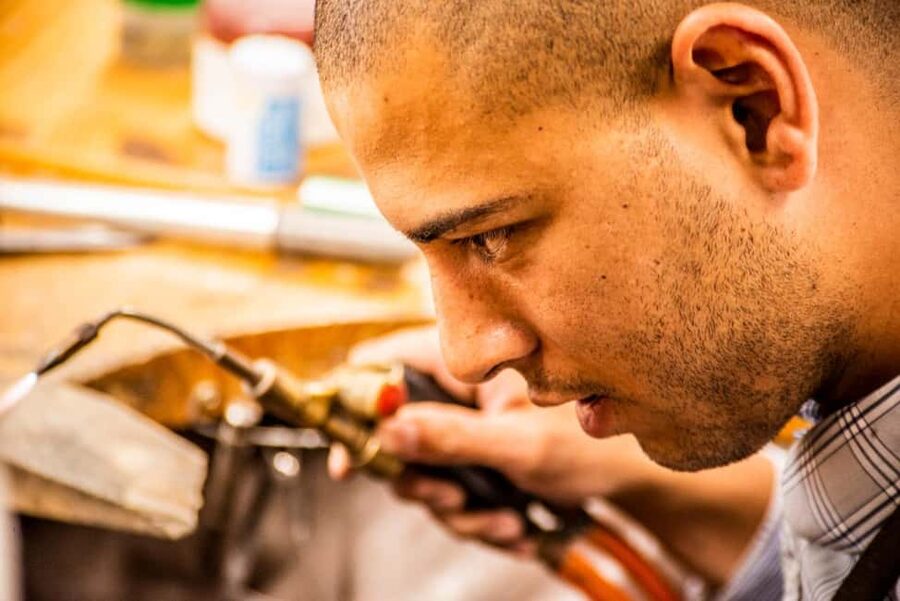
The goldsmith manufacturing section focuses on the institute’s in-house, third-generation goldsmiths. You get a look at the techniques used to shape African precious metals into finished jewelry.
This stop adds an important human element. Diamond cutting is precise, but goldsmithing shows another kind of craft. A goldsmith must shape, join, finish, and refine a piece so it is wearable as well as attractive.
I like this part because it helps separate handcrafted jewelry from mass-produced display stock. You see that the final piece depends on several different skills: selecting and cutting the stone, designing the setting, forming the metal, and finishing the surface.
The visit also gives you a better basis for judging a purchase. If you are tempted by something in the showroom, ask which elements were made in-house, what metal was used, and how the stone was sourced. The tour gives you enough background to ask sensible questions rather than simply reacting to sparkle.
The Tanzanite studio and the Essence of Africa
Tanzanite gets its own section, and rightly so. The stone is described as 1,000 times rarer than diamonds and is presented as the Essence of Africa.
The key stop is the Tanzanite polishing boutique. It is described as the only operating studio of its kind in the Southern Hemisphere that is open to the public. That gives the visit a point of difference beyond the usual diamond presentation.
You can watch Tanzanite being transformed through polishing. Like diamond cutting, this work reveals what is inside the rough material, but the appeal here comes from the stone’s rarity and African identity.
If you know little about Tanzanite, listen closely to the explanation of how the rough stone changes as it is polished. This is also a good point to compare the roles of diamonds and Tanzanite. One is widely known around the world; the other has a much more specific connection to Africa.
The boutique may be one of the most interesting parts of the tour for repeat Cape Town visitors. Even if you have seen diamond displays elsewhere, an operating Tanzanite studio gives you something more specific to look for.
The Taylor Burton diamond on a virtual red carpet
The Taylor Burton section adds glamour and a little theater. Through augmented reality, you can appear to wear the famous Taylor Burton diamond neckpiece and step onto a red carpet for a photograph.
This is not a chance to handle the original necklace. It is a digital encounter, but that is part of the fun. The display lets you connect with a famous piece without the security barriers and glass that usually surround major jewelry.
The Taylor Burton diamond has a strong link to celebrity and luxury, so this stop works as a light break between the craft demonstrations. You can take a picture that gives the visit a personal souvenir, even though the neckpiece itself is virtual.
I would expect this to appeal most to families, couples, and anyone who enjoys a playful photo opportunity. If you prefer a quiet, traditional museum setting, this may feel a little showy. That is not a flaw, but it helps to know the tone before you arrive.
Kimberley, 1872, through virtual reality
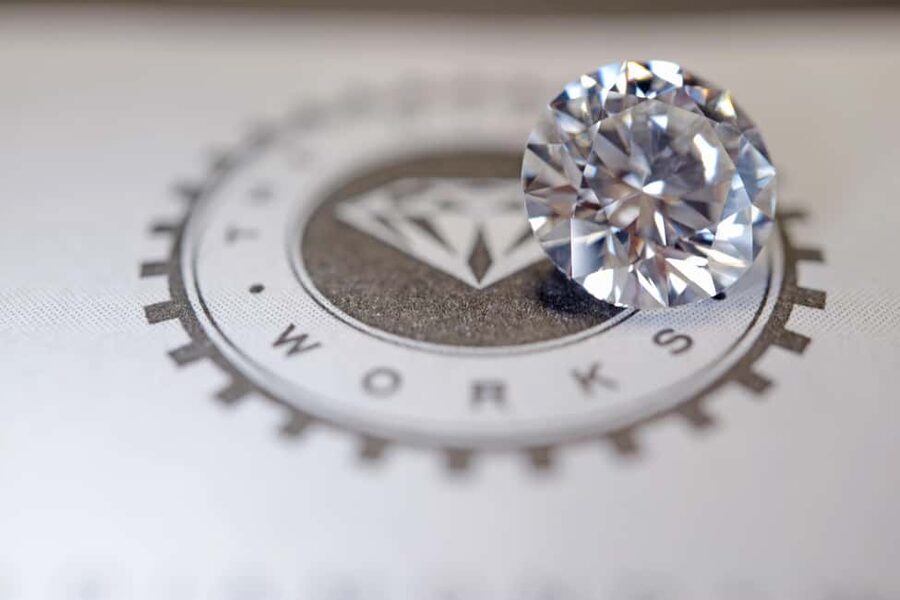
The VR section takes you back to the Kimberley hole digs of 1872. You can see a version of the early mining world, learn about the people who shaped South Africa’s economy, and mine your own diamond through the interactive display.
This is a useful way to connect the earlier history talk with a physical activity. Instead of only hearing about the old diamond workings, you get a short digital experience that puts you in that setting.
The Kimberley reference matters because the early diamond rush changed South Africa’s economy and helped shape the country’s connection with the international diamond trade. The VR display cannot replace a visit to the actual historic site, but it gives you a quick introduction while you are in Cape Town.
The simulated mining activity should work well for children, though adults may enjoy it too. It turns a complicated industrial story into something you can grasp quickly: diamonds had to be found, removed, sorted, and processed before they became luxury objects.
As with the Taylor Burton display, the technology is an addition to the craft and history rather than the main reason to visit. The strongest parts remain the demonstrations and explanations.
Who will enjoy the Sparkling Tour most
I would recommend this tour to anyone curious about jewelry but unsure how diamonds and Tanzanite are made. The free price makes it especially easy to add between other Cape Town activities.
It also suits:
- Couples looking for a memorable jewelry-related stop
- Families who enjoy hands-on and virtual displays
- Shoppers considering a custom ring or other bespoke piece
- Visitors interested in South African mining and economic history
- Anyone who wants to see Tanzanite polishing in a public studio
The visit may be less suitable if you want a purely historical museum with no commercial element. Since the institute makes and sells jewelry, you should expect the possibility of browsing and buying. You can still enjoy the educational portion without making a purchase, but it helps to arrive with clear limits.
The tour is offered in English, Afrikaans, Turkish, French, and German. That is useful if you want explanations in one of those languages, though you should confirm language arrangements when booking.
Practical value, timing, and what to bring
The tour includes the Sparkling Tour and sparkling wine or juice. Food is not included, and the visit does not include parking.
No duration or group size is provided, so I would avoid planning a tightly timed connection immediately afterward. The institute may spend more or less time on demonstrations, design, or shopping depending on the day.
Bring a phone if you want a picture with the augmented reality Taylor Burton display. Also bring questions. Ask how diamond cuts affect appearance, how Tanzanite is polished, and what happens after a CAD design is approved.
You can reserve now and pay later, which keeps your plans flexible. Cancellation is free up to 24 hours in advance, with a full refund. That policy makes this a low-risk booking, especially if you are still adjusting your Cape Town schedule.
One practical safety note comes from the experience itself. After a visitor was pickpocketed shortly before arriving, the staff offered help arranging an Uber. I would still keep your phone, wallet, and bag secure around Cape Town, but the response suggests the staff are willing to assist when something goes wrong.
Should you book The Diamond Works Sparkling Tour?
Yes, if you want a short, easy introduction to South African diamonds, Tanzanite, and jewelry making at no admission cost. The cutting and polishing demonstrations, the public Tanzanite studio, and the helpful explanations are the strongest reasons to go.
Book with the right expectations. This is an institute and jewelry business, not a free-standing museum. You may be invited to browse or consider a purchase, especially after seeing the CAD design and goldsmith sections.
For curious adults, families, and anyone considering custom jewelry, the value is excellent. If you are mainly seeking old mine buildings, outdoor history, or a long technical tour, choose another attraction and treat this as an entertaining add-on.
FAQ
Where is The Diamond Works Institute in Cape Town?
The institute is next door to the Rockefeller Hotel in Cape Town. Look for artwork on the outside wall to identify the location.
How much does the Sparkling Tour cost?
The listed price is $0 per person.
What is included with the tour?
The Sparkling Tour and sparkling wine or juice are included.
Is food included?
No. Food is not included in the activity.
Is parking included?
No. Parking is not included, so you need to arrange it separately if you drive.
What languages are available?
The tour is offered in Afrikaans, Turkish, French, German, and English.
Can I design my own jewelry?
Yes. The 3D design service uses CAD technology, lets you create a bespoke piece, and prints a wax replica. The institute says the finished piece can be made within 24 hours, though you should confirm the price and arrangements.
Can I see Tanzanite being polished?
Yes. The tour includes a visit to the Tanzanite polishing boutique, described as the only operating studio of its kind in the Southern Hemisphere open to the public.
Can I cancel for a full refund?
Yes. You can cancel up to 24 hours in advance for a full refund.
Newest reviews from Cape Town
- Explore Atlantis Sand Dunes with a 1hour 30mins sandboarding tour★ 5.0 · 5 reviews
- Transfer from Cape Town City Center to Cape Town Airport★ 5.0 · 5 reviews
- Pneuma private travel & tours, creating memories and friends never forgotten★ 5.0 · 5 reviews
- Cape Town Table Mountain and Peninsula Tour★ 5.0 · 5 reviews
- Private Transfer: CPT Airport to Cape Town in Luxury Van★ 4.0 · 5 reviews
- Cape Town Full Day Family Fun With Kids Private Tour★ 4.0 · 5 reviews
- Cape of Good Hope-Cape Point & Penguins from Cape Town★ 5.0 · 5 reviews
- Cape Town: Shark Cage Diving Tour (with Breakfast & Lunch)★ 4.8 · 5 reviews
Tours, compared.

Wine Tour: Paarl, Franschhoek & Stellenbosch incl 3 wineries
Read our review →

Cape of Good Hope & Penguins Day Tour with Pickup
Read our review →
Table Mountain Cable Car, Hop-On Hop-Off Bus Tour
Read our review →
Cape Point and Boulder’s Penguins Full Day Tour
Read our review →

Cape of Good Hope & Boulder Penguins Full-Day Tour from Cape Town
Read our review →